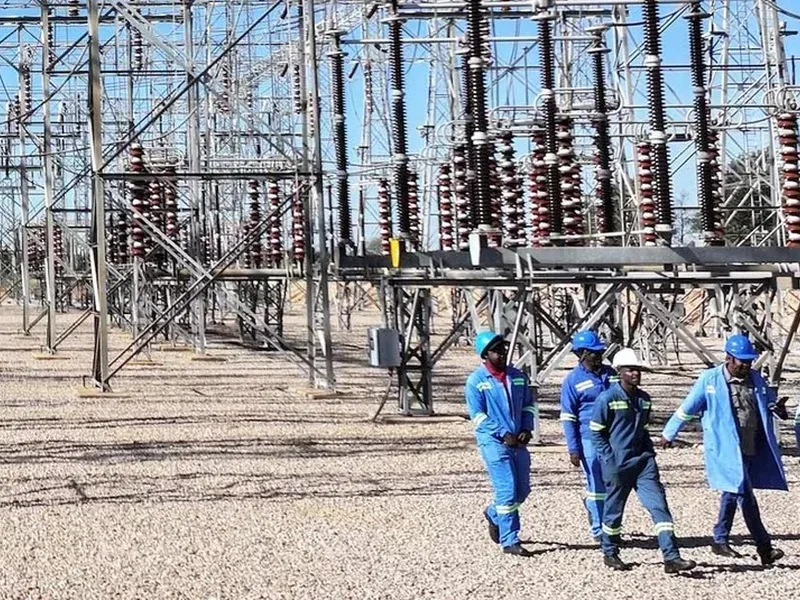
Britain’s battery industry has demonstrated that storage can attract investment without relying on dedicated deployment subsidies.
Its next challenge is making electricity markets recognise the flexibility those assets already provide.
For African markets expanding solar and storage, the lesson is not to copy Britain’s model, but to remove connection, dispatch and revenue barriers before they become expensive constraints.
When Technology Outruns The Market Rules
Britain’s battery-storage experience provides African policymakers with a stern warning: proving a technology works does not guarantee the electricity system will use it efficiently.
- Grid queues, planning delays and market rules can still prevent useful assets from delivering their full value.
In Aurora Energy Research’s Energy Unplugged episode 311, published on 20 October 2026, Harmony Energy chief executive Peter Kavanagh discusses those tensions with Emma Woodward, Aurora’s GB flexible-energy lead.
- Their conversation moves beyond deployment targets to the practical question of how storage earns revenue and lowers system costs.
The African relevance lies in sequencing.
- As solar and batteries become a larger part of electricity supply, regulators need to establish how storage connects, trades and gets paid.
This is a policy inference from Britain’s experience, not evidence that African markets already share its commercial conditions.
Battery Success Reveals A Different Constraint
Kavanagh’s central argument is straightforward: batteries have established their technical usefulness, but the surrounding institutions have not always kept pace.
- He identifies grid access as the biggest current barrier and describes individual planning processes that take as long as four years, even where construction can be completed within 12 months.
These are company-reported experiences, not averages for every British project.
That distinction matters.
- A long project pipeline is not the same as operational capacity, and a short construction period does not include land acquisition, permitting, financing or connection work.
- Governments can therefore announce impressive storage ambitions while the actual delivery system remains congested.
For an African industrial cluster seeking dependable electricity, such delays would mean more than deferred investment returns.
- They could prolong reliance on backup generation or leave new solar capacity without the flexibility needed to serve evening demand.
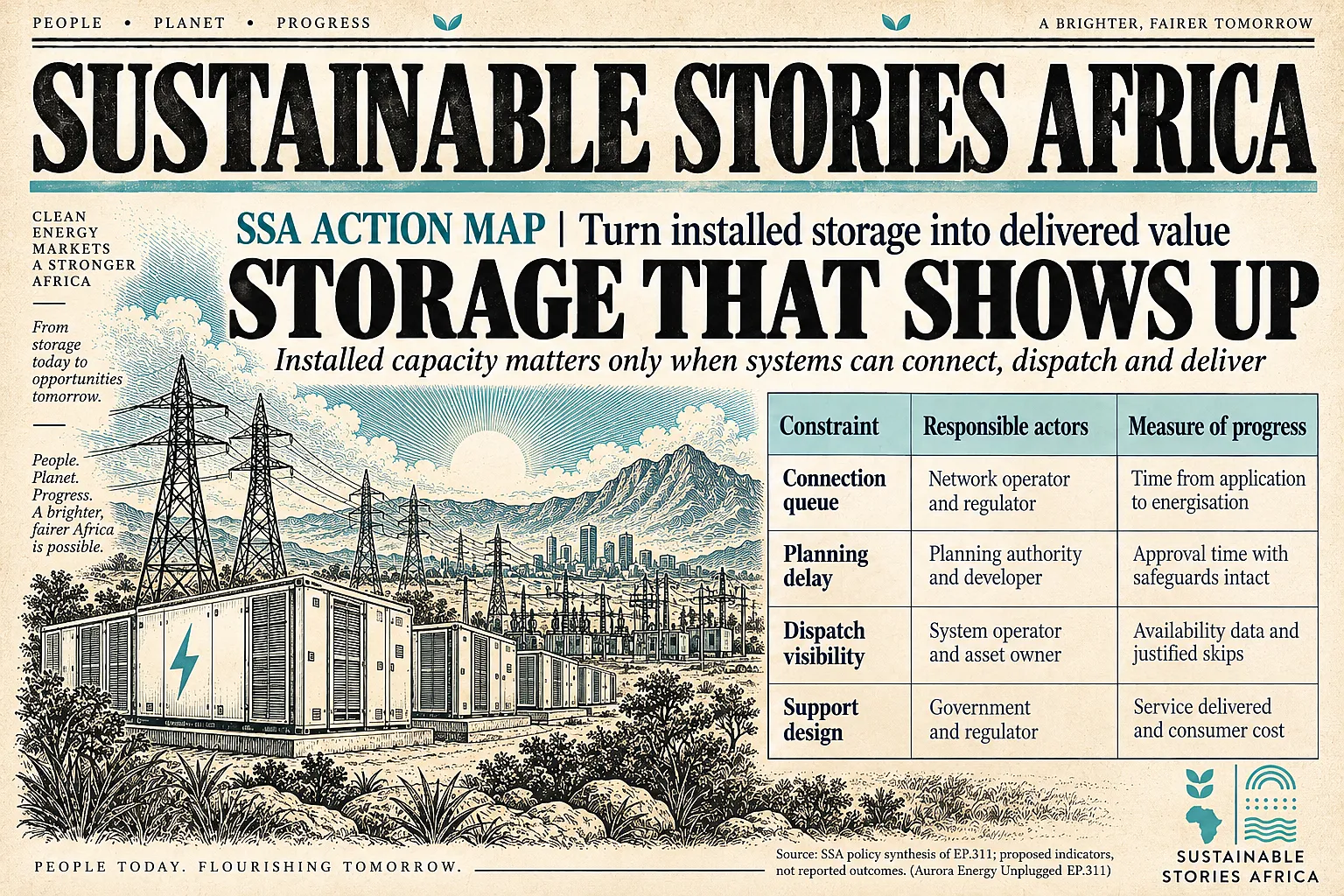
The immediate policy task is to measure elapsed development time, not just count applications.
Revenue Choices Shape Investment And Deployment
The interview distinguishes merchant operation from contracted arrangements.
Merchant batteries earn revenues that move with market conditions.
- A tolling agreement transfers specified operating or trading rights for an agreed payment, while revenue floors can provide downside protection.
- Their detailed terms vary.
Harmony had not used floors or tolls at the time of the discussion, according to Kavanagh.
- He favours merchant exposure because the company can fund projects from its balance sheet and accept volatility.
- He also recognises that contracted structures can help highly leveraged projects obtain financing. Neither model is universally superior.
Kavanagh reports that a fleet revenue measure rose from roughly £55,000 per MW to £80,000 per MW during the period discussed.
The financing lesson is that risk allocation should follow the investor’s capacity to absorb uncertainty.
- A developer with substantial debt cannot simply borrow the appetite of a stronger corporate balance sheet.
- African procurement programmes should specify the service required and let financing arrangements respond to credible payment and operating conditions.
Storage specifications must keep power and energy separate.
- A megawatt describes the rate at which a battery can charge or discharge; megawatt-hours describe stored energy.
- A two-hour designation links those quantities under specified operating assumptions.
- Duration matters because market recognition of available energy affects which balancing actions an asset can undertake.
This makes procurement design consequential.
- A buyer seeking a short burst of response and a buyer seeking several hours of evening supply are not purchasing identical services.
- Both may invite battery bids, but the performance conditions, operating pattern and commercial exposure can differ.
- An auction based only on installed power could obscure those differences.
African developers should therefore present a service case alongside an equipment specification:
- The constraint addressed, the required duration, expected availability and how performance will be verified.
- Public authorities should assess who benefits from each service and how those benefits enter the payment arrangement.
This is especially important when an installation serves both a customer’s backup needs and a wider network function.
A common vocabulary can improve financing and regulation.
- Lenders and utilities need to understand the same operating limits, while communities need a clear account of the project’s purpose.
- Technical capability becomes commercially useful when contracts and system procedures describe it consistently.

Better Dispatch Can Protect Consumer Value
Another concern is the balancing mechanism, through which the system operator adjusts supply and demand close to delivery.
- A battery may be bypassed despite offering a lower price, a practice known as a skip.
However, technical requirements and location can justify selecting a different asset.
- A low offer alone does not establish that a dispatch decision was wrong.
Kavanagh welcomes better recognition of battery energy availability through the GC0166 code change.
- He argues that market arrangements have been slow to reflect the operating capabilities of two-hour batteries.
- The issue is therefore not simply the number of megawatts connected, but whether operators can see and use the energy available.
For African markets, the opportunity is to define flexibility services early:
- Rapid response, reserve provision, congestion relief or energy shifting.
- Procurement should distinguish these functions rather than assume every battery performs every task.
Consumer value also needs verification.
- Storage can lower system costs, but the outcome depends on charging patterns, network location, operating rules and the alternative resources displaced.
Public reporting should connect dispatch decisions to measurable service and cost outcomes, rather than treat deployment itself as proof of savings.
Build Rules Before Bottlenecks Become Structural
Kavanagh supports long-duration storage while questioning whether Britain’s proposed support arrangements could distort competition with existing merchant batteries.
- That is a commercial stakeholder’s concern, not a demonstrated conclusion that long-duration support is unnecessary or inherently harmful.
- Different storage durations can meet different system needs.
African regulators should draw a narrower lesson:
- Assess system requirements before choosing the subsidy.
- Competitive procurement can compare technologies against a defined service, with clear treatment of duration, availability and performance.
- Where public support is justified, its consumer cost and interaction with existing investment should be disclosed.
Network operators should publish connection requirements, queue status and realistic delivery milestones.
- Planning authorities can examine whether suitable sites near substations warrant streamlined procedures, without removing fire-safety, environmental or community protections.
- Proximity to infrastructure does not eliminate local risks.
Investors should test financing against low-revenue periods, equipment degradation and replacement needs.
Utilities should develop transparent dispatch and settlement arrangements that recognise storage’s actual capabilities.
Together, these measures make projects easier to assess without pretending that merchant risk can be regulated away.
The institutional objective is practical:
- Shorten avoidable delays, preserve operational safety and reward delivered services.
- That offers a stronger foundation than chasing storage targets while leaving the rules that determine utilisation unresolved.
Path Forward – Make Storage Useful Before Scaling Further
African power markets should define storage services, publish connection pathways and establish transparent payment rules before deployment accelerates.
Public support should address demonstrated system needs rather than favour a technology category by default.
Britain’s experience shows why technical success must be matched by institutional readiness. The priority is dependable, affordable electricity, not a larger battery pipeline alone.