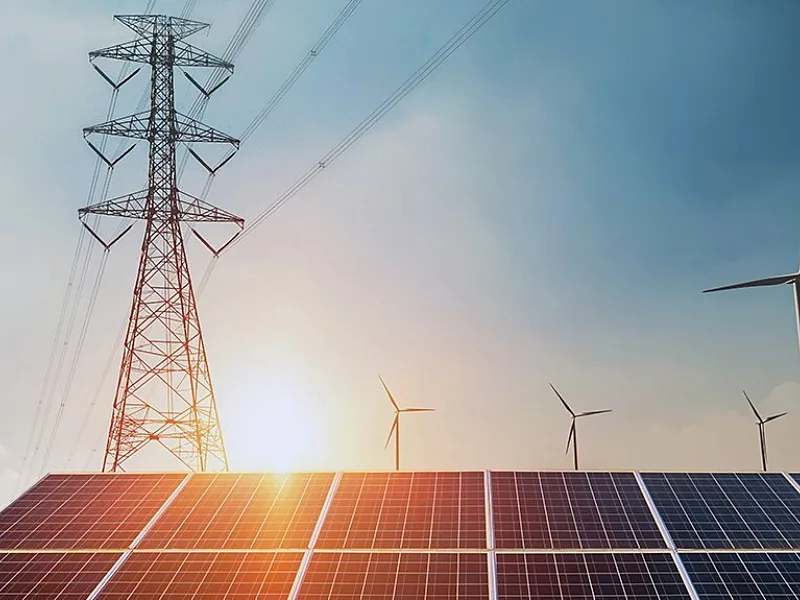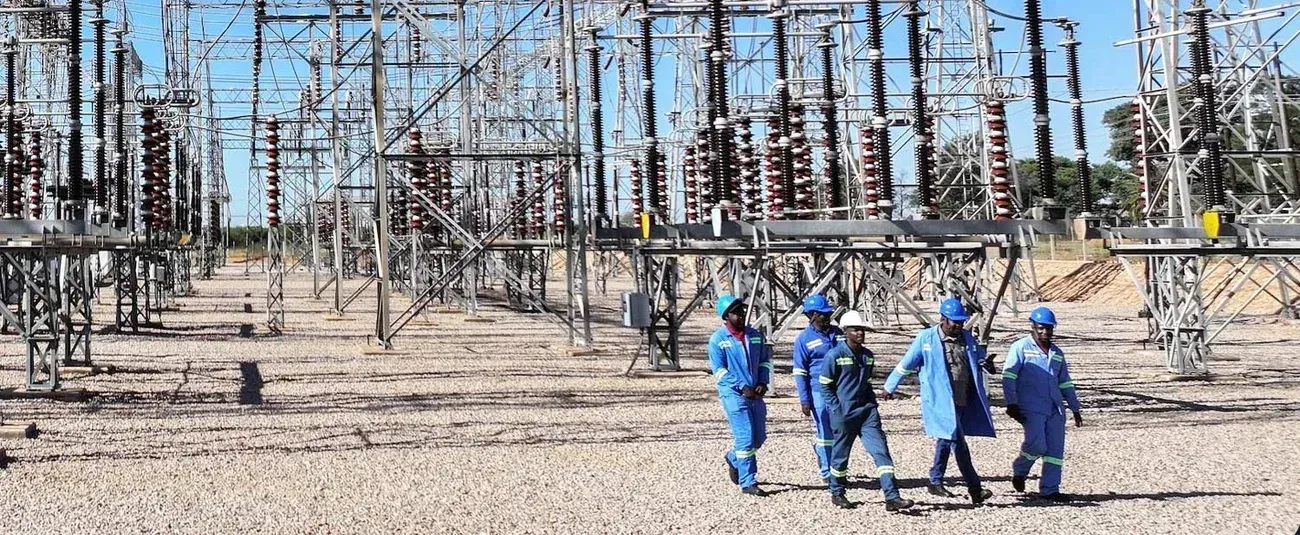
Africa’s generation capacity is expanding, but weak networks, high losses and fragmented markets prevent the system from delivering its full economic value.
AFC’s 2026 report places transmission, rehabilitation, storage and regional trade at the centre of the solution.
The investment opportunity extends beyond building more power plants. It includes making existing and future capacity usable, reliable and commercially connected to productive demand.
Africa Needs Power Systems That Connect
Africa’s energy challenge cannot be solved through generating capacity alone.
The Energy chapter of AFC’s State of Africa’s Infrastructure Report 2026 argues that generation, transmission, storage, fuel systems and industrial demand must be planned as connected components.
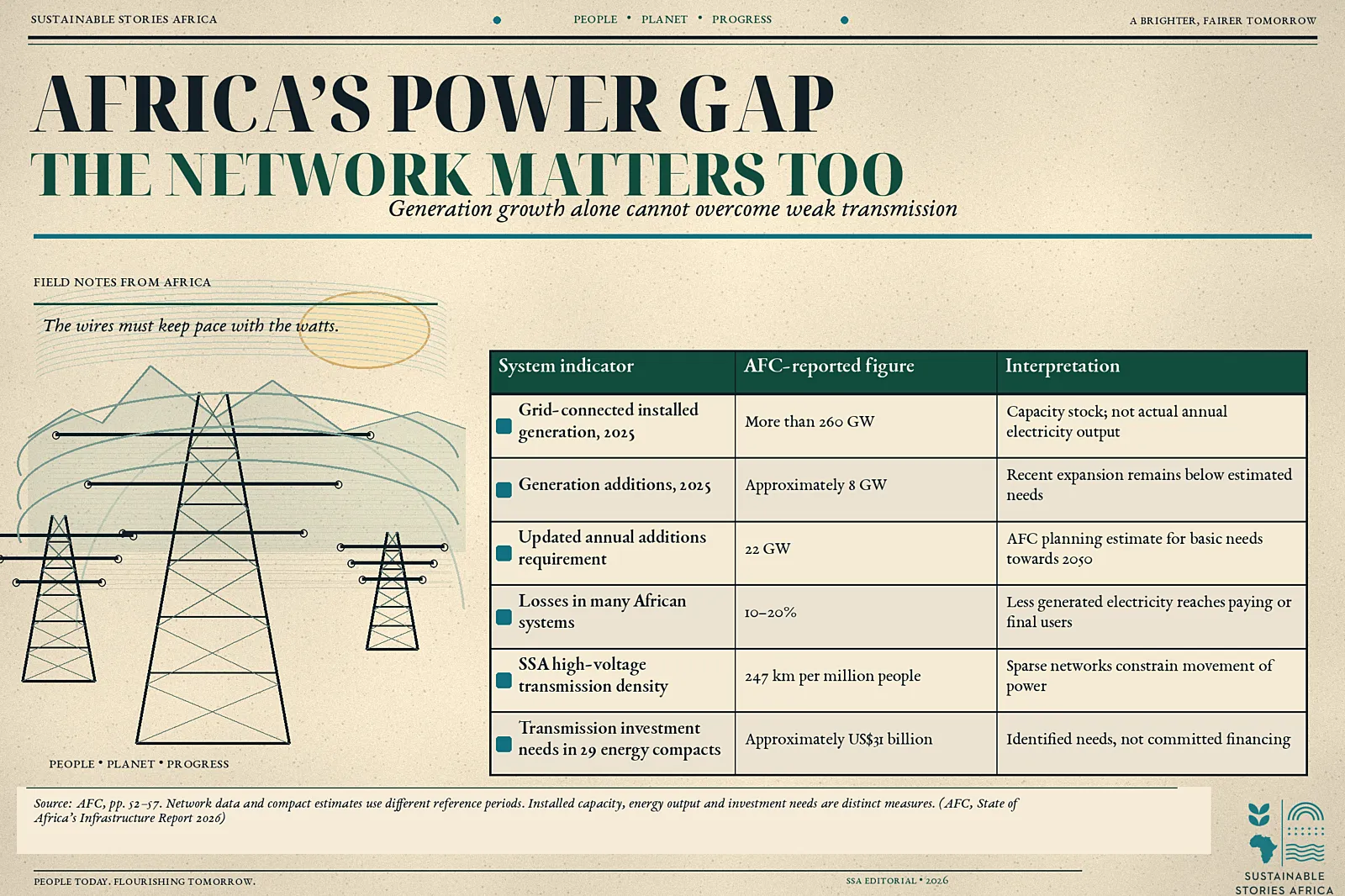
- The report estimates that grid-connected installed capacity exceeded 260 GW in 2025, more than double its level in 2008.
However, expansion has not kept pace with demographic and economic needs, while weak networks prevent available electricity from reaching customers efficiently.
For African businesses, the relevant measure is not the size of a national power fleet
- It is whether usable electricity arrives at a predictable cost and quality.
That shifts attention towards the infrastructure and commercial arrangements between the generating plant and the productive user.
More Capacity Does Not Guarantee Service
AFC reports around 8 GW of generation additions in 2025, against its updated estimate of 22 GW in annual additions needed to meet basic requirements by 2050.
- The latter is a planning estimate, not an agreed target binding every African country.
Even accelerated construction would leave a second problem unresolved.
- Transmission and distribution losses in many countries remain around 10% – 20%, compared with a global reference of approximately 7% in the report.
- Available electricity is therefore not equivalent to electricity delivered.
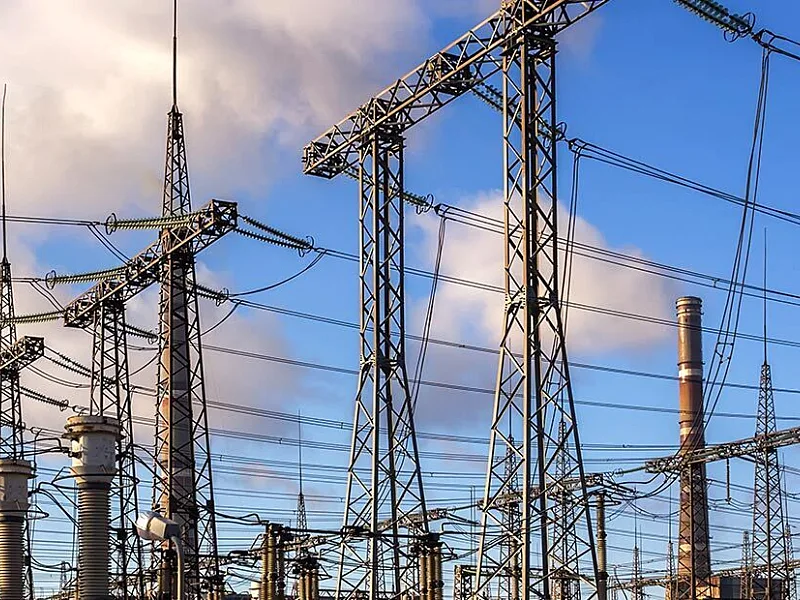
Sub-Saharan Africa’s high-voltage transmission density is also low:
- AFC cites 247 kilometres per million people, compared with more than 600 kilometres in Brazil.
This comparison illustrates a network gap, although geography, settlement patterns and demand differ between systems.
Transmission Can Become An Investable Service
The report finds that 99% of private investment recorded in Africa’s power sector between 2000 and 2024 went to generation, with only 1% allocated to transmission.
- Its argument is that the financing architecture must evolve to address that imbalance.
Uganda’s Amari Power Transmission project provides a practical example.
- Gridworks confirms that the $50 million project reached financial close to upgrade transformer capacity at four high-voltage substations.
- Construction can proceed, with commissioning expected in 2028.
That milestone should not be confused with completed infrastructure or electricity already delivered.
- Its significance is financial and institutional: a transmission investment has reached an executable financing stage under a contractual arrangement involving the developer, national utility and government.
AFC describes the model as a special-purpose company financing and owning assets during a concession, receiving predictable annuity payments, with eventual transfer to the utility.
- This can separate the investment case from fluctuations in electricity volumes, although payment and contractual risks still require assessment.
The model is not universal.
- Replication depends on credible counterparties, enforceable contracts, appropriate regulation and a clear system need.
- Private financing changes who provides capital; it does not remove the obligation to justify costs or protect consumers.
Power-sector comparisons also require consistent units.
- Installed capacity measures the maximum output a facility can provide under specified conditions; annual generation records energy produced over time.
- Storage capacity and discharge power answer different operating questions again.
- Investment narratives become misleading when these measures are presented as interchangeable evidence of supply.
- Each should be connected to the actual service a project is expected to deliver.
Fuel security remains part of the wider picture in AFC’s chapter.
- Industrial heat, logistics and backup generation cannot be understood solely through the electricity network.
- Planning should identify which services can credibly switch to electricity, which remain dependent on fuels and how transition choices affect resilience.
These assessments should also make emissions and long-term demand risks visible, rather than use energy security to bypass scrutiny.
Existing Assets Can Deliver More Value
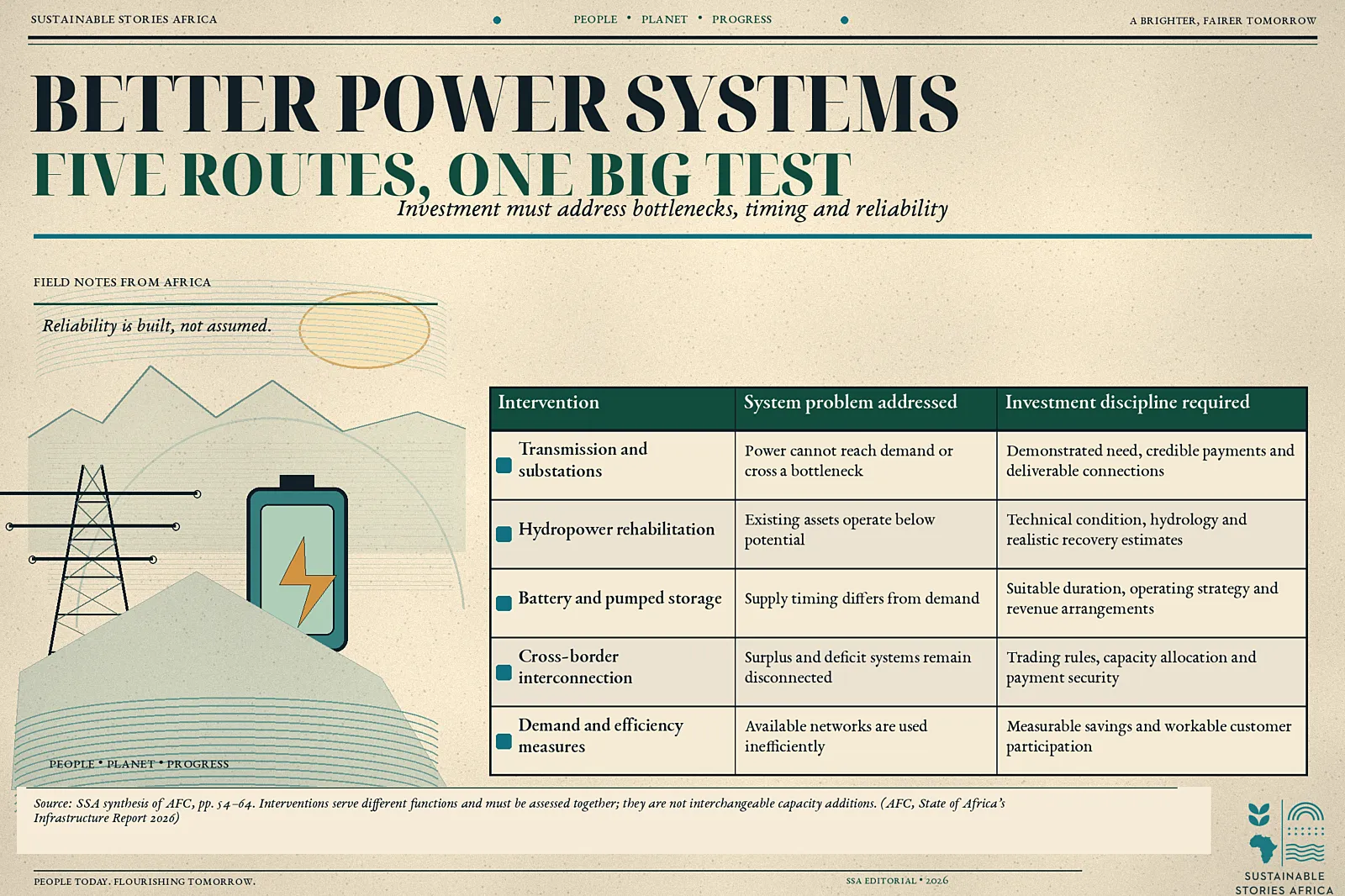
Hydropower rehabilitation offers another route to improved performance.
AFC estimates capital costs of approximately $400 – $500 per kilowatt for brownfield rehabilitation, substantially below its cited new-build hydropower comparisons.
- These are indicative costs, not quotations available for every plant.
- The value comes from recovering output, improving efficiency and extending useful service from assets already embedded in a power system.
However, rehabilitation still needs plant-specific technical assessment, environmental review and consideration of changing hydrological conditions.
Storage adds a different function.
- It can shift electricity across time, helping align variable production with demand.
- Regional trade shifts it across geography, allowing a surplus in one system to serve a deficit elsewhere. Neither function should be confused with creating unlimited new energy.
AFC identifies Angola as holding more than 2 GW of stranded capacity outside the Southern African Power Pool grid.
- The opportunity illustrates why the location of capacity matters: electricity cannot support neighbouring industrial demand without the physical and commercial connections to move it.
A stronger regional market can improve the use of complementary resources, but interdependence also requires governance.
- Trading partners need confidence in operating rules, information-sharing and dispute arrangements.
- A physical connection is therefore only the beginning of integration.
- Its long-term value depends on institutions capable of managing changing supply conditions and competing demands while preserving confidence among participating countries and customers.
At project level, the most informative question may be what would happen without the investment.
- A credible assessment should identify the constraint removed, the demand served and the realistic alternatives.
- This helps avoid attributing every expected industrial benefit to one network asset.
- It also makes it easier to distinguish a strategically necessary investment from a project whose benefits depend mainly on optimistic assumptions elsewhere.
Finance The Connections That Unlock Demand
Governments should organise energy planning around service and productive demand.
- Industrial zones, mines, manufacturers and data facilities need explicit network assumptions rather than general assurances that national capacity is increasing.
Utilities should prioritise investments that reduce binding constraints.
- In some systems, rehabilitation and loss reduction may produce faster gains; elsewhere, sparse networks make expansion essential.
- The correct sequence depends on evidence from the specific system, not a continental rule of thumb.
Regulators should clarify how transmission investments earn revenue and how costs reach consumers.
- Predictability can support financing, but tariff treatment and affordability require transparent oversight.
- Public guarantees should be disclosed and assessed as obligations, not treated as free risk removal.
Regional power institutions need to address operational and commercial readiness alongside construction.
- An interconnector provides a route, but trading requires compatible arrangements, scheduling capability and confidence that electricity will be paid for.
- These institutional functions determine whether physical links become useful markets.
Financiers should compare whole-system outcomes.
- A generation project may appear inexpensive at the plant gate while imposing significant network requirements.
- Conversely, an apparently modest substation investment may unlock substantial existing capacity.
- Evaluation should capture these dependencies without assigning speculative benefits to unbuilt projects.
The social objective remains central.
- Improved system performance should support access and productive activity while maintaining attention to affordability and affected communities.
- Better infrastructure is valuable because of the services it enables, not merely because it adds to an investment total.
Path Forward – Connect Energy Investment With Economic Use
Africa should fund generation and the networks, flexibility and institutions that make it useful.
Transmission, rehabilitation and regional trade deserve the same strategic attention as new power plants.
Governments and financiers should select investments against demonstrable system constraints and credible demand.
The measure of progress is dependable electricity reaching households and productive businesses, not capacity announced or financial close achieved in isolation.