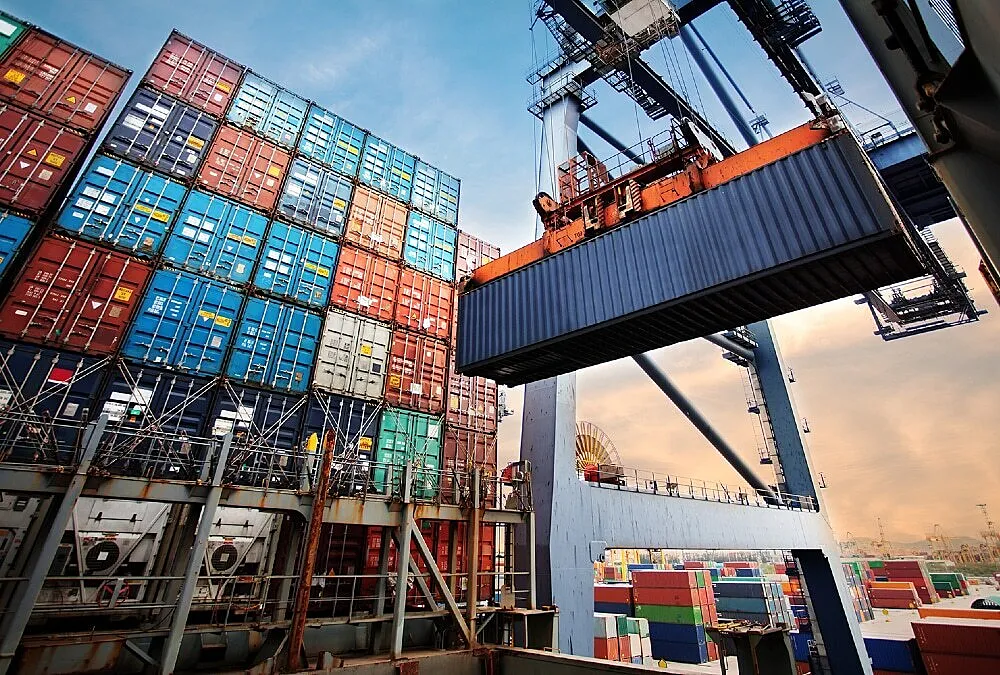
Africa’s ports and railways are expanding, but disconnected infrastructure and cumbersome trade processes still weaken their economic returns.
AFC’s 2026 report argues that corridors must operate as integrated supply chains, supported by governance, storage and productive demand.
The next phase of investment must improve how goods move—not simply add more transport assets.
Aviation can address selected connectivity gaps, while resilient land-based systems remain essential for scale.
Africa Needs Corridors That Actually Work
Africa’s transport challenge is shifting from asset construction towards system performance.
The Transport and Logistics chapter of AFC’s State of Africa’s Infrastructure Report 2026 finds that expanding ports, railways and roads do not automatically create dependable cross-border supply chains.
- The report identifies fragmented planning, weak coordination and border bottlenecks along major routes, including Abidjan – Lagos, Dakar – Bamako and the North – South Corridor.
These gaps limit the commercial value of infrastructure that already exists.
For the African Continental Free Trade Area, the stakes are direct.
- Firms need predictable delivery, competitive costs and access to markets.
A corridor becomes economically meaningful when producers can use it consistently, not when the final construction contract is signed.
Growing Ports Cannot Solve Inland Friction
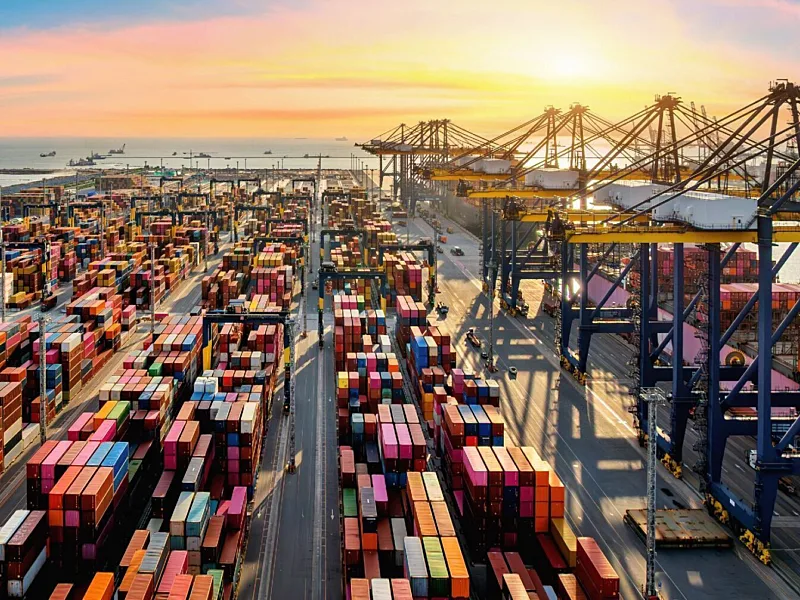
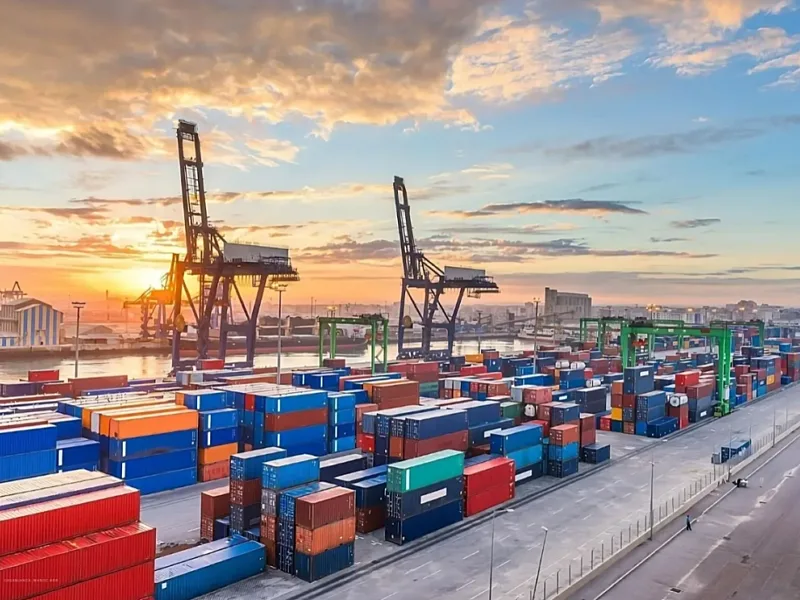
Port expansion demonstrates that Africa’s transport story is not one of uniform stagnation.
- AFC reports that Tanger Med handled more than 160 million tonnes in its latest comparison, while Mombasa and Abidjan exceeded 45 million tonnes.
- Other regional gateways have also recorded substantial growth.
However, throughput at the coast is only one part of the journey.
- A container can leave a modern terminal and encounter road delays, fragmented paperwork, limited warehousing or an unreliable onward connection.
- The economic cost accumulates across the chain.
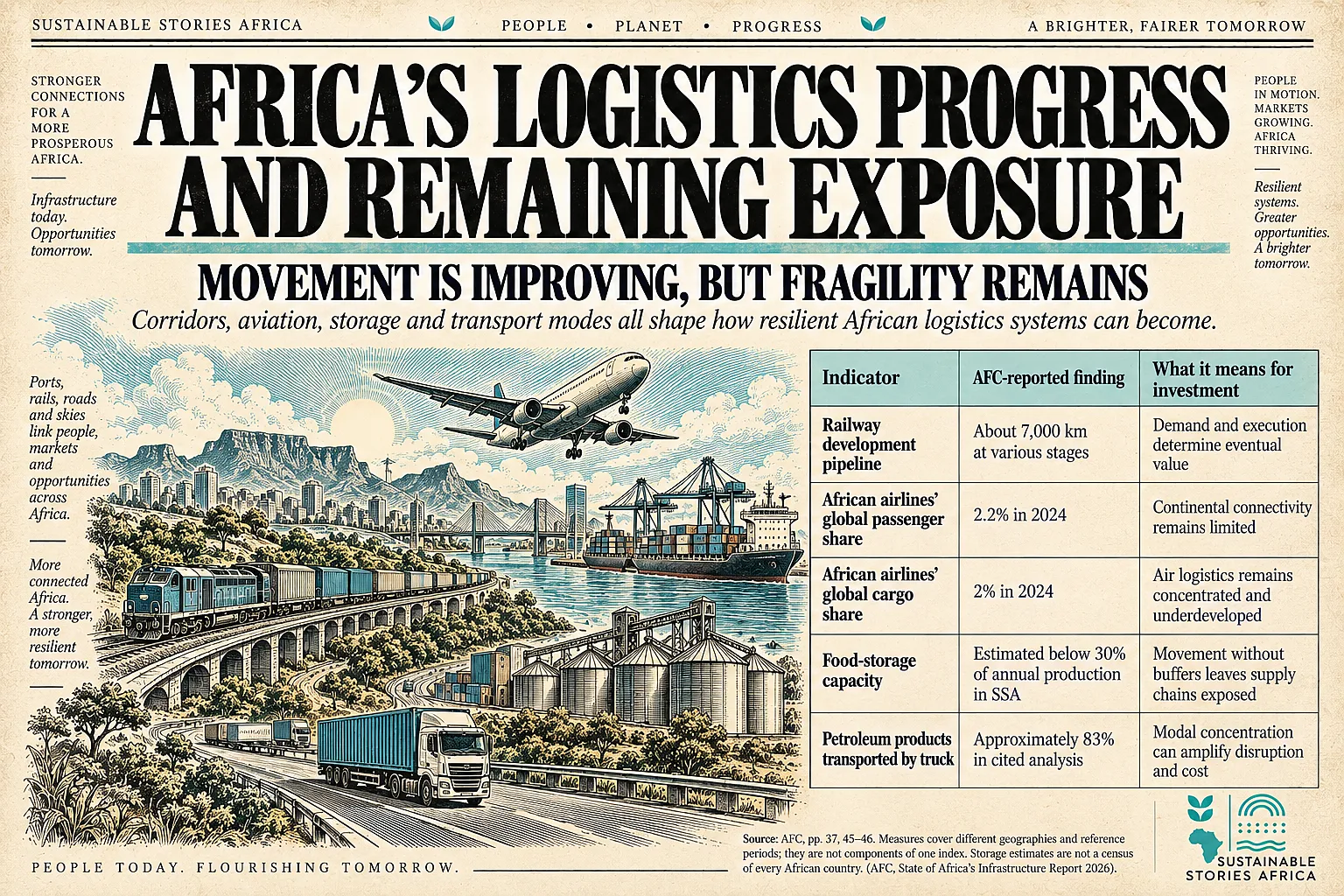
AFC also identifies about 7,000 kilometres of railway lines at different stages of construction and development.
- That is a pipeline measure, not completed, operating track.
Its value will depend on delivery, access arrangements and the customers the lines ultimately serve.
Borders And Governance Determine Corridor Performance
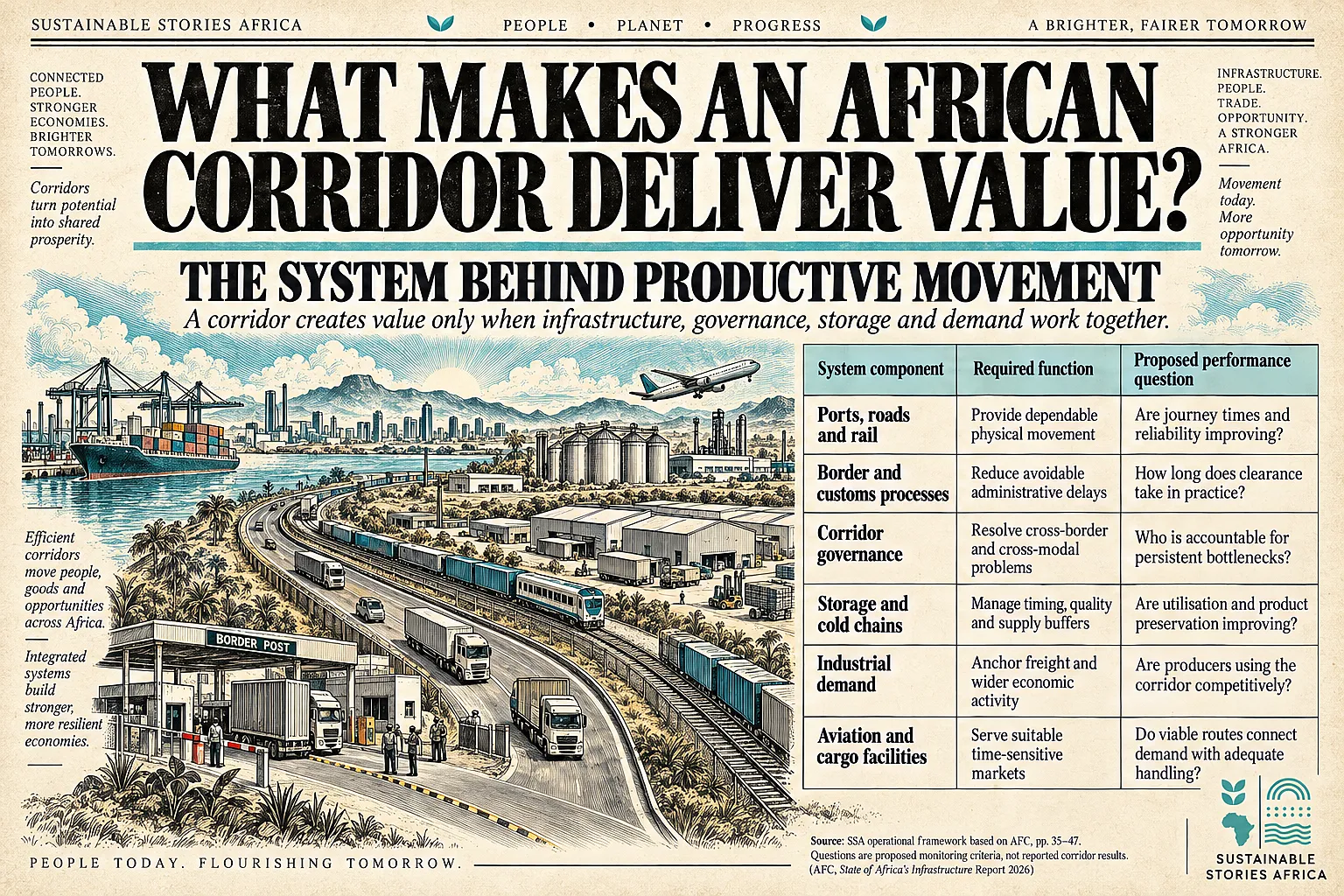
AFC’s corridor framework combines physical assets with institutional arrangements:
- Corridor agreements, functioning authorities, customs coordination, one-stop border posts and multimodal connections.
- Its purpose is to identify whether a route operates as a coordinated system rather than a collection of national projects.
The report describes stronger institutionalisation along the Northern and Central Corridors in East Africa, where operational arrangements and monitoring mechanisms support cross-border movement.
- It also highlights the Walvis Bay Corridor Group as a model of structured public–private coordination.
The lesson is not that a single organisational model will work everywhere.
- It is that someone must own the task of resolving bottlenecks across jurisdictions and modes.
- Without that accountability, each operator can optimise its own asset while the end-to-end journey remains inefficient.
Industrial demand also changes corridor economics.
- A railway linked to mines, processing facilities and wider production zones can draw on several sources of freight.
- Designing for multiple users may broaden its economic contribution, provided access rules and commercial terms support actual participation.
This is why traffic forecasts need scrutiny.
- Transit volumes alone may not establish a durable revenue base.
- Investors should understand where goods originate, how production is expected to grow and whether the supporting industrial facilities have credible delivery plans.
The customer’s perspective can help organise that analysis.
- A firm may accept a slightly longer journey if it is dependable, while highly variable delivery can force it to hold additional inventory or miss a customer commitment.
- Corridor planning should therefore examine reliability alongside average travel time. This is a proposed evaluation principle, not a claim that every route has the same cost structure.
Institutional reform also needs to be grounded in actual workflows.
- A one-stop border post is intended to combine exit and entry formalities, but its effectiveness depends on coordinated procedures and operating arrangements.
- Constructing a facility without resolving those practical requirements risks reproducing the old delays inside a new building.
- Physical and administrative delivery should be planned and assessed together.
Faster Connections Need Resilient Supply Chains
Aviation offers a complementary route to integration, particularly for time-sensitive goods.
- AFC highlights horticulture, pharmaceuticals and e-commerce as activities that can benefit from improved air connectivity.
- These applications differ from the bulk commodities for which rail and maritime systems remain central.
The linked AFCAC/IATA continental study models substantial benefits from air-service liberalisation, including additional trips, lower fares and employment gains.
- These are scenario-based estimates from an earlier study, not benefits already realised in 2026.
The sustainability case requires a separate test.
- Faster connectivity does not automatically reduce emissions.
- Route development should be evaluated alongside economic demand, operational efficiency and environmental impacts rather than described as inherently green.
Storage deserves equal attention.
- AFC cites evidence that supply-chain weaknesses contribute to food losses and higher consumer prices.
- Warehouses, cold chains and appropriate reserve arrangements can help manage timing differences between production and demand, but they require dependable operations and commercial use.
Resilience does not mean maximising stocks regardless of cost.
- Storage ties up capital and requires appropriate maintenance, handling and inventory management.
- The policy challenge is to identify which buffers address a material risk and how they will be financed and operated.
- A useful storage investment should have a clear function within the supply chain, not merely add warehouse space to a construction programme.
The same principle applies to multimodal development.
- Road, rail, pipelines and aviation serve different goods, distances and customer needs.
- An integrated strategy should exploit those differences rather than assume that every corridor needs every mode.
The appropriate mix depends on volumes, commercial demand, service requirements and the ability to coordinate transfers between assets without creating new friction.
Prioritise Performance Before Adding New Capacity
Governments and regional bodies should establish a shared corridor delivery agenda.
- It should identify the most costly delays, assign responsibility and publish progress against a manageable set of indicators. Border reforms require operating cooperation, not just new buildings.
Infrastructure agencies should coordinate investment plans with customs authorities, logistics operators and industrial customers.
- A port expansion, railway extension and processing zone should not rely on incompatible assumptions about timing, capacity or demand.
Financiers should assess the complete supply chain when evaluating a major transport asset.
- The creditworthiness of the project may depend on an inland link, a border process or another facility outside its contractual boundary.
- These dependencies deserve explicit risk treatment.
Storage should enter planning early rather than appear as a later add-on.
- Food systems need facilities matched to the commodity and market; fuel systems need safety, operational integrity and demand-based planning.
- More capacity without sound management can create new costs without improving resilience.
Private operators also have a role in sharing performance information.
- Reliable data on dwell time, cargo handling and service interruptions can help identify whether a problem lies in infrastructure, regulation or coordination.
- Public institutions should avoid confusing commercially sensitive information with an excuse for opaque performance.
Communities along corridors should be included in the economic assessment.
- The desired outcome is not merely faster transit through a region, but better opportunities to produce, trade and access services.
- That requires deliberate links between the main corridor and the firms and settlements around it.
Path Forward – Make Integration The Measure Of Success
Africa should judge corridor investment by dependable journeys, lower friction and stronger productive activity, not construction milestones alone.
Governments must align border operations, logistics facilities and governance with physical infrastructure.
Investors should favour credible demand and complete supply-chain planning.
Linking assets into working systems can improve both bankability and resilience, making trade integration more useful to businesses and communities.