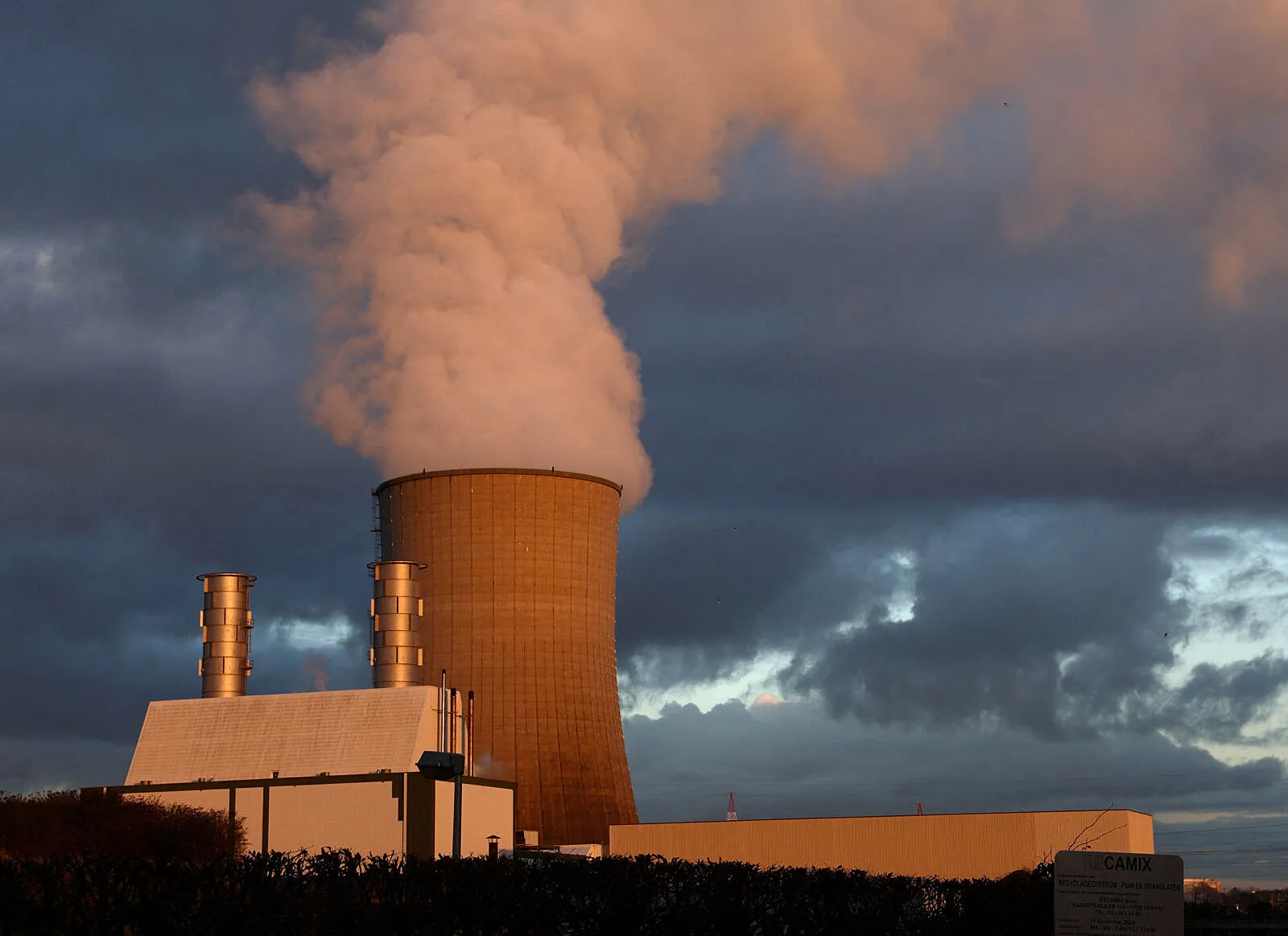
The World Meteorological Organisation (WMO) reports record atmospheric concentrations of carbon dioxide, methane and nitrous oxide in 2025.
Slower growth in some gases did not reverse their accumulation.
The bulletin also flags sulfur hexafluoride and hydrogen leakage as concerns for the energy transition.
African investment strategies need to pair expanded energy access with credible measurement, equipment choices and emissions control.
Atmospheric Records Raise The Delivery Stakes
Atmospheric concentrations of the three principal long-lived greenhouse gases reached new highs in 2025, according to the World Meteorological Organization's Greenhouse Gas Bulletin released on October 27.
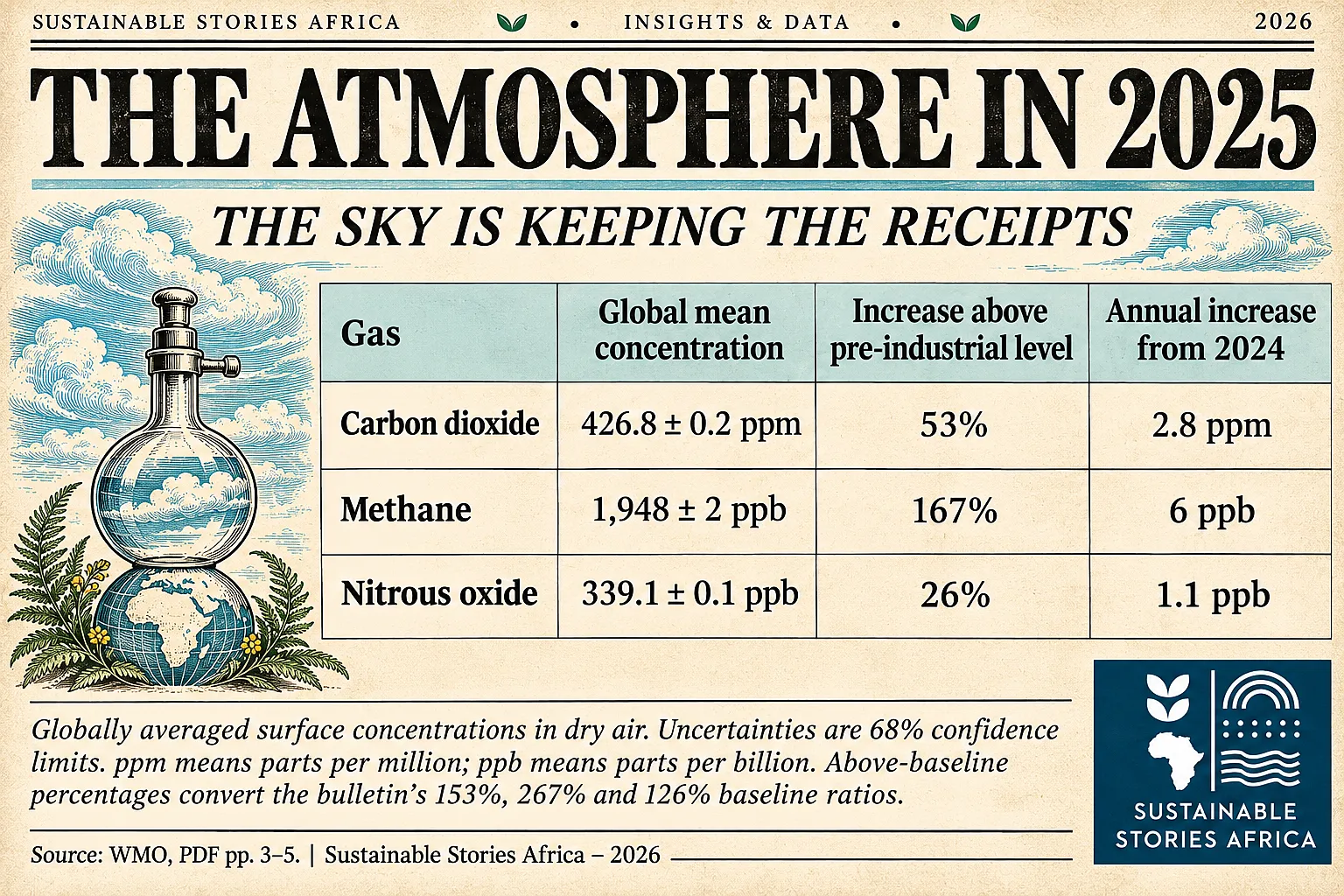
- Carbon dioxide reached 426.8 parts per million, methane 1,948 parts per billion and nitrous oxide 339.1 parts per billion.
The measurements show the continuing accumulation of gases that alter the planet's energy balance.
- Carbon dioxide's annual increase slowed from the exceptional rise recorded in 2024, but remained substantial.
- A smaller addition to an already growing atmospheric stock is still an addition.
For African policymakers, utilities and investors, the findings connect two responsibilities: preparing for a changing climate and building energy systems whose benefits are measured across their full operation.
- The bulletin highlights less abundant gases associated with electricity equipment and hydrogen, showing why quality of transition infrastructure matters as well as its scale.
Slower Growth Still Means Higher Concentrations
In 2025;
- Carbon dioxide concentration was 153% of the pre-industrial level, representing a 53% increase.
- Methane was at 267% of its pre-industrial level, or 167% higher
- Nitrous oxide was at 126%, or 26% higher.
Confusing a percentage of a baseline with a percentage increase would overstate the changes.
The bulletin measures concentrations in the atmosphere, not annual emissions from a country or sector.
- Concentrations reflect emissions, removal by natural sinks and atmospheric processes over time.
- Consequently, these global averages cannot be used to calculate an individual country's current emissions performance.
The unit also matters.
- Carbon dioxide is reported in parts per million, while methane and nitrous oxide are reported in parts per billion.
- Comparing their raw numerical values as if they used the same scale would misrepresent their abundance and say little about their different warming effects.
Natural Sinks Shape The Annual Signal
Carbon dioxide rose by 2.8 parts per million from 2024 to 2025, compared with the previous year's record 3.6-part increase.
- WMO links the moderation to recovery in land carbon uptake and reduced fire emissions after the 2023-2024 El Niño
- They emphasise that continuing emissions still added substantial carbon to the atmosphere.
The bulletin reports that, over 2015 - 2024, about half of emissions from human activities accumulated in the atmosphere, with approximately 29% absorbed by the ocean and 21% by land.
- These are estimates for a defined period, not a guarantee that sinks will absorb the same shares in future.
Methane increased by six parts per billion in 2025, less than its rise in 2024 and below its recent decadal average.
- This slower growth still raised concentrations to a record.
- Sources include natural systems, agriculture, waste and fossil fuel activities, making source identification central to effective mitigation.
The bulletin's methane isotope analysis illustrates why more detailed observation matters.
- Different sources and removal processes leave differing isotopic patterns, helping scientists examine shifts that concentration measurement alone cannot explain.
- The interpretation remains scientific analysis with uncertainties, not a direct allocation of responsibility to particular African sectors.
The broader warming signal also strengthened.
- The NOAA Annual Greenhouse Gas Index reached 1.56 in 2025, representing a 56% increase in radiative forcing from long-lived greenhouse gases since 1990.
- This measures additional warming influence; it does not mean global temperature rose by 56%.
Cleaner Infrastructure Requires Attention To Leakage
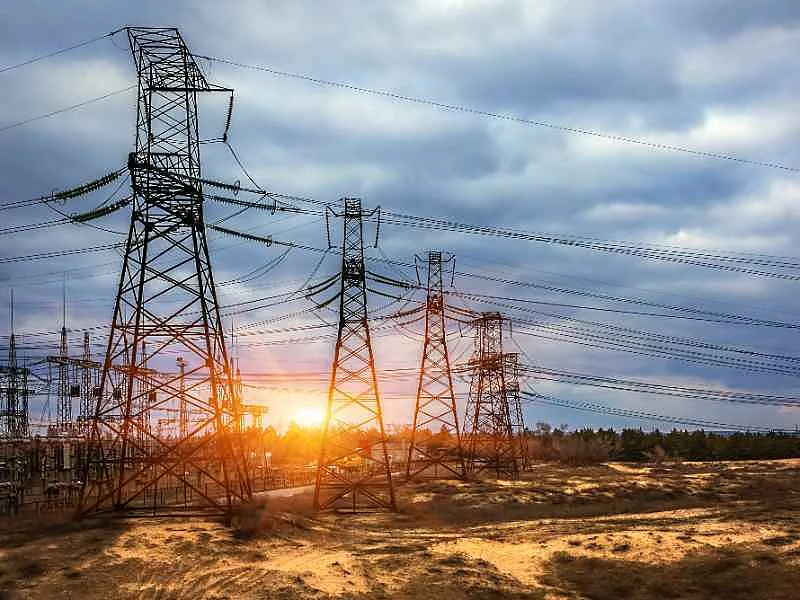
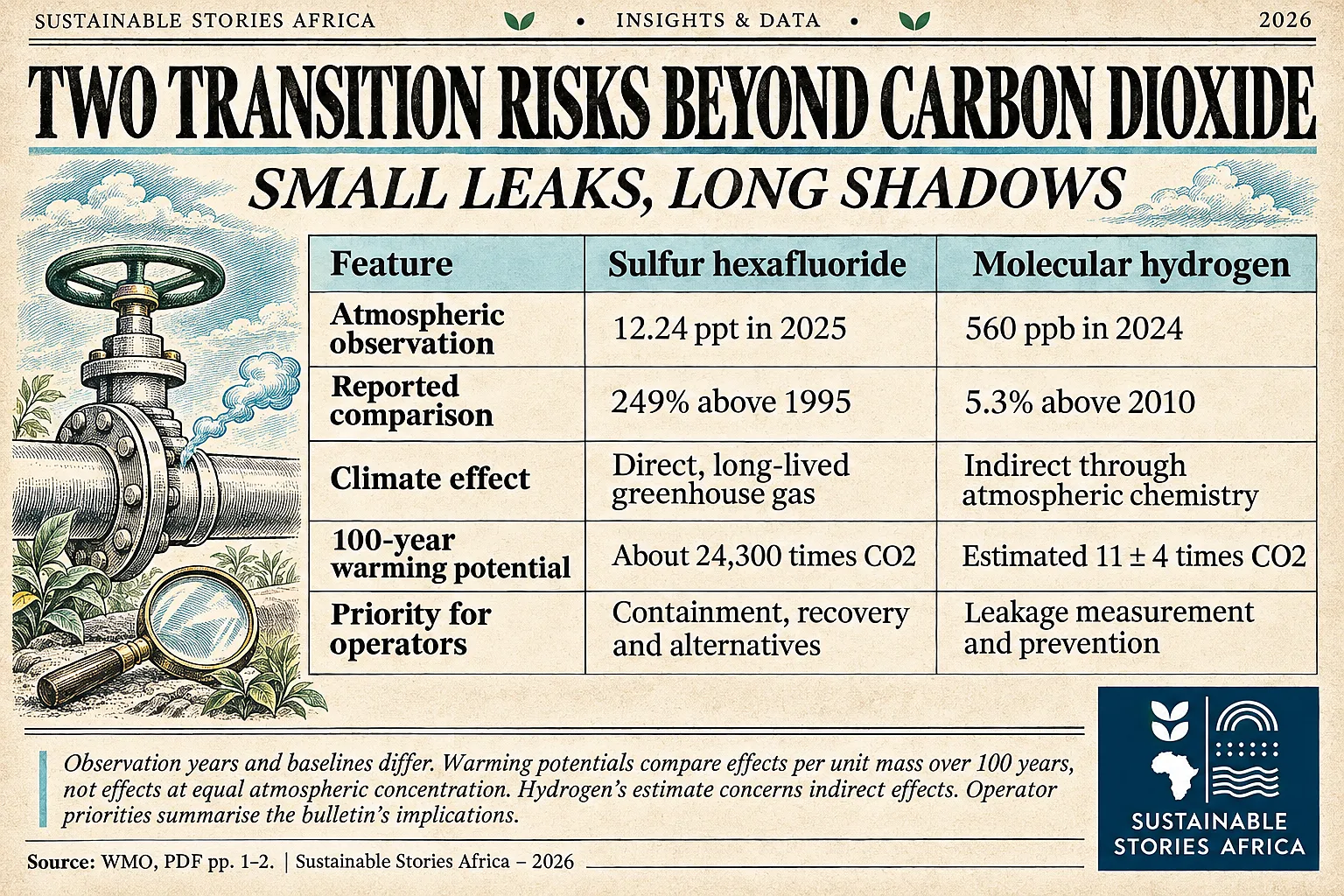
The bulletin highlights sulfur hexafluoride, or SF6, used mainly as an electrical insulator in high-voltage equipment.
- Its atmospheric concentration reached 12.24 parts per trillion in 2025.
- Its very long lifetime means emissions create a climate liability that extends far beyond a project's operating life.
Hydrogen raises a different issue.
- It is not a greenhouse gas, but leakage affects atmospheric chemistry and can contribute indirectly to warming.
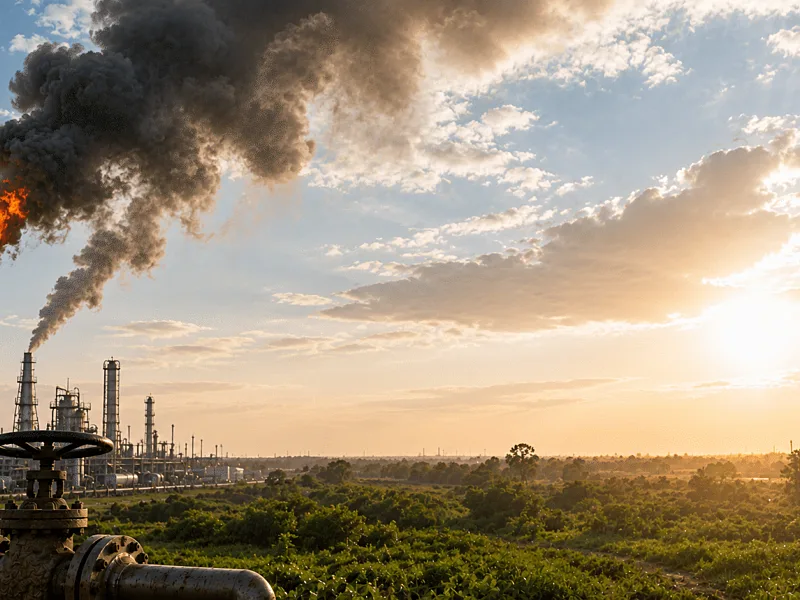
- Its use as an energy carrier therefore requires attention to losses from production, storage and transport, alongside the emissions associated with making it.
For African infrastructure investment, the opportunity is to build these considerations into design and procurement early.
- Plan expansion and emissions control together, to improve the credibility of climate claims while avoiding preventable operating losses.
Build Measurement Into Transition Investment Decisions
Governments and utilities should connect project-level inventories with reliable observation and verification.
- An equipment register, consistent monitoring and clear reporting responsibilities can make emissions management part of ordinary operations.
- Claims should specify what was measured, over what period and against which baseline.
For electricity equipment containing SF6, procurement should examine technically appropriate alternatives, maintenance capability and end-of-life recovery.
Existing assets require attention the same as new purchases.
- Gas stored inside equipment is a future management responsibility even when it has not yet escaped into the atmosphere.
Hydrogen developers should define leakage measurement and control arrangements across the supply chain.
- Project assessments need explicit assumptions about production, handling and transport, with uncertainty visible to investors and regulators.
- A low-carbon label does not establish the climate effect of an entire operating system.
Agricultural policy must also carefully connect productivity and emissions.
- The bulletin identifies fertiliser use as a source of human-related nitrous oxide emissions.
- In African settings, the policy task is to support efficient, locally appropriate nutrient management while preserving food production, rather than infer a universal input prescription from a global atmospheric average.
Investment in atmospheric science deserves a place in development planning.
- Monitoring networks, laboratory capacity and sustained data collection make it possible to evaluate progress and understand changing sources and sinks.
- Funding equipment without maintaining expertise and continuity would weaken the value of those investments.
Finally, institutions should report outcomes in terms that decision-makers and citizens can interpret.
- Annual emissions, atmospheric concentrations and warming influence answer different questions.
- Keeping them distinct improves accountability and ensures climate action remains connected to energy access, agricultural needs and resilience.
Better measurement cannot change reductions, but it is essential for establishing what action actually achieved.
Path Forward – For Credible Climate Delivery
African transition plans should pair energy expansion with emissions measurement, leakage control and sound equipment management.
Global concentration records strengthen the action case and provide no for local inventories.
Utilities, developers and governments should ensure operating performance and scientific capacity are part of investment decisions.
Progress must be demonstrated through measured outcomes.