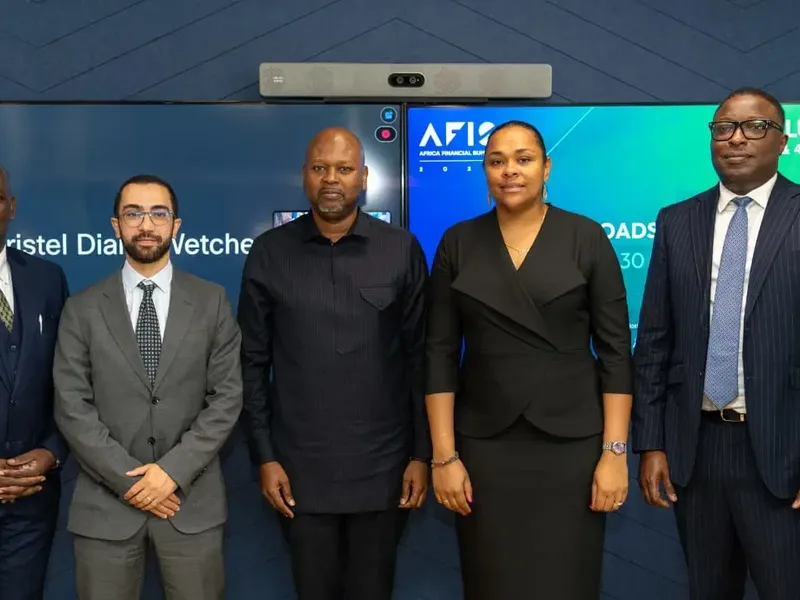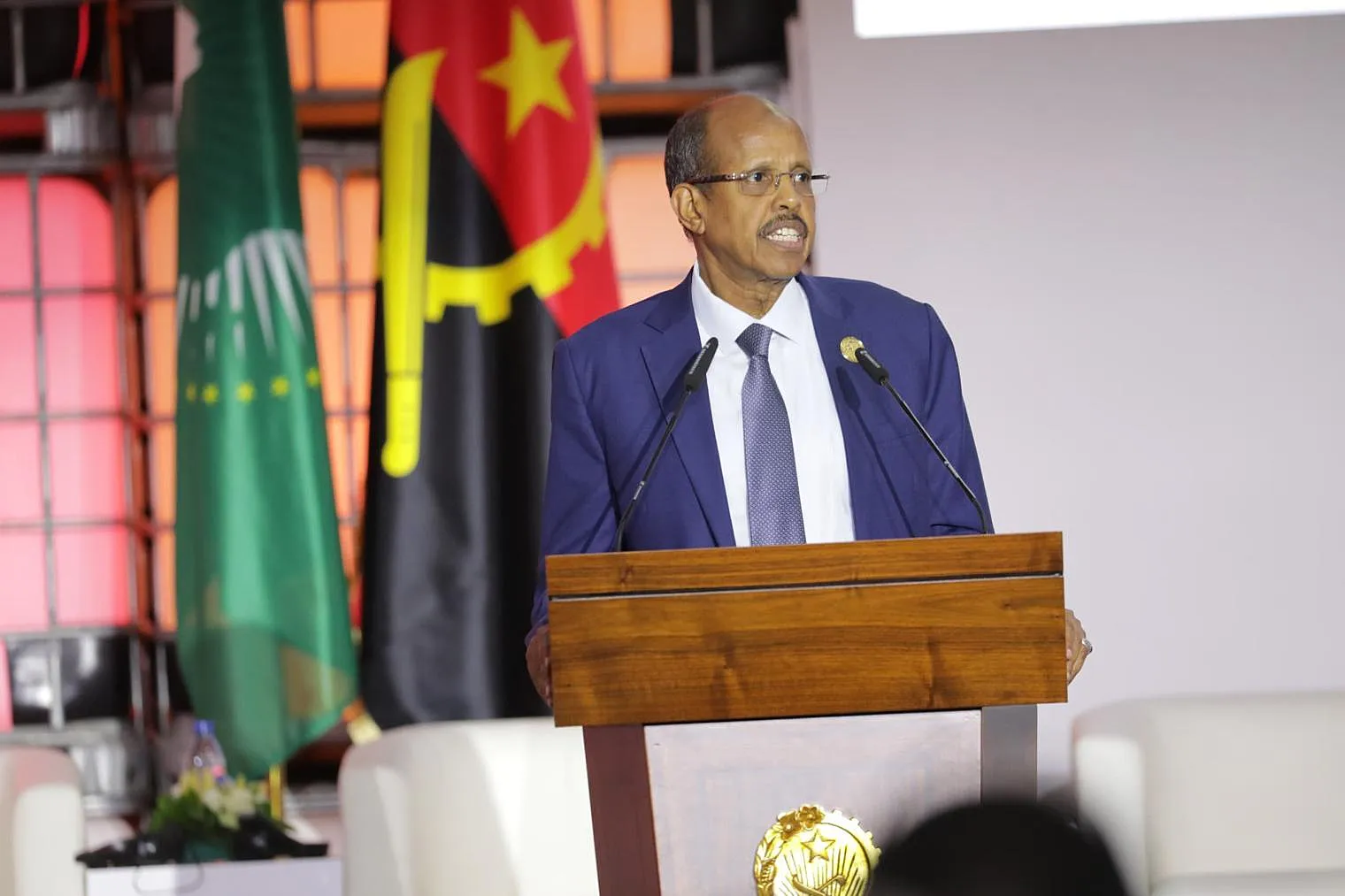
The Africa Financial Summit opened in Luanda with a focus on turning domestic savings and stronger financial institutions into productive investment.
An African Development Bank proposal puts coordination and risk sharing at the centre of the response.
What matters after Luanda is whether those ideas produce finance that firms and infrastructure projects can use.
Luanda Puts Investment Ahead of Expansion
Africa’s financial leaders opened a two-day summit in Luanda on 3 November with a question for bankers, regulators and investors.
- How can stronger balance sheets help businesses expand and create jobs in markets where affordable long-term finance remains hard to obtain?
The Africa Financial Summit, hosted by Angola and co-hosted by Jeune Afrique Media Group and IFC, put private capital mobilisation and financial integration at the centre of its opening day.
- The programme brought together public officials and leaders from banks, insurers, development institutions and capital markets.
The African Development Bank Group estimates the continent’s structural development financing gap at more than US$400 billion a year.
- It also estimates that domestic capital pools exceed $4 trillion in aggregate.
Moving some of those resources into productive investments requires credible projects, investors willing and permitted to take on the risks, and ways to match financing with the timing of revenues.
Africa’s Financing Gap Meets Domestic Capital
The AfDB’s estimate of domestic capital includes banking assets, pensions, insurance, central bank reserves and other pools with distinct mandates.
- Pensions must meet benefit payments, banks need liquidity for depositors, and central banks hold reserves for monetary and external stability.
- Combining them into one figure shows the scale of the financial system.
- The amount any investor can commit depends on its own obligations.
This helps explain why a viable project can remain unfunded.
- A logistics hub may need years to build traffic.
- Investors need a credible demand forecast, clear land rights and confidence that counterparties will honour contracts.
- A savings institution considering the project also has to know whether it can sell its exposure or hold it until maturity.
These constraints compound when a project spans borders.
- A road, power line or payments network can create value in several economies, while licences, collateral and disputes must still be handled under national rules.
- The cost of coordinating those arrangements can affect whether a deal is worth pursuing.
Financing small businesses also raises questions of distribution.
- A large institution can raise funds and manage a portfolio.
- Local lenders may be better placed to verify an individual supplier's orders or assess a food processor’s seasonal cash flows.
- Partnership can make those capabilities complementary, provided the institutions agree who makes credit decisions, who keeps the records and who remains accountable when a borrower falls behind.
These choices determine whether a large facility reaches productive firms or stops at the intermediary that receives it.
What Opening Day Put on Record
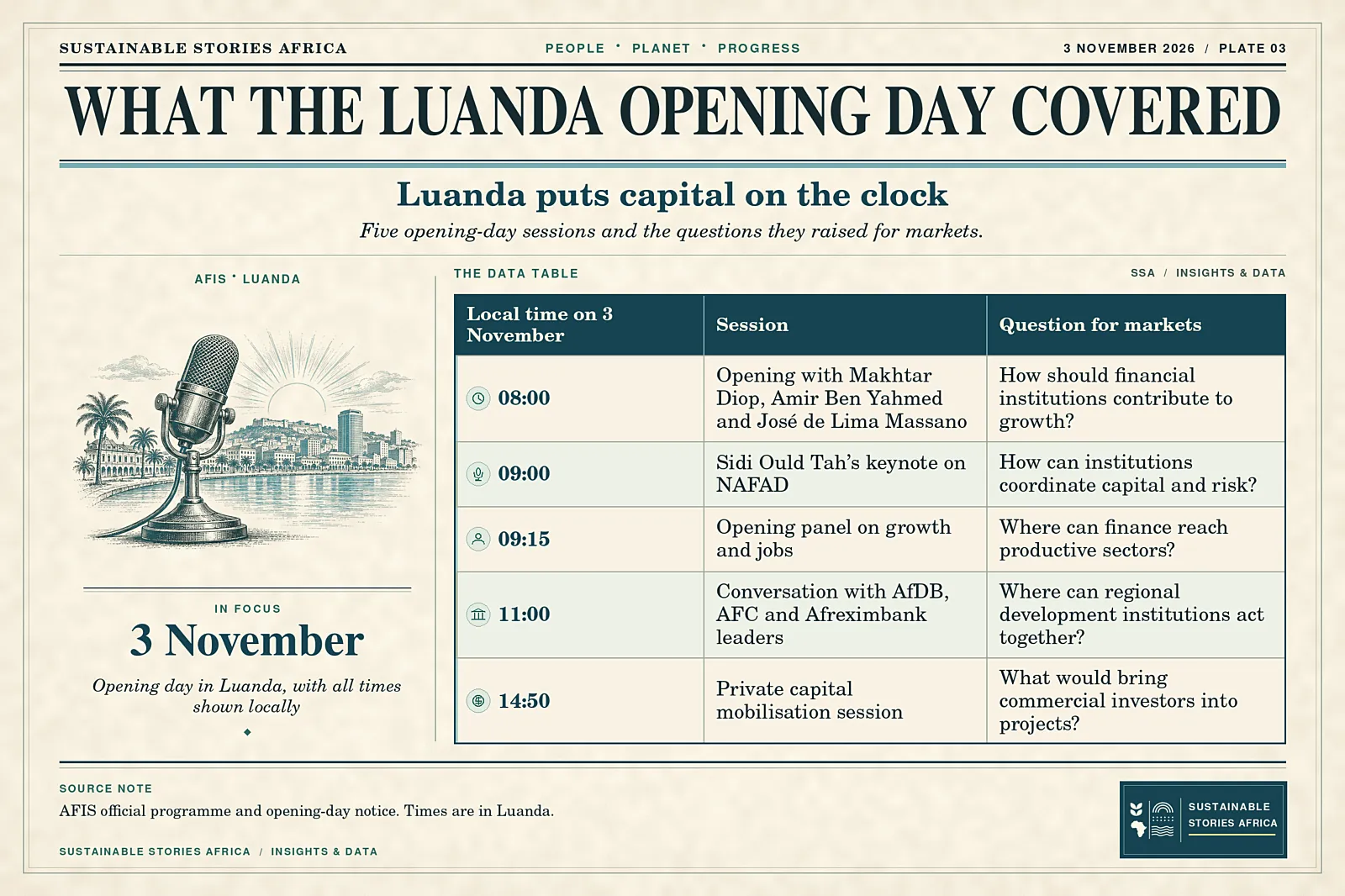
IFC Managing Director Makhtar Diop used the opening to argue that Africa already has capital, entrepreneurs and talent, according to same-day reporting by Financial Afrik.
- He emphasised connecting those assets through financial institutions.
- Summit founder Amir Ben Yahmed likewise called for financial strength to translate more directly into economic growth.
AfDB President Sidi Ould Tah presented the New African Financial Architecture for Development, or NAFAD, as a coordination effort linking national, regional and continental institutions.
- Reporting from Luanda identified guarantees, risk sharing and local-currency finance among the mechanisms discussed.
- The AfDB says the African Union endorsed NAFAD in February and the Abidjan Consensus adopted it in April.
- The summit put the initiative before the institutions that could help put it into practice.
The opening programme featured a panel on finance for growth and jobs, a discussion with leaders of African development finance institutions and a session on attracting commercial investors.
- Financial Afrik reported that in the preliminary AFIS–Deloitte barometer, 69% of respondents thought implementation of the African Continental Free Trade Area was too slow and only 11% of surveyed institutions reported a connection to the Pan-African Payment and Settlement System.
These results describe the respondents.
- They point to practical questions about which institutions can settle cross-border payments and on what terms.
The AfDB describes NAFAD as a way to organise existing capital and risk more effectively.
That divides responsibilities, which is important.
- A finance ministry can prepare projects and make public obligations visible.
- A development bank can structure guarantees and bring lenders together.
- Private investors can price the risk they retain.
A transaction can still stall if two public institutions assume the other will pay for project preparation, or if a guarantee cannot be drawn under the conditions most likely to cause a loss.
Why Project Size Matters to Investors
Ecobank Group Chief Executive Jeremy Awori pointed to the challenge of presenting individual African infrastructure projects to large international investors.
- In remarks shared by AFIS, he used an airport in a single country to illustrate how small transactions can fall below investors’ preferred size.
Pooling can help if the underlying investments are comparable.
- A bundle of independently assessed projects can spread exposure across borrowers or locations and produce an instrument large enough to justify due diligence.
- Investors still need to know who services the assets, how losses are shared and which risks could affect the whole portfolio at once.
The same logic applies to smaller loans for manufacturers, food processors and suppliers.
- A bank can keep originating and servicing loans while sharing some exposure with other investors.
- When the bank retains a meaningful stake, it has an incentive to maintain loan quality.
- The structure can then expand credit while making the risks visible for purchase.
Regional integration can enlarge the set of investors a project can approach.
- A lender in two countries still needs to manage currencies and comply with each jurisdiction’s rules.
- Common disclosure standards and clear contract enforcement procedures can reduce the cost of assessing those exposures.
- In markets with limited trading, an investor may need to hold a loan to maturity.
That makes portfolio transparency and a reliable way to value the position particularly important for funds accountable to savers.
What Governments and Financiers Can Publish
Governments can identify projects with credible revenue assumptions and publish the permits, land and procurement decisions still needed.
- Clear preparation makes it easier to identify why a deal has stalled and which institution can move it forward.
- Where an investment depends on a public payment, the budget should show the obligation and how it changes if demand falls short.
Development finance institutions can set out the risks a guarantee covers and the losses they could bear.
- They should also distinguish private funds committed at signing from money actually disbursed.
- Pension and insurance regulators can clarify which instruments qualify, how assets are valued and how investors will manage liquidity under stress.
The public has a stake in how this money is used.
- For a logistics project, freight costs and journey times measure value.
- For industrial finance, business investment, supplier purchases and sustained employment offer a picture beyond the announcement of a facility.
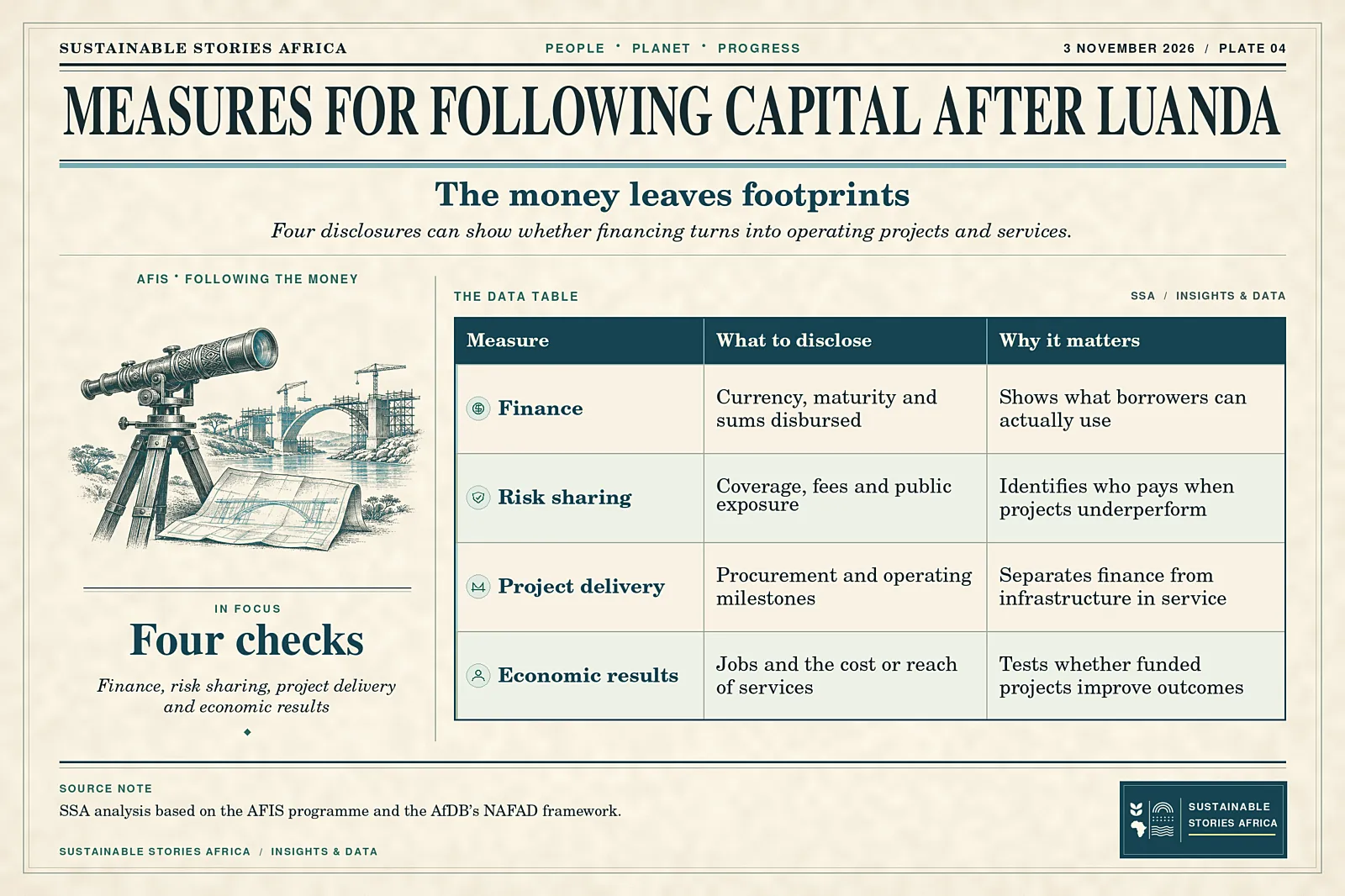
Path Forward – What Will Count After the Summit
The clearest follow-up to Luanda would be a pipeline naming project owner, remaining approvals and the investors and guarantors prepared to take each risk.
Disclosure at signing and during operation would show whether the summit helped move finance into businesses and public services, and whether the benefits justify any public support.