An IFC conversation with British International Investment shows how domestic savings can reach businesses that earn in local currency and need room to grow.
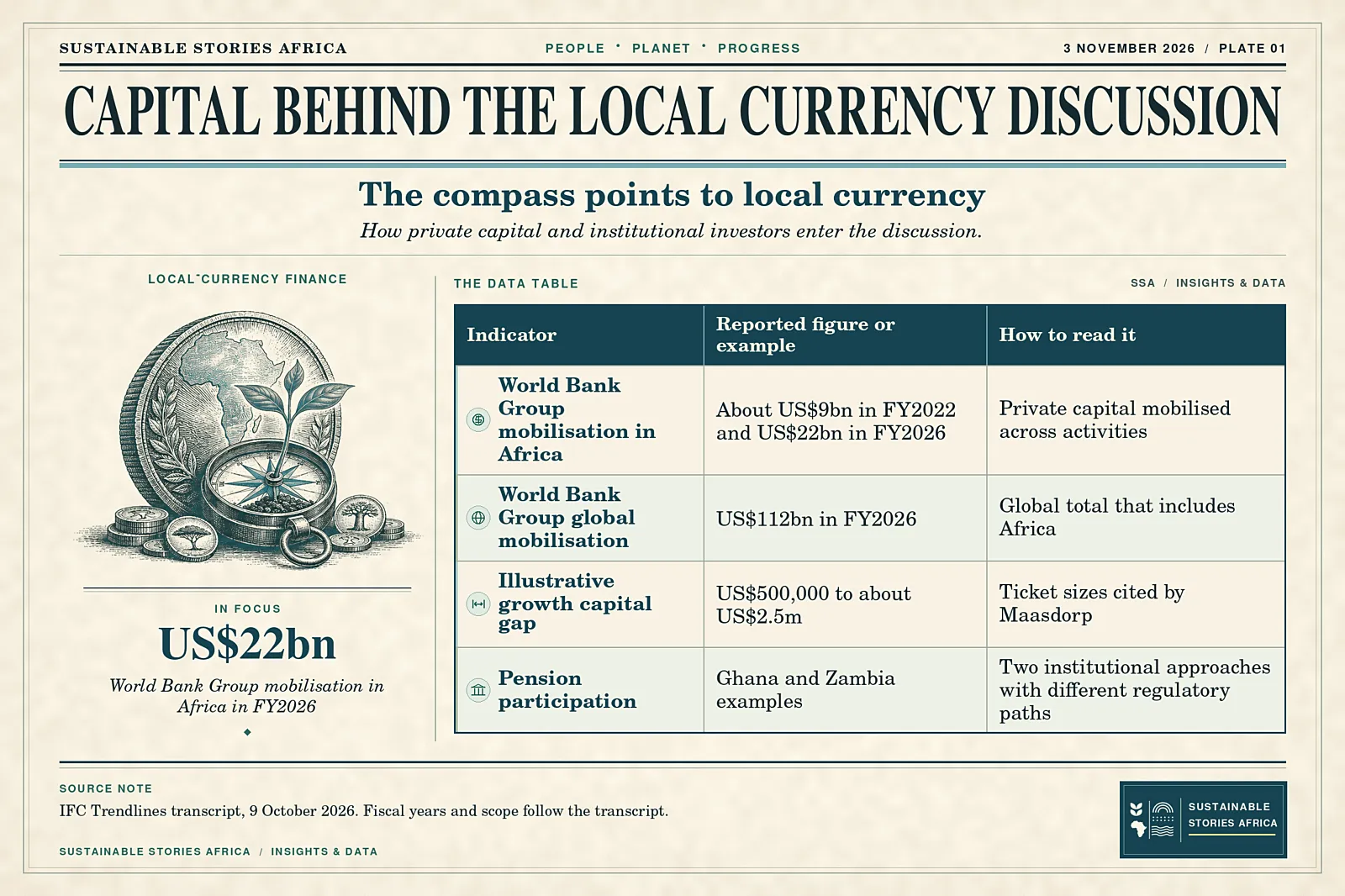
Ghana and Zambia offer early examples of financing vehicles that bring pension capital into the market.
Their wider promise depends on managing risk and proving that the model can work repeatedly.
When Borrowing Currency Shapes Business Growth
A food processor earning cedis can sell more goods and still struggle to service a dollar loan.
- If the cedi weakens, the borrower needs more local revenue to make the same dollar payment.
- That exchange rate exposure can overwhelm the gains from a stronger business.
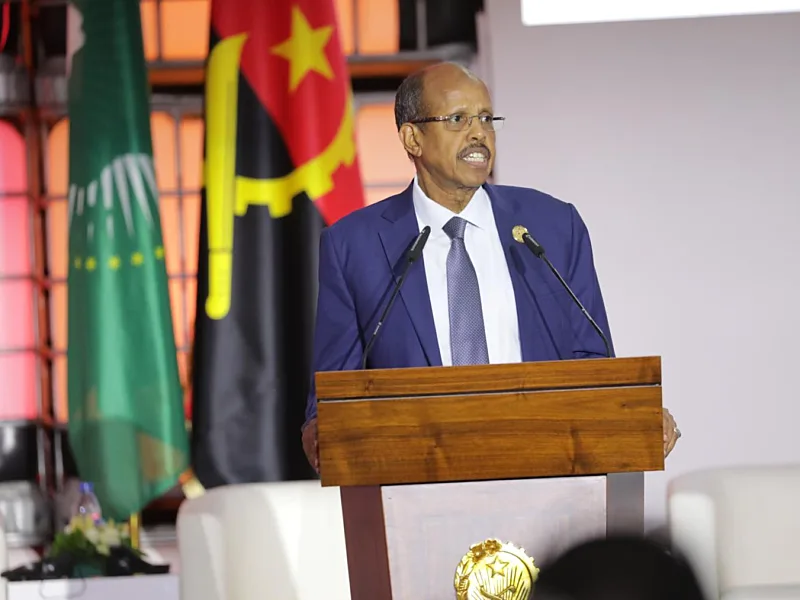
In an IFC Trendlines episode released on 9 October, IFC Africa Vice President Ethiopis Tafara and British International Investment Chief Executive Leslie Maasdorp discussed why stronger domestic capital markets matter to firms in that position.
- Maasdorp described investment platforms in Ghana and Zambia designed to bring longer-term, flexible finance to smaller businesses, with local institutions participating alongside development investors.
Tafara said World Bank Group private capital mobilisation in Africa rose from roughly $9 billion in fiscal 2022 to $22 billion in fiscal 2026.
- The shift shows what development institutions can bring into transactions.
The next challenge is whether African markets can supply more of the funding businesses need in currencies they earn.
The Growth Capital Many Firms Miss
Maasdorp placed the financing gap he was describing at roughly $500,000 to $2.5 million.
- The dollar figures describe the size of the need.
- The currency of the underlying loan is a separate decision.
- These amounts can finance a new production line, warehouses or a network of outlets.
A business pursuing that kind of expansion may have too few assets to pledge for a conventional bank loan and too short a track record to issue securities.
Loan length matters as much as currency.
- A firm investing in equipment needs time to install it, build sales and collect payment.
- A short facility that has to be renewed before those sales arrive can turn a sound investment into a scramble for cash.
- The firms that need flexible repayment the most may also have the least developed accounts, which makes them costly for lenders to assess.
Even banks that know these businesses may be funded by short-term deposits.
- Extending a long loan ties up funding and creates a risk that the bank must refinance itself before the borrower repays.
- A pension fund has a different profile.
Some of its commitments extend over decades, although it still needs liquidity to meet nearer-term payments.
- A specialist fund can connect part of that longer-term money to business loans of an appropriate maturity.
- Its design needs to reflect the pension’s cash needs as carefully as the borrower’s.
What Ghana and Zambia Are Testing
In Ghana, BII helped establish Growth Investment Partners, a specialist vehicle.
- Maasdorp said Norfund and a Ghanaian pension fund joined the effort.
- The model combines flexible local-currency finance with support for functions such as financial management.
- Better records can help a company understand its costs, plan repayments and eventually qualify for funding from another lender.
In Zambia, Maasdorp described working with the National Pension Scheme Authority, or NAPSA.
- He said a regulatory change was needed to allow the pension institution to invest in a vehicle of this kind.
- That experience points to a difference between the presence of domestic savings and permission to deploy them.
- Trustees must be able to explain how the investment fits their mandate, including its liquidity, concentration and expected return.
The two examples illustrate the division of labour Maasdorp proposed.
- Development investors can help originate and structure deals and take carefully defined risks.
- Local institutions bring knowledge of the market and pools of savings that can outlast a project cycle.
- Reliable disclosure, comparable loan data and credible servicing let each participant judge the risks it is being asked to carry.
Maasdorp pointed to the Global Emerging Markets Risk Database, which pools lending data from development institutions.
- In October, the consortium published new data that added detail on returns alongside defaults and recoveries.
- That can improve comparisons, particularly where investors have little information beyond sovereign ratings or headline country risk.
The data reflect loans originated by the participating institutions, whose underwriting and protections may differ from those available to other lenders.
- A portfolio of small firms still needs its own payment history before trustees can decide what returns compensate for its particular risks.
How Currency Matching Changes Business Decisions
Take a distributor buying imported refrigerators and selling them locally.
- A cedi loan can align instalments with most customer receipts, while the cost of replacing the stock still depends partly on the exchange rate.
- An exporter with reliable dollar receipts might make a different financing choice.
- Lenders need to look through the invoice currency to the economics of the business, including what happens when costs and revenues reprice at different speeds.
Financing that reflects those cash flows can give businesses time to fulfil orders, train staff and use equipment at economic capacity.
- Smaller local suppliers can also benefit if expanding firms pay them reliably.
The test is whether borrowers grow after meeting their financing costs and whether they can obtain a follow-on loan on terms the market will sustain.
- A guarantee can help a lender enter a market it understands poorly.
- As payment histories accumulate, a pooled record of losses and recoveries can show whether the original price of risk was justified.
That evidence can support better terms for subsequent borrowers and give a development financier room to redeploy its capital.
Local borrowing can carry a high nominal interest rate when inflation is elevated, and a variable rate can put pressure on a firm even when its sales and borrowing are in the same currency.
- A fixed-rate facility offers more certainty to a borrower, while the lender has to manage the risk that its own costs rise.
- Comparing offers on total cost, the repayment schedule and their response to a revenue shock gives a more complete picture than comparing the advertised interest rate alone.
The Rules That Make Deals Repeatable
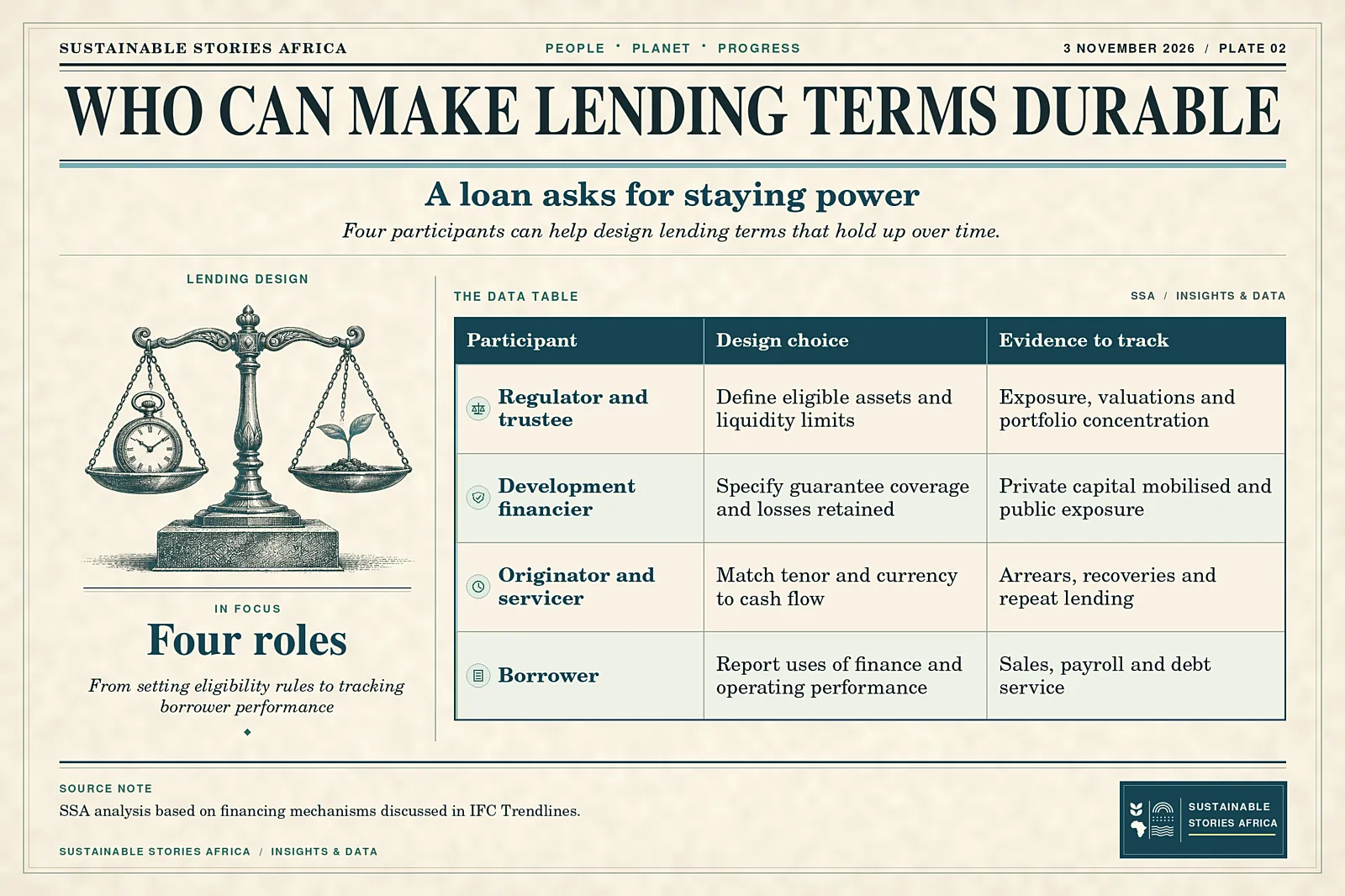
Regulators can define when pensions may hold private credit, how funds value illiquid positions and what concentration limits apply.
Trustees can compare fees, expected losses and the timing of returns with their obligations to savers.
Development financiers can explain what they guarantee, which party absorbs the first losses and what would trigger a claim.
Borrowers can be assessed on management accounts, tax and payment records, customer concentration and the ability to withstand lower sales or higher rates.
- A lender can track approval times and the share of applicants who receive offers in the same currency as their revenue.
- Monitoring should continue after signing.
- Days past due, restructurings and recoveries show whether underwriting works across an entire portfolio.
Several small loans can eventually be pooled into an instrument large enough for institutional investors.
- That requires contracts investors can compare, servicing that continues if an originator fails and reporting that distinguishes a late payment from a loss.
- Starting with that infrastructure makes a first transaction easier to repeat.
Path Forward – How Local Markets Can Build Momentum
Ghana and Zambia offer examples worth following through the repayment cycle.
Publishing portfolio performance would let other markets judge which risk-sharing tools helped attract pension investors and which borrowers gained access.
Regulators and investors should keep the goal in view.
A business that earns locally should be able to compare credible long-term financing offers in that currency, with terms it can understand and meet.