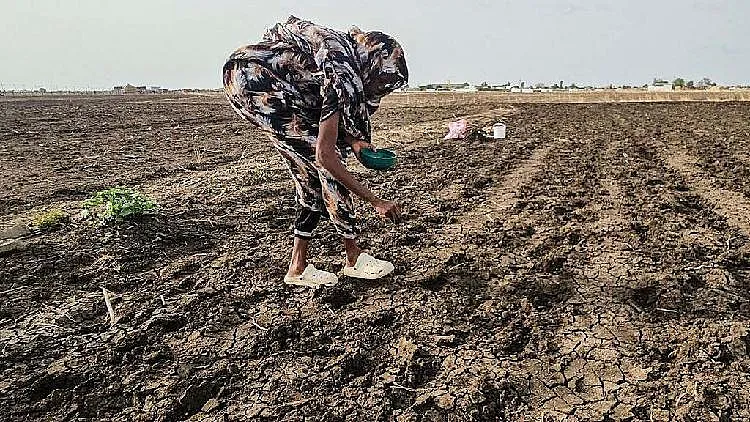
FAO and WFP’s joint appeal seeks $202 million to help 8.8 million people act ahead of El Niño impacts across 22 priority countries.
In Africa, seasonal risks include drought across much of the south and floods in parts of the east. The value of early funding depends on when and where it can be used.
The Weather Warning Has a Deadline
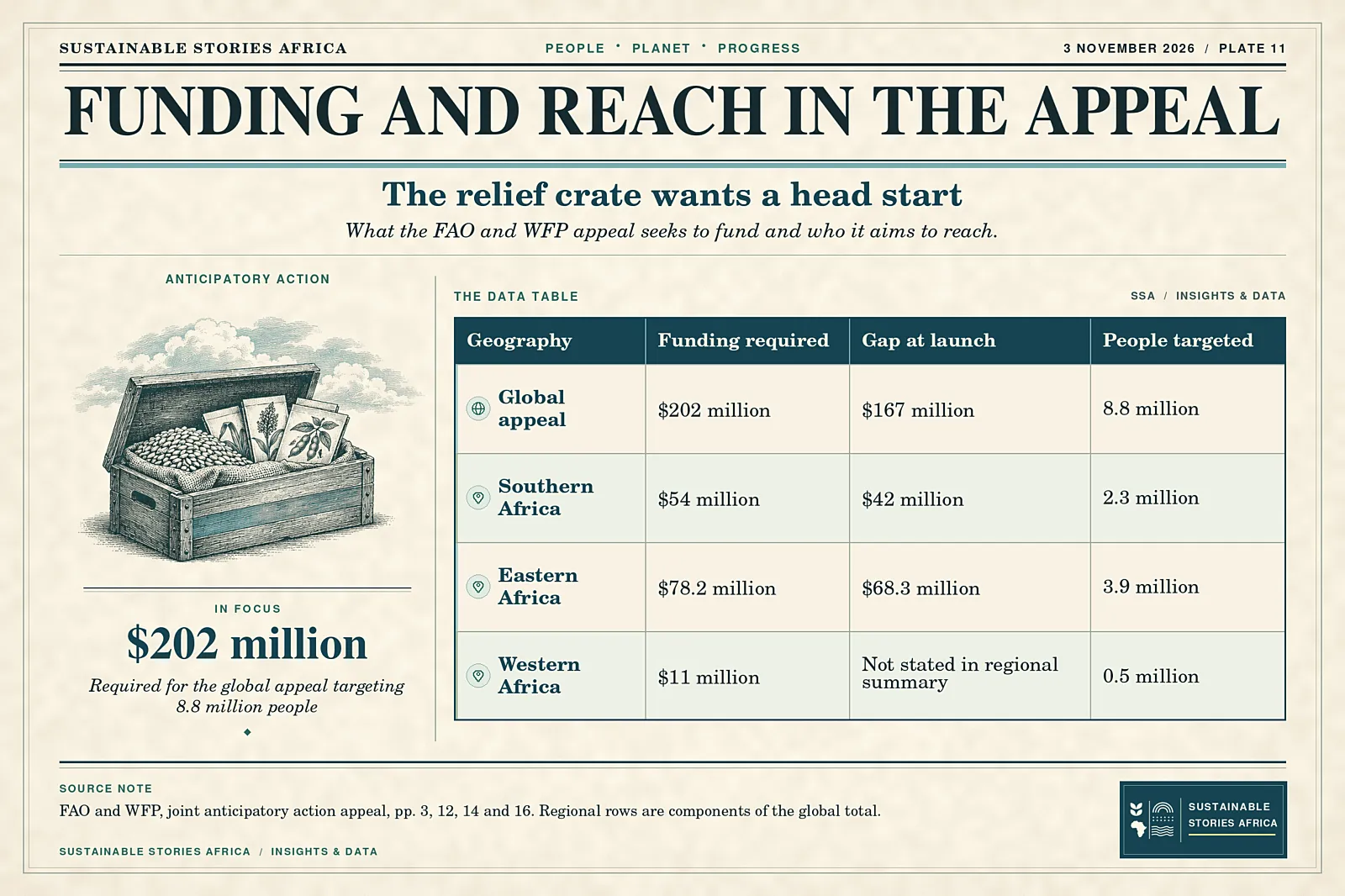
The Food and Agriculture Organisation and World Food Programme are seeking US$202 million for early action against El Niño impacts between June 2026 and March 2027.
- Their joint appeal identifies 22 priority countries, including 12 in Africa.
- It starts from the premise that cash, seed and other support can protect food and livelihoods if they reach people before the most damaging period.
At launch, the agencies said they could support 1.2 million people immediately and needed another US$167 million to reach 7.6 million more.
- The appeal records that funding gap at launch. Its figures are a basis for judging the scale of the response, while funding and delivery can change as the season progresses.
The World Meteorological Organisation’s 21 October update forecasts further intensification of El Niño for November through January, with Pacific warming expected to peak around December.
- That signal raises the stakes for planning.
- Where rainfall hazards emerge, their effects will depend on local conditions, vulnerability and the agricultural calendar.
Why One Forecast Requires Different Responses
The same Pacific climate pattern can alter rainfall differently across Africa.
- FAO and WFP flag a high risk of below-average rainfall for the Southern African agricultural season.
- In parts of Eastern Africa, including parts of the Horn, they flag flooding and storms during relevant rainy periods.
- Other areas of Eastern Africa face dry conditions at different times of year.
A positive Indian Ocean Dipole, if it develops alongside El Niño, can further alter these risks.
- The appeal considers compounding conditions, including heightened flood risk in parts of the Horn and greater drought stress in parts of Southern Africa.
- National and local forecasts are required to locate the risk and make planning decisions.
The consequences extend beyond crops.
- Dry spells can reduce water and pasture for livestock and force households to spend more on feed.
- Floods can wash out feeder roads or cut communities off from markets and clinics.
- A useful response anticipates how weather would disrupt daily life in each place.
The appeal’s Eastern Africa assessment illustrates why a single response would miss important differences.
- It links El Niño to below-average rainfall during the main June to September rainy season in parts of western and northern Ethiopia and in Sudan.
- In parts of Somalia, Kenya and eastern Ethiopia, it instead identifies a heightened risk of heavy rain and flooding in the October to December season.
- Even downstream areas with poor local rains can experience flooding if upstream rainfall raises river levels.
Preparedness therefore needs river and catchment information alongside a district rainfall forecast.
How the Appeal Targets Early Support
The appeal prioritises Cameroon, Ethiopia, Kenya, Madagascar, Malawi, Mozambique, Nigeria, Somalia, South Sudan, Sudan, Uganda and Zimbabwe in Africa.
- Agencies considered previous El Niño patterns, seasonal forecasts, agricultural calendars, existing food insecurity and their ability to act in time.
- Inclusion identifies preparedness priorities and funding.
Local triggers determine when assistance is deployed.
- The Southern Africa component seeks $54 million to assist 2.3 million people.
- Eastern Africa’s component seeks $78.2 million to assist 3.9 million.
These geographic components sit within a global appeal that also covers countries in Asia and the Pacific and in Latin America and the Caribbean.
The operating calendar matters more than the date a contribution is announced.
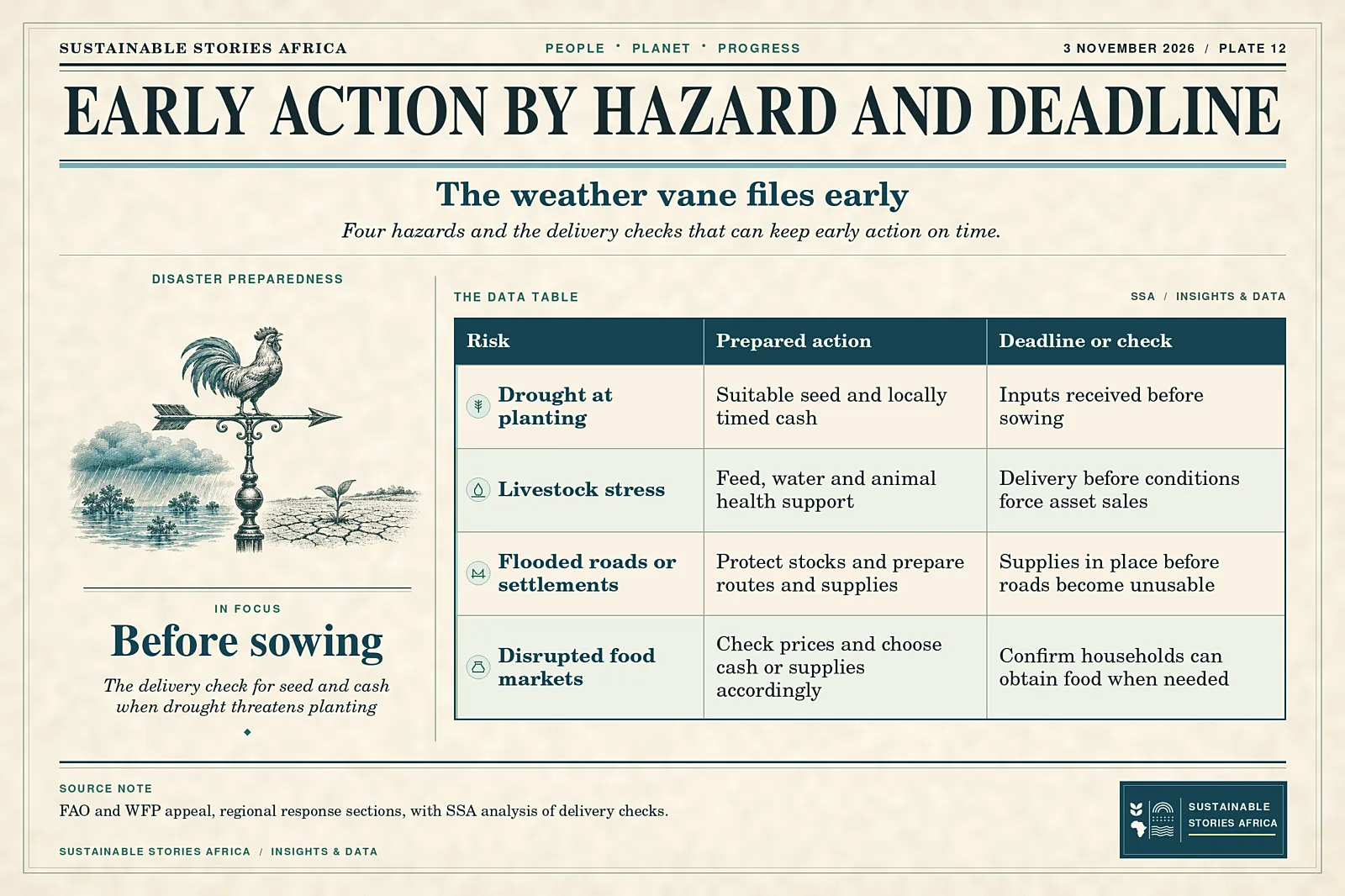
- An input must reach farmers early enough to use it.
- Cash transfers need reliable payment systems and functioning markets.
- Where flooding could isolate settlements, supplies and distribution plans may need to be in place before travel becomes difficult.
The agencies’ experience during the 2023 – 24 El Niño gives a sense of the timing involved.
- They report supporting more than three million people before peak impacts.
- The new appeal seeks to expand that approach through systems that can release funds before a disaster declaration.
- Speed still depends on mundane details such as whether a supplier has stock, whether roads can take delivery vehicles and whether local staff know which households to reach.
Readiness work can resolve those questions before a forecast meets the activation threshold.
What Households Can Protect Before Impact
In drought-facing districts;
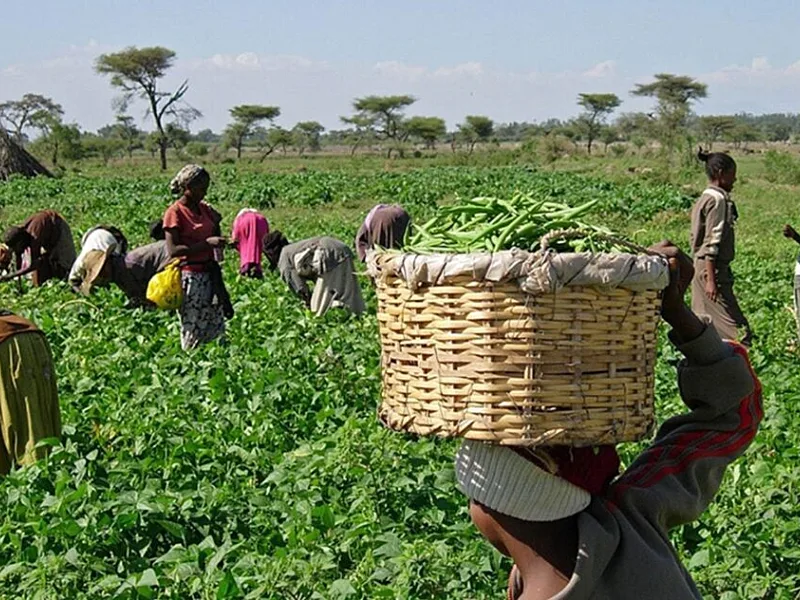
- Farmers may be able to plant a suitable short-cycle or drought-tolerant variety if they receive it before sowing.
- Livestock keepers can use feed, water or veterinary support to protect animals while pasture is under stress.
Acting early can help households avoid selling productive assets to buy food.
Where flooding is the greater risk;
- Communities can protect stored grain, reinforce small barriers or plan evacuation and supply routes.
- Cash can help households buy what they need when local markets remain accessible.
If roads are lost or prices spike;
- Cash may have to be combined with pre-positioned supplies or another form of assistance.
FAO and WFP cite evidence that $1 spent on anticipatory action can avoid up to $7 in humanitarian losses.
- Potential savings depend on the intervention, the trigger and the time available.
- A local programme should judge results by what it preserved, including harvests, livestock or access to markets, rather than assuming the maximum return will recur.
Coordination matters when several agencies work in the same district.
- Joint decisions about eligibility and where each team can deliver can prevent two agencies from contacting the same households while another community remains unserved.
- Local groups can identify people who have moved or cannot use the usual distribution point.
They can also explain early warnings in terms that connect to choices people face.
- A forecast is valuable when residents know when to move livestock, protect stored food, collect supplies and travel safely.
How Donors Can Fund Timely Action
Donors can provide flexible funds that release when agreed forecast and vulnerability thresholds are reached.
Governments and agencies can decide in advance who verifies the signal, who releases funds and how delivery is recorded.
- A forecast with credible uncertainty still has value if the protocol matches the cost of acting early to the likely cost of delay.
Agriculture services should align input choices and delivery dates with farmers’ calendars.
Disaster agencies and local authorities can review routes and contact arrangements in flood risk areas.
Payment teams should identify households that could struggle to receive cash because of poor connectivity, a lack of identification or limited access to payment agents.
After activation, authorities can publish the interval between the trigger and delivery and check whether support arrived before the local deadline.
When a predicted shock fails to occur, the same reporting should show how decisions were made and what can be improved before the next season.
Path Forward – What to Check Before Seasons Turn
Review funding and readiness against district forecasts and planting or lean-season deadlines.
National authorities should confirm who can authorise release and who can deliver in areas likely to become isolated.
The strongest evidence of progress is support arriving while families still have choices about planting, buying food or protecting their livestock.