
Antoinette Kwofie recalls strong results and a two-level downgrade in the same year-end appraisal.
She later became MTN Ghana’s chief financial officer.
Her account raises a question for employers and executives.
How can companies assess how leaders work with others while keeping vague judgments and inconsistent standards out of promotion decisions?
A Strong Year Ends With Tears
Antoinette Kwofie remembers crying in her office after a year-end review.
- In her account, managers praised what she had delivered and still lowered her rating by two levels because of concerns about her behaviour.
- It was a shock to someone who had built her career around working hard and delivering results.
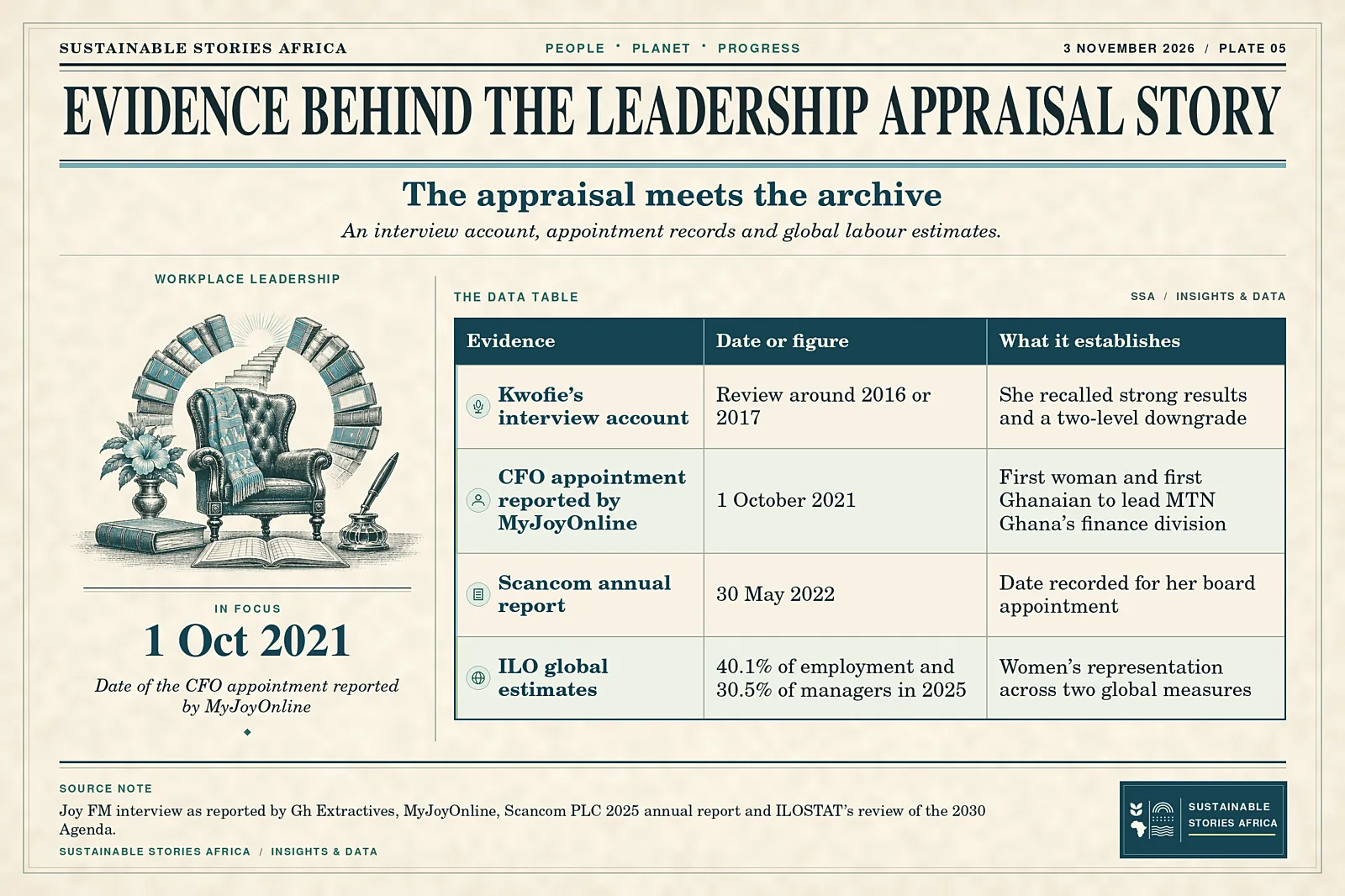
Kwofie recalled the episode on Joy FM’s Personality Profile with Lexis Bill, in an interview reported in June 2025.
- Karen Punch subsequently revisited the story on LinkedIn. Kwofie took up the role on 1 October 2021, becoming the first woman and the first Ghanaian to lead MTN Ghana’s finance division, according to MyJoyOnline’s reporting of the appointment.
- Scancom’s 2025 annual report records her board appointment in May 2022.
The story carries weight beyond one career.
- Executives can meet a financial target while leaving colleagues reluctant to bring them bad news.
- Companies can also penalise employees based on subjective impressions.
A performance system must recognise the first problem and guard against the second.
The Weight of Two Rating Levels
Kwofie recalled the episode as occurring around 2016 or 2017, when she reported both to a country managing director and to a group chief financial officer.
These reporting lines would have put her work in front of managers with different responsibilities.
- A group finance leader might focus on reporting quality and controls.
- A country leader might have a closer view of how decisions were communicated and implemented.
Clear criteria are important when a review combines those perspectives.
Kwofie described herself as direct and said that, in the heat of a discussion, her approach could be unfiltered.
- The distinction between directness and how it is received is important in finance.
- An executive must be able to challenge a weak forecast or interrupt a risky transaction.
The way it is done can influence whether colleagues bring the next issue forward early enough to act on it.
- A downgrade of two levels may affect pay, promotion or access to important assignments, depending on the employer’s system.
- These consequences make timing important.
If a concern comes at the year-end meeting, an employee has little chance to change course before the rating is recorded.
- Regular feedback gives managers more than one observation and gives employees a chance to show how they responded.
- Where an issue is serious enough to warrant an immediate intervention, it can be addressed when it occurs and documented while the facts are still clear.
What Evidence Allows Employers to Ask
Kwofie’s account gives readers her recollection of the review and the meaning she drew from it.
- The employer’s review records are private.
- Her case raises useful questions about how assessments work without offering a basis for deciding how other employees were treated.
Research offers evidence on one of these questions.
- A study led by Stanford sociologist Shelley Correll found that taking charge was linked to top ratings for men but not to the same relationship for women in the performance reviews studied.
That finding concerns the organisations and reviews examined.
- The practical implication is that employers should check whether it values comparable conduct consistently across employees.
The International Labour Organisation reported that women made up 40.1% of global employment in 2025 and held 30.5% of managerial jobs.
- These global measures describe different populations and cannot diagnose the source of the gap.
- They give employers a reason to examine their own progression data, including whether women receive the assignments that qualify people for senior roles and how those assignments are evaluated.
Finance teams face moments when disagreement is part of the job.
- A controller may have to stop the release of a report while a material figure is checked, even if that frustrates colleagues.
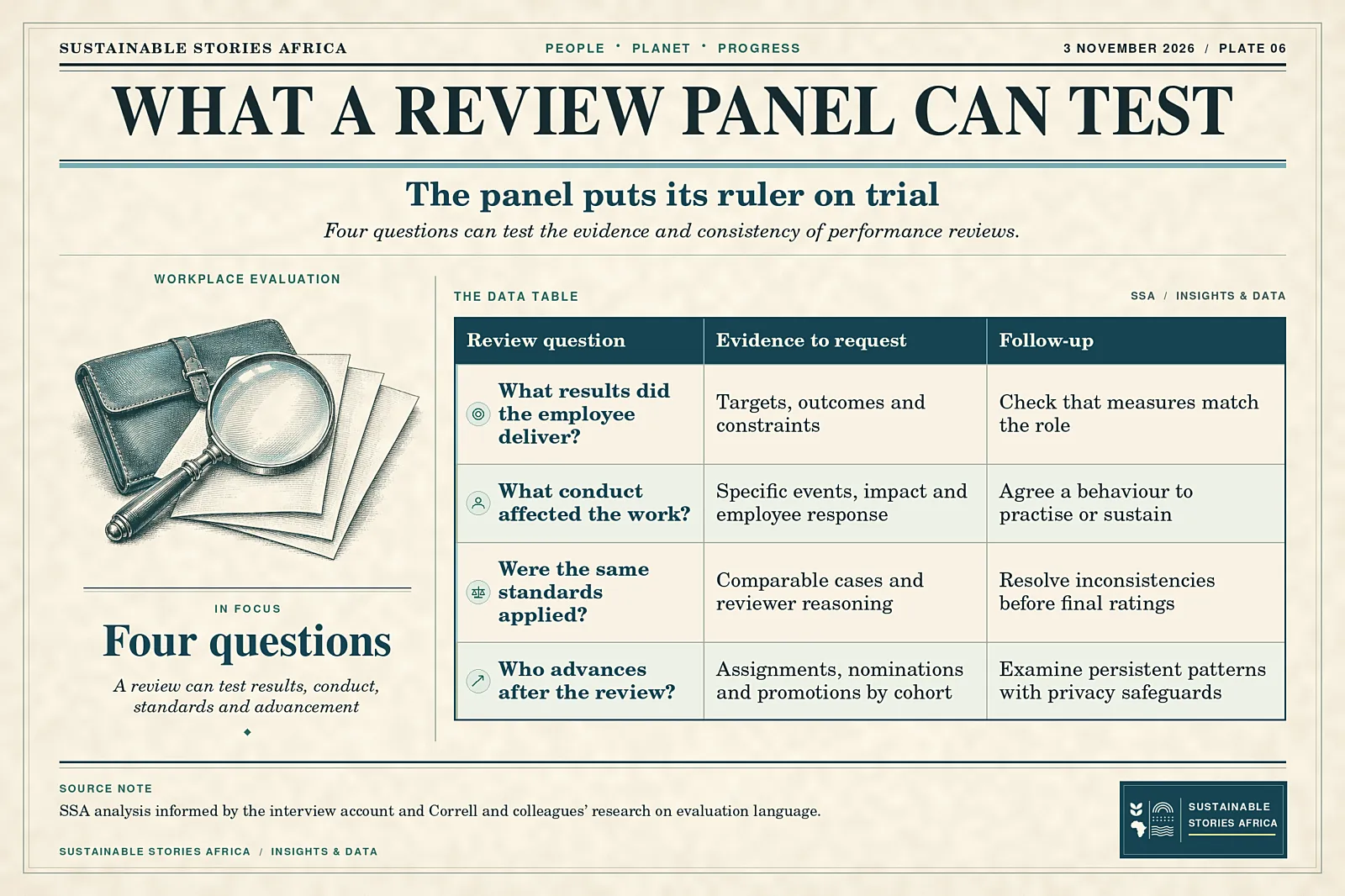
- Assessing that decision requires separating the professional duty to raise the issue from the way the person handled the discussion.
- Reviewers can ask whether the evidence was clear, whether the right people were heard and whether the team knew what would happen next.
You can ask the questions of anyone who makes a comparable decision.
What Specific Feedback Can Make Possible
Evidence-based feedback can preserve the best part of a direct style while improving how difficult decisions are handled.
- For example, a finance lead can flag a control failure in plain terms, identify the exposure, and let the people responsible explain what happened before agreeing a remedy.
- The standard is an accurate account and a workable response. It also gives the reviewer something observable to assess.
Good feedback identifies the situation, what the person did and how it affected a decision or a team.
- A reviewer who recalls an interrupted discussion can say who lost the opportunity to raise a risk and whether that risk came to light later.
- The employee must respond with context, and both sides can agree what to try the next time.
The organisation benefits if people feel able to challenge the numbers and raise problems early.
- That is an issue of governance as well as culture.
- A formal reporting channel is valuable, but the daily experience of speaking up will shape whether colleagues use it when a deadline or a senior manager is involved.
Formal mentoring can help people practise difficult conversations, but the chances to lead also matter.
- An employee may develop judgement by presenting to an audit committee, resolving a cross-functional problem or taking responsibility for a project through a setback.
- If such opportunities go repeatedly to people who already have sponsors, a promotion panel will later see differences in experience that reflect who received the opportunities in the first place
Recording assignments alongside ratings makes that pipeline visible and gives senior leaders a concrete decision they can revisit before the next promotion round.
How Boards Can Check Promotion Decisions
Employers can start by defining two sets of expectations before the review cycle.
- The first covers results such as meeting reporting deadlines and maintaining effective controls.
- The second covers observable conduct, including how leaders resolve disputes and respond when colleagues raise risks.
Discuss both during the year, with examples recorded while the events are fresh.
Review panels can compare language and scores across similar roles.
- A label such as abrasive needs an example and a demonstrated impact.
- Praise for being decisive should face the same test.
- When reviewers differ, a calibration meeting can look at the underlying conduct and the role’s requirements before agreeing a rating.
Human resources teams can examine who is nominated for larger assignments, who is promoted and whether repeated patterns are visible across levels or teams.
- Small samples need careful interpretation, and privacy safeguards should govern reporting.
- Senior leaders can still ask for specific follow-up when employees doing comparable work receive different ratings or chances to advance.
Path Forward – How Better Reviews Build Stronger Leadership
Executives can seek examples early, test a different approach and ask colleagues what changed. Employers can support that work with timely feedback and a consistent standard.
The next review should show how both the leader and the organisation acted.
A reliable record of decisions makes it easier to develop talent and to explain who advances into roles with greater responsibility.