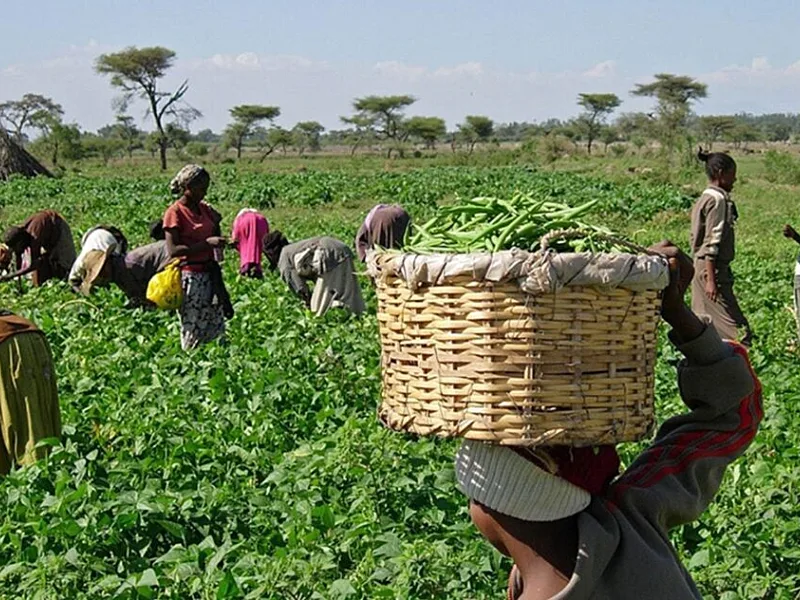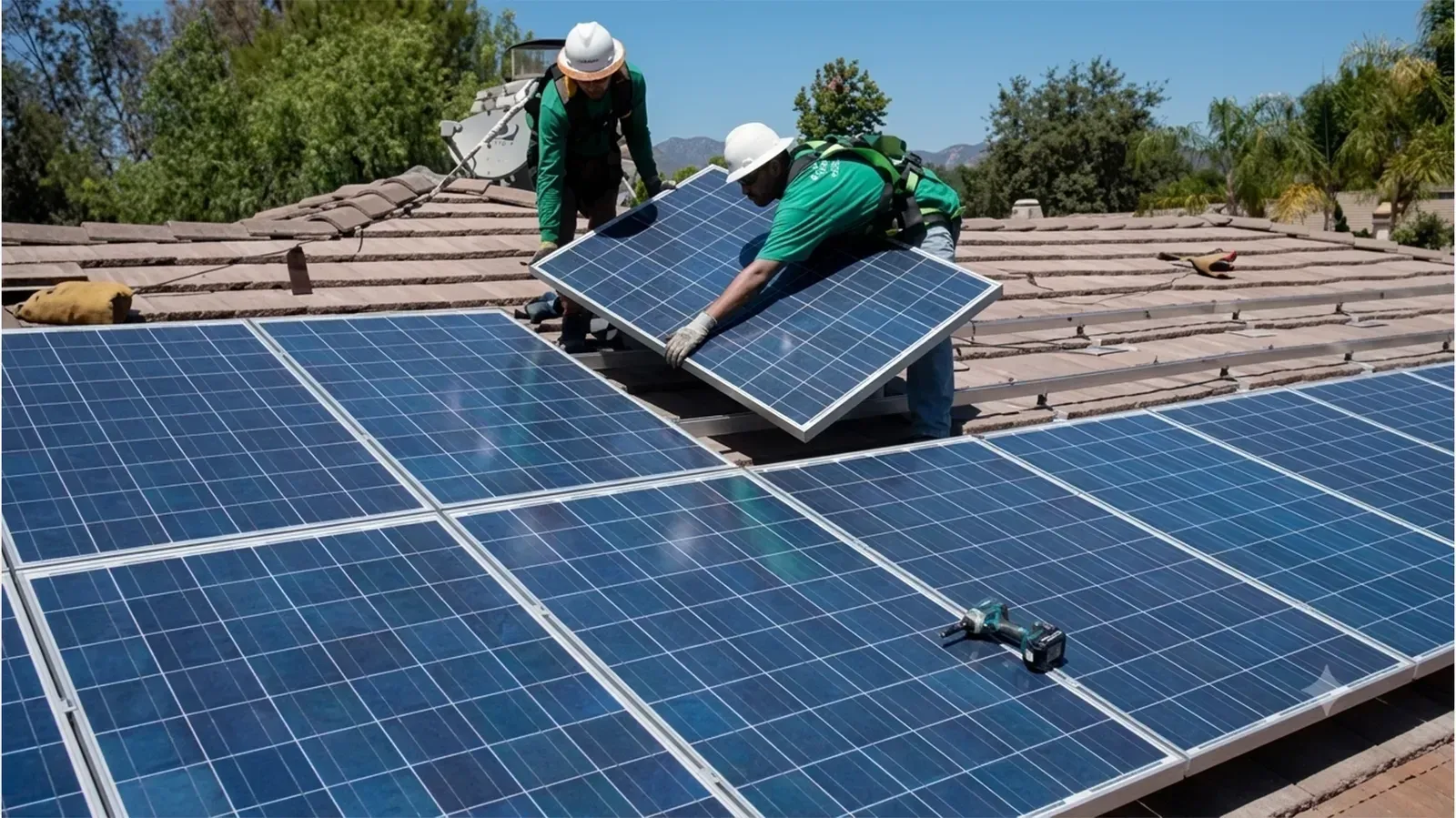
Off-grid solar products sold by companies that report to GOGLA served 149 million people in 2025.
The industry is reaching more households and businesses, while funding is concentrated among a few providers.
A new market assessment puts the cost of reaching those best served by off-grid solar at roughly $11.4 billion over 2027 – 2030.
Standalone Solar Is Reaching More Households
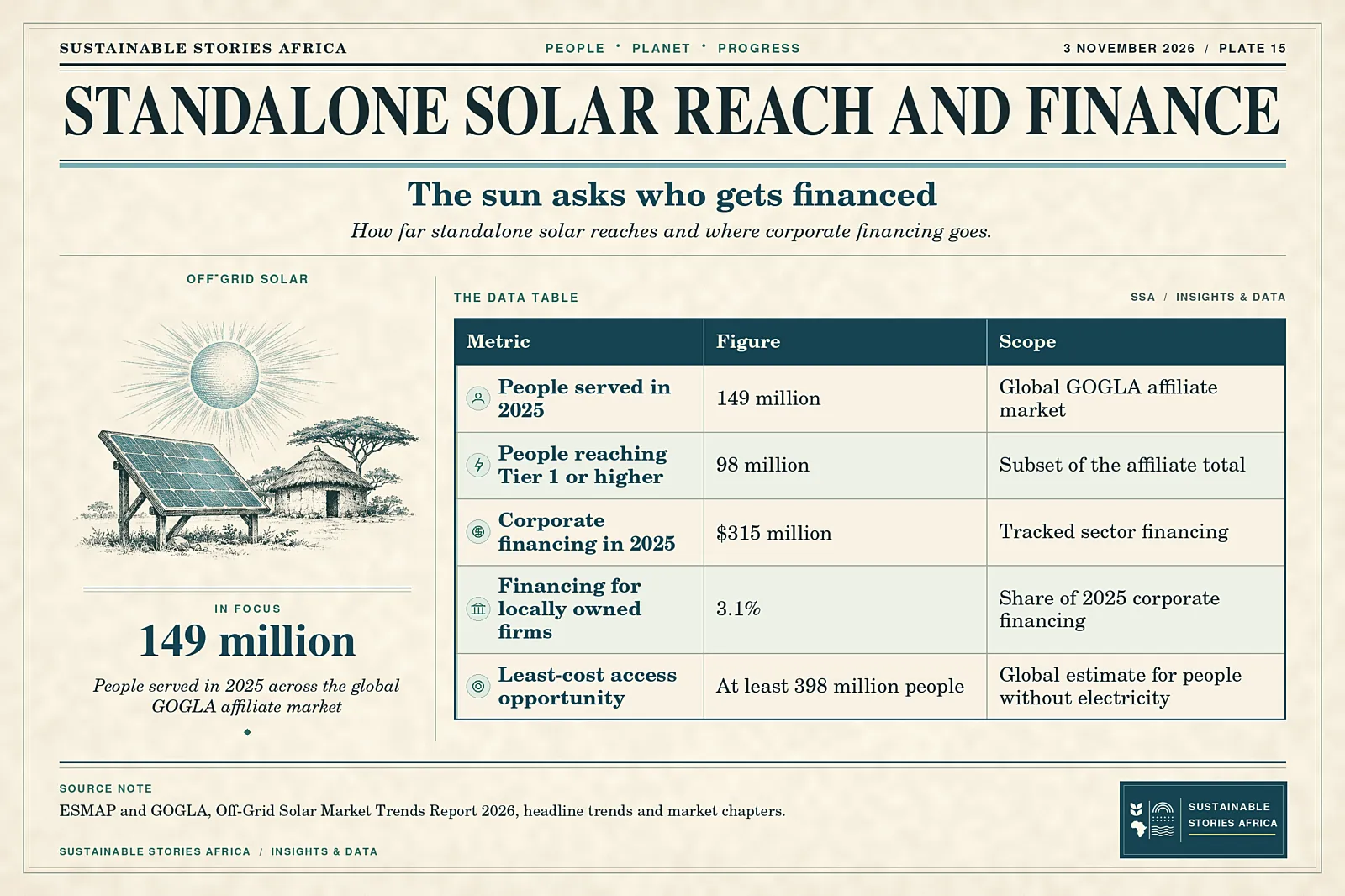
Off-grid solar products from companies tracked by industry association GOGLA served 149 million people in 2025, 26% more than in 2023.
The October 2026 market trends report, jointly issued by the World Bank Group’s Energy Sector Management Assistance Program and GOGLA, estimates that 98 million of those people reached Tier 1 or higher access.
Released in Kigali on 27 October, the report finds that standalone solar is the least-cost electricity option for at least 398 million people worldwide who lack access.
- A home system can bring basic electricity quickly to communities far from a grid.
- Different systems can power a business, a water pump or selected services in a clinic.
Access depends on which customers can afford a system and which providers can serve them.
- In sub-Saharan Africa, Kenya, Nigeria and Zambia accounted for 47% of solar home system sales recorded in 2025 in the affiliate market.
Much of the rest of the market requires finance and distribution suited to places where commercial demand is harder to serve.
A Solar Sale Can Take Years
Pay-as-you-go financing divides the upfront price into instalments
- It makes a system accessible to households that would struggle to pay in full, and requires a provider to carry the unpaid balance over time.
- The provider still needs to buy equipment, pay distributors and maintain a network to collect payments and respond to faults.
The report estimates that about one-third of unelectrified households can afford an entry-level Tier 1 system on such terms while spending up to 5% of their consumption expenditure.
- A further third might afford one by spending between 5% and 10%.
- Household income varies from month to month, and customers near the limit are especially exposed to missed harvests, higher prices or lost work.
Local currency can add another challenge.
- Providers may import equipment while collecting instalments in local money.
- Depreciation can make the next shipment more expensive before they collect the proceeds of the last one.
Financing that recognises this timing can help providers keep systems in stock and maintain predictable terms.
The sales figures also help explain why support needs to vary by product.
- The report finds that affiliate solar home system sales grew rapidly, while lantern and cooling product sales declined and solar pump sales plateaued.
- A pump must match a farm’s water supply, crop plans and ability to service the equipment.
The customer’s financing depends on agricultural income that may arrive only after harvest.
- An instalment plan designed for a lantern, with small regular payments and limited maintenance needs, may be a poor fit for a more expensive productive asset.
What the Market Figures Tell Us
GOGLA’s affiliate figures cover companies that participate in its sales reporting.
- They show the direction of change among those companies.
- Sales by companies outside that reporting group sit outside these figures.
The report estimates corporate financing at $315 million in 2025.
- Three market leaders received around 70% of corporate financing across 2024 – 2025.
- Locally owned companies received only 3.1% of the 2025 total.
- Debt to small and medium-sized companies fell to $79 million in 2024 –2025, from $175 million in the previous two years.
Larger companies’ ability to raise capital will help the industry grow, while smaller distributors may still lack the capital to serve areas where their knowledge is valuable.
The report estimates that reaching all 398 million people for whom standalone solar is the lowest-cost option would require around $11.4 billion over 2027 – 2030.
- It envisages public grants and affordability subsidies alongside equity and debt.
The division matters because some customers cannot cover the full cost even when a provider can raise capital at a reasonable rate.
What Reliable Power Can Make Possible
- A household solar system can extend usable hours for study or work.
- A larger system can support a shop’s refrigeration or a farmer’s irrigation.
- A clinic needs power for specific equipment and must have a fault repaired promptly.
These uses demand different capacities, customer support and financing terms.
Durability depends on what happens after the sale.
- In the report’s survey of customers who had finished paying for quality-verified Tier 1 home systems, 95% said their systems still worked four or more years after purchase.
- Among customers who experienced a technical problem, only 36% considered the repair or replacement satisfactory.
These figures measure different groups and point to the need for accessible repairs.
Programme designers can improve value by tracking how long systems work and what happens when they fail.
- A repairs network can keep installed equipment useful, protect repayment and create skilled work for local technicians.
- Spare parts, warranty procedures and contact details matter most where replacing a product is expensive.
Nigeria’s Distributed Access through Renewable Energy Scale-up programme requires participating solar home system companies to offer five-year warranties, according to the report.
In Rwanda, the report describes discussions about replacing batteries in an ageing stock of systems.
These cases capture different parts of the same problem.
A warranty gives customers recourse, while replacement schemes may help where older equipment has reached the end of a component’s useful life.
Both depend on parts being available and on customers knowing who to contact locally.
Where Public Funding Can Improve Delivery
Public programmes can subsidise access for households the market would otherwise miss.
- Results-based financing can pay a provider after verifying an eligible installation.
- If verification or payment is slow, a smaller supplier may run out of cash even when demand is strong.
- Publishing payment schedules and making verification proportionate can help reliable providers participate.
Commercial lenders can test local-currency working capital and get repayment terms to reflect the expected life of receivables.
- Guarantees can help lenders enter a market if the provider has transparent customer records and keeps a meaningful share of the risk.
- Public buyers of equipment for clinics and schools can pay for reliable service over time, including repairs.
Regulators can require clear disclosure of the total price, missed-payment terms and warranty coverage.
- A programme should check installation quality, who remains connected and whether complaints are resolved.
These measures help establish whether public spending has bought sustained access.
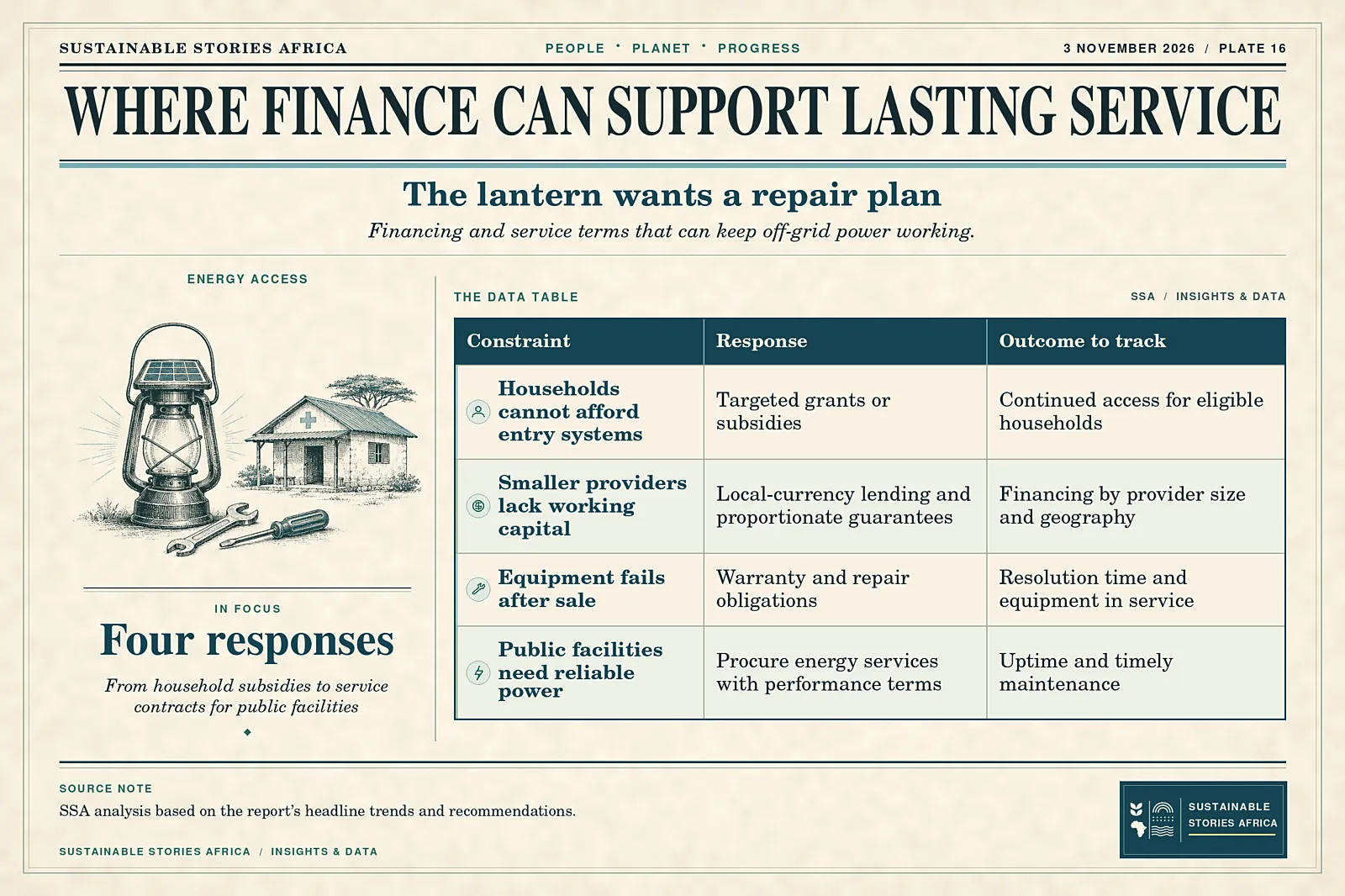
Subsidies can substitute different barriers.
- A household that has irregular income may need a lower upfront price or more flexible payment terms.
- A remote community may need help with distribution and maintenance costs, even when residents can pay for the product.
- A clinic may need public funding for a service contract because it cannot finance the system out of patient fees.
Defining the barrier in advance makes it possible to compare providers and judge whether a subsidy is still needed as the market develops.
Path Forward – How to Extend Access After Installation
Governments and investors should follow affordability, access and reliability together.
A programme can report how many people are served, where financing reaches smaller providers and how often installations remain in use.
Progress depends on extending service to people the market struggles to reach and keeping equipment working long enough to deliver the benefits they paid for.