
Aceli Africa is redefining how ESG standards can mobilise private capital into smallholder agriculture, linking impact to incentives in a measurable way.
However, as ESG frameworks scale across Africa, the critical question remains: can structured incentives and data-driven standards unlock sustainable, inclusive growth at the speed required?
Finance Meets Impact in Agriculture
Africa’s agricultural financing gap has long constrained inclusive growth. Small and medium-sized enterprises (SMEs), the backbone of food systems, face limited access to affordable capital, despite their central role in supporting millions of smallholder farmers.
Aceli Africa is attempting to change that equation. Through a market-enabling model that blends ESG standards with financial incentives, the organisation links donor funding to private sector lending outcomes, creating a multiplier effect across agricultural value chains.
The model is ambitious. By 2030, Aceli aims to mobilise $2 billion in lending to 20,000 agri-SMEs, reaching five million smallholder farmers, while ensuring that ESG principles are embedded across lending practices.
At stake is more than finance; it is the future of Africa’s food systems, employment pathways, and climate resilience.
A $1 Unlocks $10 Opportunity
In Africa’s agricultural finance ecosystem, one statistic stands out: $1 of donor funding deployed through Aceli unlocks $10 in private-sector lending and generates at least $3 in incremental farmer income.
This is not traditional development finance; it is a leverage-driven ESG model, in which incentives are calibrated to reduce risk, encourage lending, and reward impact.
The urgency is clear:
- Smallholder farmers remain underserved
- Agricultural SMEs struggle to scale
- Climate risks are intensifying across food systems
Aceli’s model reframes ESG, not as compliance, but as a capital mobilisation strategy.
Inside Aceli’s ESG Incentive Architecture
At the core of Aceli’s model is a structured ESG framework that operates at two levels:
- Lender-Level ESG Compliance – Financial institutions must:
- Adopt ESG policies aligned with IFC, ILO, and CSAF standards
- Train staff on ESG due diligence
- Verify borrower compliance with environmental and social safeguards
- Loan-Level Impact Criteria – Each loan must meet:
- Positive impact thresholds (e.g., sourcing from ≥25 smallholder farmers or employing ≥5 workers)
- Revenue thresholds ($50,000 – $3 million for SME eligibility, with flexibility for underserved groups)
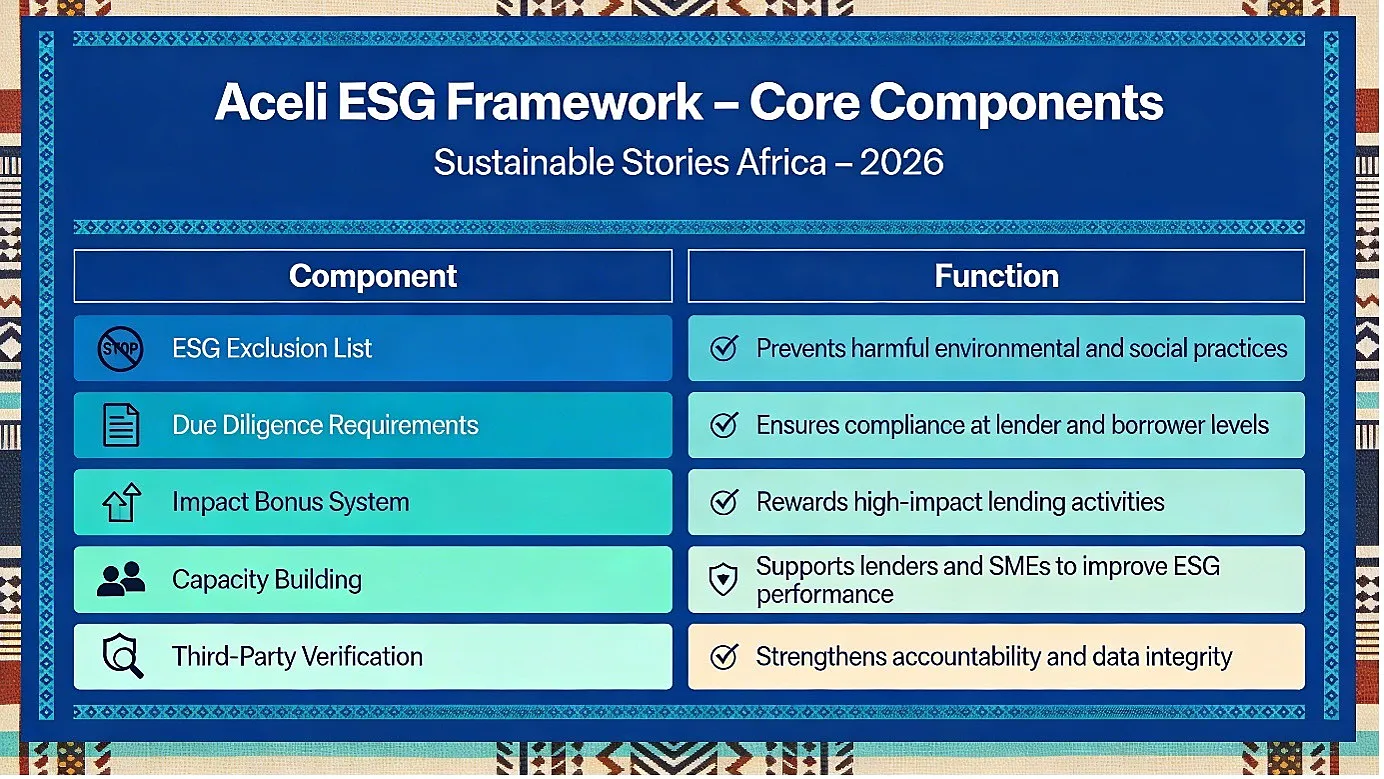
Aceli ESG Framework – Core Components
Component | Function |
|---|---|
ESG Exclusion List | Prevents harmful environmental and social practices |
Due Diligence Requirements | Ensures compliance at the lender and borrower levels |
Impact Bonus System | Rewards high-impact lending activities |
Capacity Building | Supports lenders and SMEs to improve ESG performance |
Third-Party Verification | Strengthens accountability and data integrity |
The Impact Bonus – Incentivising What Matters
Aceli introduces a differentiated incentive mechanism, the Impact Bonus, focused on four priority areas:
Impact Area | Focus |
|---|---|
Women’s Economic Opportunity | Leadership, employment, supplier inclusion |
Food Security & Nutrition | Productivity, resilience, nutrient-rich foods |
Climate & Environment | Regenerative agriculture, circular systems |
Youth Economic Opportunity | Employment, ownership, supplier participation |
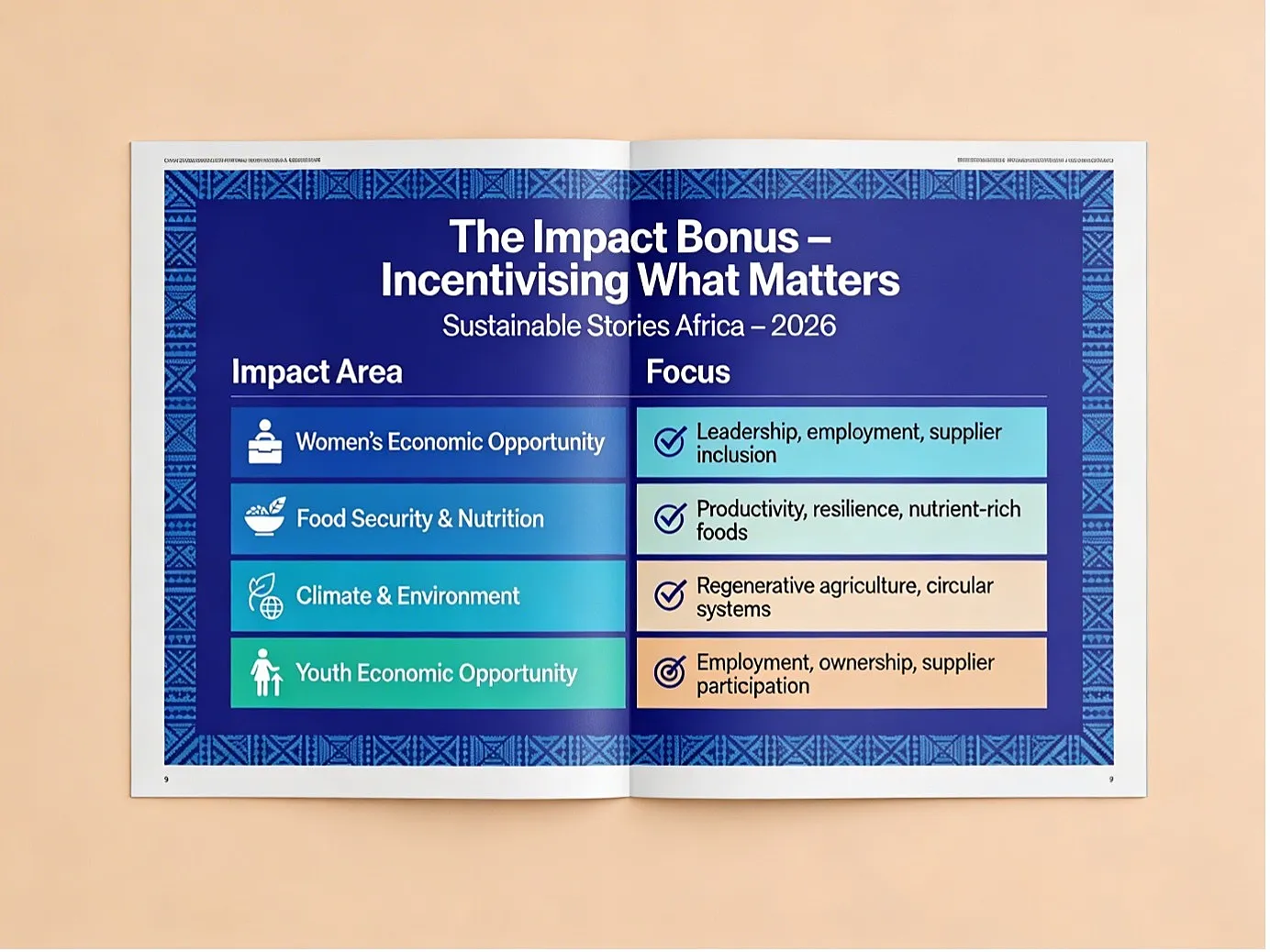
Loans that meet higher thresholds receive enhanced financial incentives, aligning capital flows with measurable development outcomes.
- Scale and Reach: A Continental Play – The model is already demonstrating traction:
- Over 50% of loans are issued by African-based lenders
- Over 50% of financing supports staple food crops for domestic consumption
This localisation is critical. It ensures that capital flows are not only mobilised but also anchored within African markets.
Reimagining Africa’s Agricultural Economy
If scaled effectively, Aceli’s ESG-driven model could reshape Africa’s development trajectory:
- Unlocking SME Growth – By reducing risk for lenders, SMEs gain access to affordable capital, enabling expansion, innovation, and job creation.
- Transforming Smallholder Livelihoods – Improved access to finance and markets increases farmer incomes, resilience, and productivity.
- Advancing Gender and Youth Inclusion – Structured incentives ensure that women and young people are not peripheral but central to economic transformation.
- Driving Climate-Smart Agriculture – Investment flows into regenerative practices, climate technologies, and circular systems, supporting both productivity and sustainability.
- Strengthening Food Systems – Enhanced financing improves food availability, nutrition outcomes, and supply chain resilience across Africa.
However, the opportunity is fragile. Without consistent implementation and scale, impact could remain fragmented.
What Must Happen Next
To realise its full potential, Aceli’s model and similar ESG frameworks must address several critical priorities:
- Strengthen Data Systems – Robust data collection and verification are essential for:
- Measuring impact
- Ensuring accountability
- Building investor confidence
- Expand Lender Participation – Scaling requires onboarding more financial institutions, particularly local banks and microfinance institutions.
- Deepen SME Capacity – SMEs need technical support to:
- Meet ESG standards
- Improve operational efficiency
- Access and utilise financing effectively
- Align Policy and Regulation – Governments must:
- Integrate ESG into financial sector policies
- Provide enabling regulatory frameworks
- Support blended finance mechanisms
- Mobilise Long-Term Capital – Institutional investors and development partners must:
- Commit patient capital
- Support risk-sharing mechanisms
- Scale proven models across regions
Path Forward – Scaling Impact Through Incentives
Aceli Africa demonstrates that ESG can move beyond compliance into capital mobilisation. By linking incentives to measurable outcomes, the model enables pathways for scaling inclusive agricultural finance.
The next phase will depend on replication. Expanding this approach across African markets could unlock billions in capital, transforming agriculture into a driver of inclusive, sustainable growth.