Kenya is widely seen as a climate leader in Africa, with ambitious renewable energy targets and inclusive development goals.
However, a new policy brief reveals a critical gap: the country’s transition lacks a clearly defined “Just Transition” framework.
As climate investments accelerate, the question is urgent: Can Kenya’s green growth remain equitable without stronger policy integration, financing stability, and institutional coordination?
Green Growth, Unequal Transition Risks
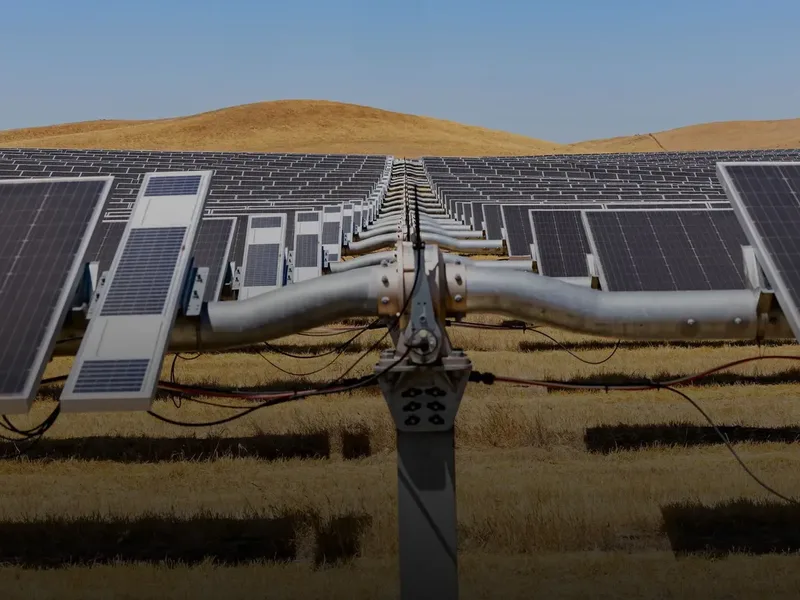
Kenya’s climate ambition is no longer in doubt. With a target of achieving 100% renewable energy by 2035 and a growing portfolio of green investments, the country is positioning itself as a continental leader in low-carbon development.
However, beneath this momentum lies a structural tension. The concept of a “Just Transition”, ensuring that climate action benefits workers, communities, and vulnerable populations, is still only partially embedded in policy frameworks.
The result is a paradox: a country advancing rapidly toward decarbonisation, but without a fully operational system to ensure that the transition is inclusive, equitable, and socially sustainable.
A Climate Leader at a Crossroads
Kenya’s transition story is both impressive and incomplete.
The country has shelved an estimated 400 million tonnes of coal and 2.85 billion barrels of oil reserves in pursuit of a cleaner future, relying instead on renewables and international climate finance.
However, this shift comes with trade-offs. Climate-related losses are estimated at up to 2% of GDP annually, while financing gaps remain significant, with 81% of decarbonisation costs expected to be determined by international support.
The central issue is clear: Kenya is transitioning, but not yet fully managing the social consequences of that transition.
Policy Strength Meets Structural Weakness
Kenya’s policy ecosystem is robust on paper.
Key frameworks include:
Policy/Framework | Role in Transition |
|---|---|
Constitution of Kenya (2010) | Guarantees environmental rights |
Climate Change Act (2016, amended 2024) | Legal basis for climate action and carbon markets |
NDC (2031–2035) | Sets mitigation and adaptation targets |
NCCAP III (2023–2027) | Operationalises climate actions across sectors |
LT-LEDS (2022–2050) | Long-term decarbonisation roadmap |
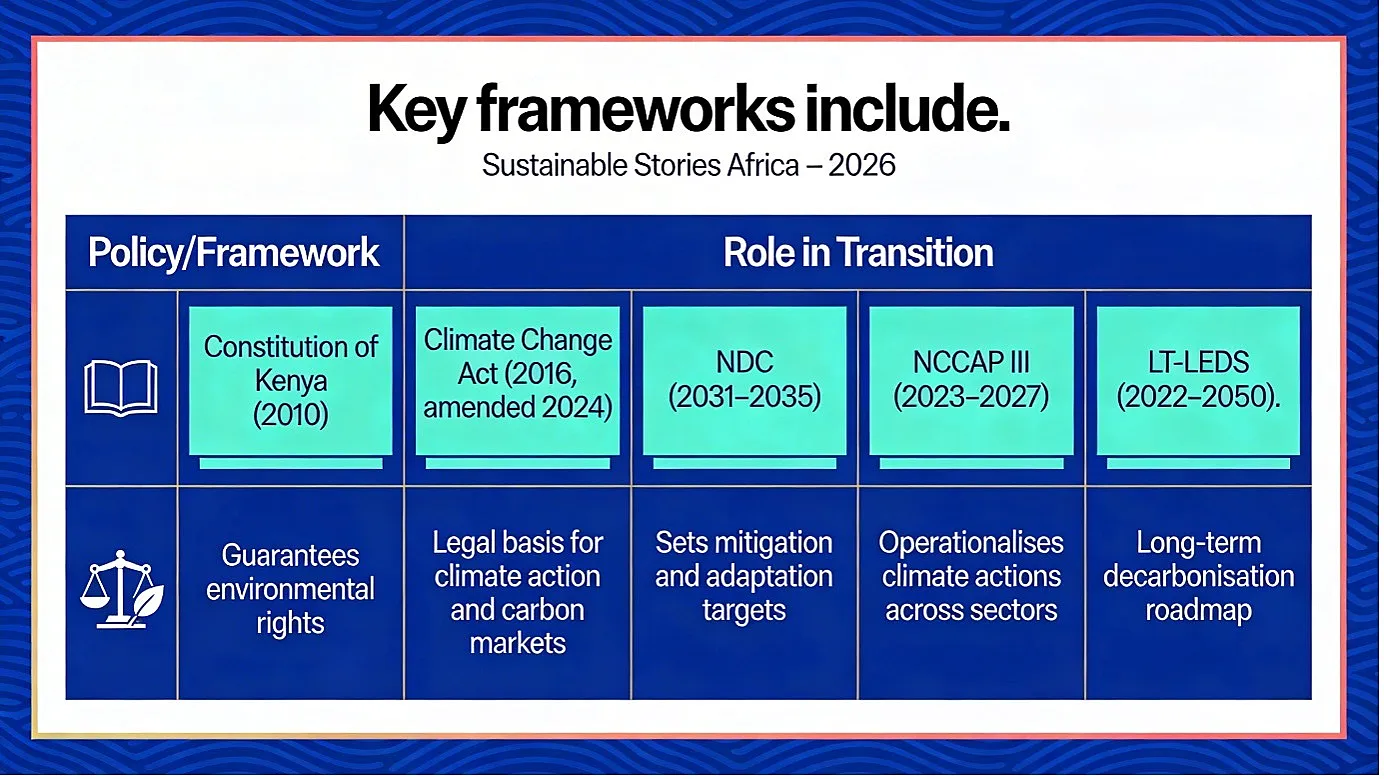
These frameworks collectively embed elements of social justice, inclusion, and environmental protection.
However, the policy brief highlights a critical gap: Just Transition is not explicitly defined or operationalised across these instruments.
Sectoral Realities: Where Transition Meets Livelihoods
- Energy: Backbone of decarbonisation, with investments in e-mobility, clean cooking, and renewable expansion.
- Agriculture (AFOLU): Supports many livelihoods but remains climate-vulnerable and emissions-intensive.
- Waste: Accounts for 5% of emissions; however, informal workers remain excluded from circular economy systems.
At the same time, governance structures are ambitious but complex. Kenya’s 47 devolved counties create opportunities for localised climate action, but also introduce coordination challenges and uneven capacity.
Transition Pressures and Opportunities
Indicator | Insight |
|---|---|
Median age | 19.8 years (youth-driven labour market) |
Population (2035) | 62.2 million projected |
Manufacturing share of GDP | Declined from 10.4% to 7.8% |
Renewable ambition | 100% electricity by 2035 |
Job potential | Over 500,000 green jobs (ETIP estimate) |
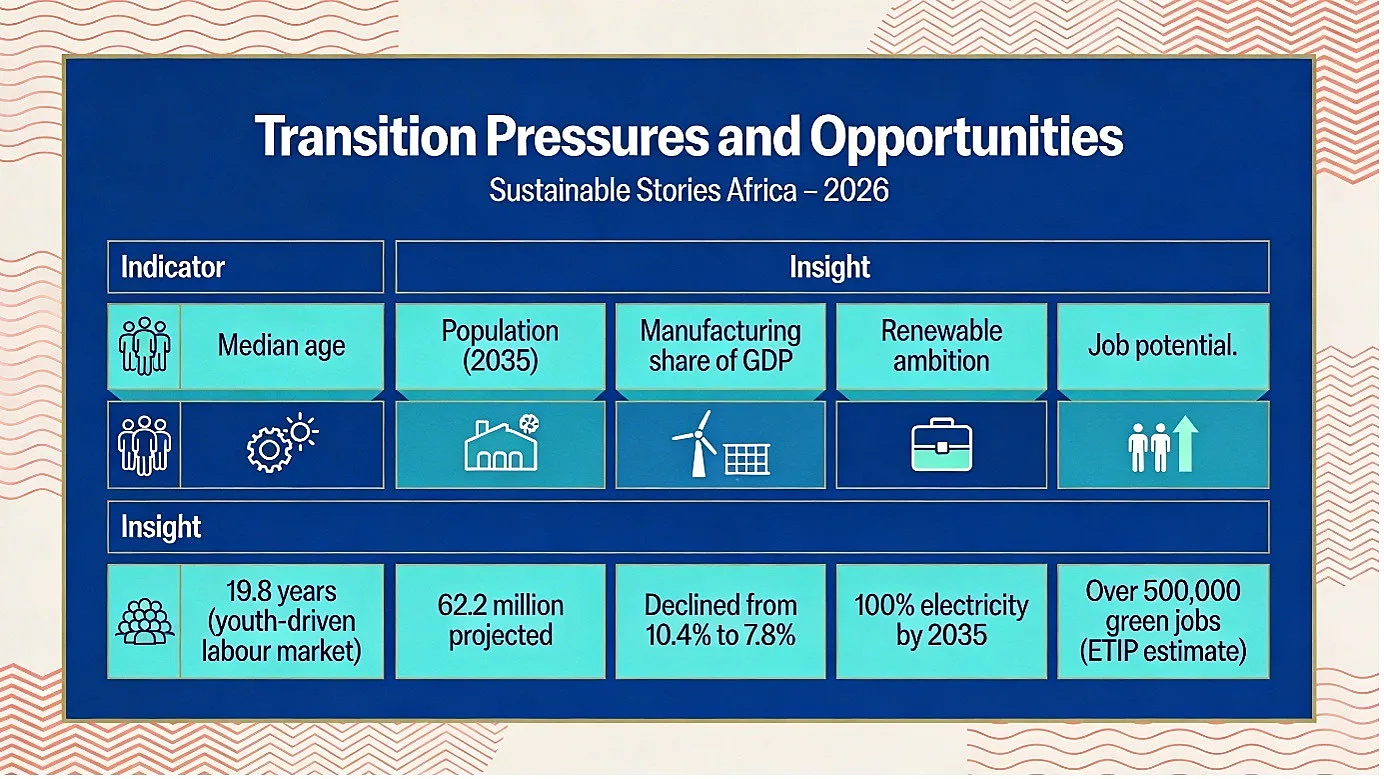
This data underscores a key tension: a young, rapidly growing workforce is entering a labour market not yet aligned with green economy demands.
The Promise of an Inclusive Green Economy
If fully realised, Kenya’s Just Transition could unlock multiple layers of value:
- Economic Transformation – The Energy Transition and Investment Plan projects that over 500,000 new jobs are tied to a $600 million investment pipeline, signalling that climate action can drive growth, not just costs.
- Social Equity Gains – Kenya’s participatory governance model—spanning national and county levels, already integrates youth engagement, gender inclusion, and community consultations, including outreach to over 14,000 young people across 47 counties.
- Innovation in Climate Finance - The country is pioneering:
- PAYG clean energy models
- Results-based financing
- Carbon market-linked social protection
These mechanisms lower barriers for vulnerable households while attracting private capital.
- Decentralised Climate Action – Initiatives like FLLoCA (Financing Locally-Led Climate Action) demonstrate how devolved financing can align national goals with local realities.
What Must Change Now
The policy brief outlines a clear set of actionable priorities:
- Establish a National Just Transition Framework – A unified framework must:
- Define labour transitions and reskilling pathways
- Integrate social protection systems
- Align sectoral policies across energy, agriculture, transport, and industry
- Strengthen Data and Monitoring Systems – Current MRV systems prioritise economic indicators while excluding:
- Cultural impacts
- Gendered labour transitions
- Community ownership metrics
Without robust data, equity claims risk being overstated.
- Align Climate Finance with Social Outcomes – Development partners and multilateral banks must:
- Embed Just Transition conditions in funding
- Track labour, gender, and community impacts
- Support domestic financial systems to reduce reliance on volatile carbon markets
- Close Skills and Capacity Gaps – Kenya faces a mismatch between:
- Green investment pipelines
- Available workforce skills
This requires:
- Curriculum reform
- Regional training hubs
- Integration of informal sector workers
Path Forward – From Ambition to Equity
Kenya’s transition must move from implicit inclusion to explicit design. A national Just Transition framework, backed by data systems and aligned financing, will determine whether climate ambition translates into shared prosperity.
Global actors must shift from funding volume to fairness metrics, ensuring that value flows to workers, communities, and local economies. Only then can Kenya’s green transition become not just low carbon, but truly just.