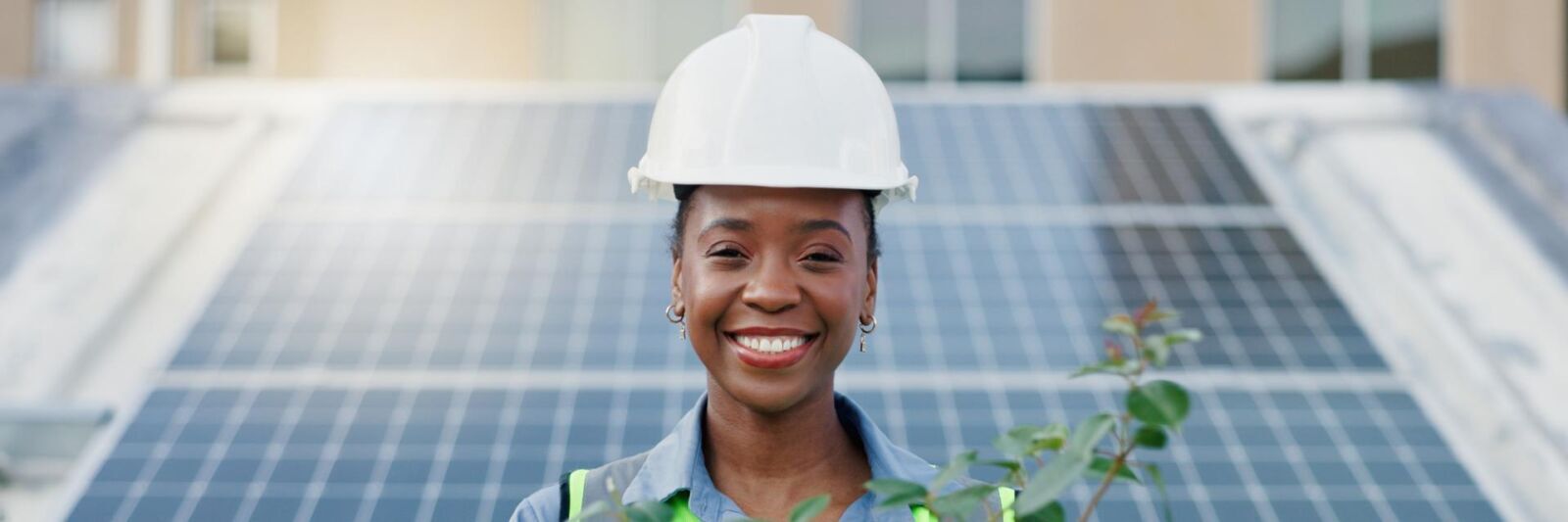
The Gambia’s clean energy transition is moving beyond panels and power lines. A new AfDB-backed report argues that women must become leaders, investors, technicians and entrepreneurs in renewable energy.
The question now is whether policy can close the gap between ambition and implementation, especially in rural communities where energy poverty still shapes women’s time, health and income.
Women Must Power The Transition
The Gambia is at a decisive point in its energy transition, with renewable energy increasingly seen as a route to climate resilience, inclusive growth and universal access.
But a new final report, Women as Key Partners: A Gender-Transformative Renewable Energy Strategy and Action Plan for The Gambia, warns that the country’s clean energy future will remain incomplete if women are treated only as beneficiaries rather than full partners.
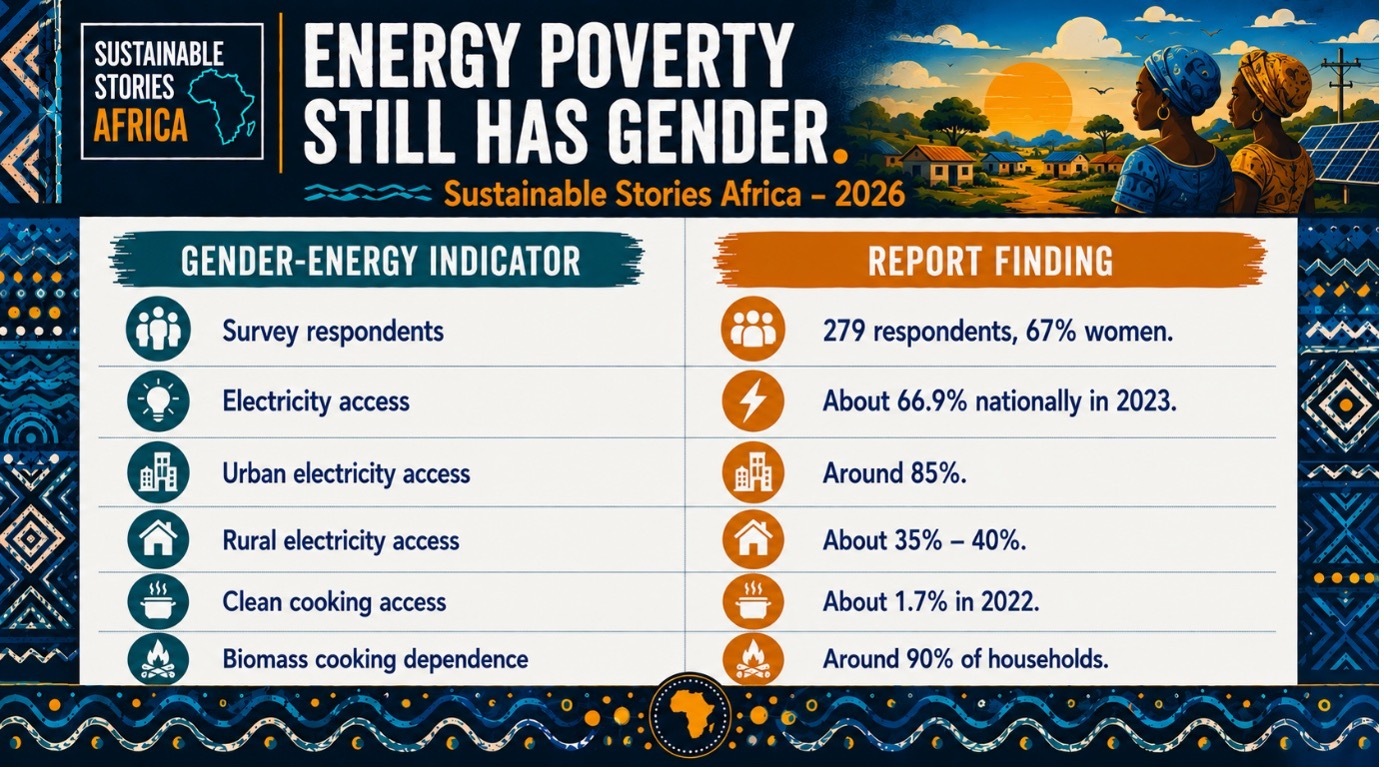
Commissioned by the African Development Bank in partnership with Enda Energie and The Gambia’s Ministry of Gender, Children and Social Welfare, the study combines literature review, institutional consultations, focus groups, community radio dialogues and a survey of 279 respondents, 67% of whom are women.
Energy Poverty Still Has Gender
In The Gambia, energy poverty is not gender neutral.
Rural women remain heavily dependent on biomass for cooking, while limited access to electricity affects education, health, safety and small-business productivity.
The report states that electricity access was about 66.9% in 2023, but urban access was around 85%, compared with only 35% – 40% in rural areas.
Clean cooking remains even more constrained. Only about 1.7% of the population had access to clean cooking fuels and technologies in 2022, while around 90% of households use biomass, mainly firewood and charcoal, for cooking.
For women and girls, that gap is measured in hours, smoke exposure and missed opportunities.
In rural areas, women and girls can spend two to four hours daily gathering firewood and water, reducing time for school, enterprise, leadership and paid work.
The Barriers Are Structural
The report’s central finding is that women face barriers across the renewable energy value chain, from training and finance to land, markets, mobility and decision-making.
The Gambia has progressive frameworks, including the Renewable Energy Act, the National Gender Policy and ECOWAS Gender and Energy Policy.
However, implementation remains weak, with limited sex-disaggregated data and insufficient gender mainstreaming in energy programmes.
The formal economy also shows the scale of exclusion. In the latest Enterprise Survey cited by the report, only 8.2% of firms had a female top manager, 17.1% had female ownership participation, and women accounted for 17.5% of permanent full-time workers across surveyed firms.
The gender gap extends into politics and public decision-making.
Women held 5 of 58 National Assembly seats, approximately 8.6%, as of August 2025; 3 of 23 cabinet positions, approximately 13%; and only 13 of 1,887 Alikalos were female.
These numbers matter because energy decisions are often made where women are least represented: boards, ministries, utilities, financial institutions, technical schools, and procurement systems.
Clean Energy Can Expand Women’s Agency
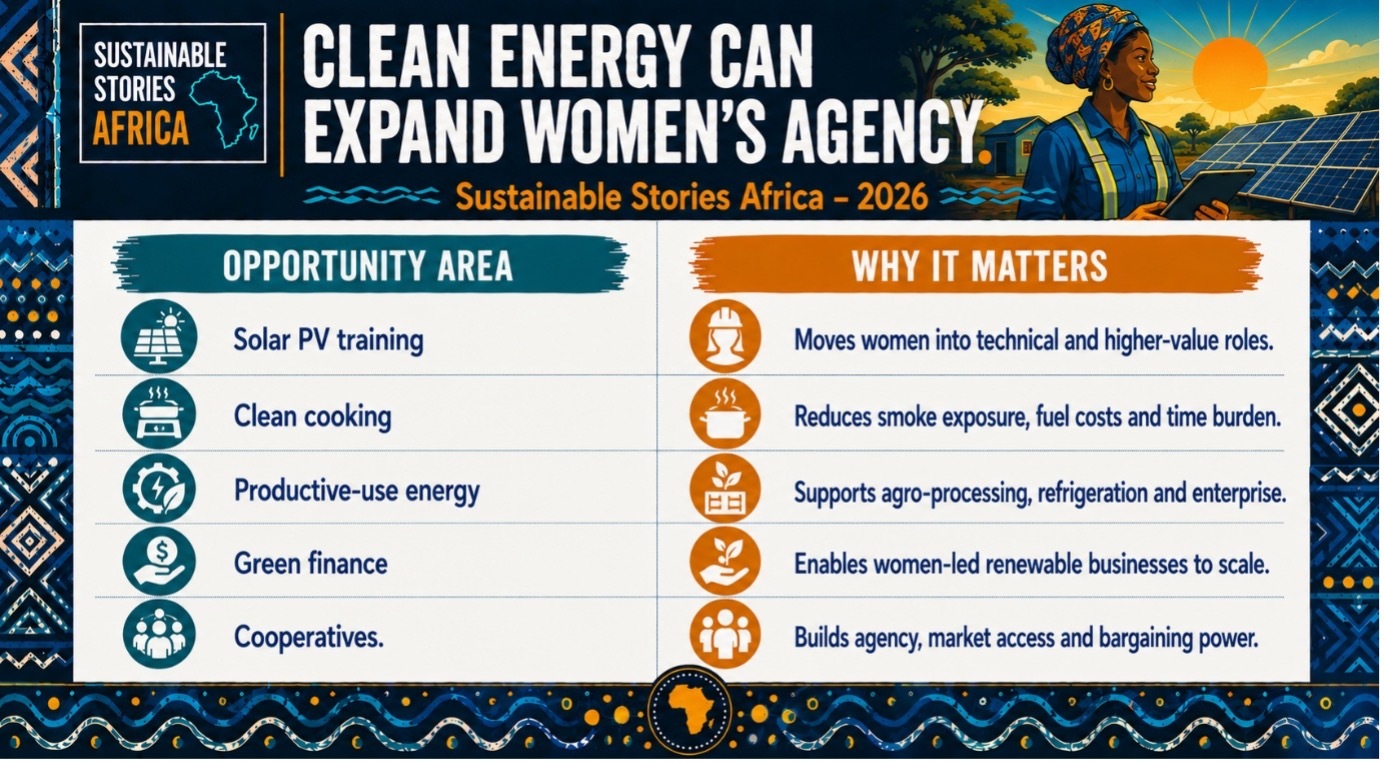
The opportunity is equally clear. Renewable energy can reduce time poverty, improve health outcomes, expand educational opportunities and open new income streams.
Solar home systems, clean cookstoves, mini-grids, solar dryers, biogas, productive-use appliances and solar-powered irrigation can help women move from unpaid energy labour into paid green enterprise.
The report points to women-led solar cooperatives, clean cookstove initiatives and renewable micro-enterprises as scalable pathways for inclusive green jobs and livelihoods.
It also highlights that renewable energy is already improving women’s lives by fostering leadership roles in cooperatives and community initiatives.
One strong signal comes from solar installation. The report notes that women made up 90% of Mbolo’s workforce in recent solar PV installation projects, showing that women can participate in technical roles when training, opportunity and institutional support align.
Finance, Skills, and Quotas Matter
The report’s recommendations are practical and policy-facing.
It calls for gender quotas in energy governance, gender-responsive budgeting and stronger monitoring systems.
It also recommends scholarships, vocational training and mentorship programmes for women in renewable energy technologies and entrepreneurship.
On finance, it proposes gender-responsive credit lines, grants and guarantees for women-led enterprises, supported by awareness campaigns to increase uptake.
The report also calls for women’s cooperatives, culturally sensitive norm-change campaigns, donor financing windows and the revitalisation of the Gambia Renewable Energy Centre as a hub for women’s skills and innovation.
The targets are ambitious. The strategy aims for 80% of women to be aware of renewable energy by 2028 and 90% by 2030; modern energy services for 200,000 women beneficiaries; 100% gender-responsive energy policies by 2030; and 10,000 women’s jobs across the renewable energy value chain by 2030.
It also targets at least 15% women in the public-sector renewable energy workforce by 2028, rising to 30% by 2030, alongside 1,500 women-owned renewable energy and clean-cooking MSMEs started or scaled by 2030.
Path Forward – Make Women Energy Partners
The Gambia’s renewable energy transition can deliver more than electricity. It can create jobs, reduce unpaid labour, improve health and strengthen climate resilience.
The next step is execution: finance women-led enterprises, train women technicians, mainstream gender in policy, revive practical skills hubs and track results.
That is how The Gambia turns clean energy into shared power.