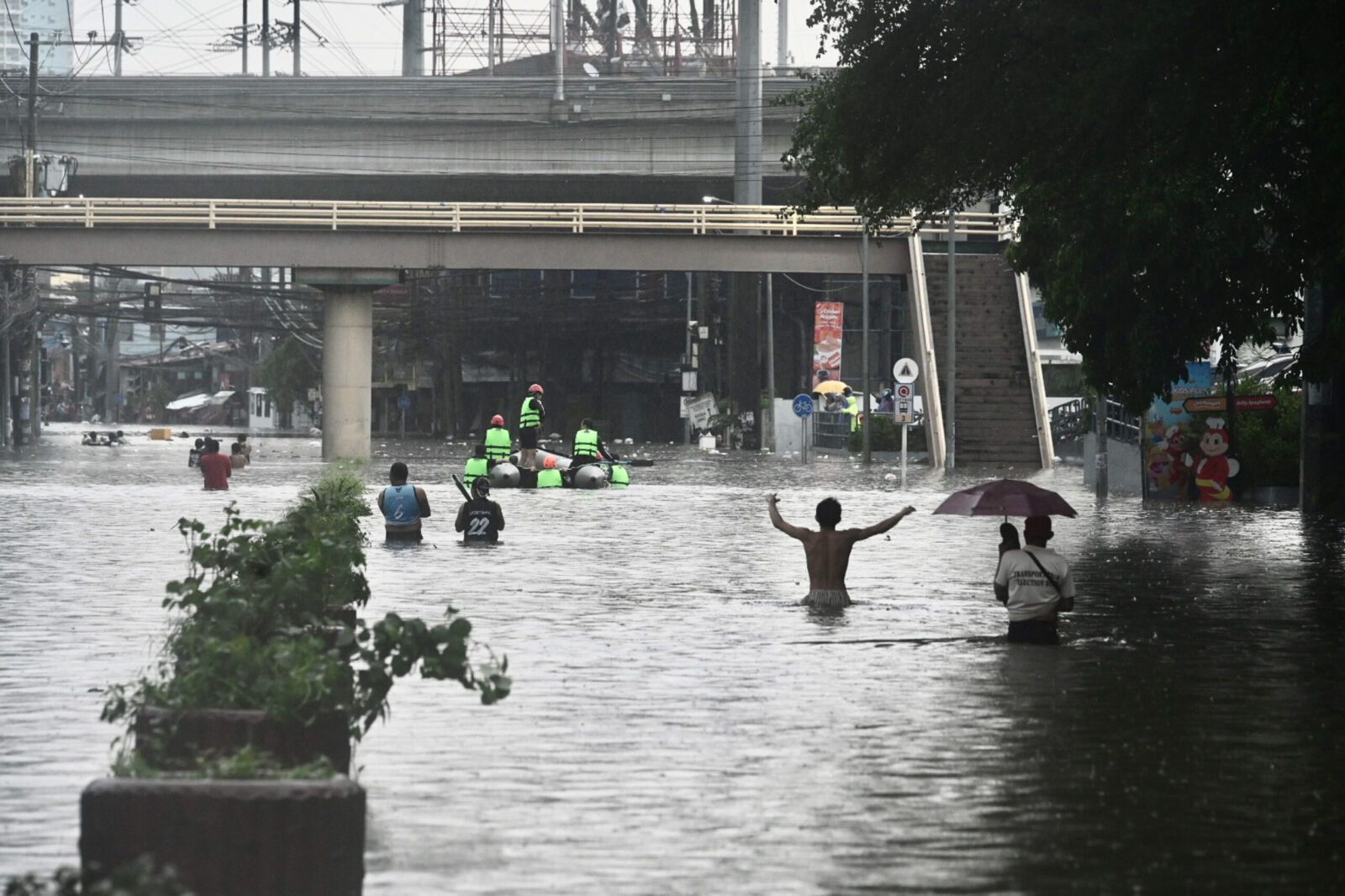
Africa’s cities are on the frontline of climate risk, where floods, droughts and heatwaves now threaten roads, homes, health systems and livelihoods.
A new ACCPA policy brief argues that Sino-African partnerships can help, but only if they move beyond project delivery toward co-designed, locally grounded urban adaptation.
Climate Risk Is Rewriting Urban Africa
Africa’s urban future is being shaped by a hard climate reality: the continent’s cities are expanding rapidly, but many are doing so without reliable drainage, resilient housing, climate finance or planning systems to withstand worsening floods, droughts and heatwaves.
A 2026 policy brief by Yiling Lyu of the Africa-China Centre for Policy and Advisory argues that urban climate adaptation is no longer optional for African governments.
It is now a development imperative, especially as an estimated 60% of Africa’s urban population lives in informal settlements.
The brief places Sino-African cooperation at the centre of the adaptation debate, pointing to China’s Sponge City Initiative as a useful model for integrated water management, flood mitigation and green infrastructure.
However, its central warning is clear: Africa should not copy China wholesale. It should adapt useful principles to local realities.
Cities Are Becoming Climate Frontlines
Lagos, Nairobi, Accra and Dar es Salaam are already experiencing climate shocks that disrupt infrastructure, public health and livelihoods, according to the brief.
However, Africa receives less than 5% of global climate finance, while urban adaptation remains particularly underfunded.
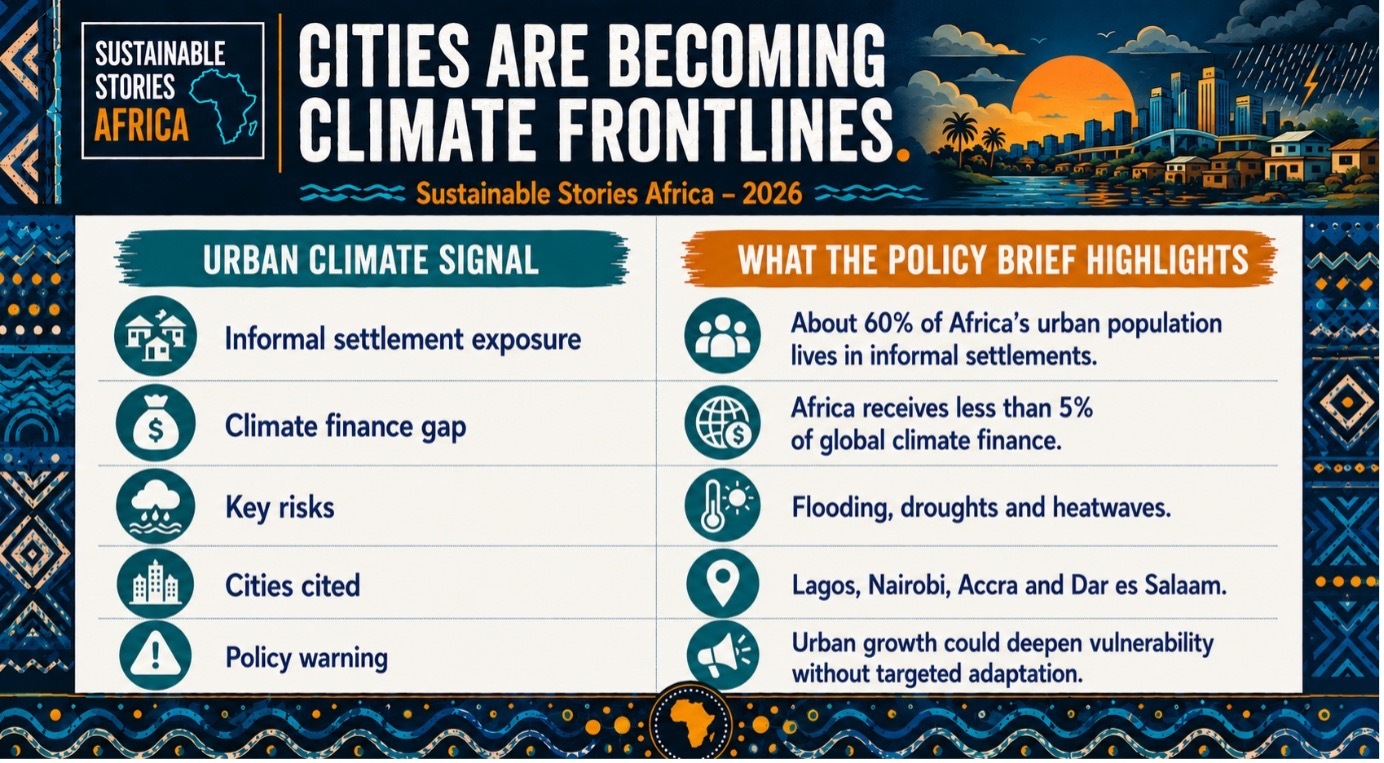
This matters because climate impacts in cities are rarely isolated. A flooded road can block workers from markets.
- A damaged drainage channel can trigger disease outbreaks.
- A heatwave can reduce productivity, strain hospitals and deepen inequality in communities already underserved by public infrastructure.
China’s Sponge Cities Offer Lessons
China’s Sponge City Initiative, launched in 2015 across 30 pilot cities, aims to help cities “absorb, store, infiltrate, and purify” at least 70% of annual rainfall through green-grey infrastructure systems.
The model uses interventions such as permeable pavements, vegetated swales, wetlands and green roofs to reduce flooding and water scarcity.
More importantly, it marks a shift from reactive flood defence toward proactive water-sensitive urban design.
For African cities, the value lies in selective adaptation. Urban wetlands restoration, flood-resilient housing, green corridors and permeable streets can be integrated into a wider resilience plan.
However, this requires planning capacity, maintenance budgets and community involvement, rather than just imported engineering.
Partnerships Can Build Resilient Cities
The brief identifies early examples of Sino-African cooperation, which already point in this direction.
In Kenya, the Nairobi River Green Infrastructure Project integrates ecological restoration with urban development, supported by Chinese technical expertise and co-financing.
In Mozambique, China provided post-disaster support following Cyclone Idai through the South-South Cooperation Assistance Fund, including help for rebuilding infrastructure and livelihoods in Beira.
In Egypt, Chinese companies have contributed to the New Administrative Capital, including green zones, stormwater systems and energy-efficient design principles.
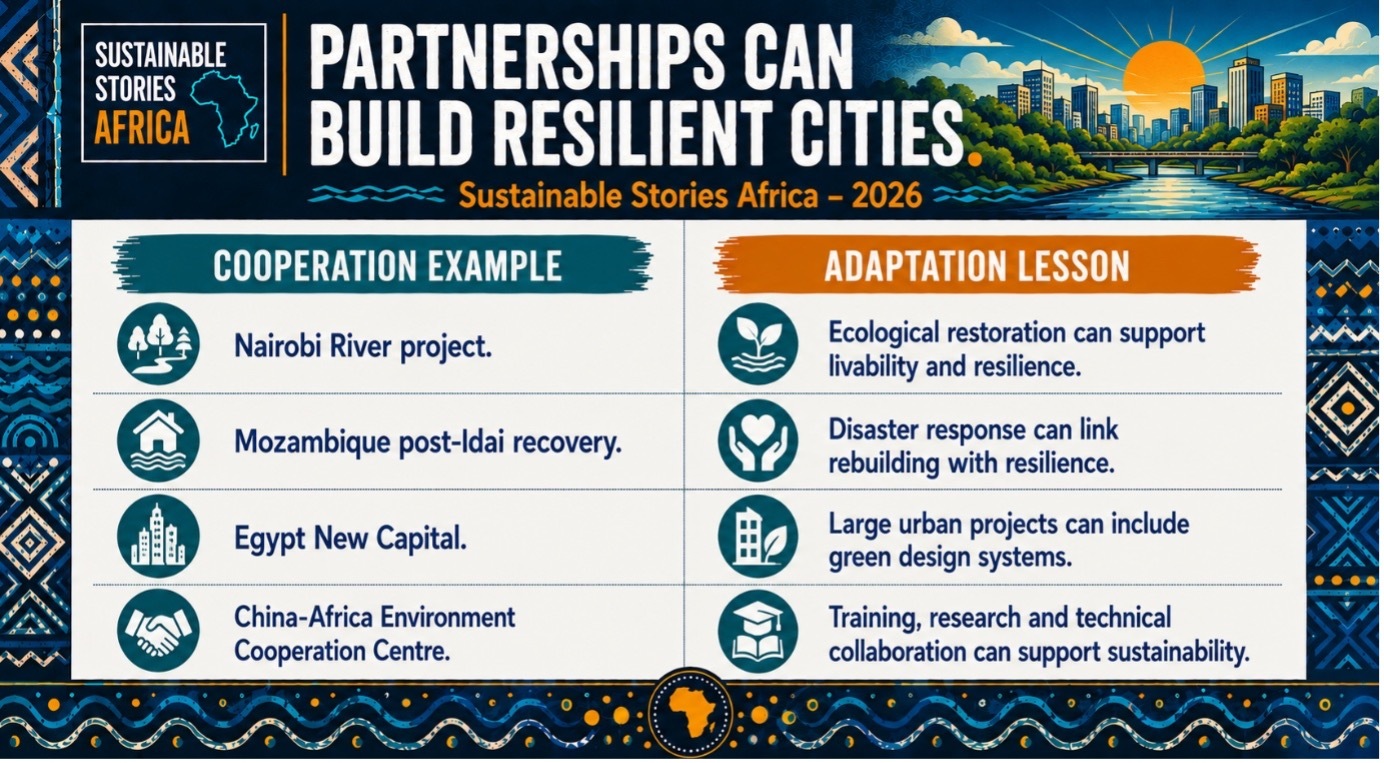
The opportunity is not only technical. Better adaptation can reduce disaster losses, protect low-income communities, improve urban livability and make cities more attractive for long-term investment.
Shift From Projects To Co-Design
The brief also identifies four barriers that could weaken Sino-African climate cooperation: excessive focus on large grey infrastructure, weak climate-risk planning, municipal capacity limitations and institutional misalignment.
One warning example is South Sudan’s Lumbek Road Project, where floods severely damaged the road during construction in 2020, showing why climate modelling and adaptive design standards must be embedded early in project cycles.
African governments should integrate climate-risk assessments into urban planning, zoning and land-use regulation. Cities should prioritise low-cost, nature-based solutions such as wetlands restoration, green corridors and flood-resilient housing. Governments also need stronger procurement, monitoring and talent-development systems.
China, meanwhile, can earmark more climate finance for adaptation, support water-sensitive urban design and expand knowledge-sharing models.
The brief points to China’s collaboration with Copenhagen as a useful template, suggesting triangular cooperation between African, Chinese and Nordic cities.
Multilateral actors such as UN-Habitat, AfDB and UNEP can help by documenting pilot lessons, creating co-financing mechanisms and supporting cross-country learning networks.
Path Forward – Co-Create Cities With Africa
Africa’s climate challenge demands local adaptation systems, financed and community-centred.
Sino-African partnerships can help, but only when they strengthen African planning capacity and local ownership.
The next phase must move from building cities for Africa to co-creating cities with Africa, cities able to anticipate, absorb and recover from climate shocks.