Disasters are no longer temporary shocks to agriculture. They are becoming a structural threat to food security, rural livelihoods and national development.
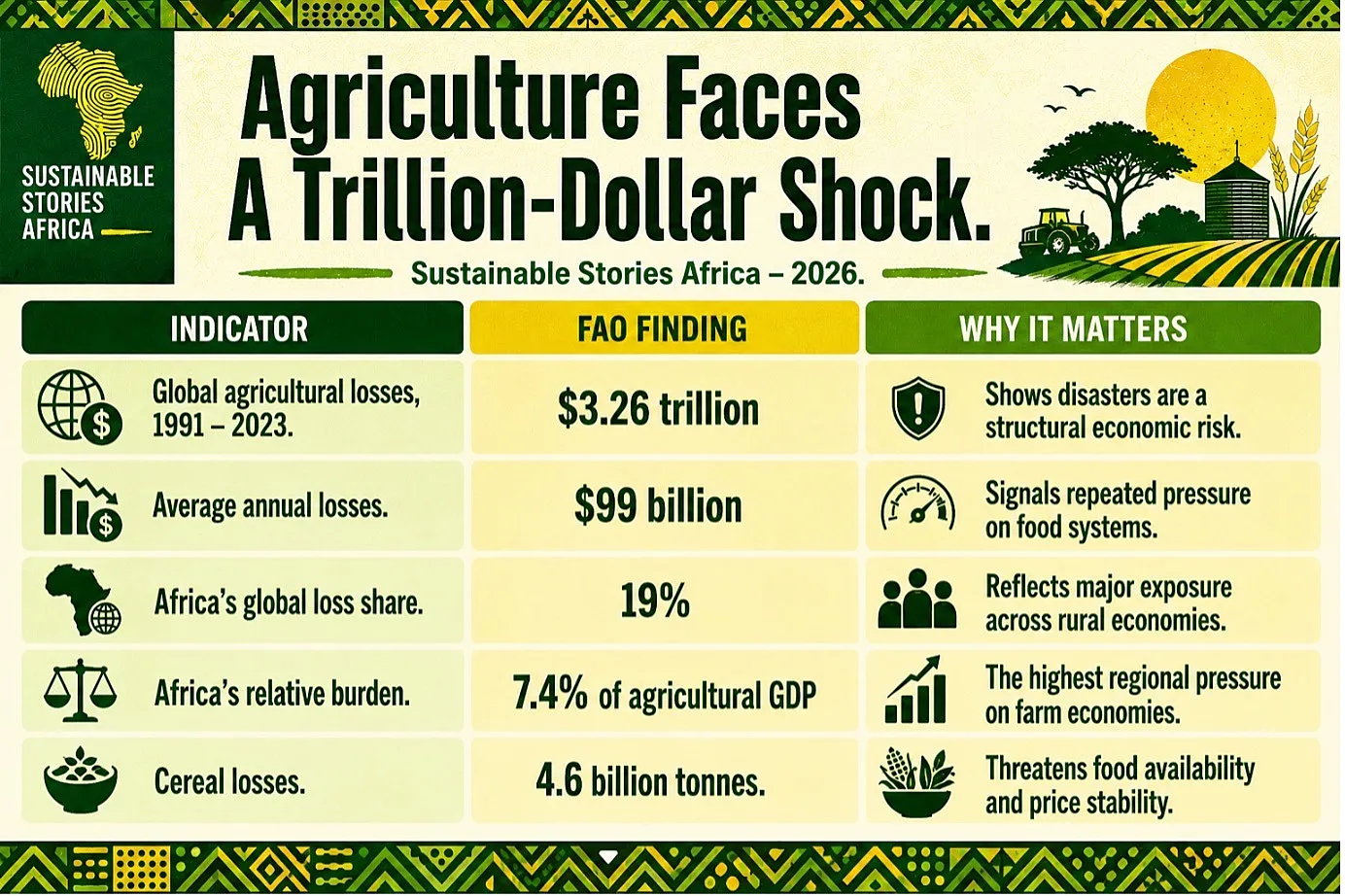
FAO’s 2025 report estimates $3.26 trillion in agricultural losses over 33 years, with Africa carrying the highest relative burden at 7.4% of agricultural GDP.
The question now is whether digital tools can move countries from crisis response to prevention.
Disasters Now Reshape Food Security
Africa’s farmers are increasingly living between two clocks: the planting calendar they know and the disaster calendar they cannot predict.
The Food and Agriculture Organisation’s 2025 report, The Impact of Disasters on Agriculture and Food Security, shows that floods, droughts, storms, heatwaves, pests, disease outbreaks and marine heatwaves are no longer isolated emergencies.
They are disrupting production, markets, infrastructure, finance and nutrition at the same time.
For African economies, the warning is direct. Agriculture remains central to jobs, food prices, rural income and social stability.
When disaster losses hit farms, they also hit household diets, school attendance, government budgets and inflation control.
Agriculture Faces A Trillion-Dollar Shock
The headline number is stark: disasters caused an estimated $3.26 trillion in agricultural losses between 1991 and 2023, averaging $99 billion a year.
Annual damages increased from $64 billion in the 1990s to $144 billion in recent years, according to FAO.
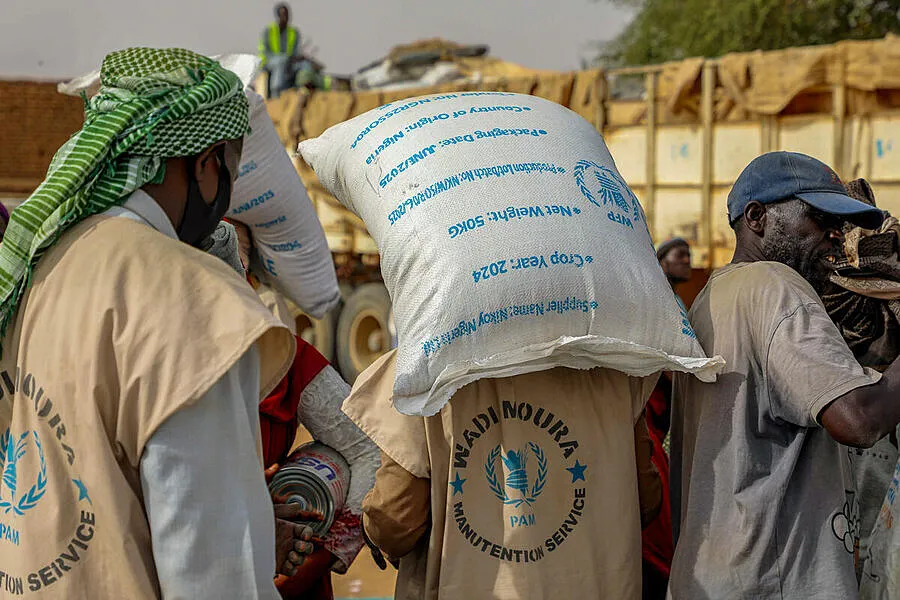
Cereals carried the heaviest physical burden, with 4.6 billion tonnes lost over the period. Fruits, nuts and vegetables lost 2.8 billion tonnes, while meat, dairy and eggs lost 900 million tonnes.
These are not just production numbers; they represent food that never reached markets, school meals, family kitchens or national reserves.
Africa’s losses accounted for 19% of global agricultural disaster losses, equivalent to approximately $611 billion.
However, the continent’s deeper vulnerability appears when losses are measured against agricultural GDP. By that measure, Africa carries the highest regional burden, at 7.4% of agricultural GDP.
Losses Travel Beyond The Farm
The impact does not stop when floodwater recedes or drought breaks. FAO says the effects of disasters cascade through infrastructure, markets, financial systems and ecosystems.
- A washed-out road can isolate farmers from buyers.
- A damaged cold room can destroy perishable produce within hours.
- A failed harvest can tighten credit, raise food prices and weaken household nutrition.
The nutritional cost is especially serious. FAO estimates that disaster-related production losses correspond to a reduction in the availability of about 320 kilocalories per person per day globally, together with losses in iron and other essential nutrients.
The report also highlights hidden risks in fisheries and aquaculture. Marine heatwaves caused an estimated $6.6 billion in fisheries losses between 1985 and 2022, affecting 15% of global fisheries and cutting production by more than 5.6 million tonnes.
This matters for coastal African communities where fish supports diets, jobs and local trade.
Digital Tools Can Shift The Outcome
The hopeful part of FAO’s report is that technology is changing what prevention can look like.
Satellite imagery, artificial intelligence, machine learning, mobile advisory services, digital insurance and early-warning platforms are making it possible to detect risk earlier and act faster.
FAO says every $1 invested in anticipatory action can generate up to $7 in benefits by avoiding agricultural losses.
Digital systems are also helping governments and farmers move from reactive emergency response to proactive risk reduction.
In practical terms:
- This means a farmer receives weather and pest alerts by SMS before planting.
- It means governments using satellite data to identify flood persistence across cropland, including examples such as Taraba State, Nigeria, cited in FAO’s visual monitoring tools.
- It also means insurers using parametric platforms to pay farmers faster after verified shocks.
Resilience Requires More Than Technology
However, FAO is clear: technology alone will not solve the problem.
Digital tools work only when backed by institutions, infrastructure, finance, trusted data and human-centred design.
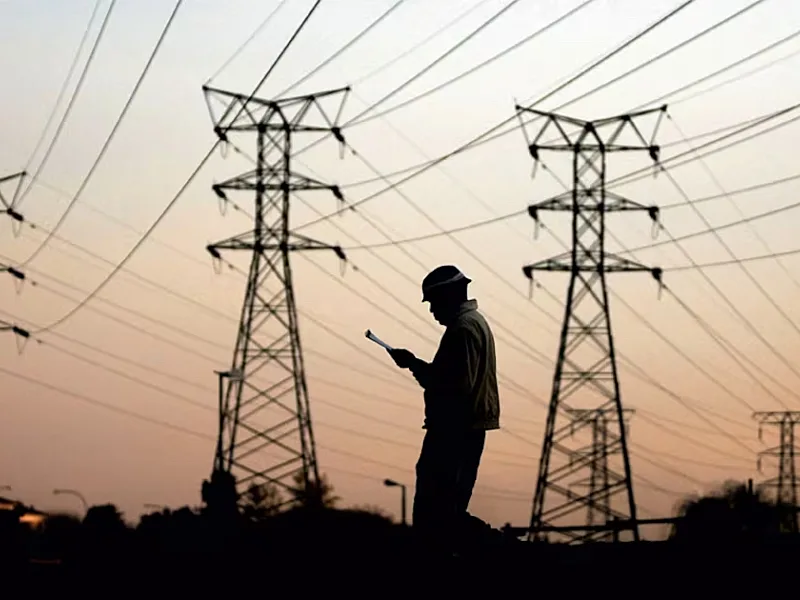
That is where many African markets face a double challenge. Rural communities often have the highest exposure to climate shocks but the weakest access to electricity, broadband, mobile data, extension services and formal finance.
Globally, 2.6 billion people remain offline, creating a digital divide that can exclude the very farmers most exposed to disaster risk.
The policy lesson is simple. Advanced AI systems may help national agencies; however, smallholder farmers may need basic mobile alerts, local-language radio advisories, interactive voice systems and trusted extension officers.
Resilience must be designed around users, not dashboards.
What Governments And Markets Must Do
- African governments need to integrate disaster risk reduction into agricultural policy, climate adaptation plans, food security strategies and rural infrastructure budgets. Early-warning systems should be linked to pre-arranged finance, so action begins before losses become irreversible.
- Regulators and development partners should support data governance frameworks that protect farmers’ rights while allowing useful data sharing.
FAO stresses the need for interoperability, privacy safeguards, data ownership rules and accountability for algorithmic decision-making.
Businesses and financiers also have a role.
- Banks, insurers, agritech firms and food companies can help scale climate-smart advisory services, crop insurance, digital payments, warehouse systems and resilient value chains.
- For investors, the opportunity is not only in technology platforms, but in the infrastructure that allows them to work: power, connectivity, storage, roads and local data systems.
Path Forward – Prevention Before Disaster
Africa’s food-security agenda must shift from relief after disaster to resilience before disaster.
That means investing in early warning, digital advisory systems, anticipatory finance, rural infrastructure and farmer-centred design.
The goal is practical: protect harvests, diets, incomes and markets before shocks become crises. In a climate-stressed world, agricultural resilience is now an ESG, development and economic security priority.