Women entrepreneurs in Ghana’s informal economy are sustaining livelihoods despite rising costs and limited support.
Their resilience highlights both the strength of grassroots enterprise and the fragility of the systems surrounding it.
The story underscores urgent gaps in finance, policy, and social protection shaping Africa’s urban markets.
Survival at the Heart of Ghana’s Markets
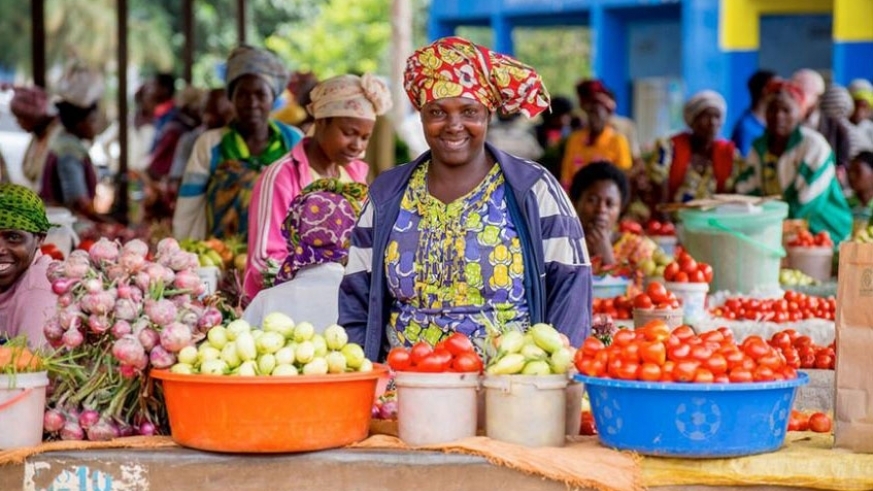
In the bustling local markets of Ghana, women entrepreneurs are quietly holding up the backbone of the informal economy, navigating inflation, inconsistent income, and limited institutional support to keep businesses alive.
Across urban trading hubs, from food stalls to textile kiosks, women dominate informal commerce.
However, despite their economic significance, they operate within an ecosystem defined by volatility: rising input costs, unstable demand, and restricted access to formal credit.
This is not just a story of entrepreneurship; it is a story of survival. And increasingly, it is becoming a defining feature of West Africa’s urban economic reality.
Resilience Within Structural Constraints
Ghana’s informal economy accounts for a substantial share of employment, with women forming many traders in local markets. These women often finance their businesses through personal savings, informal lending groups, or daily reinvestment of profits, mechanisms that are flexible but highly vulnerable.
At the market level, traders describe a cycle of constant adjustment. Prices of goods fluctuate rapidly due to inflation and currency pressures, forcing entrepreneurs to either absorb losses or pass costs to already price-sensitive customers.
Many women operate without formal business registration, thereby limiting access to structured financing, insurance, and government support programmes. As a result, they rely heavily on social capital, trust networks, rotating savings schemes, and community-based support systems.
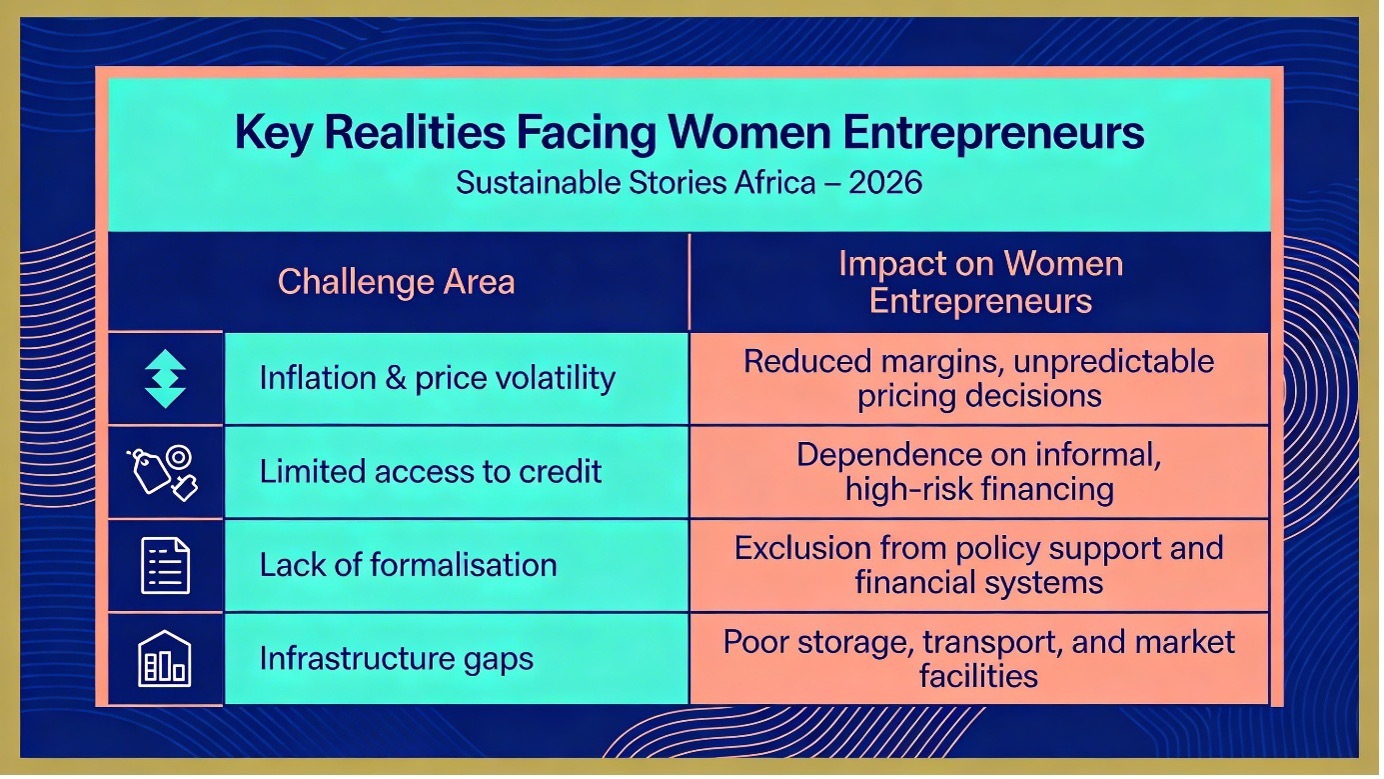
Key Realities Facing Women Entrepreneurs
Challenge Area | Impact on Women Entrepreneurs |
|---|---|
Inflation & price volatility | Reduced margins, unpredictable pricing decisions |
Limited access to credit | Dependence on informal, high-risk financing |
Lack of formalisation | Exclusion from policy support and financial systems |
Infrastructure gaps | Poor storage, transport, and market facilities |
Beyond economics, there is also a social dimension. Many women balance business operations with caregiving responsibilities, making their entrepreneurial journey both economically and emotionally demanding.
Despite these constraints, market traders continue to innovate, diversifying product lines, negotiating supplier terms, and leveraging customer relationships to sustain demand.
What a Supportive System Could Unlock
If structural barriers are addressed, the potential upside is significant, not only for individual entrepreneurs but for national economic growth.
Formalising segments of the informal economy could unlock access to microfinance, digital payments, and insurance products, reducing vulnerability and enabling scale. Improved infrastructure, such as storage facilities and transport networks, would enhance efficiency and reduce post-harvest losses for food traders.
More importantly, targeted policies that recognise the realities of informal women entrepreneurs could transform survival-driven businesses into growth-oriented enterprises.
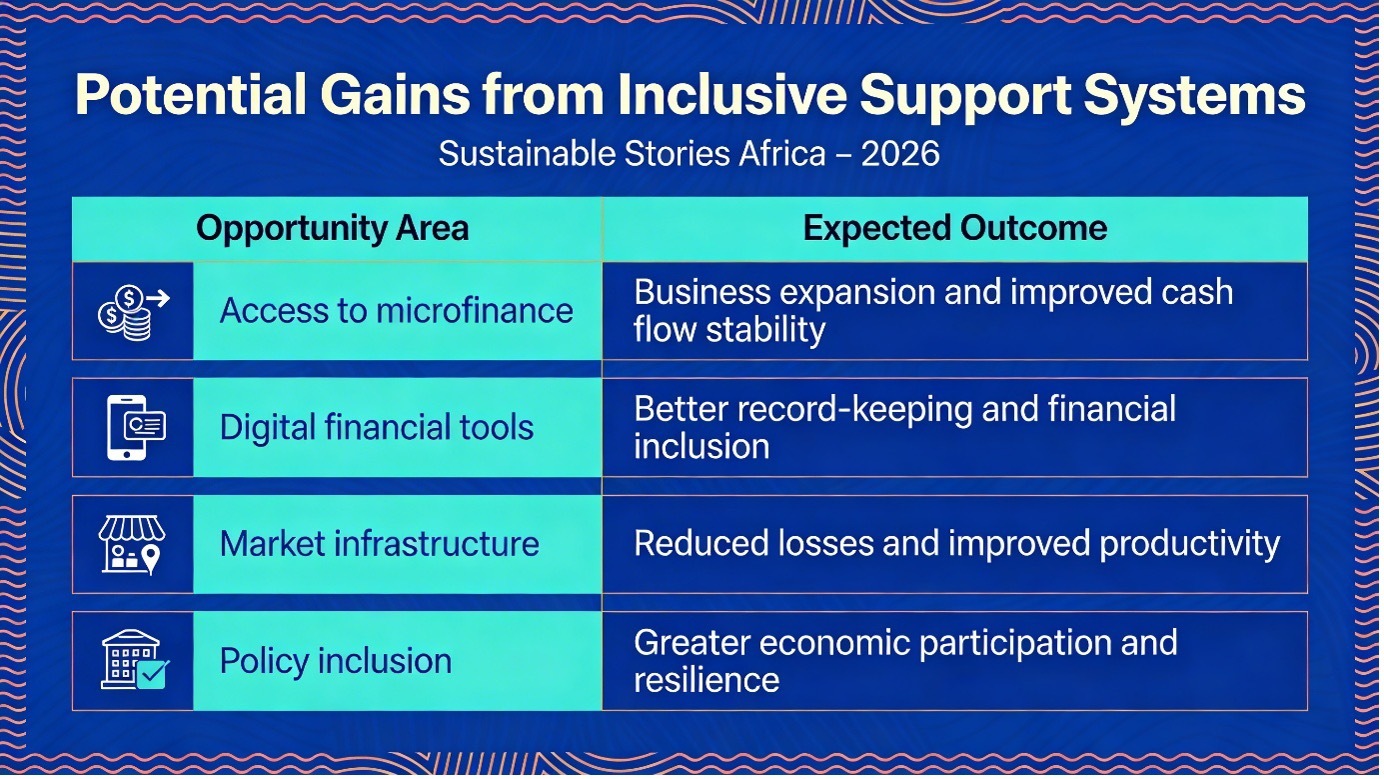
Potential Gains from Inclusive Support Systems
Opportunity Area | Expected Outcome |
|---|---|
Access to microfinance | Business expansion and improved cash flow stability |
Digital financial tools | Better record-keeping and financial inclusion |
Market infrastructure | Reduced losses and improved productivity |
Policy inclusion | Greater economic participation and resilience |
Without these interventions, however, the risks are equally clear: persistent poverty cycles, reduced economic mobility, and underutilisation of a critical segment of Africa’s workforce.
From Survival to Structured Inclusion
The path forward requires coordinated action across multiple stakeholders.
Governments must design policies that bridge the gap between informality and inclusion, simplifying registration processes, expanding access to microcredit, and investing in market infrastructure.
Financial institutions need to rethink risk models to accommodate informal business realities, while development partners can support capacity-building and digital literacy initiatives.
At the same time, there is a role for private-sector innovation, particularly in fintech, to create tailored solutions for informal traders.
For citizens and consumers, supporting local markets and informal businesses remains critical to sustaining these ecosystems.
Ultimately, the goal is clear: shift women entrepreneurs from survival mode to sustainable growth trajectories.
PATH FORWARD – Inclusive Markets, Resilient Women, Sustainable Growth
Building inclusive market systems requires aligning policy, finance, and infrastructure with informal realities.
Empowering women entrepreneurs will strengthen economic resilience, deepen financial inclusion, and unlock Africa’s grassroots growth potential.