Sahara Group has commissioned MT Asharami Ghana, a 40,000-cubic-metre LPG carrier aimed at strengthening Ghana’s energy supply chain.
The vessel arrives as West Africa seeks cleaner cooking fuels and more reliable LPG logistics.
With Ghana targeting wider LPG adoption and regional trade expansion, the investment signals growing infrastructure commitments across the sub-region’s energy markets.
New LPG Carrier Strengthens Regional Energy Supply
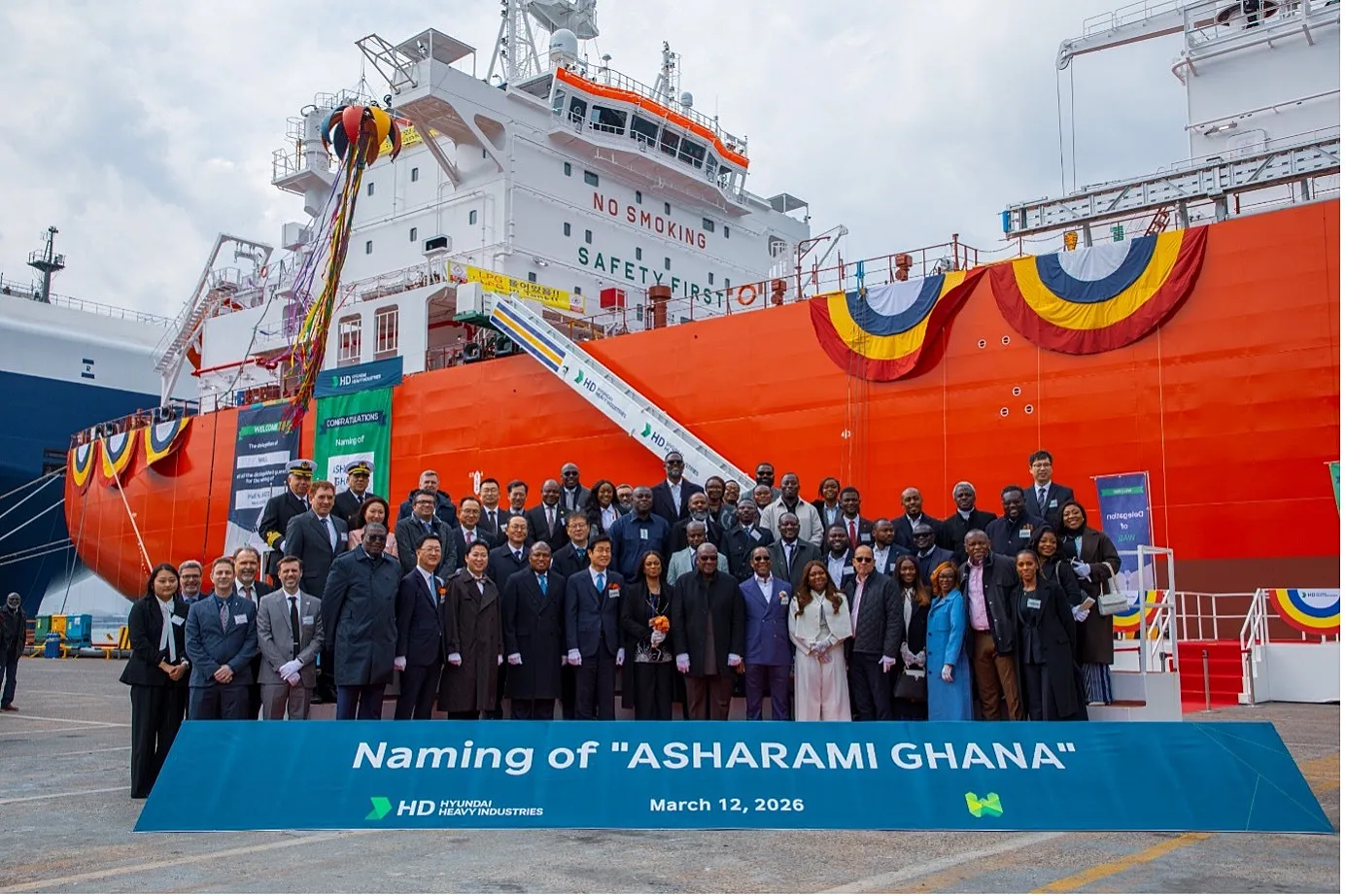
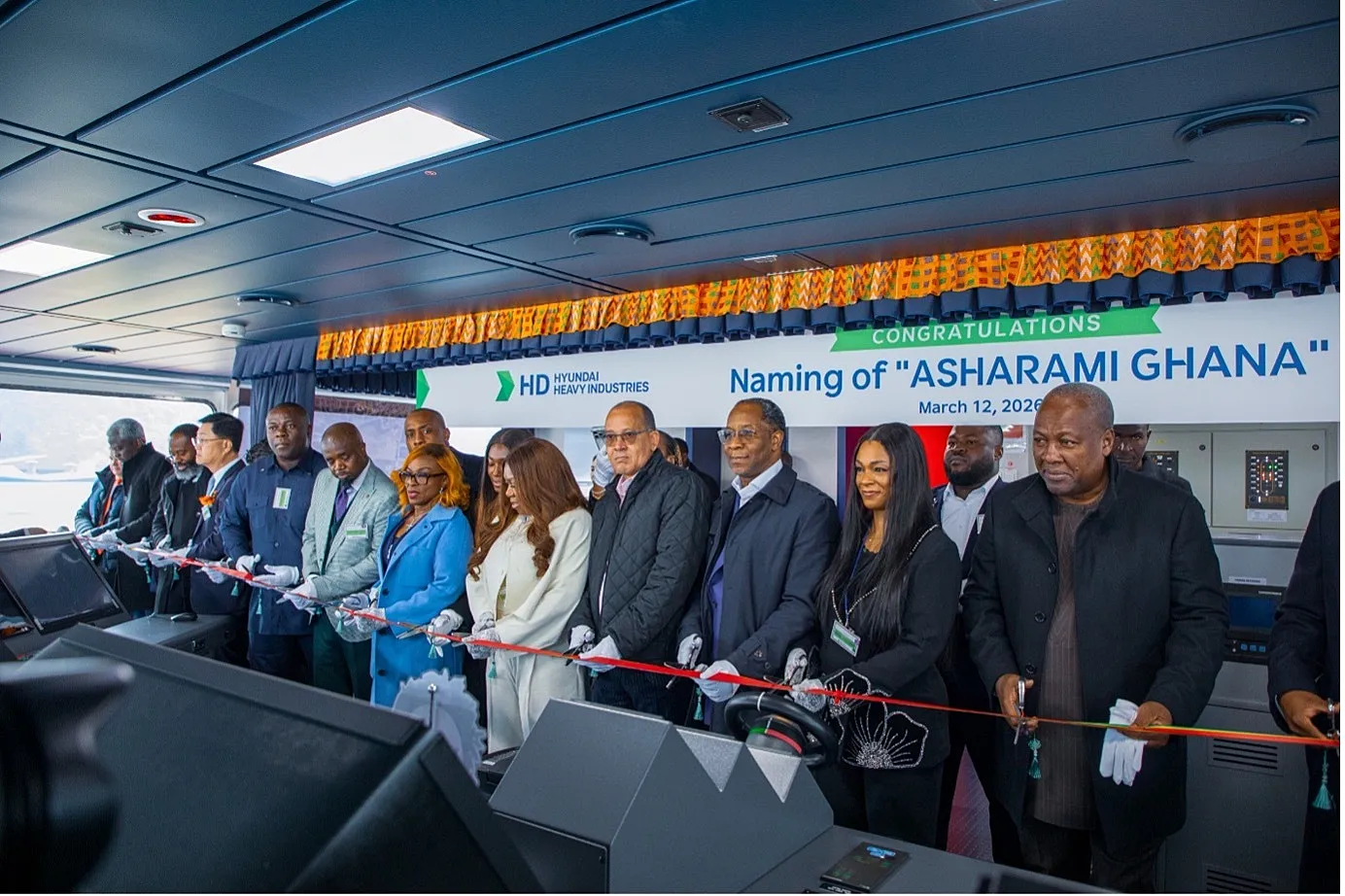
Sahara Group has commissioned MT Asharami Ghana, a 40,000-cubic-metre Liquefied Petroleum Gas (LPG) carrier, expanding its shipping fleet and reinforcing LPG distribution capacity for Ghana and the wider West African region.
The vessel was unveiled on March 12, 2026, in Ulsan, South Korea, marking a major milestone in the company’s regional energy logistics strategy.
The dual-fuel vessel is designed to improve operational efficiency, strengthen supply reliability and support lower-emission LPG logistics as demand grows across West Africa.
Speaking at the commissioning ceremony, Ghana’s President John Dramani Mahama described the vessel as a strategic step toward strengthening the infrastructure that underpins the global LPG supply chain.
“Expanded shipping capacity is critical to improving supply security, reliability and efficiency for countries that rely partly on LPG imports,” Mahama said during the ceremony.
The announcement comes as African governments increasingly promote LPG as a cleaner alternative to traditional biomass fuels used in cooking.
Infrastructure Expands As LPG Demand Rises
The addition of MT Asharami Ghana increases Sahara Group’s LPG carrier fleet to six vessels, with a combined capacity of 202,000 cubic metres.
According to Sahara Group Executive Director Wale Ajibade, the vessel forms part of a broader strategy to improve LPG supply security and strengthen Ghana’s clean-energy transition.
“MT Asharami Ghana is more than a vessel; it is part of a deliberate strategy to strengthen LPG supply security and support Ghana’s clean energy ambitions,” Ajibade said.
The vessel will provide an additional 25,000 metric tonnes of security for Ghana’s LPG supply chain while complementing new storage infrastructure currently under development in the country.
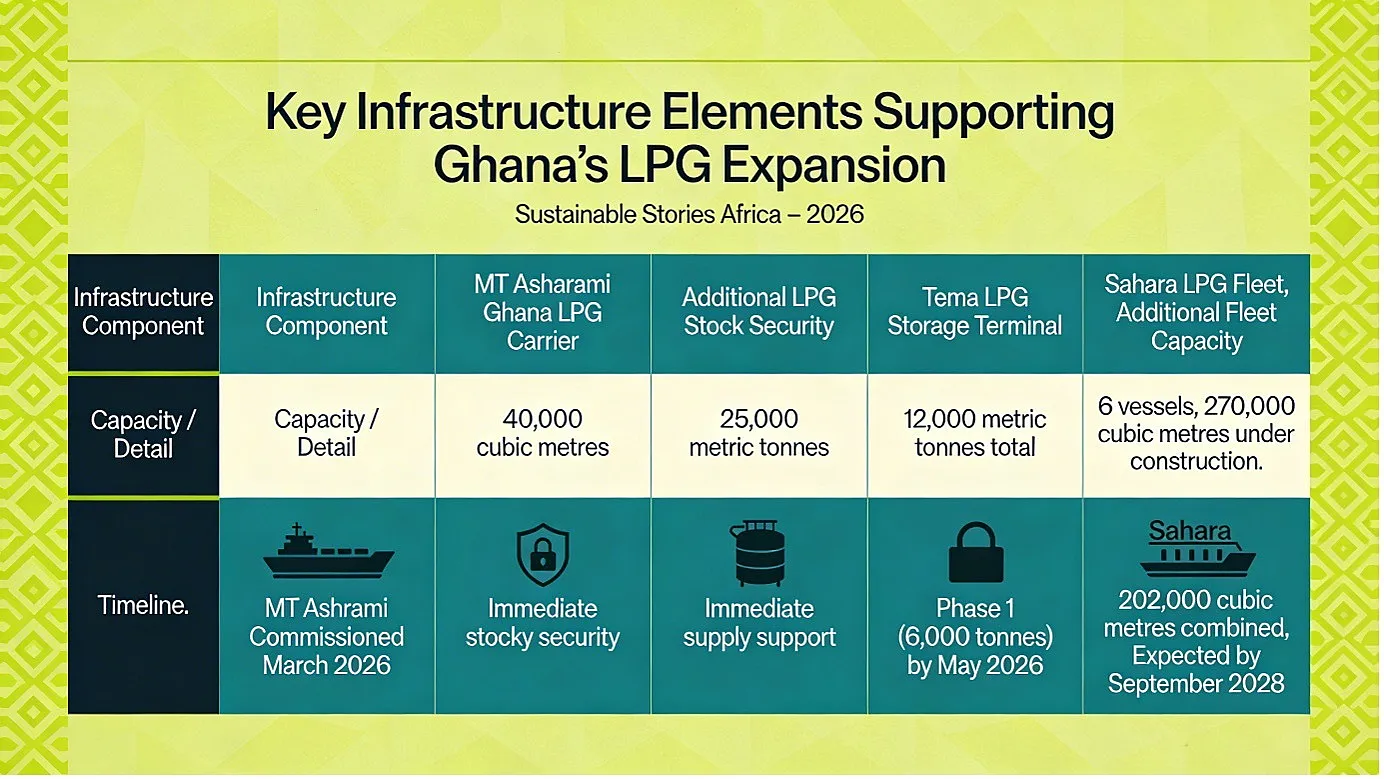
Key Infrastructure Elements Supporting Ghana’s LPG Expansion
Infrastructure Component | Capacity / Detail | Timeline |
|---|---|---|
MT Asharami Ghana LPG Carrier | 40,000 cubic metres | Commissioned March 2026 |
Additional LPG Stock Security | 25,000 metric tonnes | Immediate supply support |
Tema LPG Storage Terminal | 12,000 metric tonnes total | Phase 1 (6,000 tonnes) by May 2026 |
Sahara LPG Fleet | 6 vessels | 202,000 cubic metres combined |
Additional Fleet Capacity | 270,000 cubic metres under construction | Expected by September 2028 |
Sahara Group Executive Director Temitope Shonubi said the investment reflects the company’s integrated infrastructure strategy, combining shipping, storage and downstream LPG distribution.
The initiative also benefits from partnerships with organisations including WAGL Energy and NNPC Limited, highlighting growing collaboration across Africa’s energy supply chain.
Cleaner Cooking Fuel For Millions
The expansion arrives at a crucial moment for Ghana’s energy transition.
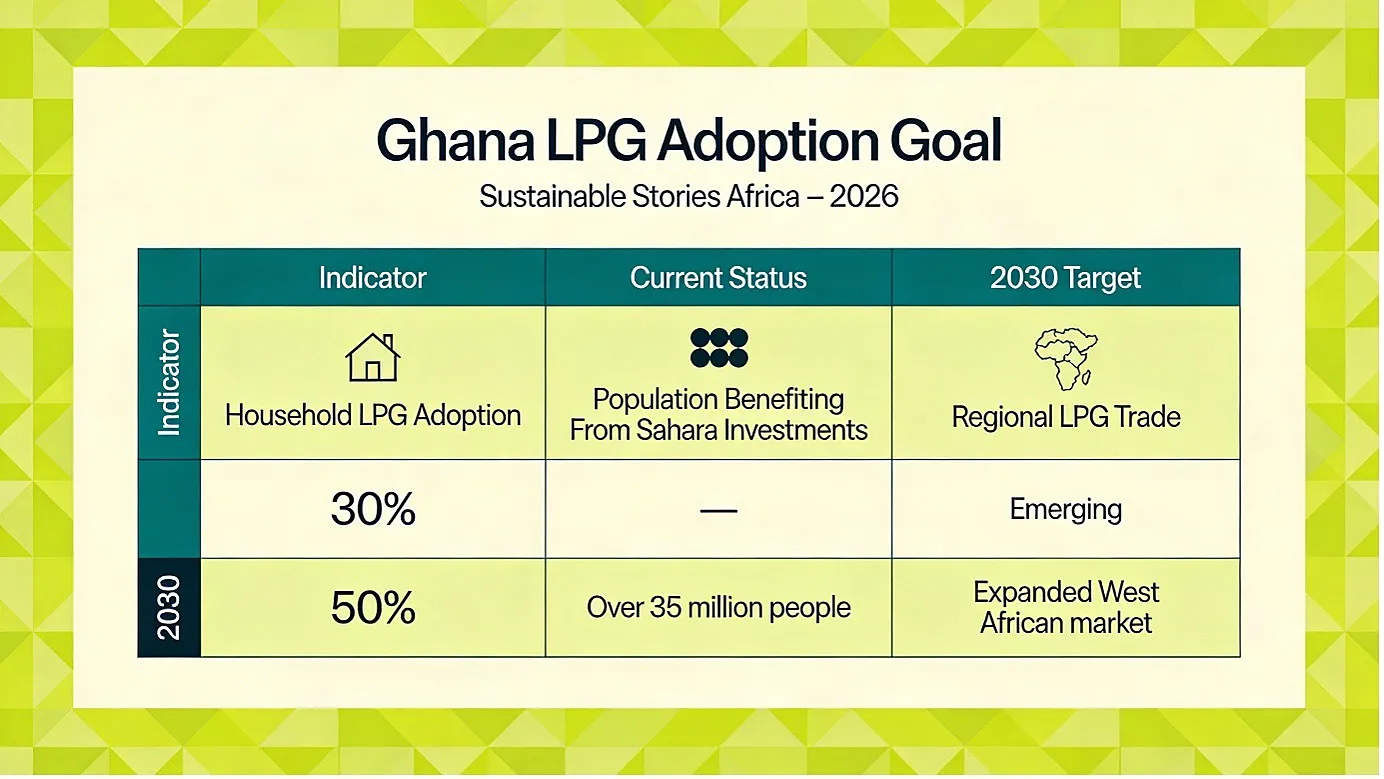
Ghana aims to increase LPG adoption to 50% of households by 2030, up from roughly 30% today, to reduce reliance on charcoal and firewood for cooking.
Expanding LPG infrastructure could significantly improve access to cleaner cooking fuels across the region.
Ghana LPG Adoption Goal
Indicator | Current Status | 2030 Target |
|---|---|---|
Household LPG Adoption | 30% | 50% |
Population Benefiting From Sahara Investments | — | Over 35 million people |
Regional LPG Trade | Emerging | Expanded West African market |
Sahara Group estimates its LPG infrastructure investments could support clean energy access for more than 35 million people, strengthening Ghana’s position as a regional distribution hub for its landlocked neighbours.
Beyond energy access, the project could improve regional fuel security, reduce indoor air pollution, and support economic activity tied to LPG trade and logistics.
The investment also coincides with Sahara Group’s 30th anniversary. In line with its theme “Sahara Beyond XXX”, the milestone initiative aimed at delivering long-term economic impact across its operating markets.
Regional Energy Logistics Needs Continued Investment
Despite progress, energy analysts say Africa’s LPG infrastructure remains underdeveloped relative to rising demand.
Shipping capacity, coastal storage terminals and inland distribution networks will be critical to enabling LPG expansion across the region.
Industry stakeholders argue that sustained investment is needed to:
- Expand LPG shipping and storage infrastructure
- Improve cross-border distribution networks
- Support cleaner cooking transitions across rural communities
- Strengthen regional energy trade corridors
The commissioning of MT Asharami Ghana highlights how private-sector investment can help bridge Africa’s infrastructure gap while advancing cleaner energy transitions.
From a policy perspective, initiatives such as Ghana’s LPG adoption programme illustrate how infrastructure, regulation and market demand must align to achieve sustainable energy outcomes.
The approach also reflects the broader reporting principle recommended in responsible press-release journalism: presenting the announcement, timeline, stakeholders and implications with clear data and context rather than promotional framing.
Path Forward – Expanding Infrastructure For Cleaner Energy
Ghana’s LPG expansion strategy highlights how logistics infrastructure can accelerate the adoption of cleaner energy across emerging markets. Shipping capacity, storage facilities and regional partnerships will remain central to improving supply reliability.
As Sahara Group continues to expand its fleet and storage investments, the initiative could strengthen West Africa’s LPG trade corridors, helping millions transition toward safer, cleaner household energy solutions.
Press Release