The UN-Water and UNESCO report reframes the global water crisis as a failure of governance and equity, rather than merely a resource shortage. Financing gaps, gender inequalities, and weak institutions continue to undermine access.
For Africa and emerging markets, the implication is immediate: without systemic reform, across policy, finance, and data, water scarcity will increasingly constrain economic growth, social stability, and climate resilience.
Water Security Now Defines Development Pathways
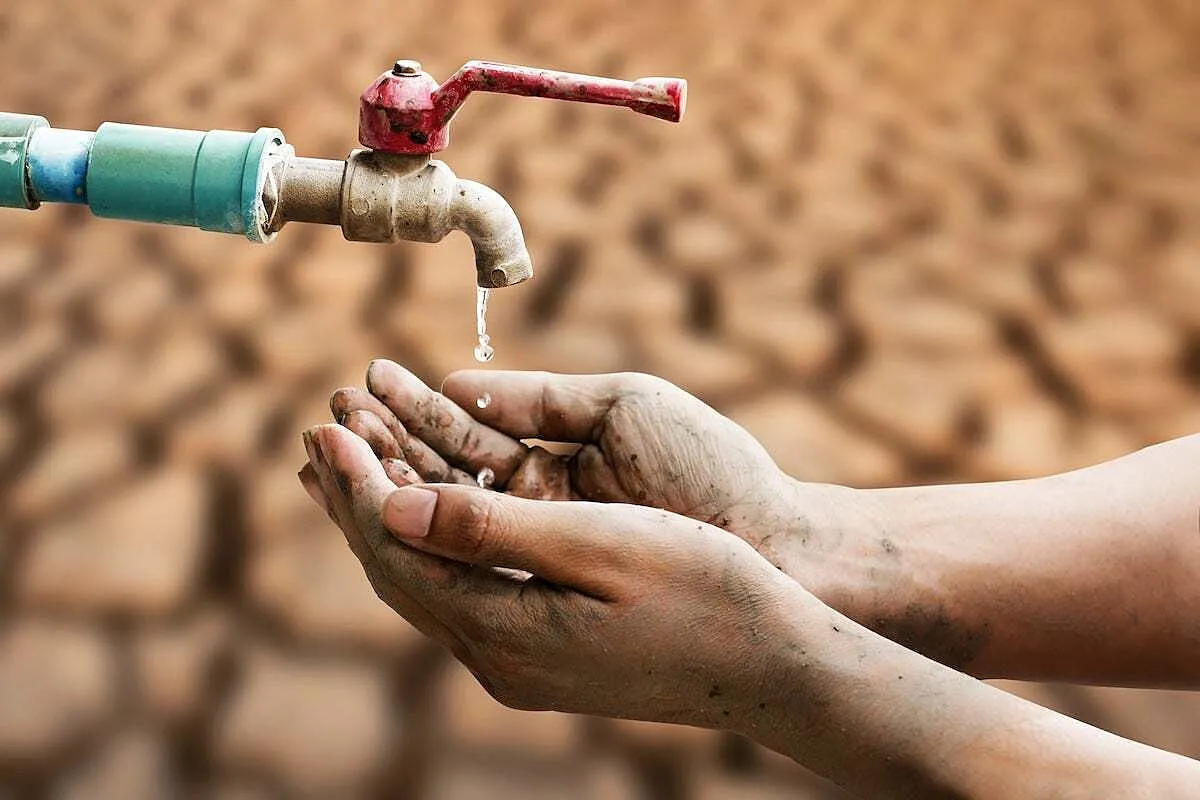
Water is no longer a sectoral issue; it is the operating system of development. Insights from the latest UN-Water and UNESCO report highlight a structural truth: the global water crisis is less about absolute scarcity and more about how water is governed, financed, and distributed.
In Sub-Saharan Africa, the crisis is already measurable. Only 58% of the population has access to basic water services, and just 47% to sanitation.
Every hour, approximately 115 people die from water-related diseases, an indicator not of resource absence but of systemic failure.
The core argument of this article is direct: water scarcity is increasingly a governance crisis, and unless this is addressed, climate adaptation, industrialisation, and social equity will all stall.
When Water Systems Fail: Development
The UN-Water and UNESCO findings arrive at a moment when climate volatility is intensifying water stress globally. Erratic rainfall, prolonged droughts, and ecosystem degradation are compounding existing vulnerabilities across Africa and other emerging markets.
However, the deeper challenge is institutional. Water systems are fragmented across ministries, underfunded in critical areas like data and capacity-building, and often disconnected from broader economic planning.
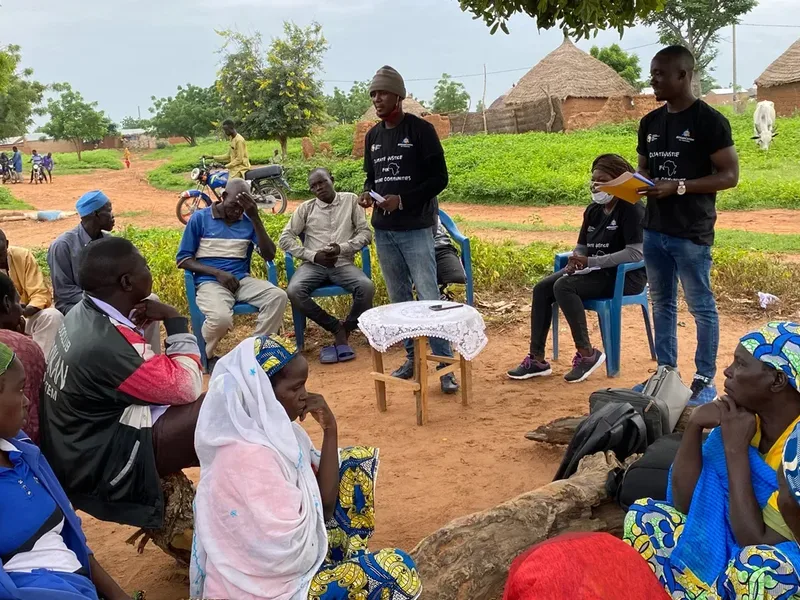
More critically, the crisis is unequal by design. Women and girls remain disproportionately burdened, responsible for water collection while being excluded from decision-making structures.
This imbalance is not incidental; it is systemic. It reflects governance frameworks that fail to integrate gender, local participation, and accountability into water policy.
The Invisible Risk Undermining Economies
Here is the uncomfortable reality: water insecurity is already constraining economic growth, and markets are underpricing the risk.
In Africa:
- Agriculture consumes 79% of freshwater resources; however, it remains highly climate dependent.
- Over 45% of the workforce depends on this water-sensitive sector.
- Climate variability is increasing supply volatility, creating systemic shocks to food systems and rural incomes.
This is not just an environmental issue; it is a macroeconomic one.
Water scarcity directly affects:
- Food inflation
- Industrial productivity
- Energy generation (hydropower and cooling systems)
- Public health expenditure
The central claim is clear: countries that fail to manage water effectively will face structural economic instability.
A System Strained By Design
The UNESCO report reveals a pattern of structural weaknesses that extends across emerging markets.
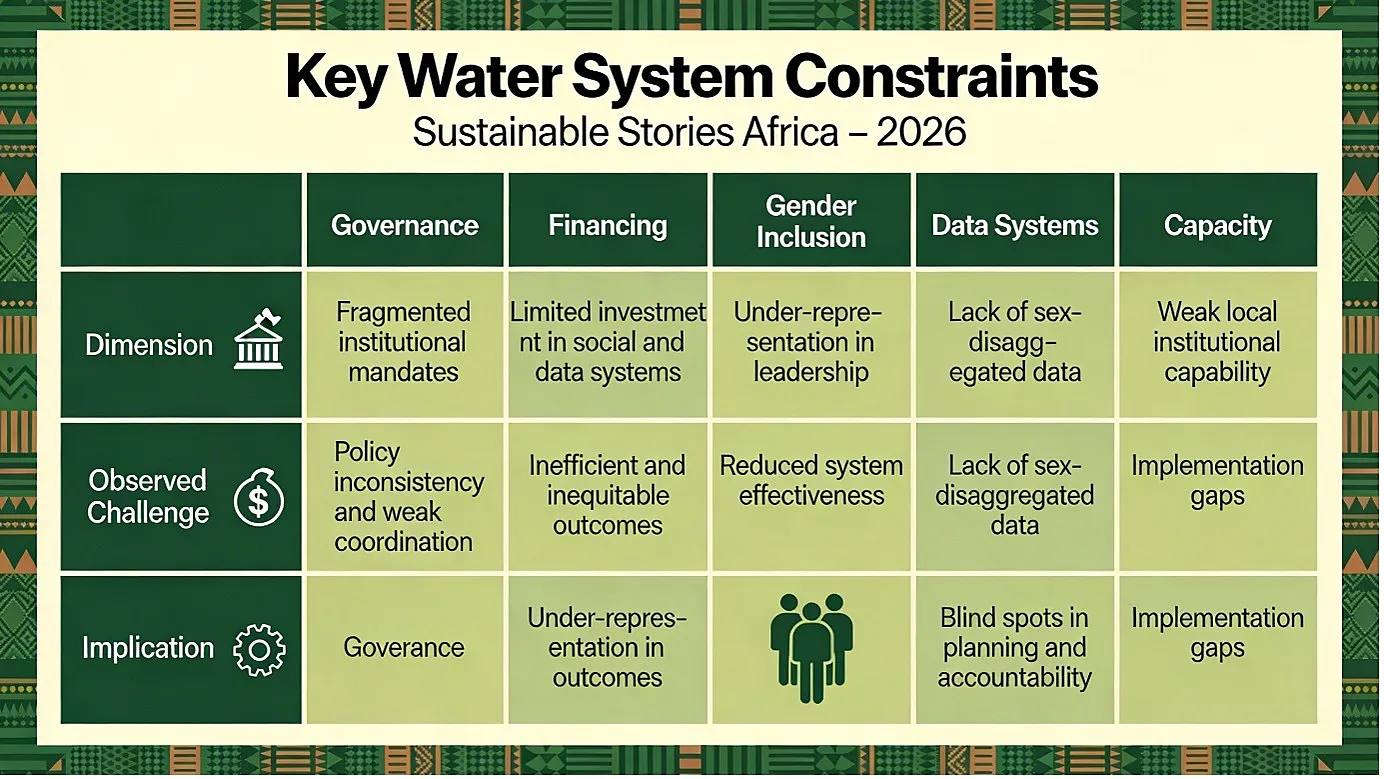
Key Water System Constraints
Dimension | Observed Challenge | Implication |
|---|---|---|
Governance | Fragmented institutional mandates | Policy inconsistency and weak coordination |
Financing | Limited investment in social and data systems | Inefficient and inequitable outcomes |
Gender Inclusion | Under-representation in leadership | Reduced system effectiveness |
Data Systems | Lack of sex-disaggregated data | Blind spots in planning and accountability |
Capacity | Weak local institutional capability | Implementation gaps |
One of the most critical insights is the financing paradox. While infrastructure funding attracts attention, investment in governance, data, and social systems remains underfunded.
This creates a cycle where:
- Projects are built
- Systems are not maintained
- Outcomes remain uneven
In essence, the problem is not building water systems; it is sustaining them.
What a Reformed Water System Unlocks
If governments and institutions address these structural gaps, the potential upside is transformative.
A well-governed water system would:
- Stabilise agricultural output, reducing vulnerability to climate shocks
- Improve public health outcomes, lowering disease burdens and healthcare costs
- Enable industrial growth, particularly in the manufacturing and energy sectors
- Empower women economically by reducing the time spent on water collection
- Attract long-term investment through predictable and resilient infrastructure systems
Emerging examples already exist. Decentralised solar water systems, mobile-based irrigation financing, and community-led water governance models are demonstrating scalable, locally adapted solutions across Africa.
The difference lies not in technology, but in institutional design and execution.
Rebuilding Water Systems As Economic Infrastructure
The policy agenda emerging from the UNESCO report is both urgent and actionable.
- Integrate Water Into National Economic Planning – Water must be treated as core infrastructure, linked to agriculture, industry, energy, and urban development.
- Rebalance Financing Toward Systems, Not Just Assets – Funding must prioritise:
- Data systems
- Capacity-building
- Governance reforms
- Gender-responsive frameworks
- Institutionalise Gender-Inclusive Governance – Women must move from water users to decision-makers. This requires:
- Leadership quotas
- Targeted training
- Inclusive policy frameworks
- Strengthen Local Delivery Systems – Subnational governments need:
- Technical capacity
- Financial autonomy
- Data tools
- Build Transparent, Accountable Water Finance – Improving transparency in financial flows can reduce corruption and enhance outcomes, particularly in gender-responsive financing.
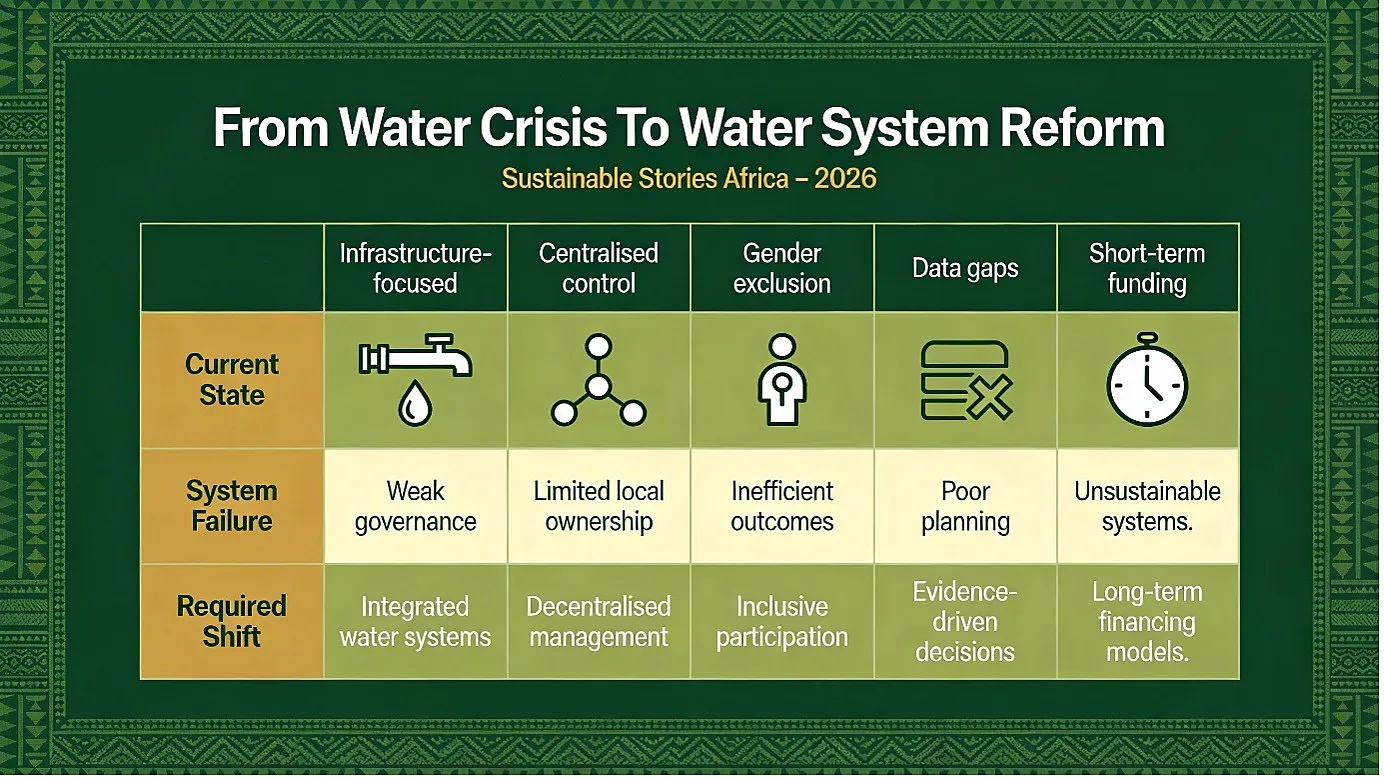
From Water Crisis To Water System Reform
Current State | System Failure | Required Shift |
|---|---|---|
Infrastructure-focused | Weak governance | Integrated water systems |
Centralised control | Limited local ownership | Decentralised management |
Gender exclusion | Inefficient outcomes | Inclusive participation |
Data gaps | Poor planning | Evidence-driven decisions |
Short-term funding | Unsustainable systems | Long-term financing models |
Path Forward – Build Systems That Deliver Equity
Water security will define the next phase of development across Africa and emerging markets. The priority is no longer access alone; it is system performance.
Countries must align governance, finance, and inclusion frameworks to ensure water systems deliver economic, social, and environmental outcomes simultaneously. Without this alignment, investments will continue to underperform, and inequality will deepen.
SSA Editorial Comment: Lessons For Africa
Africa’s water challenge is not primarily hydrological; it is institutional. The UNESCO report reinforces that governance, not scarcity, is the defining constraint.
Countries must move beyond fragmented sectoral approaches and build integrated water systems that align with industrial policy, climate adaptation, and public health priorities.
Equally, Africa must resist externally driven financing models that prioritise infrastructure over equity.
A sustainable water future requires investment in people, data, and institutions to ensure that water systems are built and governed effectively and inclusively.