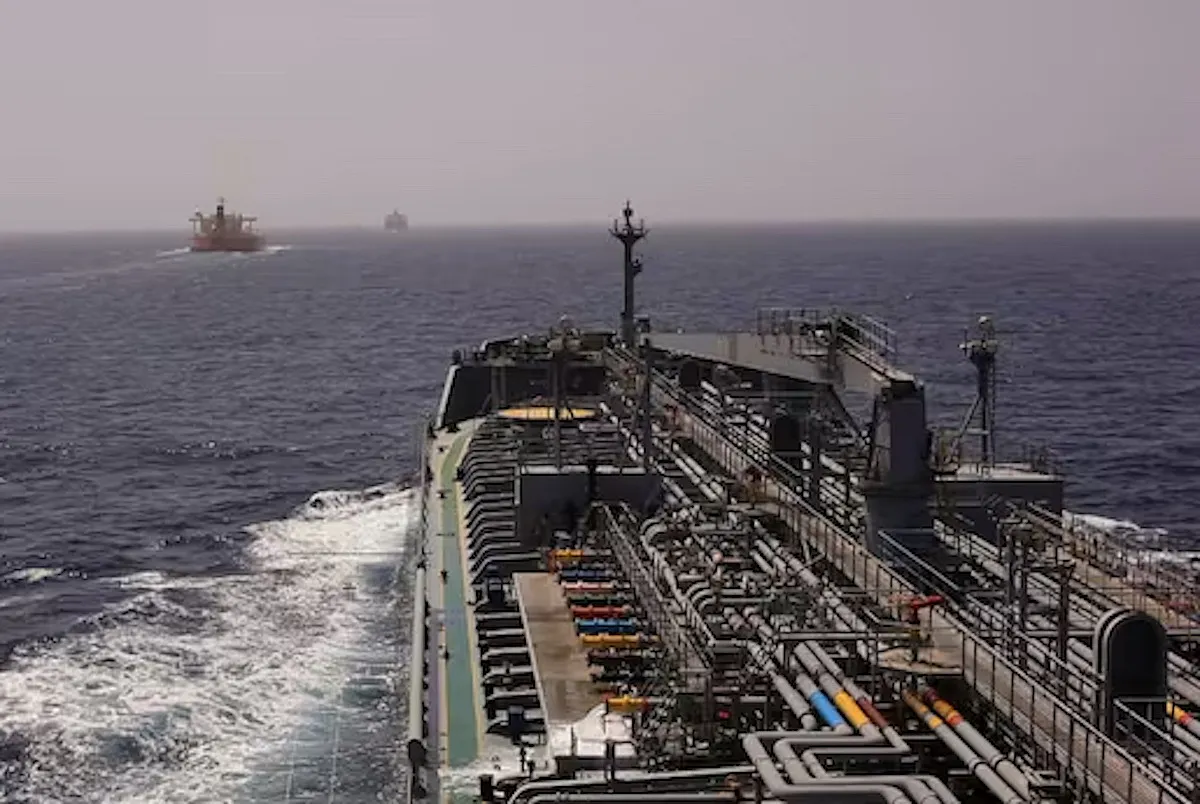
A geopolitical conflict thousands of kilometres away is squeezing Africa's fuel and food supplies and exposing how deeply the continent's economies remain shackled to fossil fuel imports.
As oil prices spike and supply chains fracture, the question is no longer whether Africa should accelerate its energy transition.
It is whether African leaders have the courage and the financial tools to act before the next crisis hits.
A Distant War, An African Problem
The Strait of Hormuz, a narrow waterway in the Persian Gulf through which nearly 20% of the world's oil and gas flows, is in crisis.
The ongoing US-Israel conflict with Iran has blocked the passage, creating a backlog of more than 2,000 vessels, sent war-risk insurance premiums to record highs, and inflicted damage on regional oil and gas infrastructure that experts say will take months to repair, with economic repercussions stretching years.
For a continent that imports the overwhelming bulk of its refined petroleum products, this is not a distant headline. It is a direct hit on household budgets, transport costs, industrial energy bills and food prices from Dakar to Dar es Salaam.
Africa Is Caught in the Crossfire
The Hormuz shock is playing out across the Global South in stark terms. Governments across Asia are rationing fuel, imposing price caps, depleting national reserves and, critically, restarting decommissioned coal plants and lifting environmental caps to prevent blackouts.
Indonesia, facing a fiscal squeeze, has even cut school feeding programmes, sacrificing the children’s welfare to manage an energy bill it did not cause.
Africa faces the same pressures, often with less fiscal room to navigate. Nigeria, Ghana, Kenya and a dozen other oil-importing African nations are absorbing higher pump prices, rising logistics costs and shrinking government revenues.
The fertiliser supply chain is equally at risk: Africa's agriculture depends heavily on chemical fertilisers produced using fossil-fuel inputs from the Middle East, routed, like the oil, through Hormuz. When that pipeline fractures, food prices follow.
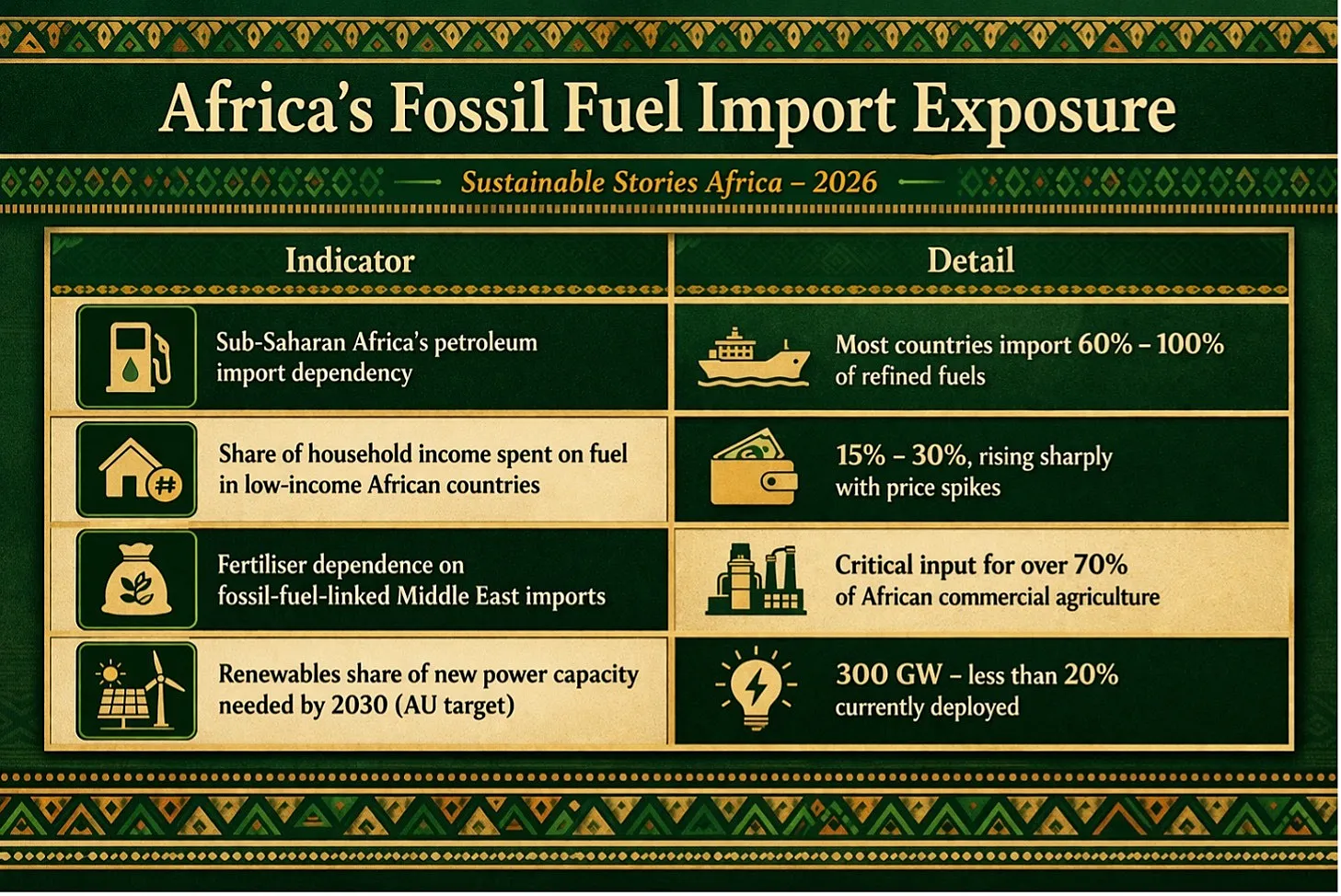
Africa's Fossil Fuel Import Exposure
| Indicator | Detail |
|---|---|
| Sub-Saharan Africa's petroleum import dependency | Most countries import 60% – 100% of refined fuels |
| Share of household income spent on fuel in low-income African countries | 15% – 30%, rising sharply with price spikes |
| Fertiliser dependence on fossil-fuel-linked Middle East imports | Critical input for over 70% of African commercial agriculture |
| Renewables share of new power capacity needed by 2030 (AU target) | 300 GW – less than 20% currently deployed |
Energy analysts warn that even if the conflict ends abruptly, the damage to global fossil fuel supply chains will keep prices volatile and higher than pre-conflict levels for years.
A "permanent shift in geopolitical risk pricing," as climate energy analysts describe it, means there is no return to cheap oil as Africa's default energy model.
The Transition Is Cheaper, Faster and Safer
The temptation for African governments is predictable: lock in more LNG deals, expand coal and fast-track new oil exploration.
Some will call it energy security. Simon Stiell, Executive Secretary of the United Nations Framework Convention on Climate Change, has a different word for it.
"Some responses to the fossil fuel crisis, incredibly, argue for doubling down on the cause of the problem," he said. "This is completely delusional because history tells us that this fossil fuel crisis will happen again and again. If there was ever a moment to accelerate that energy transition, breaking dependencies which have shackled economies, this is the time."
The evidence backs him up. Solar and wind energy are now the cheapest sources of new power generation globally.
African nations with the world's highest solar irradiance, from the Sahel to the Karoo, sit on an energy windfall they have barely tapped.
A continent that builds out renewable power, promotes electric vehicles and shifts agriculture to sustainable, locally sourced inputs is a continent that insulates itself from the next Hormuz, the next war, the next supply shock.
The alternative, scrambling to secure fossil fuel supplies through geopolitically unstable corridors, is not a strategy. It is a dependency that will compound costs, carbon emissions and crisis risk decade after decade.
African Central Banks Must Lead the Financing Shift
Accelerating the transition requires capital, and African central banks are an underused lever. Green monetary policy tools, including differentiated reserve requirements that favour green lending, climate-risk disclosure mandates for commercial banks, and sovereign green bond frameworks, can redirect financial flows towards renewable energy, sustainable agriculture and clean transport at the scale and speed the moment demands.
African finance ministers, central bank governors and development finance institutions must act with urgency now: green bond issuance, concessional climate finance from multilateral partners, and pan-African renewable energy grids are no longer aspirational targets.
They are balance-sheet necessities. Every year of delay is another year of exposure to oil price shocks, food insecurity and currency pressure driven by import bills Africa cannot afford.
Path Forward – Green Finance Anchors African Resilience
African central banks and finance ministries must treat the Hormuz shock as a strategic mandate, mobilising green monetary tools, sovereign green bonds and regional energy cooperation to break fossil fuel dependency once and for all.
A renewable-powered Africa that finances its own transition through green banking instruments will not just reduce climate risk; it will build the economic sovereignty and energy security that no geopolitical conflict thousands of miles away can threaten.
Culled from an article by Kari Huus