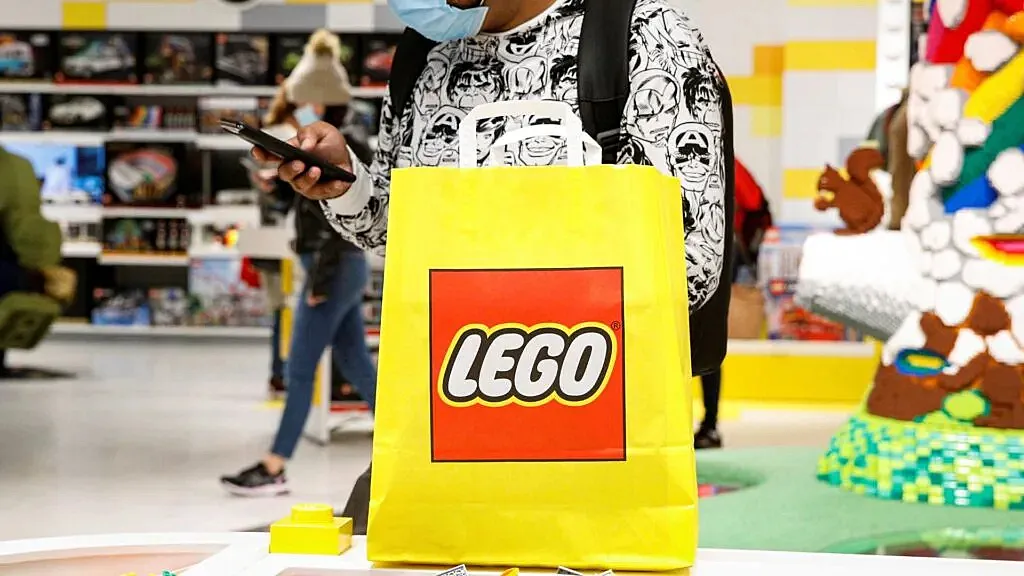
Toymaker The LEGO Group has reached a major sustainability milestone, announcing that half of the materials used in its iconic bricks now come from renewable or recycled sources.
The move marks a significant step in the company’s push to reduce reliance on fossil-based plastics.
Beyond toys, the development signals how circular manufacturing could reshape global plastics supply chains and influence sustainability transitions across consumer industries.
LEGO’s Circular Plastic Breakthrough Reaches Global Milestone
For generations, LEGO bricks have symbolised creativity and imagination. They are becoming a test case for circular manufacturing.
The LEGO Group announced it has reached 50% renewable and recycled material content across the plastics used to manufacture its bricks, an important milestone in the company’s effort to eliminate fossil-fuel-based materials from its products.
The announcement marks one of the most significant material transitions in the toy industry, where plastic durability, safety, and precision engineering have historically made recycling extremely difficult.
The milestone is part of LEGO’s broader climate and sustainability strategy, which aims to use more sustainable materials while maintaining the quality and durability that define the brand.
For the global plastics sector and industries exploring circular manufacturing models, the shift demonstrates that large-scale product redesign is possible.
Rethinking Plastic Through Circular Materials Innovation
LEGO produces billions of bricks every year, each designed to maintain tight tolerances so that pieces manufactured decades apart still connect perfectly.
That engineering challenge has historically limited the use of recycled plastics.
However, the company has invested heavily in new material science approaches, including bio-based plastics derived from plant sources and high-quality recycled polymers.
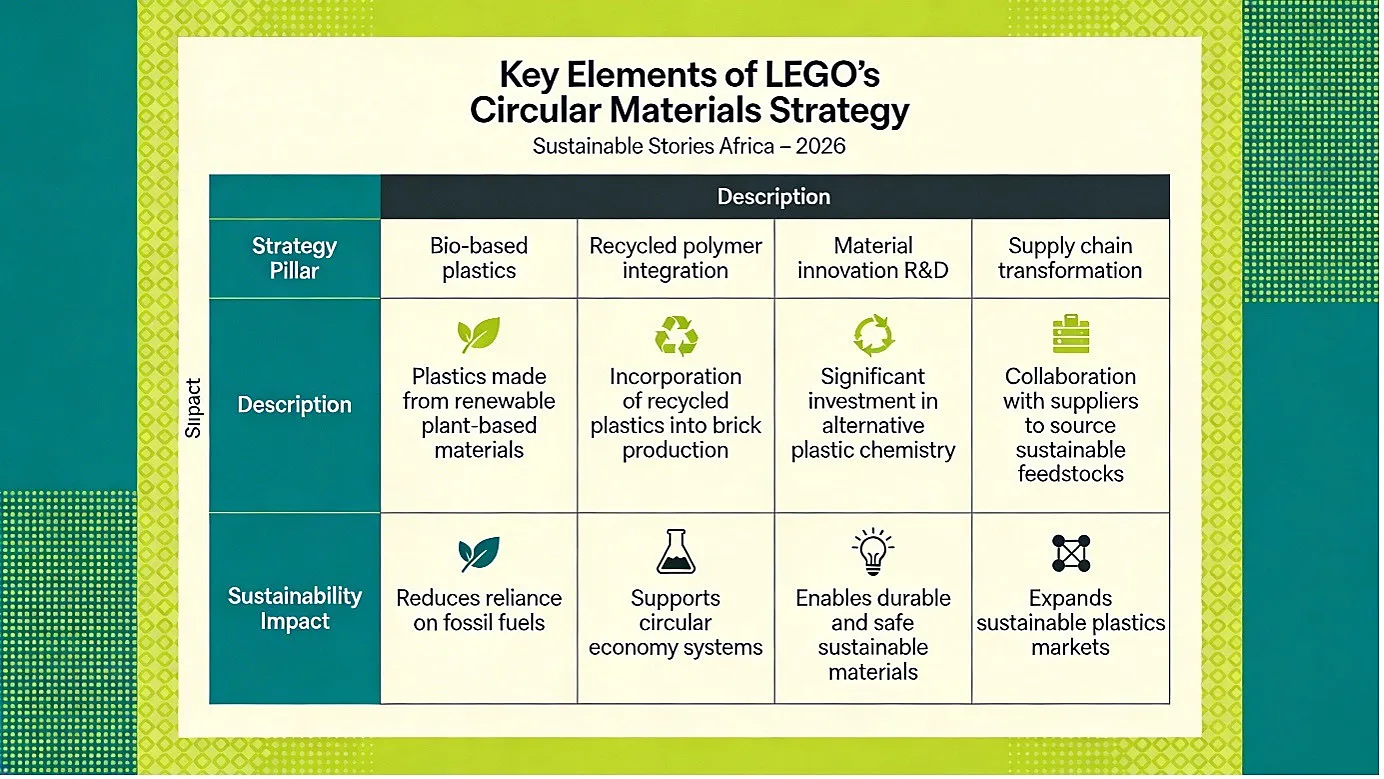
Key Elements of LEGO’s Circular Materials Strategy
Strategy Pillar | Description | Sustainability Impact |
|---|---|---|
Bio-based plastics | Plastics made from renewable plant-based materials | Reduces reliance on fossil fuels |
Recycled polymer integration | Incorporation of recycled plastics into brick production | Supports circular economy systems |
Material innovation R&D | Significant investment in alternative plastic chemistry | Enables durable and safe sustainable materials |
Supply chain transformation | Collaboration with suppliers to source sustainable feedstocks | Expands sustainable plastics markets |
Industry analysts say LEGO’s progress reflects a broader shift across manufacturing sectors.
Global plastics production exceeds 400 million tonnes annually, according to the United Nations Environment Programme, with only a small fraction currently recycled into new products.
Circular manufacturing, where materials are reused, recycled, or replaced with renewable inputs, is increasingly highlighted as essential to tackle plastic waste and climate emissions.
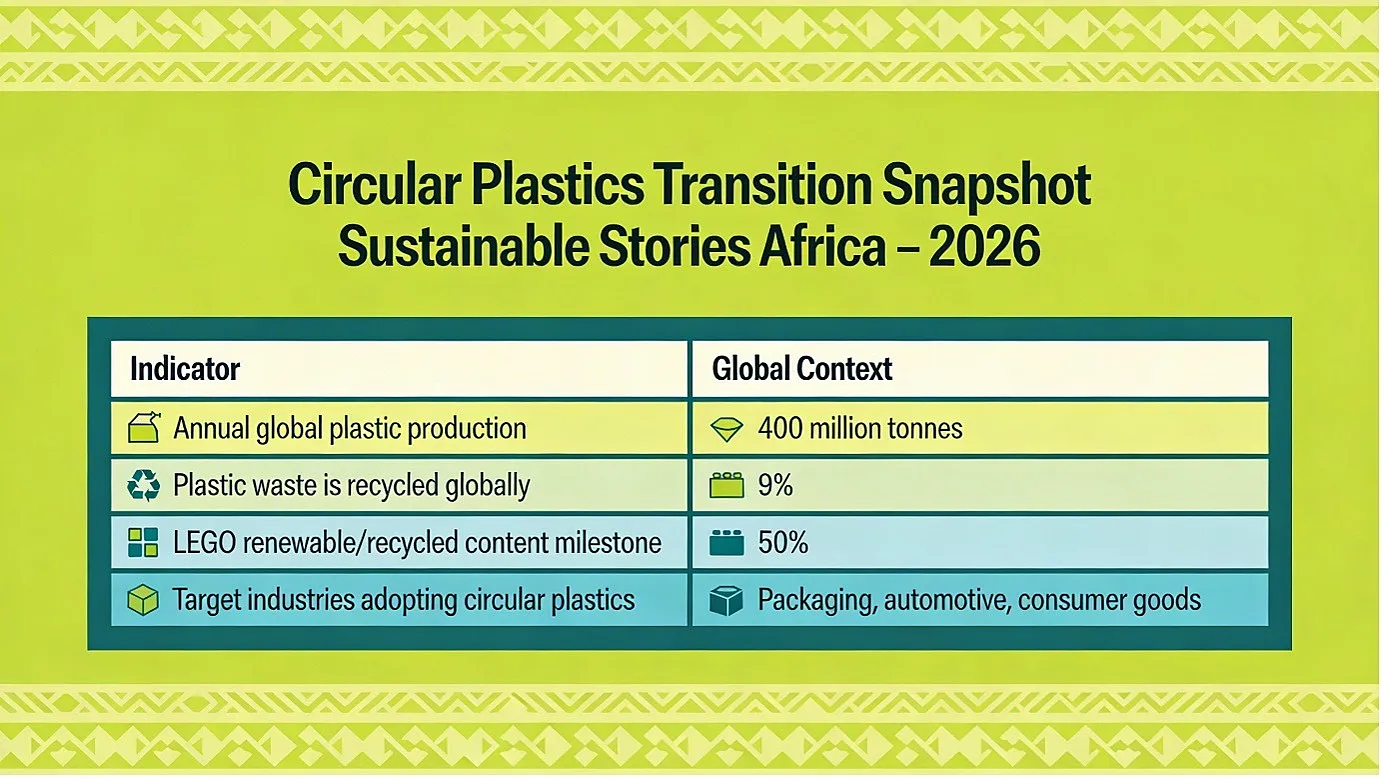
Circular Plastics Transition Snapshot
Indicator | Global Context |
|---|---|
Annual global plastic production | 400 million tonnes |
Plastic waste is recycled globally | 9% |
LEGO renewable/recycled content milestone | 50% |
Target industries adopting circular plastics | Packaging, automotive, consumer goods |
For developing economies and emerging markets, including many African countries grappling with plastic pollution, innovations in circular materials could create new economic opportunities.
Recycling industries, sustainable materials manufacturing, and waste-to-resource supply chains are increasingly being viewed as green growth sectors.
Building A Circular Future For Consumer Products
LEGO’s milestone illustrates what is possible when sustainability targets are embedded directly into product design.
For companies, the benefits extend beyond environmental impact.
Circular materials strategies can help reduce exposure to volatile fossil-fuel markets, strengthen supply chain resilience, and respond to growing consumer demand for sustainable products.
For governments and cities struggling with plastic waste, innovations in recyclable materials and circular manufacturing could transform waste management systems.
The global transition to circular plastics could also unlock new industries, from recycling technology to bio-material production, creating jobs and investment opportunities.
For children and families, the symbolism is powerful: toys that build imagination are increasingly built with materials designed for a more sustainable world.
Scaling Circular Manufacturing Across Industries
Despite progress, experts say scaling the use of circular materials across global manufacturing remains a major challenge.
Recycled plastics must meet strict safety and quality standards, supply chains must adapt to new materials, and recycling systems must improve dramatically.
Businesses, policymakers, and investors all play critical roles in accelerating the transition.
Key priorities include:
- Expanding advanced recycling infrastructure
- Supporting innovation in bio-based materials
- Introducing policies that incentivise circular production
- Building markets for recycled materials
If companies across industries adopt similar approaches to LEGO’s circular materials strategy, the shift could significantly reduce global plastic waste and emissions.
For the toy industry, the message is clear: sustainability is becoming as central to product design as creativity itself.
Path Forward – Circular Plastics Becoming Manufacturing Standard
LEGO’s 50% renewable materials milestone signals a turning point for consumer manufacturing. Circular material innovation is moving from experimental pilot projects to large-scale industrial adoption.
For emerging markets, the opportunity lies in building recycling ecosystems and sustainable materials industries that support global supply chains, transforming plastic waste challenges into new engines of green economic growth.
Culled From: LEGO Reaches 50% Renewable and Recycled Content in Bricks, Advancing Circular Materials Strategy