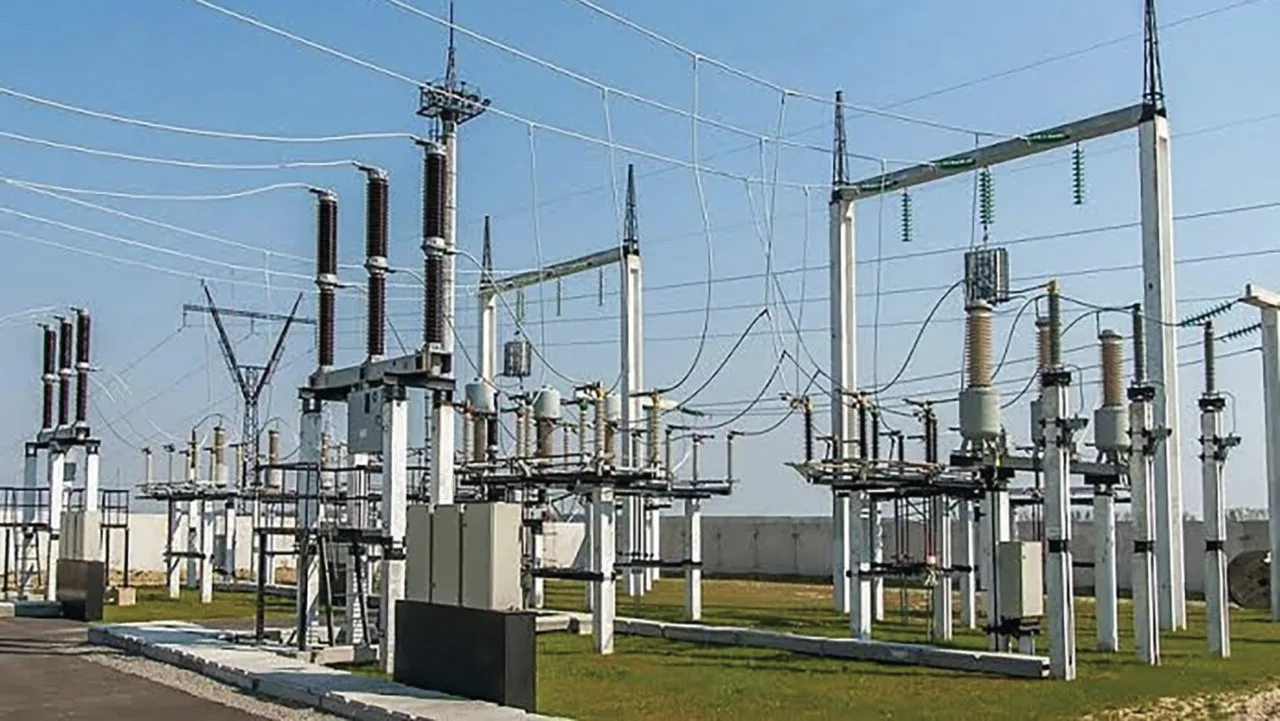
Nigeria’s electricity crisis is no longer about how much power is generated, but how much is delivered.
A new reform anchored in accountability, digitalisation, and structural separation is reframing the national grid challenge, and raising a critical question: can governance fix what infrastructure alone could not?
Fixing Power Delivery, Not Supply
Nigeria’s power sector is undergoing a structural rethink, one that challenges a long-held assumption: that the country suffers from a generation deficit.
Nigeria can produce up to 50,000 MW of electricity; however, only about 5,000 MW reaches homes and businesses, highlighting deep inefficiencies in transmission and distribution systems (page 2).
This insight is driving a new reform agenda focused on grid accountability, operational transparency, and digital transformation, spearheaded by the creation of the Nigerian Independent System Operator (NISO).
The stakes are high. With unreliable electricity costing Nigerians an estimated $22 billion annually in generator expenses (page 3), the power grid has become not just an infrastructure issue, but a defining constraint on economic growth, industrialisation, and climate transition.
A 90% Delivery Gap Reshapes the Debate
The numbers are stark.
Nigeria’s power system loses nearly 90% of its potential capacity before it reaches end users, a gap that reframes the crisis from “generation shortage” to systemic delivery failure.
As highlighted in the report, “Nigeria does not actually have a power shortage; it has a power delivery problem” (page 2).
This shift in framing matters.
For years, policy and investment focused heavily on increasing generation capacity.
However, without a reliable grid to transmit and distribute electricity, additional megawatts have translated into limited real-world impact.
The reform now seeks to correct that imbalance by addressing governance, coordination, and infrastructure bottlenecks simultaneously.
Where the System Broke and What’s Changing
- The Structural Problem: Weak Oversight – At the heart of the grid’s dysfunction was a governance flaw.
Prior to the Electricity Act 2023, a single entity, the Transmission Company of Nigeria (TCN), acted as both the operator and the regulator of the grid (page 4).
This dual role created:
- Conflicts of interest
- Weak accountability mechanisms
- Limited transparency in system failures
As the report notes, the same body “managed the grid and investigated its own failures,” resulting in systemic inefficiencies and weak enforcement.
- The Reform: Separating Roles for Accountability – The creation of NISO marks a turning point.
Old vs New Grid Governance Structure
Function | Pre-Reform (TCN) | Post-Reform |
|---|---|---|
Grid Infrastructure | TCN | TCN |
System Operation | TCN | NISO |
Market Oversight | TCN | NISO |
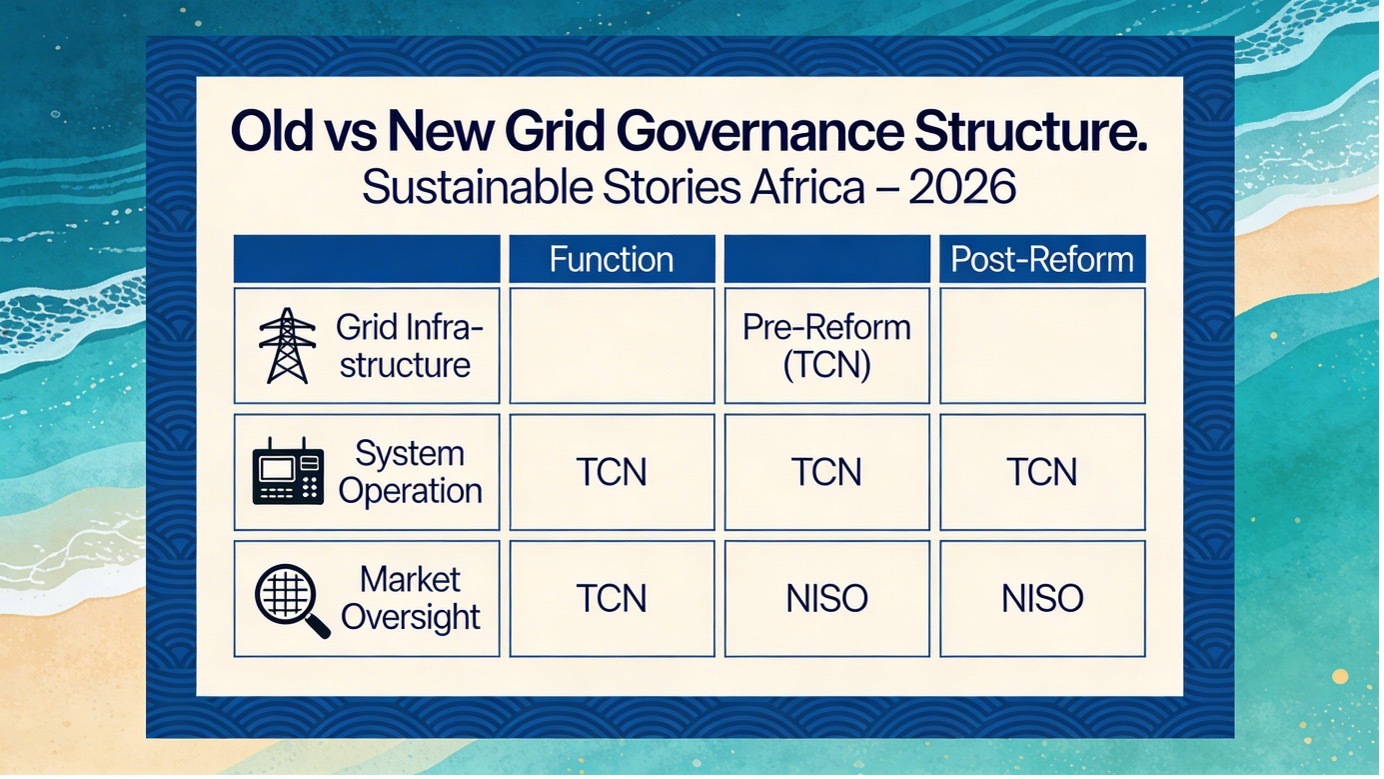
Under the new structure:
- TCN focuses on building and maintaining transmission infrastructure
- NISO manages electricity flow, ensures compliance, and enforces market rules
This separation introduces checks and balances, aligning Nigeria’s grid governance with global best practices.
- Progress So Far: Early Gains Emerging – Initial improvements suggest momentum.
According to the report:
- Transmission capacity has increased to 8,700 MW
- 82 transformers have been deployed nationwide
- Peak delivery has reached 5,802 MW
- A $1.16 billion digital upgrade programme is 69% complete (page 6)
While still far below potential capacity, these gains indicate that targeted interventions can yield measurable improvements.
- Digitalisation: The SCADA Advantage – A central pillar of the reform is SCADA (Supervisory Control and Data Acquisition) technology, enabling:
- Real-time monitoring of electricity flows
- Instant fault detection
- Remote rerouting of power
- Automated supply balancing (page 7)
This marks a transition from a manual, reactive grid to a digital, responsive system, critical for reliability and resilience.
- Why Blackouts Persist – Despite reforms, outages remain frequent due to three key factors:
- Gas shortages at power plants
- Weak distribution networks
- Operational rule violations (page 8)
These challenges highlight that grid reform must extend beyond transmission to encompass fuel supply chains, distribution companies, and regulatory enforcement.
What a Functional Grid Could Unlock
If successfully implemented, the reform could transform Nigeria’s economy.
Economic and Social Gains from Grid Stability
Area | Impact |
|---|---|
Businesses | Lower energy costs, improved competitiveness |
Households | Reduced reliance on generators |
Economy | Higher productivity and GDP growth |
Climate | Lower emissions from diesel generators |
Investment | Increased investor confidence |
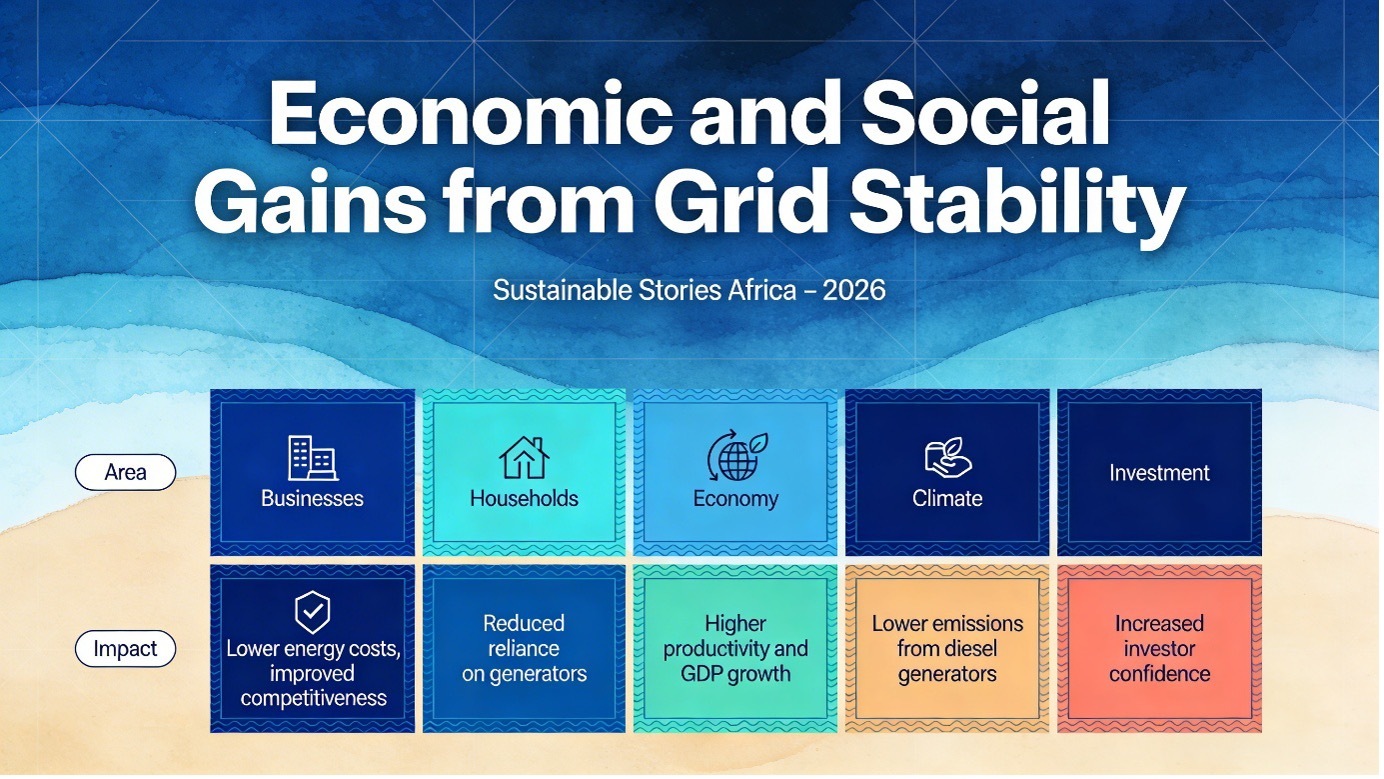
Reliable electricity is not just a utility; it is a foundation for development.
From manufacturing to digital services, stable power could unlock:
- Industrial expansion
- Job creation
- Reduced cost of living
- Accelerated energy transition
Conversely, failure to act risks entrenching a parallel energy economy dominated by diesel generators and inefficiency.
What Must Happen Next
To sustain momentum, stakeholders must act decisively.
- Strengthen Regulatory Enforcement
- Ensure strict compliance with grid codes
- Empower NISO with operational independence
- Complete Digital Transformation
- Fast-track SCADA deployment nationwide
- Integrate data systems across generation, transmission, and distribution
- Fix Distribution Bottlenecks
- Upgrade distribution infrastructure
- Improve metering and revenue collection
- Secure Energy Inputs
- Address gas supply constraints
- Diversify into renewables and hybrid systems
- Improve Transparency and Reporting
- Publish quarterly performance reports
- Track system reliability metrics publicly (page 9)
As Dr Adesegun Akin-Olugbade, Chairman of NISO, notes:
“Electricity is 19th-century technology. We don’t need rocket science to fix it, we need honesty, better tools, and strict enforcement of the rules.” (page 10)
Path Forward – Accountability Meets Execution
Nigeria’s grid reform signals a critical shift, from infrastructure expansion to governance and delivery efficiency. By separating roles, digitising operations, and enforcing accountability, the country is laying the foundation for a more reliable power system.
The next phase will test execution. Sustained reforms, cross-sector coordination, and transparent performance tracking will determine whether Nigeria can finally turn installed capacity into delivered power and unlock its full economic potential.