Global deforestation fell 15% in 2025, yet tropical Africa continued losing more forest.
The Forest Declaration Assessment 2026 exposes a widening gap between international pledges and the incentives shaping land use.
For African economies, the challenge extends to agricultural resilience, water security and investment.
Durable progress requires finance, enforceable protections and secure community rights.
Africa Faces A Diverging Forest Crisis
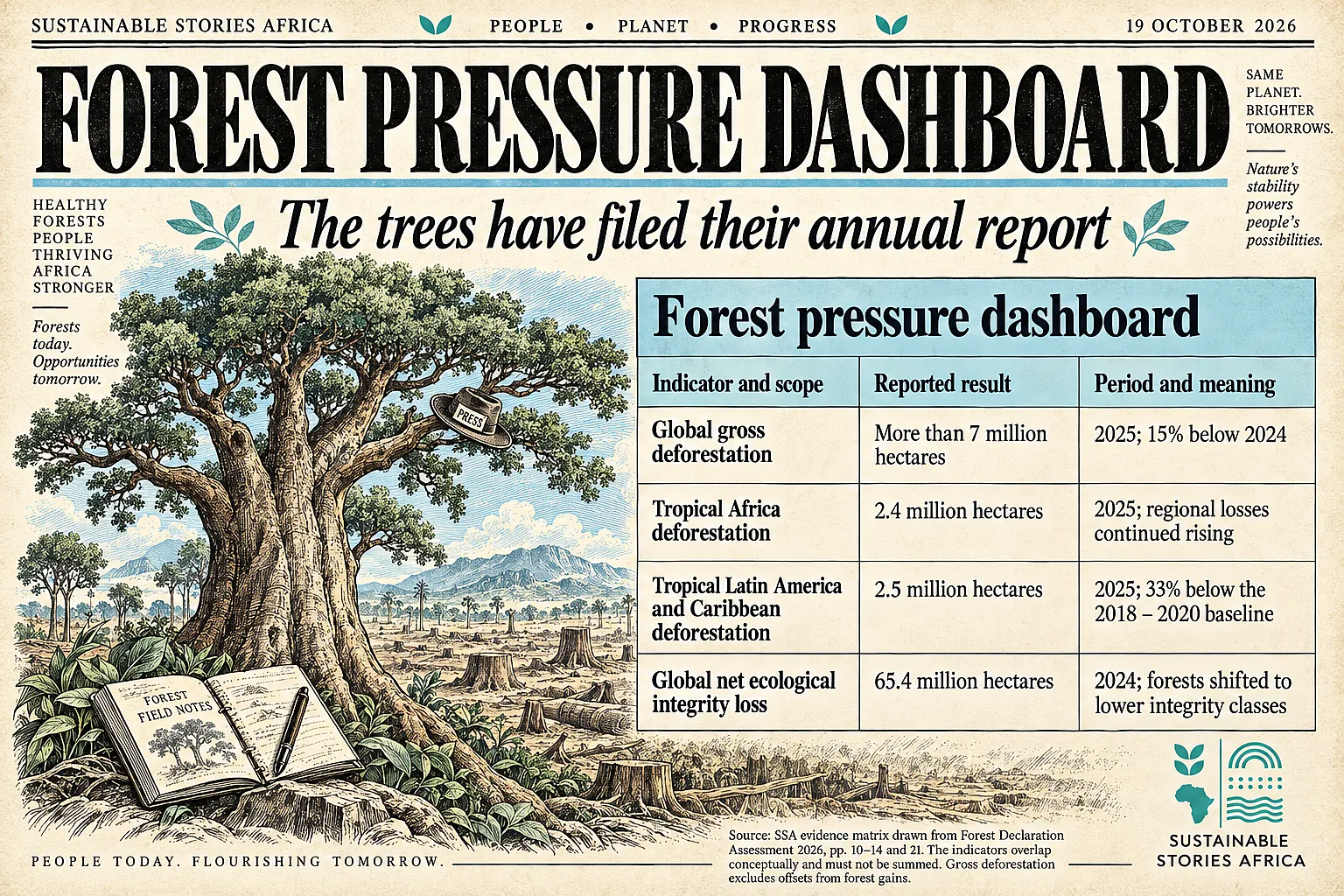
Tropical Africa lost approximately 2.4 million hectares to deforestation in 2025, approaching tropical Latin America and the Caribbean's 2.5 million hectares for the first time in the assessment's series. The regional increase came as global deforestation declined, according to the Forest Declaration Assessment 2026.
The independent assessment, coordinated by Climate Focus, tracks progress towards halting and reversing deforestation and forest degradation by 2030.
- Its central finding is uncomfortable: stronger enforcement can deliver rapid improvements, but economic incentives and governance systems have yet to secure lasting protection.
For African governments, businesses and communities, this is a development concern with immediate consequences.
- Forests help regulate rainfall, protect soils and sustain water systems.
Their deterioration can weaken the productive base on which farming, energy and local livelihoods depend, even while national growth strategies seek more output from the same landscapes.
A Global Decline Conceals Deepening Pressures
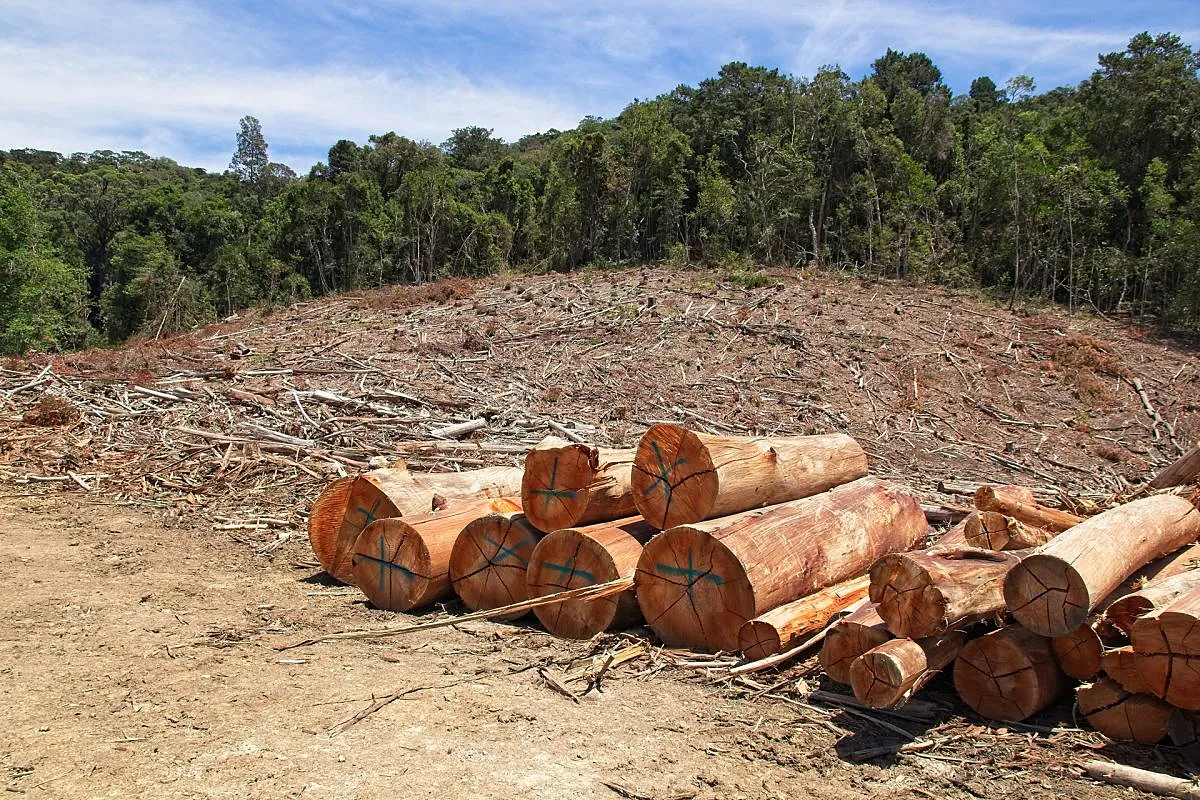
Just over seven million hectares disappeared through deforestation worldwide in 2025.
- This represented a 15% annual decline, but losses since 2021 still exceeded the assessment's pathway to the 2030 goal by 10.7 million hectares.
- This cumulative shortfall measures additional forest cleared above that benchmark; it is distinct from total forest loss.
Regional differences matter.
- Tropical Latin America and the Caribbean reduced deforestation to 33% below the 2018 – 2020 baseline, while tropical Africa continued moving in the opposite direction.
- The report links Africa's pressures to agricultural expansion, infrastructure development and regulatory systems struggling to redirect land conversion.
Forest condition requires a wider lens than cleared hectares.
- In 2024, the latest year available for this indicator, a net 65.4 million hectares worldwide shifted into a lower ecological integrity category.
- This captures deterioration within forests that may remain standing. It is a different measure, covering a different year, and cannot be added to deforestation totals.
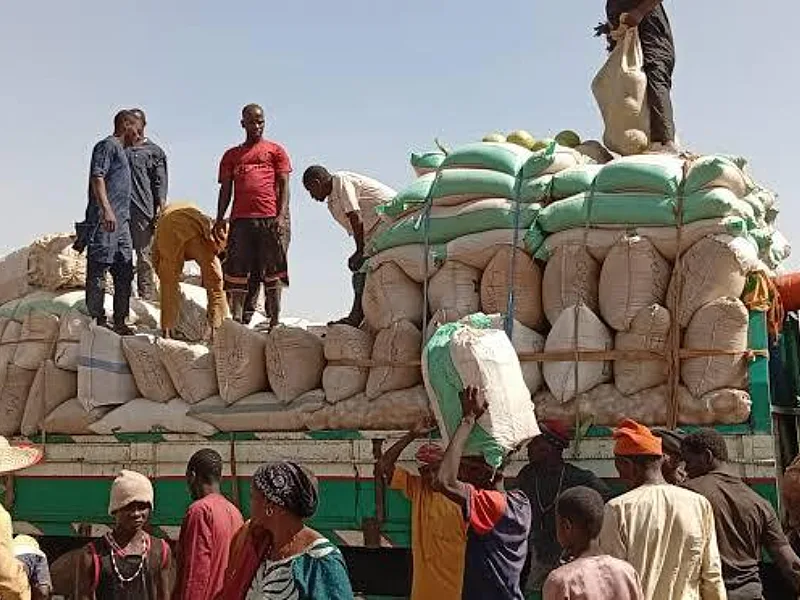
Commodity production remains a major pressure point.
- The assessment records 6.01 million hectares of commodity-driven deforestation in 2025, compared with a 2018 – 2020 annual baseline of 7.24 million hectares
- Agricultural and mined commodities are included.
The decline is encouraging, but demand for food, timber and minerals continues to place forests under pressure where production is poorly governed.
The Money Still Rewards Forest Destruction
The financing picture explains part of the policy problem.
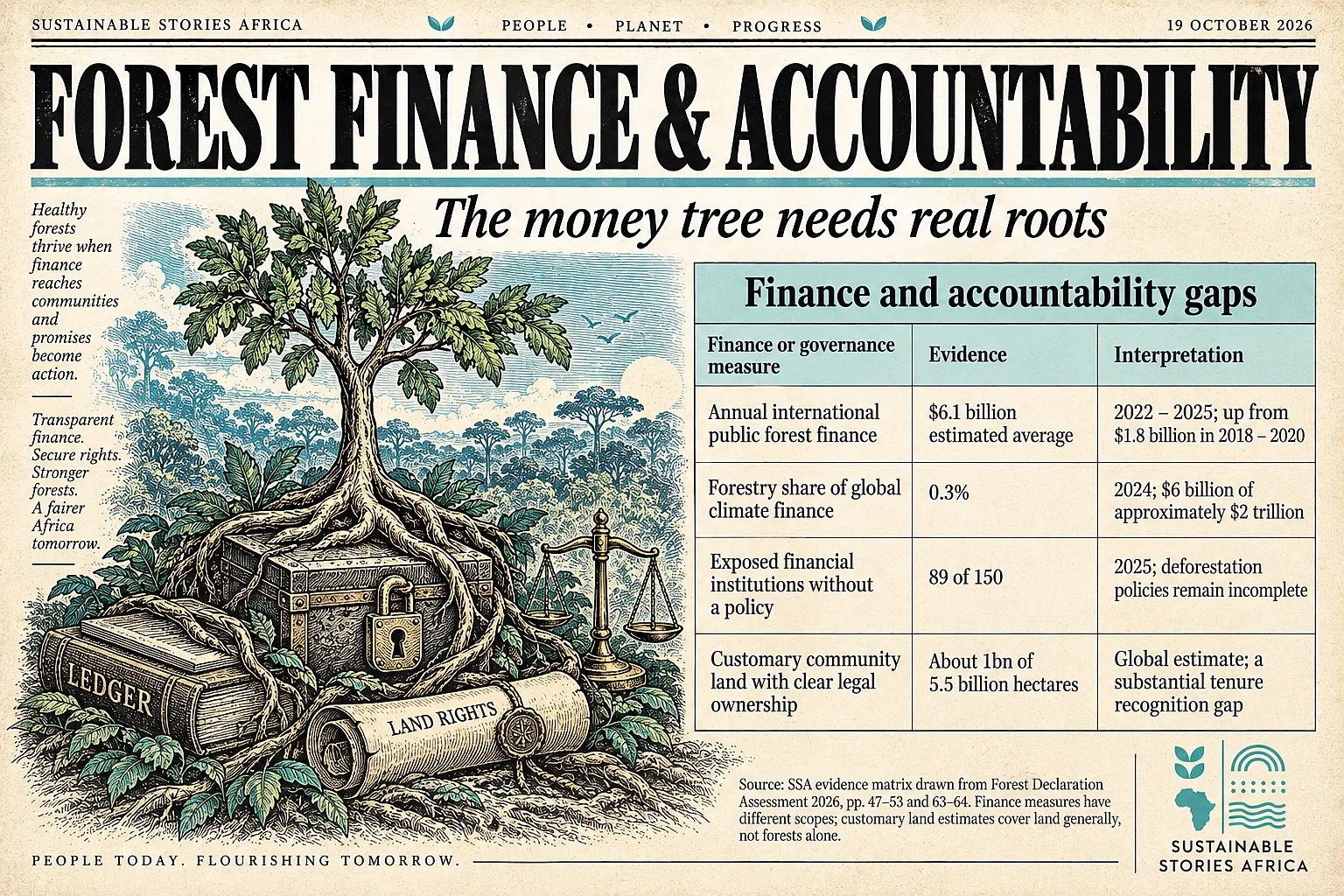
- Average annual international public forest finance rose from US$1.8 billion in 2018–2020 to an estimated $6.1 billion in 2022 – 2025.
However, the latter amount represented only about 1% of annual public spending on potentially harmful agricultural subsidies in 2022 – 2024.
- Different reporting periods limit a strict comparison, but the imbalance remains striking.
Financial institutions also retain substantial exposure.
- Among the 150 institutions most exposed to forest-risk commodity supply chains, 89 lacked a deforestation policy in 2025.
- Credit extended to companies in six forest-risk commodity supply chains reached at least $429 billion over 2016 – 2025.
This is exposure to those supply chains, rather than a finding that every financed activity caused forest destruction.
Production pressures extend beyond export crops.
- The assessment highlights food production for domestic markets, timber extraction and mining alongside internationally traded commodities.
- An African response therefore needs to address local demand and producer livelihoods as well as overseas buyers' requirements.
Companies can begin by identifying where their purchases originate and how suppliers manage land.
- Traceability becomes more useful when it informs sourcing decisions, remediation and support for producers, rather than ending with a disclosure statement.
Corporate commitments remain uneven.
- Of 500 influential companies assessed by Forest 500, 146 had commitments covering deforestation across all commodities they produced or sourced.
- Only 19 qualified as leaders under that assessment.
These findings concern a selected corporate sample, but they underline the distance between recognising a risk and managing it throughout a supply chain.
Standing Forests Can Support Stronger Economies
The economic opportunity is to treat healthy forests as productive natural infrastructure.
- Protecting catchments can help preserve water services; maintaining forest cover can support agricultural resilience; restoring degraded land can strengthen local livelihoods.
- The benefits depend on location, management and community participation, so generic hectare targets cannot establish success on their own.
Restoration is expanding, although the evidence is incomplete.
- The assessment estimates 11.8 million hectares under active restoration, approximately one million more than its estimate a year earlier.
- It cautions that fragmented databases may substantially undercount activity.
- Project area also does not demonstrate that an ecosystem has recovered: survival, ecological function and permanence need monitoring.
Rights are equally central.
- Indigenous Peoples and local communities are estimated to hold customary rights over 5.5 billion hectares globally, while about one billion hectares carry clear legal ownership.
- This is a global land tenure estimate, not an African forest inventory.
- It nevertheless illustrates why conservation agreements can become insecure when the people managing landscapes lack enforceable rights.
For African producers, better protection and fairer financing can reduce the pressure to expand into natural ecosystems.
- This requires practical support for existing farms and enterprises, with women and smaller producers able to participate in decisions and receive benefits.
A landscape approach can make those connections practical: agricultural support, conservation and community priorities can be planned together across a producing area.
- The aim is to improve livelihoods while protecting remaining ecosystems, with decisions based on local conditions.
- Payments for conservation require credible monitoring and equitable benefit sharing if they are to endure.
Put Rights And Accountability Into Practice
Governments should connect forest policy with agricultural budgets, infrastructure planning and mining approvals.
- Land conversion decisions need transparent scrutiny, while enforcement institutions require reliable funding and the authority to act against influential operators.
- Measures that place disproportionate burdens on smallholders risk weakening both legitimacy and results.
Banks and investors should establish clear deforestation policies, map relevant exposures and translate commitments into financing conditions.
- Engagement should give clients a credible route to improve practices.
- Public reporting should explain coverage, implementation and unresolved risks so that policy adoption can be assessed against actual lending and investment decisions.
Commodity buyers should share the costs of traceability and supplier improvement.
- Where smaller producers need mapping, technical assistance or access to suitable inputs, demanding compliance without support can deepen exclusion.
- The assessment's evidence points towards coordinated action across supply chains and landscapes.
Donors and development financiers should pair conservation funding with tenure security and accessible community finance.
- Local organisations need a meaningful role in programme design and oversight.
- Monitoring should distinguish money pledged from money disbursed, hectares enrolled from ecological recovery, and legal recognition from rights that people can exercise.
SSA's reading of the evidence is that progress will depend on changing routine decisions about land and capital.
- Annual forest outcomes, supplier coverage and community benefits offer a more useful accountability test than the number of new pledges.
Public dashboards should retain each indicator’s definition and reporting year.
A favourable global average can otherwise conceal worsening regional outcomes or deterioration within standing forests.
Path Forward – Turning Forest Promises Into Protection
African governments should align land use, agricultural incentives and enforcement with forest goals.
Financiers and commodity buyers should back these changes with traceable supply chains, transparent funding and practical producer support.
Community tenure and participation must be enforceable.
Progress towards 2030 should be judged through sustained reductions in loss, ecological recovery and benefits reaching the people who manage forest landscapes.