Shipping disruptions can absorb new vessel capacity, increase delivery times and raise the cost of moving essential goods.
UNCTAD’s maritime analysis shows why a larger fleet does not necessarily bring immediate freight relief.
For African importers and exporters, the practical challenge is understanding the full delivered cost and preparing for uncertainty in routes, regulation and demand.
Shipping Disruption Reaches Far Beyond Ports
African businesses need to plan for volatility in maritime transport costs because changes in shipping routes, cargo demand and environmental requirements can affect the final cost of goods even when headline freight rates fall.
UN Trade and Development (UNCTAD) explains these pressures in the freight rates chapter of its Review of Maritime Transport 2025.
UNCTAD examines developments from January 2024 to mid-2025.
Its evidence is a historical account of how disruption affected shipping economics, rather than a set of freight quotations for October 2026.
- For import-dependent economies, the stakes include food affordability, fuel supplies and the cost of manufacturing inputs.
- For exporters, uncertain transport bills can erode margins after a sales contract is signed.
The analysis asks for stronger freight data and better coordination among trade policy, logistics planning and domestic price monitoring.
Longer Voyages Can Absorb New Capacity
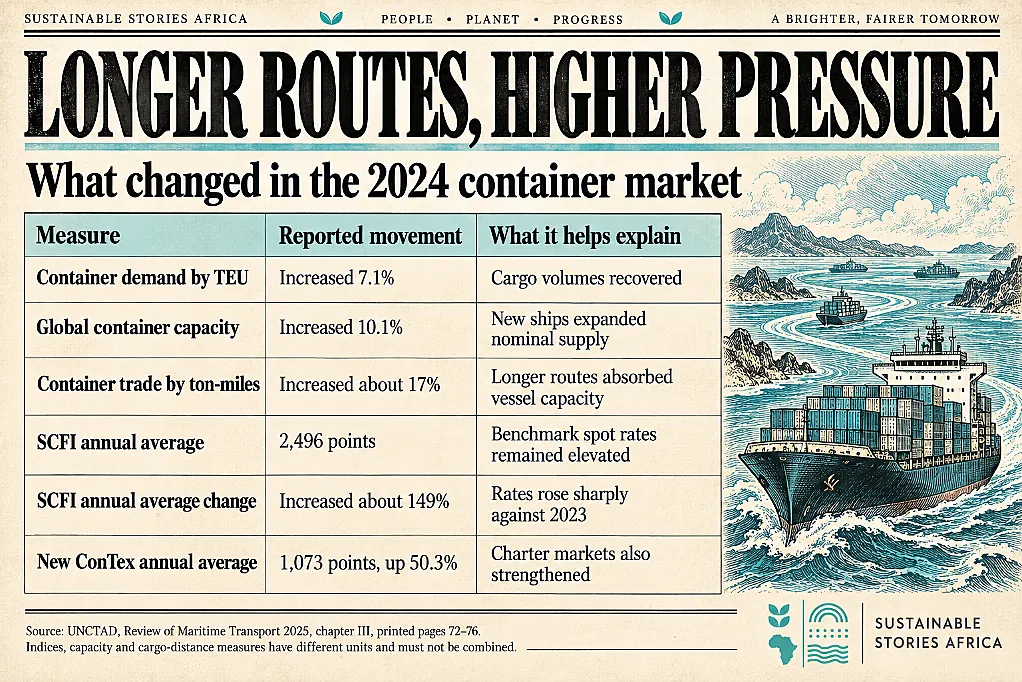
Global container shipping capacity grew 10.1% in 2024, while container demand measured in twenty-foot equivalent units grew 7.1%.
- Taken alone, those figures might suggest an easing market.
However, diversions around the Cape of Good Hope required ships to spend longer at sea, absorbing capacity that would otherwise have been available for additional sailings.
The chapter estimates that container trade measured in ton-miles rose by about 17% in 2024.
- Ton-miles combine the weight transported with distance travelled, capturing a demand on ships that cargo volumes alone can miss.
- A longer voyage also affects fuel use, equipment availability and the timing of subsequent services.
The Shanghai Containerised Freight Index averaged 2,496 points in 2024, approximately 149% above its 2023 average.
- The chapter reports a mid-2024 peak of about 3,600 points.
- These index readings describe a benchmark market; they are not dollar prices paid by every African importer or a substitute for a route-specific quotation.
Transport Bills Include More Than Freight
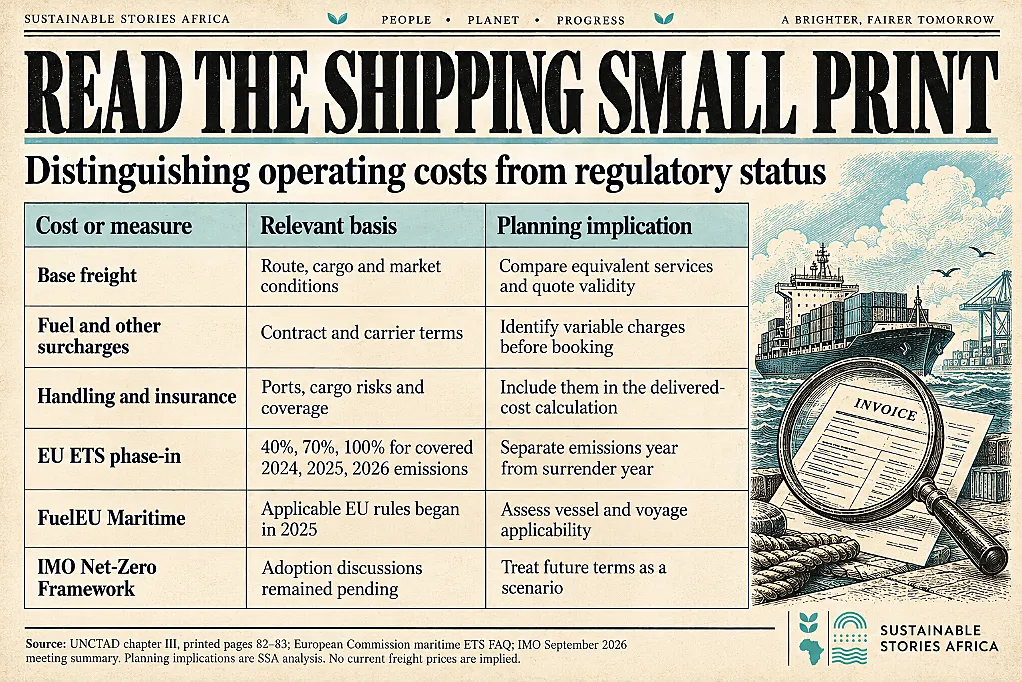
The total cost paid by a cargo owner includes freight, fuel-related surcharges, handling fees, insurance and other charges.
- A lower base freight quotation may therefore coexist with a higher final transport bill.
- Importers need to know what a quoted price covers and which amounts may change before arrival.
Dry bulk and tanker markets follow different demand patterns.
- The chapter reports firm dry bulk conditions in 2024, supported by cargoes such as coal, grain and fertiliser, followed by softer conditions in early 2025.
- Tanker markets remained particularly sensitive to geopolitical risks.
A container benchmark cannot explain these markets on its own.
- For a food importer, uncertain delivery can also increase working capital requirements as stock remains in transit.
- For a manufacturer, delayed components can interrupt production even when the cargo itself is inexpensive.
These are transmission channels identified by the economics of shipping disruption, not measured losses for a particular African company.
Environmental requirements add another dimension.
- The European Union’s shipping emissions rules can affect relevant voyages involving African ports.
- Applicable costs depend on the route, vessel, emissions and contractual arrangements.
They should not be treated as a universal fixed surcharge applied equally to all goods or all shipping services.
Cleaner And Reliable Shipping Offers Benefits
Energy efficiency can reduce fuel consumption and exposure to emissions costs.
- Better planning and more dependable services can also help businesses manage inventories and cash flow.
- These potential benefits depend on investment costs, operational conditions and how savings are shared between shipowners, charterers and cargo owners.
Regulatory precision matters for planning.
- The EU emissions trading phase-in applies to 40% of covered 2024 emissions, 70% of covered 2025 emissions and 100% of covered emissions from 2026.
- The year in which allowances are surrendered follows the emissions reporting year.
- The geographical coverage of a voyage is a separate calculation.
The chapter’s anticipated October 2025 adoption of the IMO Net-Zero Framework did not occur.
- IMO adjourned that meeting, and its September 2026 update scheduled a possible resumption for December 4, 2026, subject to committee discussions.
- As of this article’s date, the framework should therefore be described as proposed rather than an adopted global charging regime.
Improve Freight Intelligence Before Costs Escalate
Trade authorities should build systems to monitor route-specific transport costs and assess their effects on essential imports.
- UNCTAD recommends technical assistance for developing countries, particularly least developed, landlocked and small island developing states.
- That support should strengthen institutional capacity, research and evidence-based responses.
Businesses should stress-test delivered costs against longer journeys and changing surcharges, while assessing whether alternative routes are commercially workable.
- Contracts should explain who bears additional charges and delays.
- Keeping some flexibility may be valuable, but diversification can also increase costs and should be assessed against the business’s actual cargo needs.
Governments should coordinate port improvements with inland transport and border procedures so that avoidable domestic delays do not compound international disruption.
- Monitoring food and fuel prices alongside freight movements can help identify where pressure is emerging.
- Public interventions should respond to demonstrated exposure and retain incentives for efficient logistics and lower emissions.
Path Forward – Plan For Volatility With Better Evidence
African trade resilience will depend partly on understanding how transport costs develop across routes and contracts.
Better data can help governments and companies distinguish temporary market movements from persistent operational weaknesses.
The priority is dependable logistics, transparent cost allocation and credible preparation for decarbonisation, with particular attention to the businesses and households least able to absorb another disruption.