
Gallup’s 2026 emotional health report finds modest, varied associations between social media use and wellbeing across 97 countries.
Higher use is linked to more negative emotions on several measures, but the relationship does not support a simple universal conclusion.
For African policymakers and institutions, the findings raise questions about digital access, social connection and wider living conditions.
They also show why observational evidence cannot establish that social media causes the outcomes recorded.
Digital Wellbeing Requires Careful Evidence Interpretation
Social media’s relationship with wellbeing varies by intensity of use, population and country, according to Gallup’s State of the World’s Emotional Health 2026 report.
Across 97 countries, users record modestly more favourable results on several positive experiences after adjusting for other characteristics, while higher use is associated with several negative emotions compared with moderate use.
The analysis covers respondents aged 15 and older and uses nationally representative samples within countries, usually around 1,000 interviews each.
- It does not establish cause and effect.
- Nor does it measure the specific platforms, content or activities that might help explain differences between users.
For African institutions considering digital wellbeing, that complexity matters.
A discussion focused only on time online can miss unequal access, the nature of social connections and the conditions in which people work and live.
Widespread Use Coexists With Unequal Digital Access
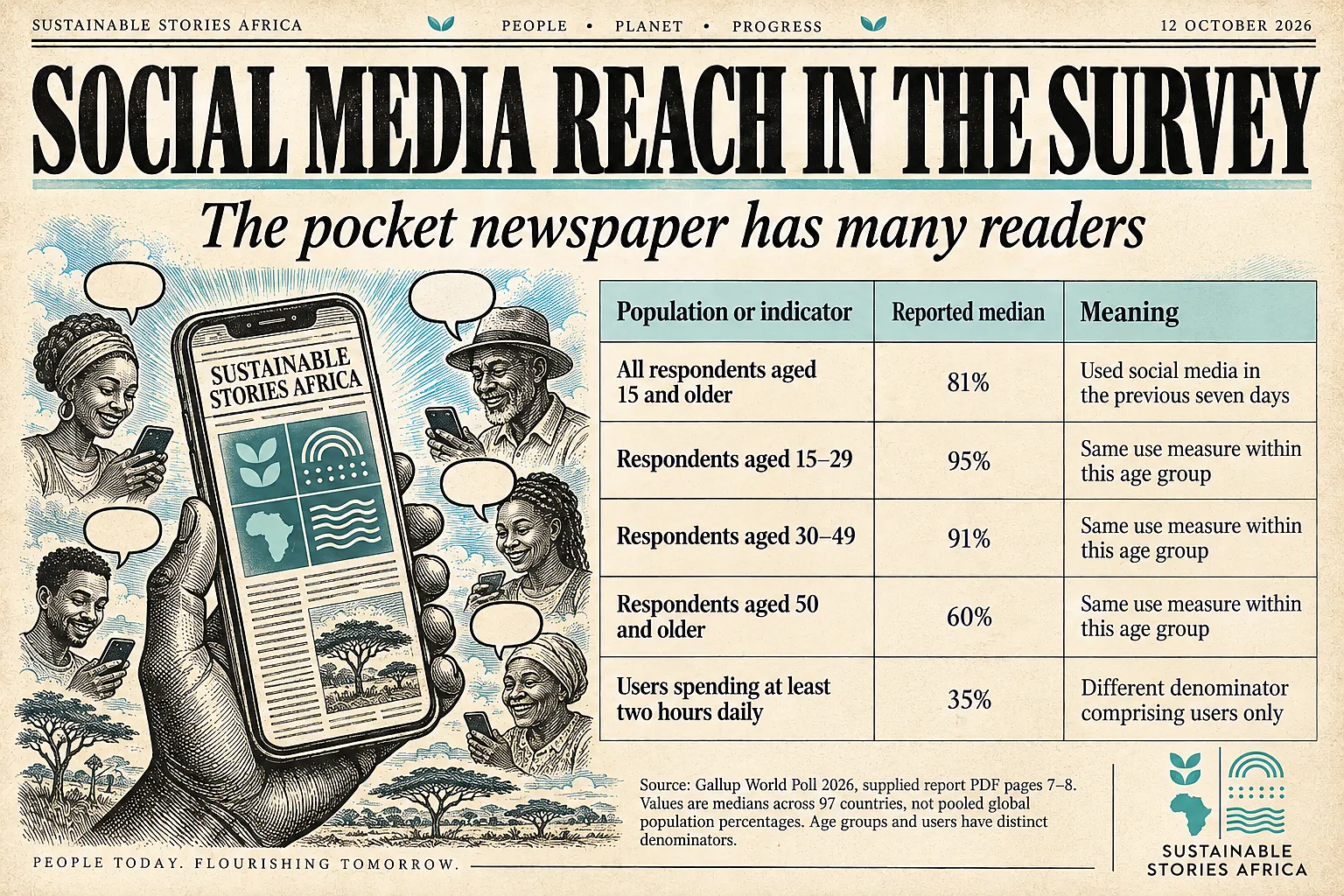
Across the countries surveyed, the median share reporting social media use in the previous seven days is 81%.
- This is the middle country-level value, not a population-weighted estimate that 81% of people worldwide use social media.
- The dataset will expand as Gallup completes its 2026 collection.
Reach differs substantially.
- The report records use ranging from 98% in Bahrain and Lebanon to 12% in Chad.
- Nine of the ten countries with the lowest recorded use are in sub-Saharan Africa.
These findings make access part of the wellbeing discussion, alongside concern about intensive use.
Age and education show large differences.
- Younger respondents are more likely to use social media, while older groups report lower participation.
Country medians also vary with education and health.
- Differences help explain why raw comparisons between users and nonusers can mix digital behaviour with wider advantages and constraints.
Adjusted Comparisons Show Modest And Varied Relationships
Before adjustment, users report much more enjoyment and less sadness or loneliness than nonusers.
- Those groups also differ in age, education, health and social support.
- Gallup accounts for these characteristics and others, including income, employment, internet use and country, to examine whether the relationships persist.
After adjustment, users have small advantages in enjoyment, smiling or laughing, learning and feeling respected.
- They also rate their lives slightly higher. Stress is modestly higher among users, while the other negative outcomes examined do not differ significantly between users and nonusers.
- The adjusted picture is therefore more limited than the raw comparisons imply.
Time spent produces a different comparison.
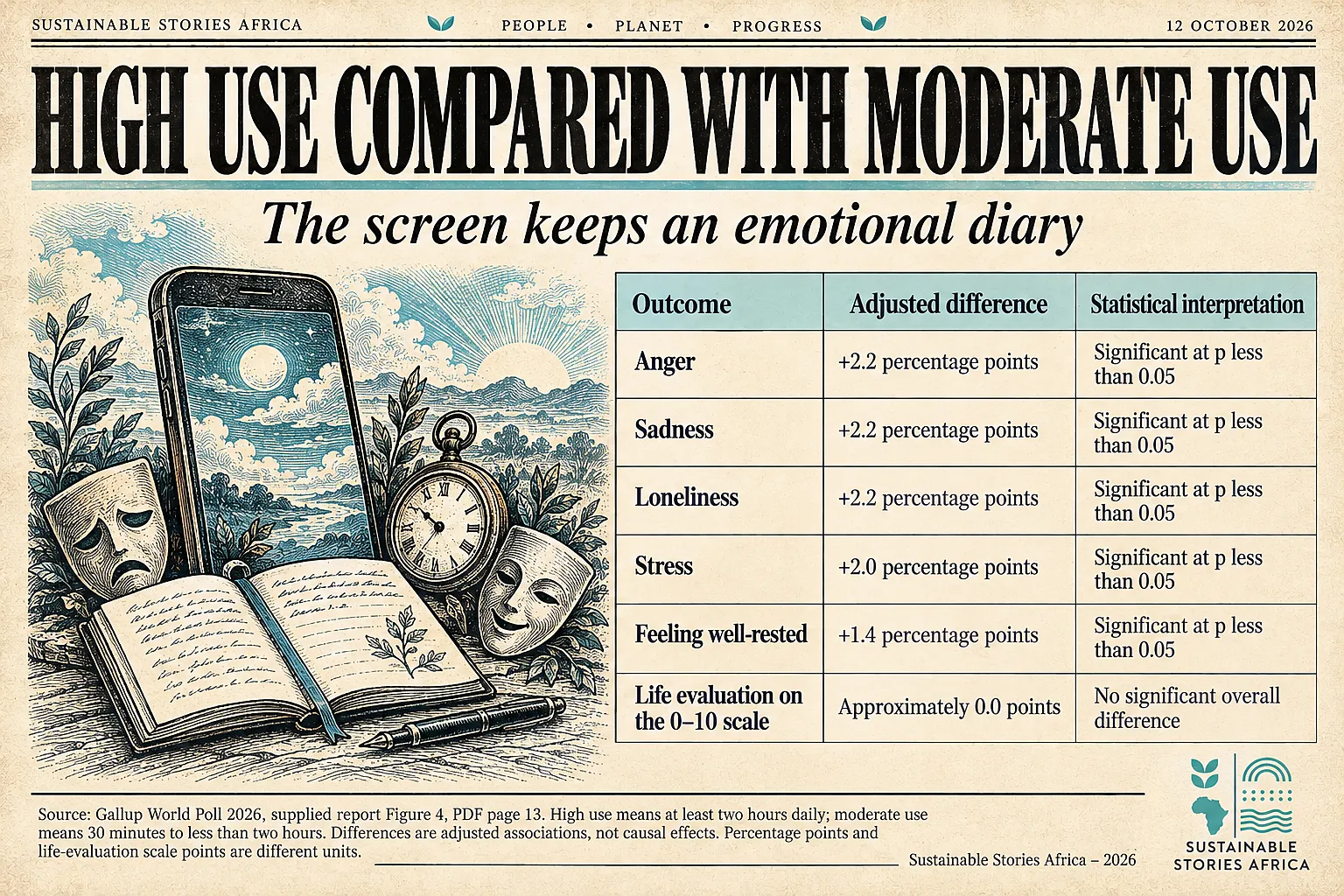
- Gallup defines low use as no use or less than 30 minutes daily, moderate use as 30 minutes to less than two hours, and high use as at least two hours.
- Higher use is associated with more anger, sadness, loneliness, stress, and worry than moderate use after adjustment.
However, life evaluation does not differ significantly between high and moderate users overall.
- High users are also more likely to report feeling well-rested, an outcome that complicates a uniformly negative interpretation.
- The categories are analytical groupings, not a recommended daily dose or a clinical threshold for harmful use.
Country Context Changes What The Findings Mean
The report finds lower life evaluation among high users than moderate users in high-income countries, but no significant difference in countries outside that income group.
- Associations with anger, loneliness and sadness occur in both groups.
- Country-level findings nevertheless vary, so an income-group result should not be substituted for evidence about Nigeria or any other individual country.
Gallup also does not assess problematic or compulsive use.
- Someone may spend considerable time online for communication or work, while another person’s shorter use may be disruptive.
- The survey cannot distinguish these experiences through duration alone.
- It also cannot determine whether distress leads people to use social media differently, whether use influences distress or whether other factors affect both.
These limits provide a useful agenda for African research.
- Studies should examine the purpose of use, the content encountered and the role of offline support.
- Digital access can facilitate information and connection, but that possibility should be evaluated alongside harms experienced by particular groups rather than assumed from aggregate associations.
Institutions Should Examine Wider Conditions Of Wellbeing
Gallup’s completed 2025 global emotion data show worry at 38%, stress at 36%, physical pain at 33%, sadness at 26% and anger at 23%.
- These measures refer to feelings experienced during much of the previous day.
- They are separate from the report’s 2026 social media analysis and are not rates of diagnosed mental illness.
Negative emotions remain higher than their levels two decades earlier.
- At the same time, several positive experiences have proved comparatively resilient.
- People can report positive emotions alongside distress, so a wellbeing programme should not assume that one measure replaces the other.
Employers and public institutions can use this evidence to improve assessment without treating screen time as a sufficient explanation.
- Anonymous staff or community surveys could examine workload, social support and emotional experiences alongside digital habits.
- Any interventions should be evaluated for their intended outcomes rather than justified by an observational association alone.
Policy discussions involving children also need age-appropriate evidence.
- Gallup surveys people aged 15 and older and does not evaluate the effectiveness of social media restrictions.
- Its findings cannot resolve questions about younger children or establish that a particular restriction will improve wellbeing.
- More specific studies and evaluation are necessary. [1]
Path Forward – Building Context-Sensitive Wellbeing Evidence
African institutions should combine digital wellbeing research with evidence on social support and everyday living conditions.
Country-specific analysis can identify who faces risks and what responses help.
Keep associations separate from causal claims and test proposed interventions.
Better measurement would support informed decisions while preserving useful digital access and recognising the wider circumstances that shape emotional health.