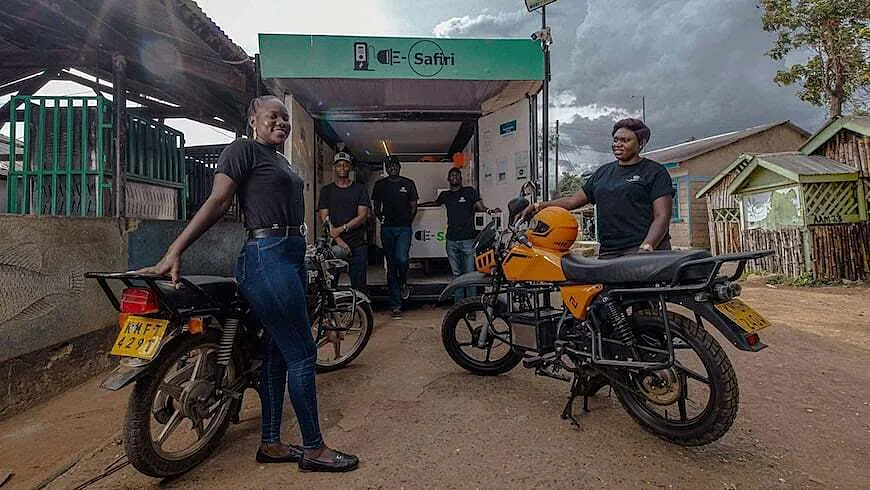
Kenya’s electric mobility sector offers work in vehicle assembly, maintenance, charging and battery swapping.
Young workers already account for a large share of employment, according to evidence assembled by APRI.
However, the transition’s employment potential depends on practical training, viable financing and access for local entrepreneurs and women.
Job forecasts indicate possible scale; they do not establish that the necessary businesses, infrastructure or opportunities already exist.
Electric Transport Creates Unequal Employment Opportunities
Kenya’s electric mobility industry could expand employment for young people, but its growth needs financing and skills systems that reach a wider range of workers and entrepreneurs.
Africa Policy Research Institute’s March 2026 study finds strong youth participation alongside barriers to practical training, business expansion and women’s leadership. [1]
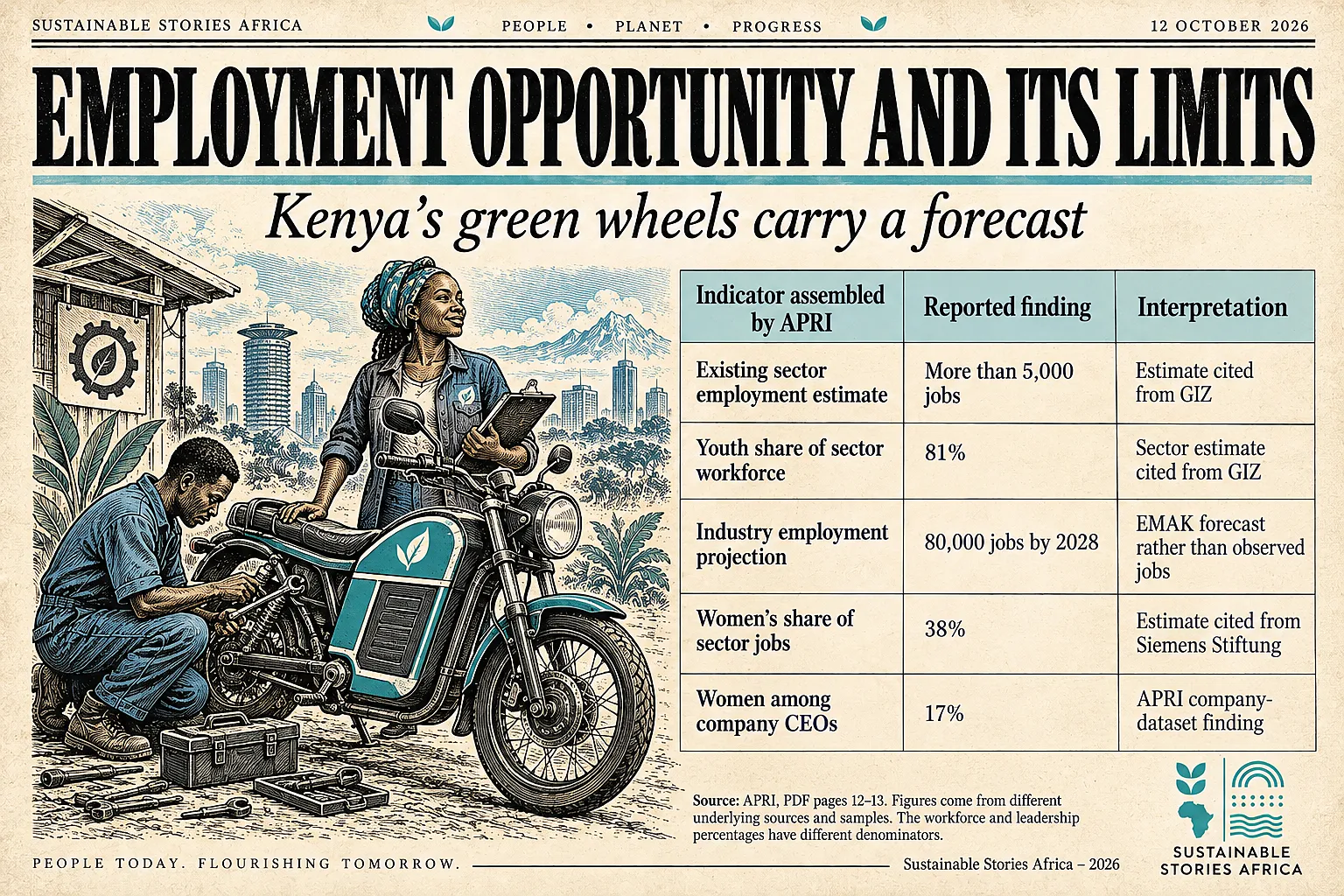
The report brings together sector estimates of more than 5,000 jobs and an 81% youth workforce share.
It also cites an industry projection of 80,000 jobs by 2028.
- These estimates come from different sources in the report, and the projection should be a conditional growth expectation rather than a guaranteed outcome.
For African cities seeking cleaner transport and better livelihoods, the key issue is how they expand.
Electric vehicles can change fuel use, while domestic servicing, assembly and ownership determine who gains income and influence from the transition.
Youth Participation Already Shapes Electric Mobility Growth
The sector covers electric motorcycles and other two-wheelers, three-wheelers, cars, buses, charging systems and related digital services.
- Many Kenyan firms emerged after 2017, combining local startups with international partners and institutions.
- The report identifies jobs across assembly, sales, maintenance and the operation of charging and battery-swapping infrastructure.
This creates several entry points.
- A worker may service a vehicle, install charging equipment, support customers or manage a digital payment system.
- Diversity matters because the employment opportunity extends beyond engineers and company founders.
- Training needs to reflect the tasks businesses actually perform.
The research combines policy review, a company dataset, stakeholder engagement and 34 key-informant interviews.
- It offers insight into workforce needs and entrepreneurial barriers, but the company data should not be treated as a complete census.
- The report’s sector-wide estimates and its own company-level findings therefore require separate attribution.
Skills And Capital Constrain Local Enterprise Expansion
Employers interviewed by APRI value young workers’ adaptability and contributions to innovation.
- They also report limited practical experience and the need for substantial training.
- Formal qualifications can provide useful foundations, while vehicle maintenance, battery handling and installation require demonstrated competence in operational settings.
The report identifies training delivered by companies and specialist institutions, including programmes focused on electric vehicle systems and charging infrastructure.
- These arrangements meet immediate needs, but rely heavily on individual employers and can restrict access for workers who have not yet secured a job.
Financing operates at several levels.
- Firms need capital for product development and assembly, infrastructure operators need investment for charging or swapping networks, and users need ways to afford vehicles.
- A financing instrument designed for one requirement may not meet another.
- A startup grant, for example, does not automatically provide affordable vehicle finance for riders.
APRI cites a financing requirement of $3.5 billion – $8.9 billion for electric two-wheelers across Ethiopia, Kenya, Nigeria, Rwanda and Uganda.
- That estimate covers five markets and several investment needs. It is not a Kenya-only financing gap, and should not be compared directly with Kenyan funding figures as if their scope were identical.
Local entrepreneurs face an additional challenge when funding eligibility assumes an established track record or substantial collateral.
- The report recommends financing windows tailored to younger firms, coupled with technical assistance and project evaluation.
- More accessible entry should still preserve safety and commercial due diligence.
Inclusive Training Can Broaden The Transport Dividend
The report’s evidence on women illustrates the difference between employment and authority.
- A cited estimate places women at 38% of sector jobs, while APRI’s company dataset finds women accounting for 17% of chief executives.
- The measures are not directly comparable samples, but they point towards questions about who can progress into leadership and enterprise ownership.
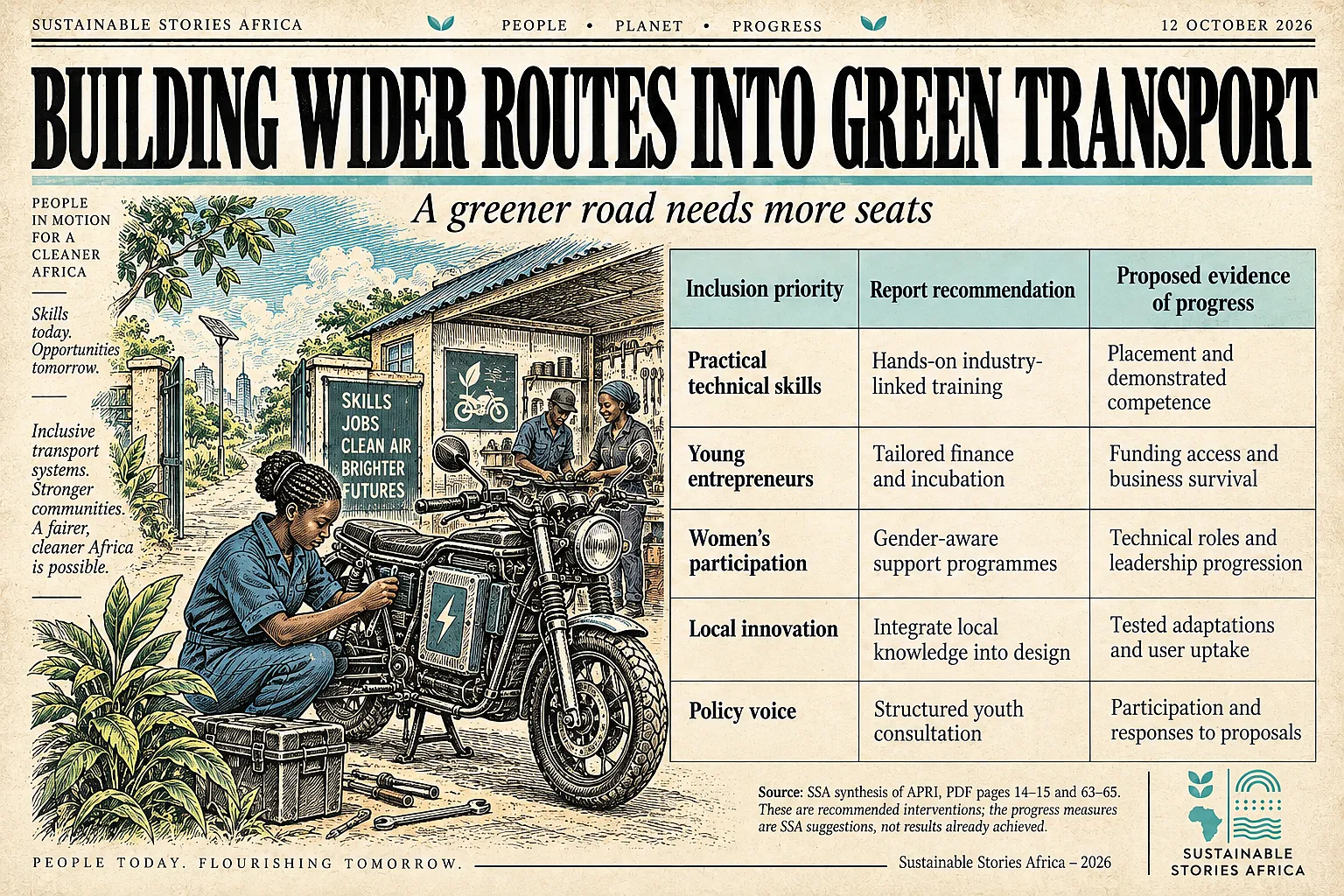
Practical pathways could include paid apprenticeships, technical placements and business support that accommodates women’s participation.
- Programme design should examine recruitment, schedules, access to equipment and post-training opportunities.
- Completion numbers alone say little about whether participants obtain stable work or retain their businesses.
Local knowledge also shapes commercial viability.
- APRI finds that innovation frequently responds to pressure to lower costs, improve access and suit particular market segments.
- Understanding customers’ routines and constraints can improve both products and business models.
These insights are especially relevant when imported technology must operate within local transport systems.
Environmental credibility needs similar attention.
- A transport company should be able to explain charging requirements, operating performance and battery management.
- Investors and policymakers can then assess whether deployment supports cleaner mobility while meeting users’ practical needs.
- A vehicle sales total provides only one part of that assessment.
Policymakers And Investors Should Track Job Quality
Transport, energy and employment institutions should connect sector expansion plans with explicit skills and inclusion objectives.
- APRI recommends targets disaggregated by gender and age, structured youth participation and stronger links between industrial development and employment policy.
- These recommendations should be assessed against implementation arrangements as policies develop.
Training institutions should design courses with employers and provide accessible practical experience.
Companies should document the roles they recruit for and the progression available to technicians and support staff.
Funders can help smaller firms improve financial planning, investment readiness and compliance, and provide appropriate capital.
Employment reporting should distinguish temporary construction work, sustained operational jobs and work generated in connected businesses.
Pay, safety and retention are useful measures of quality.
This would give policymakers a firmer basis for judging the 2028 forecast and revising support when expansion does not translate into broad opportunities.
Path Forward – Expanding Access To Transport Livelihoods
Kenya should link electric mobility growth with practical skills, suitable finance and measurable inclusion.
Young workers and women need routes into technical roles, leadership and enterprise ownership.
Regular reporting on sustained jobs and business survival would make progress assessable.
The transition’s employment promise should be judged through opportunities that people can enter, retain and develop.