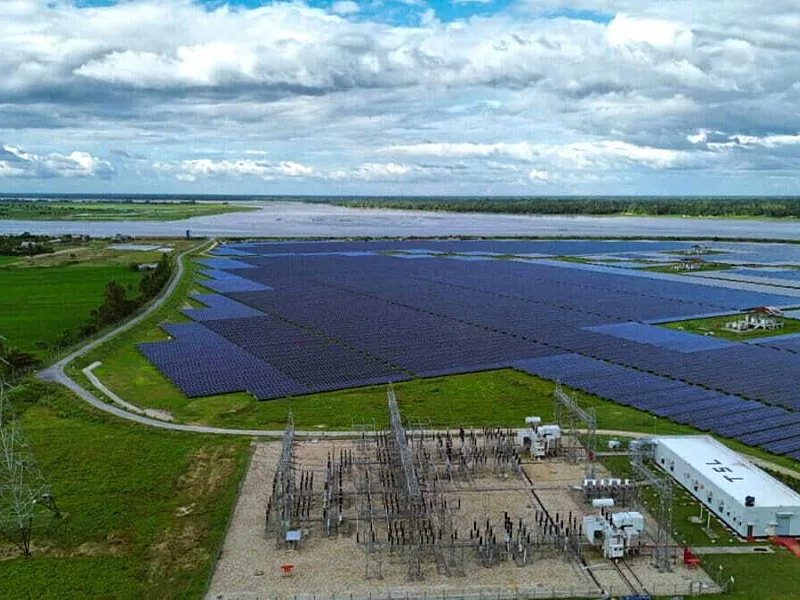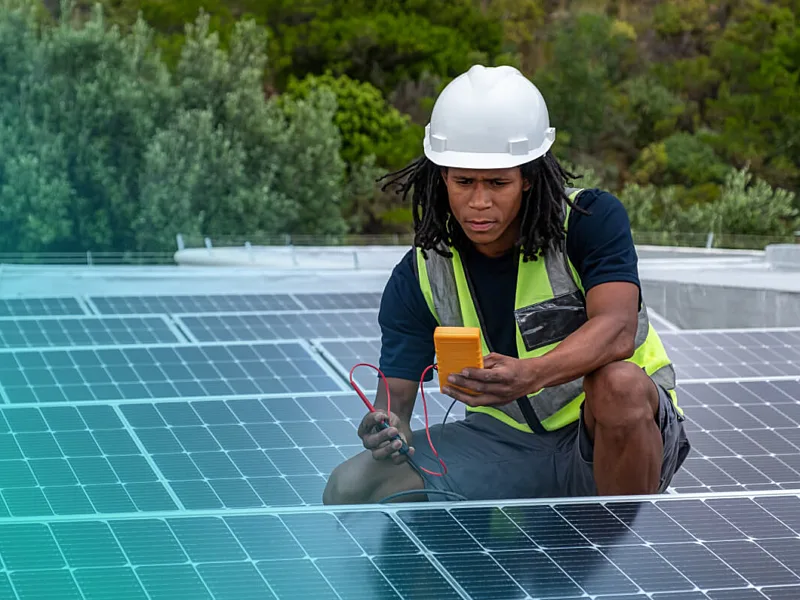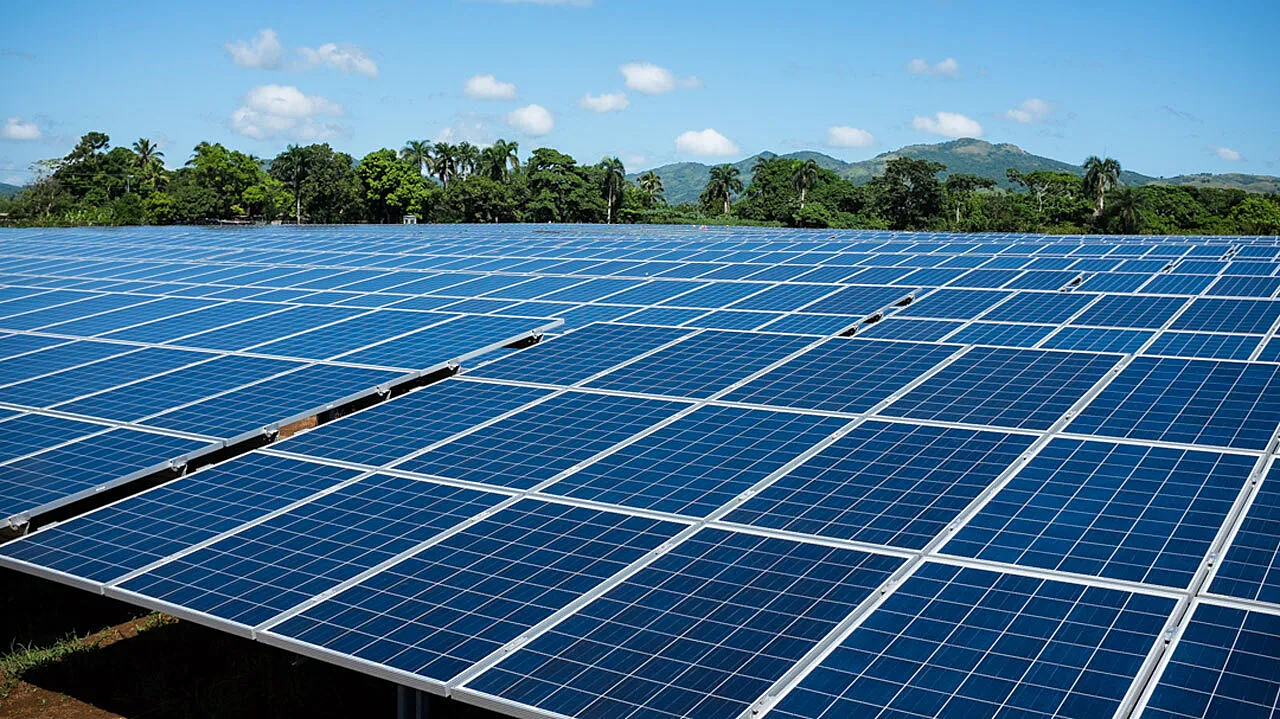
Chinese clean technology exports to Nigeria reached $830 million in 2024, reflecting expanding demand for solar equipment, batteries and related systems.
However, rising imports alone do not establish a domestic clean energy industry.
The Africa Policy Research Institute report examined how Nigeria can link affordable technology with local manufacturing, stronger standards and transparent financing.
The central question is how much lasting value the country retains as its energy transition advances.
Nigeria’s Energy Transition Needs Domestic Value
Nigeria’s growing trade in Chinese clean technologies is creating an opening for electricity access and industrial development; however, the benefits will depend on how projects are financed, regulated and linked to domestic production.
Africa Policy Research Institute’s mapping of Chinese investment argues for coordinated partnerships that connect energy delivery with Nigerian capabilities.
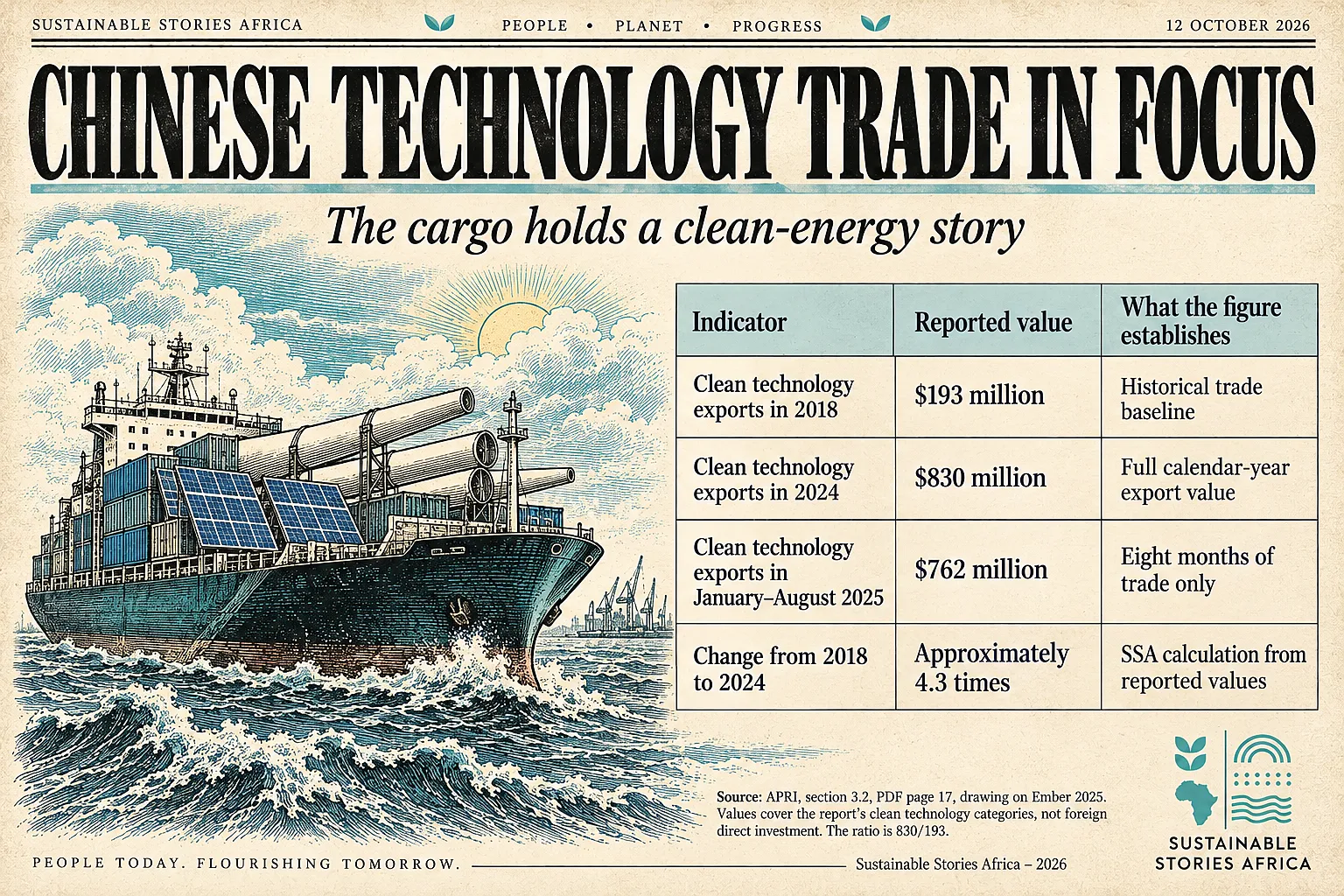
The report records clean technology exports from China to Nigeria rising from $193 million in 2018 to $830 million in 2024.
Exports reached $762 million during January – August 2025, a partial-year figure that should not be mistaken for a full-year total or a measure of investment actually disbursed.
For African economies seeking reliable electricity and employment, this distinction matters.
- Equipment can expand access quickly, while manufacturing skills, maintenance capacity and local ownership determine whether a technology market also becomes a productive domestic industry.
Import Growth Reveals A Strategic Policy Choice
Households and businesses are shaping Nigeria’s transition by seeking alternatives to unreliable supply and expensive generators.
- The report links stronger demand for distributed renewables to the energy-cost pressures that followed Nigeria’s 2023 petrol subsidy and foreign-exchange reforms.
- Chinese suppliers responded with panels, batteries, inverters and financing arrangements adapted to this market.
These flows differ from the earlier emphasis on large infrastructure supported by Chinese policy banks.
- APRI describes a broader move towards distributed renewable systems, commercial partnerships, testing facilities and local assembly.
- It also identifies continuing engagement in gas infrastructure, reflecting Nigeria’s use of gas alongside renewable deployment.
- That mixed portfolio requires clear environmental distinctions between technologies.
The trade category itself needs care.
- Its battery figures include consumer batteries as well as energy storage and electric vehicle batteries.
- Electric vehicles include both battery electric and plug-in hybrid vehicles.
Aggregate exports therefore cannot be translated directly into renewable electricity capacity or avoided emissions.
Affordable Equipment Meets Weak Domestic Supply Chains
The research combines transaction mapping, policy review, structured surveys and consultations with more than 40 actors across the clean energy value chain.
- A July 31, 2025 workshop helped validate findings.
- This evidence explains commercial and institutional patterns; it does not provide a complete audited inventory of every informal transaction.
One concern is Nigeria’s limited bargaining capacity.
- Workshop participants described weak institutional coordination, inadequate knowledge of Chinese commercial systems and underused bilateral financing mechanisms.
- Informal foreign-exchange arrangements and mineral-linked transactions may help businesses obtain equipment, but they also make financial costs and domestic benefit capture harder to assess.
Local production faces a related constraint.
- Installing imported equipment creates work, but it does not automatically transfer the engineering knowledge, quality assurance systems or supplier relationships needed for manufacturing.
- A joint venture needs explicit responsibilities for training, procurement and technology transfer if it is to build capabilities beyond assembly.
APRI also distinguishes agreements from implementation.
- Memoranda on hydrogen, battery production and testing infrastructure indicate possible cooperation, but bankability and execution still determine their economic significance.
- An announced project value should remain an announced project value until financing, construction and operating results can be verified.
Local Capabilities Can Extend The Energy Dividend
Nigeria can use its demand for clean technologies to negotiate training and supply-chain participation alongside equipment purchases.
- This would help technicians maintain installations, support component supply by businesses and reduce disruptions caused when imported equipment fails without accessible after-sales support.
The report identifies opportunities in solar modules, inverters, battery assembly and electric mobility, together with mineral processing and regional trade.
- These possibilities require commercial assessment, reliable power and quality controls. Including them in the opportunity portfolio doesn’t mean that each activity is already competitive at Nigerian production costs.
Regional markets could improve the economics of selected investments.
- APRI links manufacturing and value-added trade with the African Continental Free Trade Area, while highlighting the West Africa Power Pool as a route for regional electricity exchange.
- Implementation would depend on infrastructure, applicable trade rules and credible arrangements among participating institutions.
Financing should support these capabilities with the hardware.
- The report proposes combining Chinese engineering and supplier finance with concessional support, guarantees and Nigerian capital.
- Each instrument carries different repayment, currency and public-risk implications.
- A blended package should explain who absorbs losses and how that allocation advances affordable energy delivery.
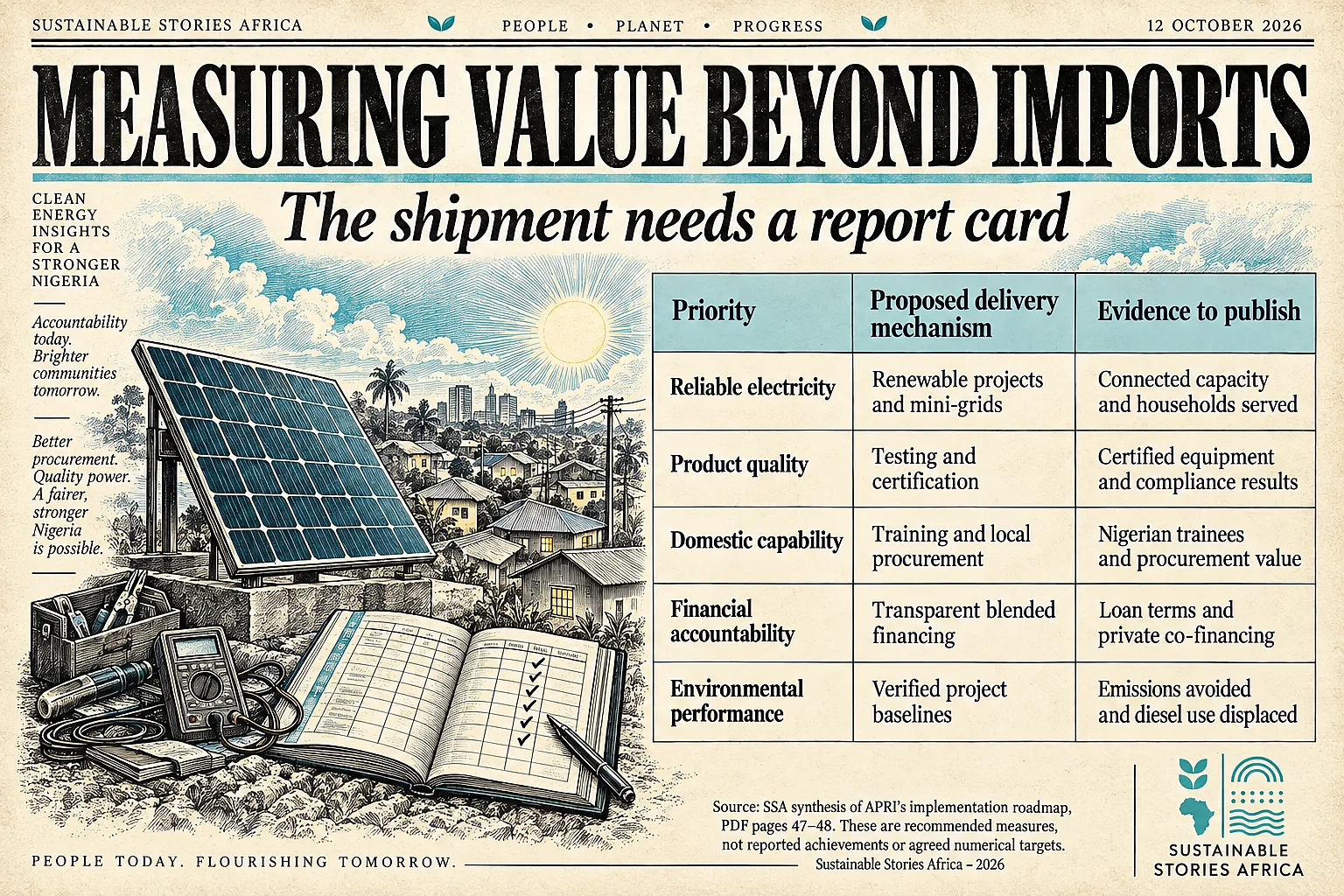
Public Institutions Must Define Investment Delivery Terms
Federal and state institutions should publish a coordinated project pipeline that identifies the development need, responsible agency and financing stage of each priority investment.
- APRI’s proposed Nigeria–China energy investment platform could provide this interface, but its usefulness would depend on authority, transparent screening and implementation capacity. [1]
Government negotiators should attach measurable training and procurement requirements to partnerships where those commitments are commercially feasible.
Developers should document equipment standards, warranties and maintenance arrangements.
Financiers should disclose currency exposure and distinguish committed funds from actual payments.
- These steps would make proposed benefits easier for citizens and investors to assess.
Domestic ownership also requires realistic project economics.
- Restrictive local-content conditions can increase costs if capacity is unavailable; unrestricted imports can leave industrial opportunities undeveloped.
- Sequenced support for selected production activities, backed by technical evaluation and open reporting, offers a practical way to manage that tradeoff.
Path Forward – Securing Nigeria’s Energy Value
Nigeria should link clean technology procurement with reliable electricity, verifiable standards and domestic skills.
Partnerships need published financing terms and measurable local benefits.
The next test is delivery: track operating systems, training outcomes and Nigerian procurement alongside import values.
That evidence would show whether expanding trade strengthens energy access and builds enduring capabilities.