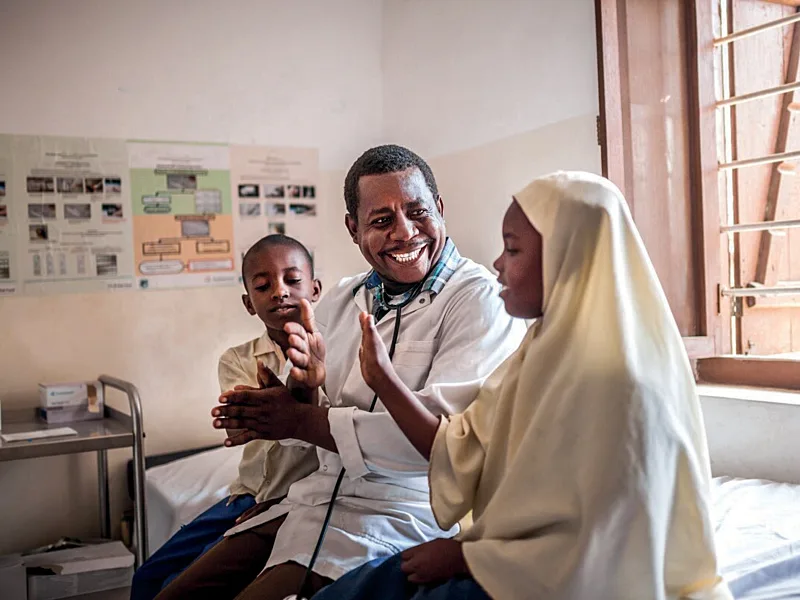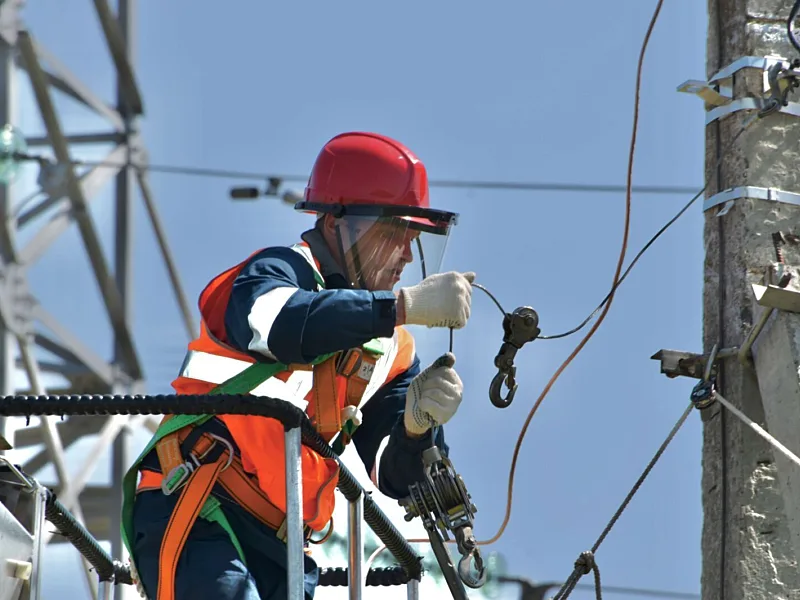
The World Economic Forum and McKinsey Health Institute argue that the AI transition needs investment in brain health and human capabilities.
Their January 2026 report brings those priorities together under the idea of brain capital.
For Africa, the opportunity is to connect health, education and workplace investment while ensuring that long-term economic projections do not obscure people’s immediate care needs.
Human Capabilities Need Sustained Public Investment
Investment in artificial intelligence should be accompanied by stronger support for the health and skills of the people expected to use it.
The January 2026 report The Human Advantage, developed by the McKinsey Health Institute in collaboration with the World Economic Forum, makes the case through a framework it calls brain capital.
- The framework combines brain health with capabilities, such as analytical thinking, adaptability, interpersonal skills and technological literacy.
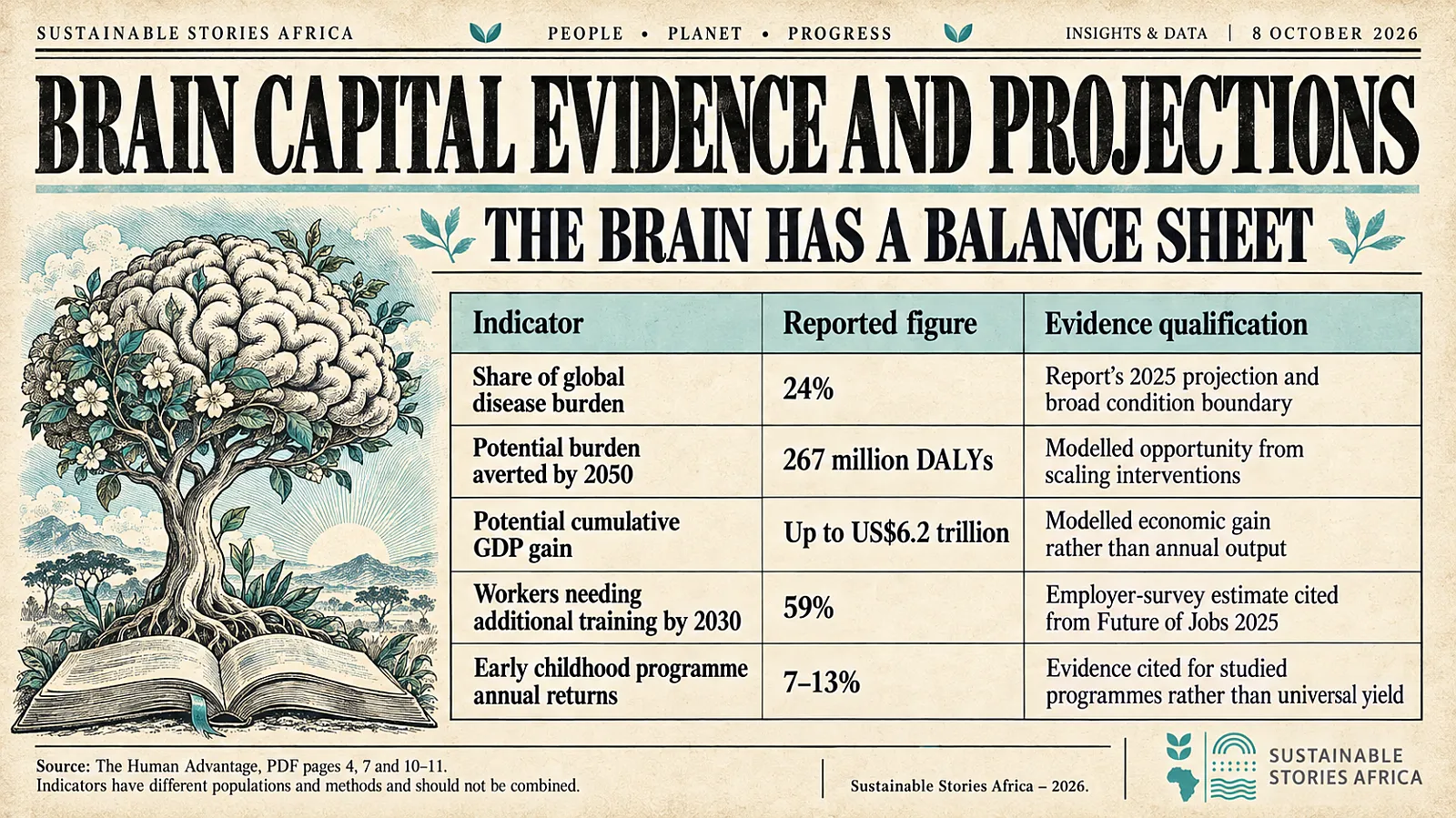
The report estimates that scaling cost-effective interventions for brain health conditions could avert 267 million disability-adjusted life years globally by 2050 and generate up to $6.2 trillion in cumulative GDP gains.
Those are modelled opportunities, not benefits already achieved.
For African policymakers and employers, the immediate question is which investments can improve access to care and help people develop capabilities suited to their circumstances.
The Economic Case Starts With People
A disability-adjusted life year, or DALY, represents a year of healthy life lost through illness, disability or premature death.
- It helps compare disease burdens across conditions.
- It is not a count of patients and should not be described as a life saved.
The report estimates that brain health conditions account for 24% of the global disease burden.
- This uses its 2025 projections and broad definition of primary and associated burden.
- That category includes mental, neurological and substance use disorders, alongside stroke and self-harm.
Comparisons need to retain the definition because narrower measures may produce different totals.
Behind these measures are people whose health affects learning, employment and everyday life.
- Families also provide care, often with consequences for their own time and income.
- Economic analysis can help justify investment, but care should not depend on whether a person’s needs can be translated into a productivity gain.
Skills And Health Require Connected Policies
The report presents brain health and brain skills as related foundations.
- Health can influence a person’s ability to acquire and use skills, while supportive environments can help both well-being and learning.
- This suggests that health and education institutions to coordinate rather than treat their responsibilities as unrelated.
The AI transition adds urgency.
- The report cites the World Economic Forum’s 2025 employer survey estimate that 59% of employees would need additional training by 2030.
- This does not mean 59% will lose their jobs or require the same intervention.
- Training needs differ by role and context.
For an illustrative African workplace, introducing an AI tool might require employees to understand how to check its output, recognise errors and decide when to escalate.
- A course focused only on software commands would leave those judgement requirements underdeveloped.
- Managers also need to ensure that workload changes do not undermine employees’ ability to learn and perform.
Early childhood investment offers a longer-term perspective.
- The report cites studies showing substantial returns from quality programmes, including benefit-to-cost ratios of up to 9:1 in low- and middle-income settings.
- Such results depend on the programme, population and implementation.
They should inform local appraisal rather than a guaranteed financial return.
The report also highlights unequal research coverage and access to care.
- African applications need local evidence and culturally appropriate services.
- Importing an assessment tool without examining language, context and access could misclassify needs or exclude the people it is intended to help.
Inclusive Investment Could Improve Shared Prosperity
The framework’s value is that it gives health and learning a place in economic planning.
- Employers can link training to how work is organised.
- Governments can examine how childhood development, primary care and education affect people’s opportunities across their lives.
For businesses, supporting staff health should include workable conditions and appropriate access to care.
- A wellness campaign alone cannot establish that an organisation has addressed excessive demands or discrimination.
- Public reporting needs to distinguish activities from outcomes and protect employees’ confidentiality.
For communities, accessible support can reduce the practical burden of seeking care and participation in learning.
- Interventions should involve the people affected in their design. This is especially relevant where stigma, cost or distance discourage access.
The benefits also extend to older adults.
- A policy focused only on young workers would miss people whose health and capabilities support household welfare, community life and continued independence.
The report’s life-course approach provides a reason to keep those groups within the investment agenda.
AI can support some services, but the report does not show that technology can replace human care or resolve unequal access by itself.
- Institutions need evidence of effectiveness, appropriate oversight and a plan for people who cannot use digital services.
Evaluation should also look at participation.
- A training programme may achieve strong results among employees who enrol while missing those with the least time or support.
- A digital service may reach many users while excluding people with limited connectivity.
- Institutions can examine who begins, completes and benefits from each programme, while respecting privacy.
- That evidence helps identify whether delivery needs to change before funding expands.
The report’s broad economic case becomes more useful when linked to these practical questions about access and distribution, rather than treated as a justification for any programme bearing the brain capital label.
Leaders Should Connect Budgets With Outcomes
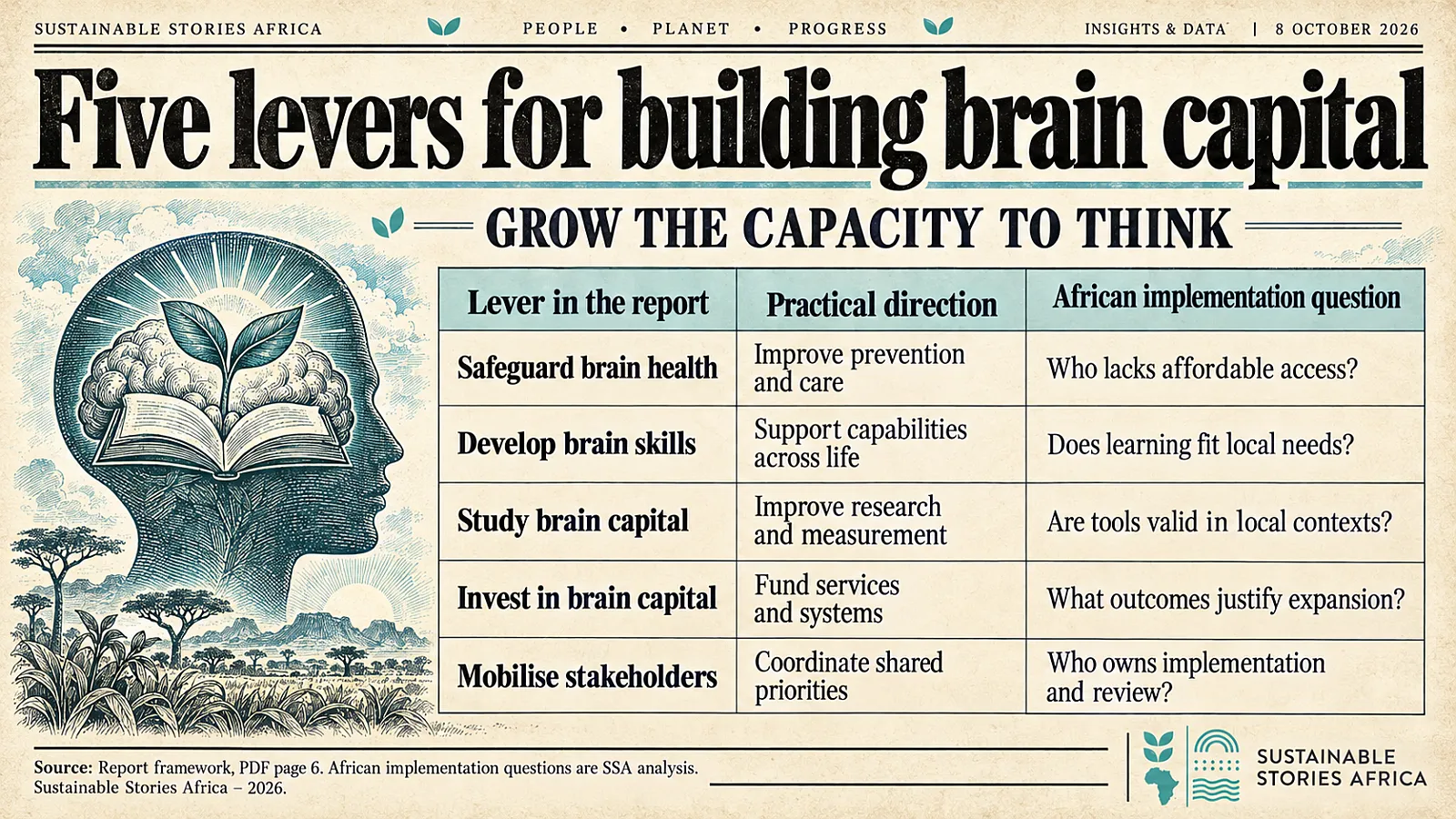
The report organises action around five levers.
They offer a framework for coordinating responsibilities, with implementation adapted to local needs.
Governments can begin by identifying where existing health and education plans could work together more effectively.
- The assessment should include service capacity and realistic financing, so aspirations become feasible improvements.
Employers should evaluate training by work quality and the ability to apply new skills, while assessing health initiatives through appropriate confidential measures.
- Individual medical information should not become an employee productivity score.
- Aggregate reporting can inform decisions without exposing personal conditions.
Researchers and funders can support locally relevant evaluation, including which groups benefit and which remain underserved.
- Scaling should follow evidence of workable delivery.
This makes investment more accountable and reduces the risk of promoting ambitious global estimates interventions that have not been tested locally.
Path Forward – For Inclusive Human Capability
African AI strategies should include health, education and workplace conditions that help people participate.
Brain capital offers a framework for coordinating those investments, with local evidence guiding priorities.
The next step is to fund practical services and evaluate who benefits.
Better care and stronger human capabilities can advance social sustainability while giving technological change a more inclusive foundation.