Session theme - Connecting institution building private market visibility and institutional capital
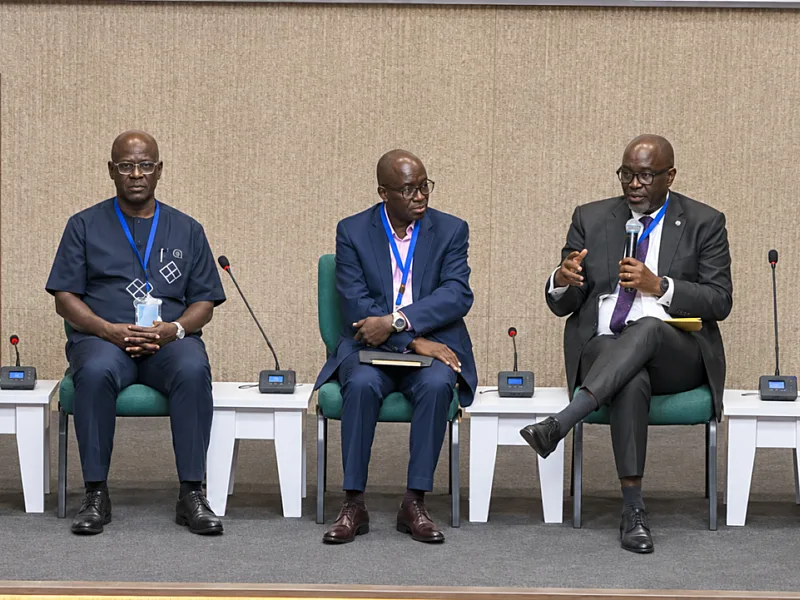
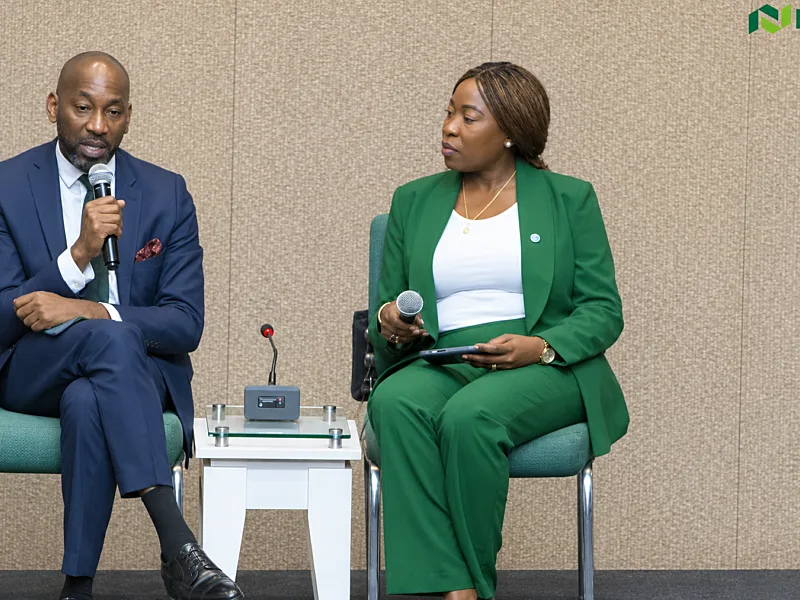
Session 1 — Building Africa’s Next Generation of Institutions: Simi Sola Eyisomi, moderator, with Tayo Oviosu, Ugonna Aka, Morenike Olufemi representing Olugbenga Agboola, and Mayowa Ali representing Deepankar Rustagi.
Session 2 — The AT50 Index Making Africa’s Private Technology Economy Visible: Gbite Oduneye and Yewande Adeayo.
Session 3 — Institutional Capital Financing the Next Stage of Growth: Ashley Lewis, moderator, with Christian Mulamula, Benson Adenuga, Oladele Sotubo and Chidi Iwuchukwu.
The AT50 Lagos discussions exposed a connected financing challenge.
Businesses need stronger institutions, investors need comparable evidence and markets need structures that can translate interest into suitable capital.
Read together, the sessions suggest that the next stage of Africa’s technology economy will depend on the quality of those connections, alongside the amount of money available.
Africa’s Financing Challenge Connects Three Systems
Africa’s technology financing gap is partly a coordination problem between how companies operate, how investors assess them and how capital markets provide access.
- This is SSA’s reading of three discussions at the AT50 Lagos Market Open on November 18, 2026, covering institution building, private-company visibility and institutional funding.
The sessions brought operators from Paga, Moniepoint, Flutterwave and OmniRetail into conversation with the AT50 leadership, Stanbic IBTC, IFC, British International Investment and Rand Merchant Bank.
- Their perspectives converged on dependable information and accountable decision-making as foundations for long-term capital.
The significance for African development is practical.
- When growing businesses cannot access suitable finance, useful services may struggle to expand.
- When finance is provided without a reliable understanding of the business, investors and customers can carry risks that the growth story does not reveal.
Market Scale Leaves Important Questions Unanswered
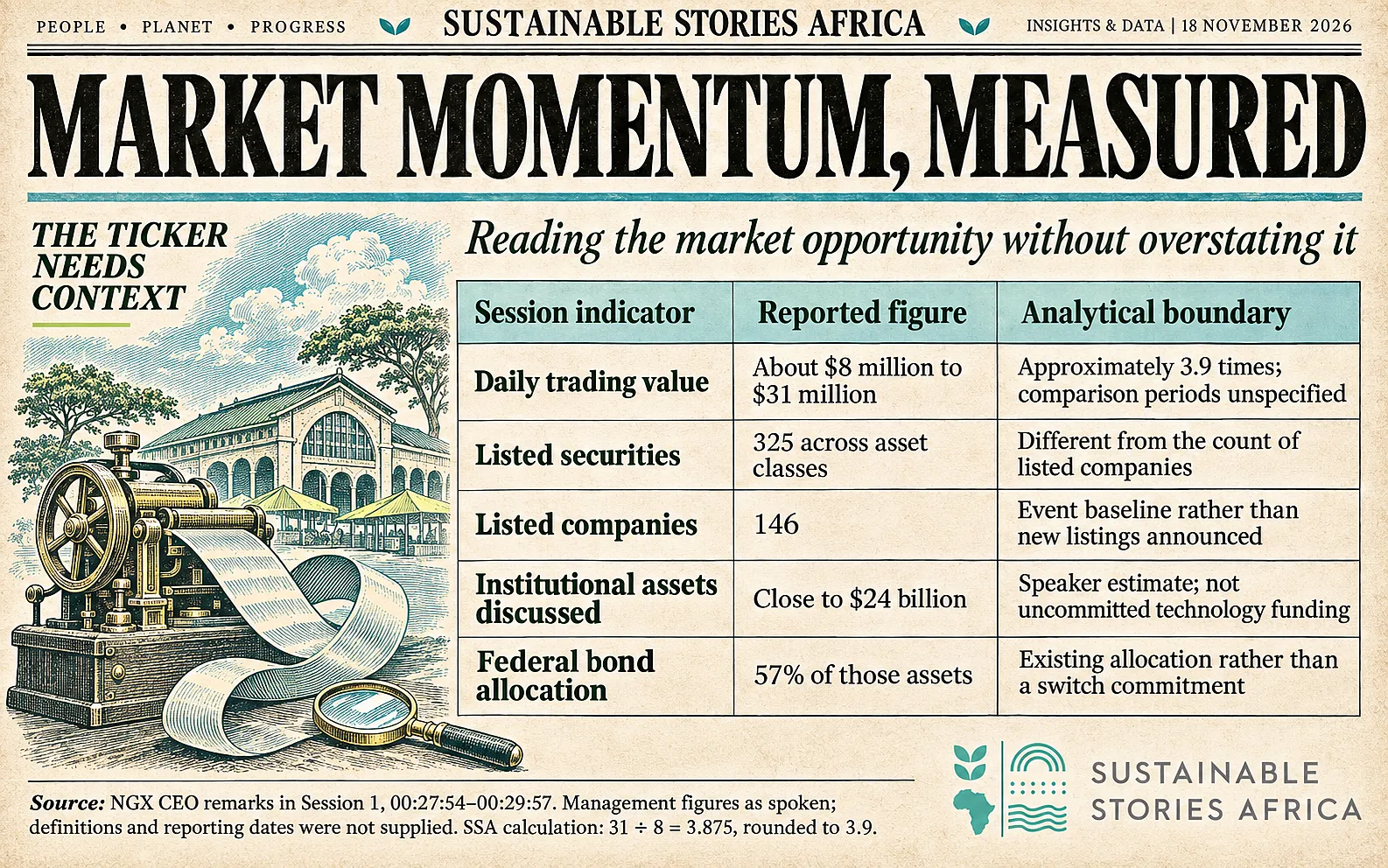
In his remarks, Nigerian Exchange CEO Jude Chiemeka cited daily trading value of about $31 million, compared with an earlier level of about $8 million.
- He also referred to 325 listed securities across asset classes and 146 listed companies.
- The figures described the exchange’s position in his address, rather than a separately supplied statistical release.
His distinction between securities and companies matters.
- A multi-asset exchange can host several types of instruments, so a security count is not a measure of how many businesses have listed equity.
- Similarly, higher daily turnover does not establish that every prospective technology listing will enjoy sufficient liquidity.
The arithmetic indicates turnover approximately 3.9 times the earlier level cited, but the address did not specify comparable measurement windows.
- The responsible conclusion is that the CEO reported a material increase, while the strength and persistence of that increase would need consistent market data.
Three Sessions Describe One Financing Chain
The first discussion, moderated by Simi Sola Eyisomi, began inside the company.
- Tayo Oviosu described delegated management and recorded knowledge; Morenike Olufemi stressed granular financial data;
- Mayowa Ali discussed profitable growth
- Ugonna Aka linked compliance with merchant trust.
Their shared concern was whether the operating business could support its ambitions.
The fireside discussion between Gbite Oduneye and Yewande Adeayo moved to the information connecting companies with markets.
- Oduneye positioned AT50 as a readiness benchmark and distinguished it from an investable product.
- The task here was to make private businesses understandable without implying that visibility itself creates ownership or liquidity.
Ashley Lewis’s institutional-capital panel completed the connection.
- Christian Mulamula and Benson Adenuga discussed preparation and development finance.
- Oladele Sotubo and Chidi Iwuchukwu explained the governance and data needed to approach public capital and debt.
The question became whether the evidence supported a financing structure with a credible return of capital.
Taken together, these are complementary responsibilities.
- Better companies still need effective market access; more visible companies still need suitable instruments; and available capital still needs investable opportunities.
Improving only one part leaves the others as constraints.
Domestic Participation Could Support Durable Growth
Deeper domestic participation could give African technology businesses a broader set of financing relationships.
- The benefit would depend on investors understanding the businesses and selecting instruments consistent with their mandates.
- Large institutional asset totals should therefore be treated as context for the opportunity, rather than money waiting to enter technology companies.
The social case also needs specificity.
- A well-financed payments platform may improve service continuity; a distributor may connect retailers with more reliable supply; an infrastructure project may ease the movement of goods.
- These are possible development pathways, not outcomes established by attendance at a market-opening event.
Institutional discipline can help test those pathways.
- Investors can ask whether expansion improves customer service, whether business economics are sustainable and whether risks are being transferred to merchants, workers or communities.
- Such questions make governance relevant to the people who experience company performance outside the boardroom.
A listing can be one financing route, but it is not the only measure of maturity.
- Some companies may be better served by private equity, appropriately structured debt or a longer preparation period.
- The relevant outcome is capital that supports durable operations on terms the business can sustain.
The financing choice also changes accountability.
- Debt requires attention to repayment capacity and timing. Equity changes ownership and the distribution of future returns.
- Public capital brings continuing disclosure expectations.
Advisers therefore need to help companies compare the consequences of each route, rather than treating access to any available pool as an adequate outcome.
Measure Conversion From Conversations Into Capital
The event’s value will be clearer when participants can track what happens after the discussions.
- Companies can document improvements in reporting and decision-making. Advisers can record which businesses enter formal preparation.
- Investors can distinguish exploratory interest from due diligence, approvals and completed transactions.
This matters especially for prospective financial products.
- A proposed $500 million product discussed in the fireside session is different from a launched vehicle, subscribed capital or funds reaching businesses.
- Reporting should preserve these differences at every stage.
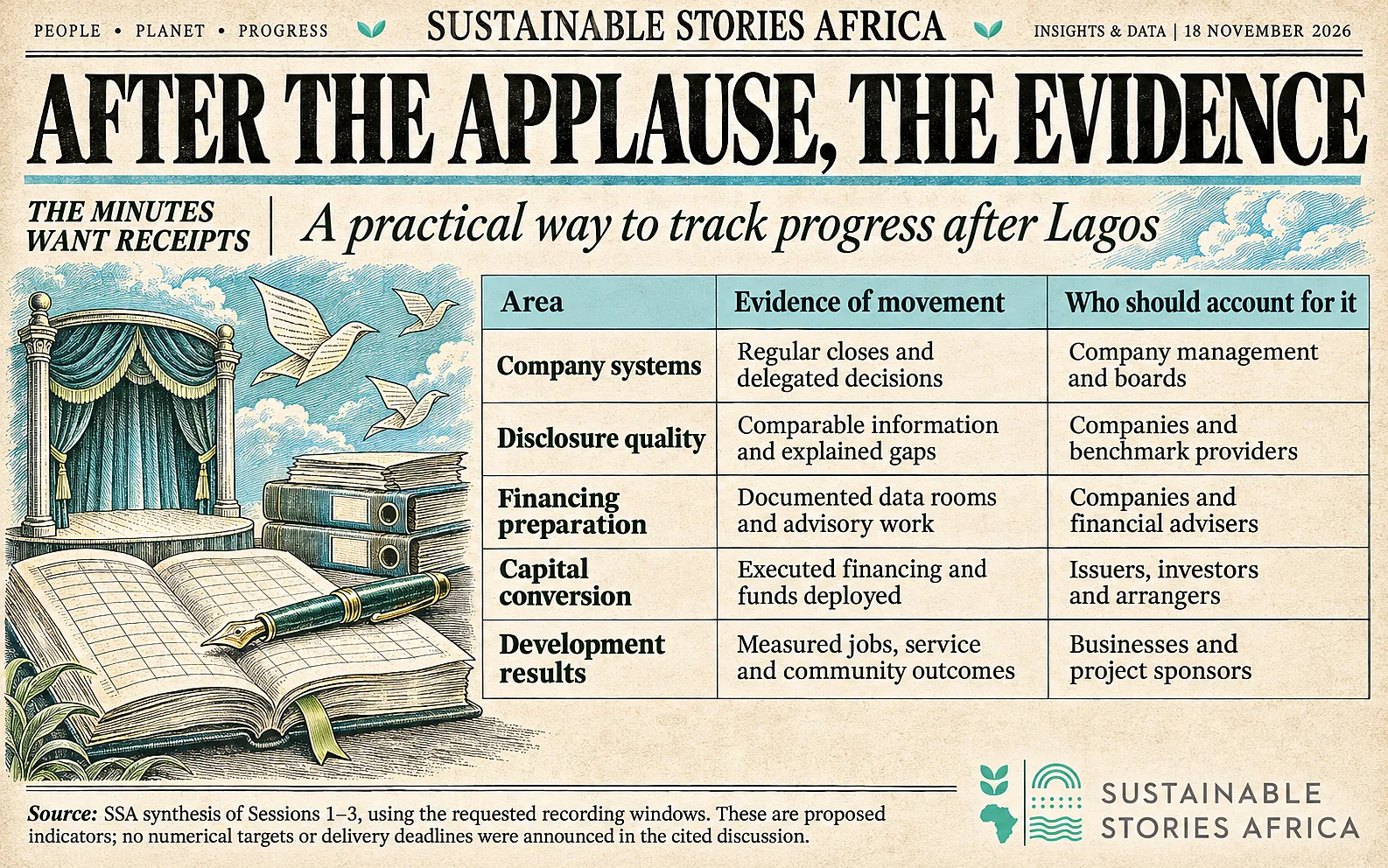
SSA proposes a small set of measures to link the three conversations.
- These measures are analytical suggestions, not commitments announced at the gathering.
- They would help readers assess whether the institutional dialogue is producing changes that matter beyond the event.
The same discipline should apply to impact reporting.
- A business serving more customers has not necessarily improved service quality; a larger funding round has not necessarily reduced financial vulnerability.
- Reporting should connect the capital received to changes in operations and then to outcomes that can be observed by customers, workers or communities.
This keeps the development argument open to scrutiny.
Path Forward – Connect Stronger Companies With Suitable Capital
Africa’s financing opportunity will advance when company discipline, credible disclosure and suitable market structures improve together.
Each participant has a distinct part to play, from operating controls to product design and investment assessment.
The test after Lagos is practical conversion: better evidence, completed financing and accountable use of capital.
Tracking those results would connect capital-market development with reliable services, sustainable businesses and measurable social value.