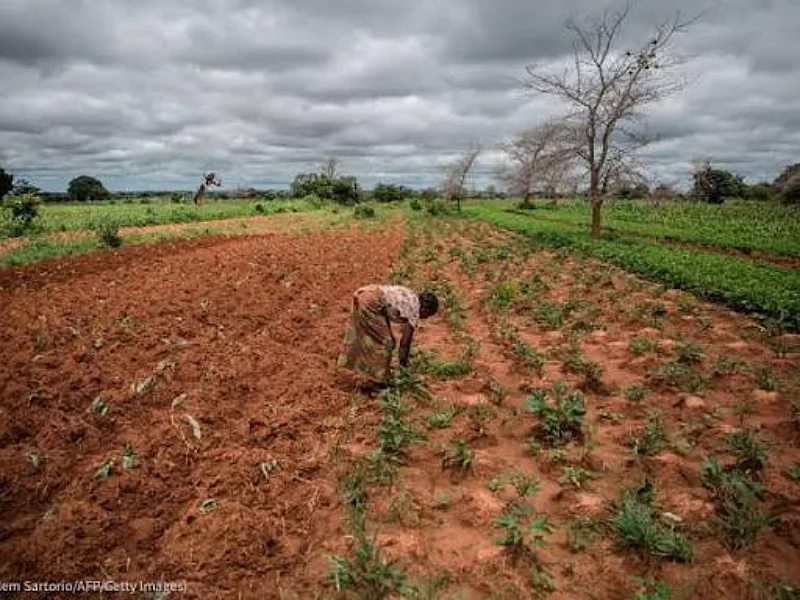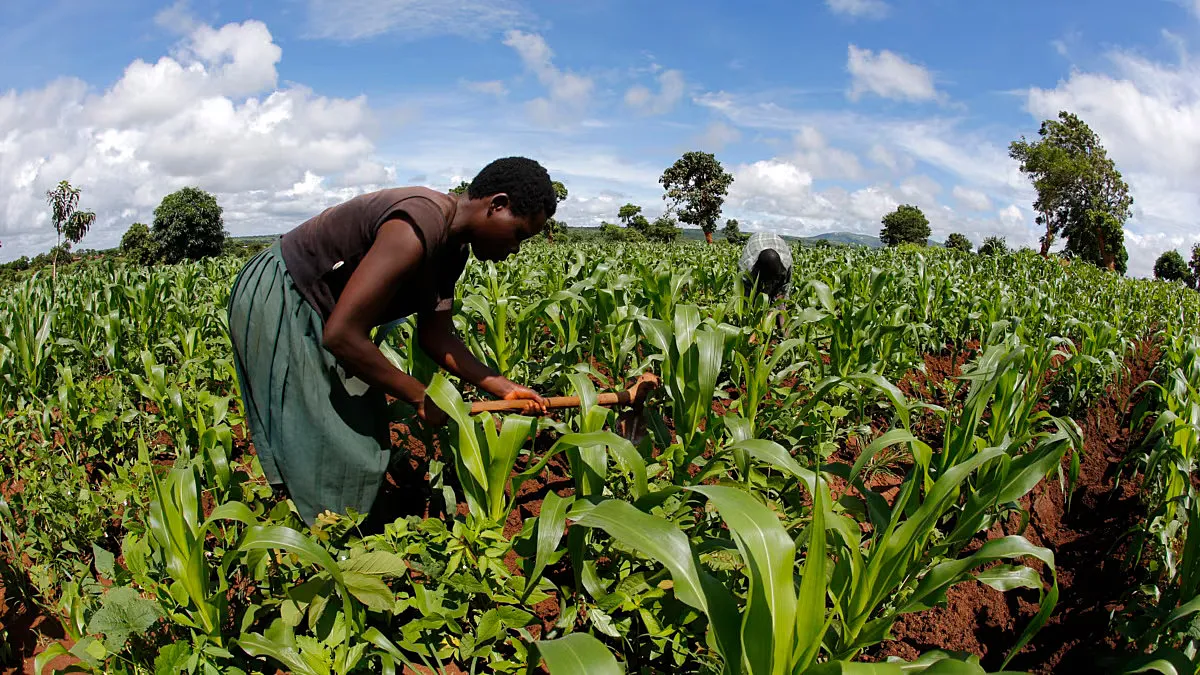
Malawi plans to cut 2035 domestic emissions by about 12% below projected levels.
The reduction could reach 48% by implementing both domestic and internationally supported packages.
The plan ties those figures to household cooking, conservation agriculture and local waste enterprises.
Malawi Puts Household Energy Into Focus
Malawi filed its third nationally determined contribution (NDC 3.0) on 1 July 2026.
- The active submission estimates $7.06 billion in investment for 2025 – 2035.
- It expects about 39% from domestic resources and the remainder from international support and climate finance.
The contribution sets out how greenhouse gas emissions could change by implementing groups of different measures.
- Its national mitigation table projects 101.6 million tonnes of carbon dioxide equivalent (MtCO₂e) under business as usual in 2035.
- The level could fall to 53.3 MtCO₂e with the domestic and supported measures together.
Under the Paris Agreement, an NDC sets out national climate action and is renewed every five-year cycle.
- Malawi’s filing shows how a national emissions target depends on household choices and local services.
- For people who rely on charcoal or firewood, cleaner cooking programmes have practical implications for fuel costs, time and household air quality.
How Malawi Models Its Emissions Cuts
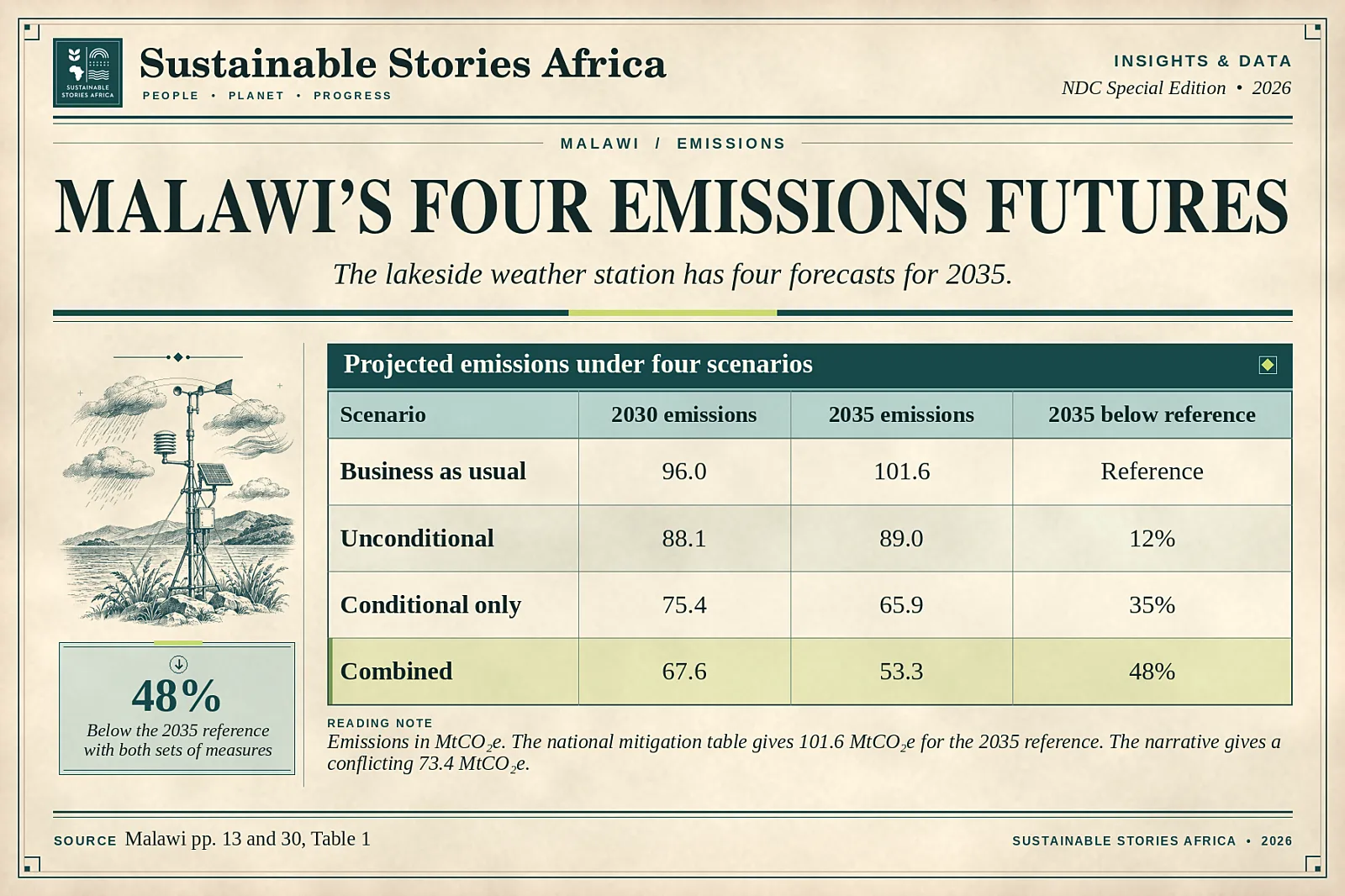
The domestic pathway reduces 2035 emissions to 89.0 MtCO₂e compared to the national table’s reference of 101.6.
- Malawi also reports a conditional-only scenario of 65.9 MtCO₂e, or 35% below the reference.
- Its combined domestic and conditional pathway reaches 53.3 MtCO₂e, or about 48% below the reference.
The separate conditional scenario shows the estimated effect of measures needing additional support.
- The combined scenario describes the outcome if both sets of measures are implemented. Using the published combined scenario retains the model’s assumptions and rounding.
- The table below uses the 2035 figures in the submission’s national mitigation table, with a note on the conflicting projection in the narrative.
Malawi provides an earlier checkpoint.
- The national table gives a 2030 business-as-usual level of 96.0 MtCO₂e and a combined pathway of 67.6 MtCO₂e.
- This checkpoint helps readers see whether household energy programmes and agriculture are reaching scale before the main target year.
The submission also models outcomes to 2040.
- The 2035 comparison gives the principal Paris Agreement benchmark, and 2030 provides an interim check.
- Using the national table for both years helps compare the scenarios on the same basis.
- The separate domestic and conditional columns show the scale of change associated with each package.
Why Cleaner Cooking Matters For Households
The energy section of the filing covers grid-connected solar and other options for serving areas away from the main grid.
- Households with different levels of access may rely on different cooking or lighting technologies.
- Reporting adoption by location can help ministries see where an intervention reduces fuel use and where limited access to equipment or repairs constrains uptake.
The plan envisages improved charcoal and firewood stoves reaching about 1.7 million households by 2030.
- An improved stove can use fuel more efficiently, and the effect depends on performance and usage.
- Fuel savings can benefit households that buy fuel or spend time collecting it.
- Measuring use after distribution would better translate the programme’s effect.
The filing also proposes biogas digesters and solar technologies.
- For rural communities, the best option depends on access to equipment, repair services and fuels or feedstocks.
- A programme that includes maintenance and training can help keep installations working.
- Household surveys can show whether families continue using older devices alongside the new ones.
At the national level, emissions effects also depend on the relationship between household demand and the supply of wood and charcoal.
- Monitoring fuel consumption and resource conditions helps establish whether the programme reduces pressure on forests.
- These records can complement the emissions estimates in Malawi’s transparency reporting.
How Farm And Waste Projects Connect
Agriculture and waste measures also have different ways of proving results.
- A district can record a composting facility’s throughput and how much material farmers buy or use.
- Field reporting can assess whether conservation agriculture is sustained and whether farms can manage dry periods better.
- Using these indicators alongside the number of enterprises or hectares gives a fuller picture of implementation.
The plan envisages expanding conservation agriculture to 240,000 hectares by 2030.
- Practices that protect soil and retain moisture can help farmers manage dry periods, and results will vary with rainfall, crops and local conditions.
- Extension services can show which practices producers continue to use and which inputs they need to apply them.
Malawi also sets out a network of 280 green composting enterprises across all 28 districts.
- Turning organic waste into compost can help supply soil amendments and create work.
- The results depend on collecting suitable material and finding customers
- Local records can show how much waste is processed and whether farmers use the compost produced.
Adaptation measures span water, agriculture, climate services and health.
- A useful assessment would show how often communities receive warnings, whether water infrastructure remains usable through dry periods and what happens to farm output.
- Linking those outcomes to delivery costs would help districts assess which investments they can sustain.
What Ministries Can Track Across Programmes
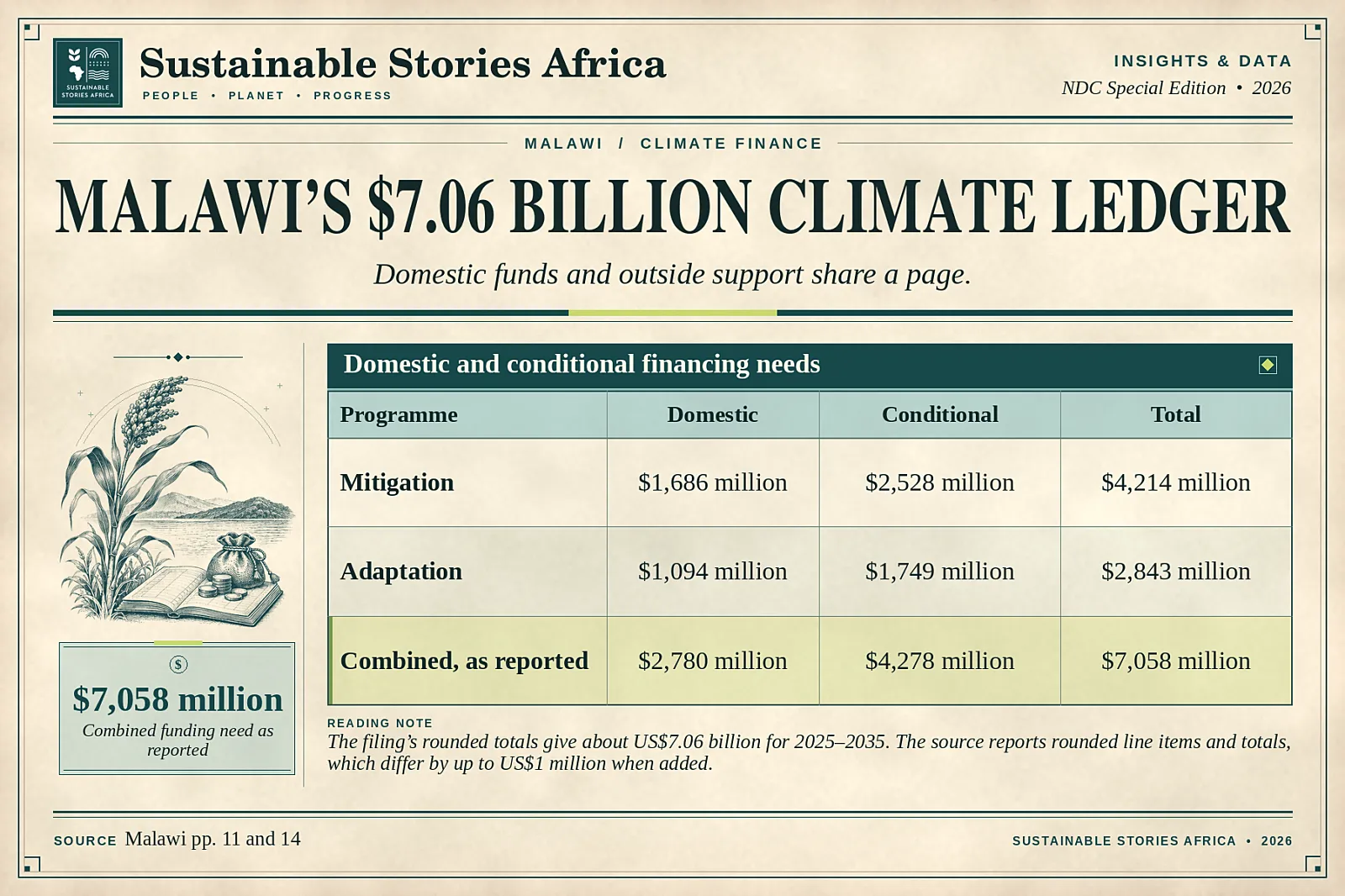
The budget is split into approximately $4.21 billion for mitigation and $2.84 billion for adaptation.
- Within the detailed table, around $1.75 billion of adaptation and $2.53 billion of mitigation are conditional.
- This distinction matters for programme managers deciding whether domestic resources can keep early work moving while they seek support for the rest of the programme.
Malawi estimates $2.78 billion of domestic or unconditional financing and $4.28 billion conditional on support.
- The conditional amounts cover both mitigation and adaptation, so progress in one category captures only a glimpse of the whole picture.
- Funding records should show which projects can proceed under domestic budgets and which depend on other sources.
The submission assigns monitoring responsibilities to sector ministries, with national coordination and quality review.
- The country describes a project monitoring system as part of the wider reporting framework. Energy agencies can monitor stove uptake and use.
- Agriculture agencies can track changes in cultivated areas and the persistence of new practices.
- District information makes the national totals easier to verify.
Future inventories and Biennial Transparency Reports can explain how the country reconciles projected and observed emissions.
- Malawi can also clarify inconsistencies in the source text when it publishes updated pathway data.
- A consistent set of definitions and years would let readers follow changes in finance, adoption and emissions together.
Malawi’s proposed monitoring approach distinguishes groundwork from the systems that combine sector information for national reporting.
- A budget can show whether funds were made available.
- A ministry or district can record whether delivery took place and what happened afterwards.
- Combining those records would make it possible to assess whether measured emissions and local outcomes are changing together.
The assessment could also show where programmes overlap in ways that help delivery.
- Composting enterprises can supply local farms, while conservation agriculture programmes can help farmers with organic inputs.
- Budgeting the projects separately preserves spending accountability.
- Reporting their links would show how local services contribute to the wider climate plan.
Path Forward – What To Watch In Malawi’s Rollout
Track domestic and supported financing alongside the programmes it pays for.
For cooking, follow continued stove use and changes in household fuel consumption.
For farms and waste enterprises, look for evidence on practices still in use, the volume of waste processed and results across districts.