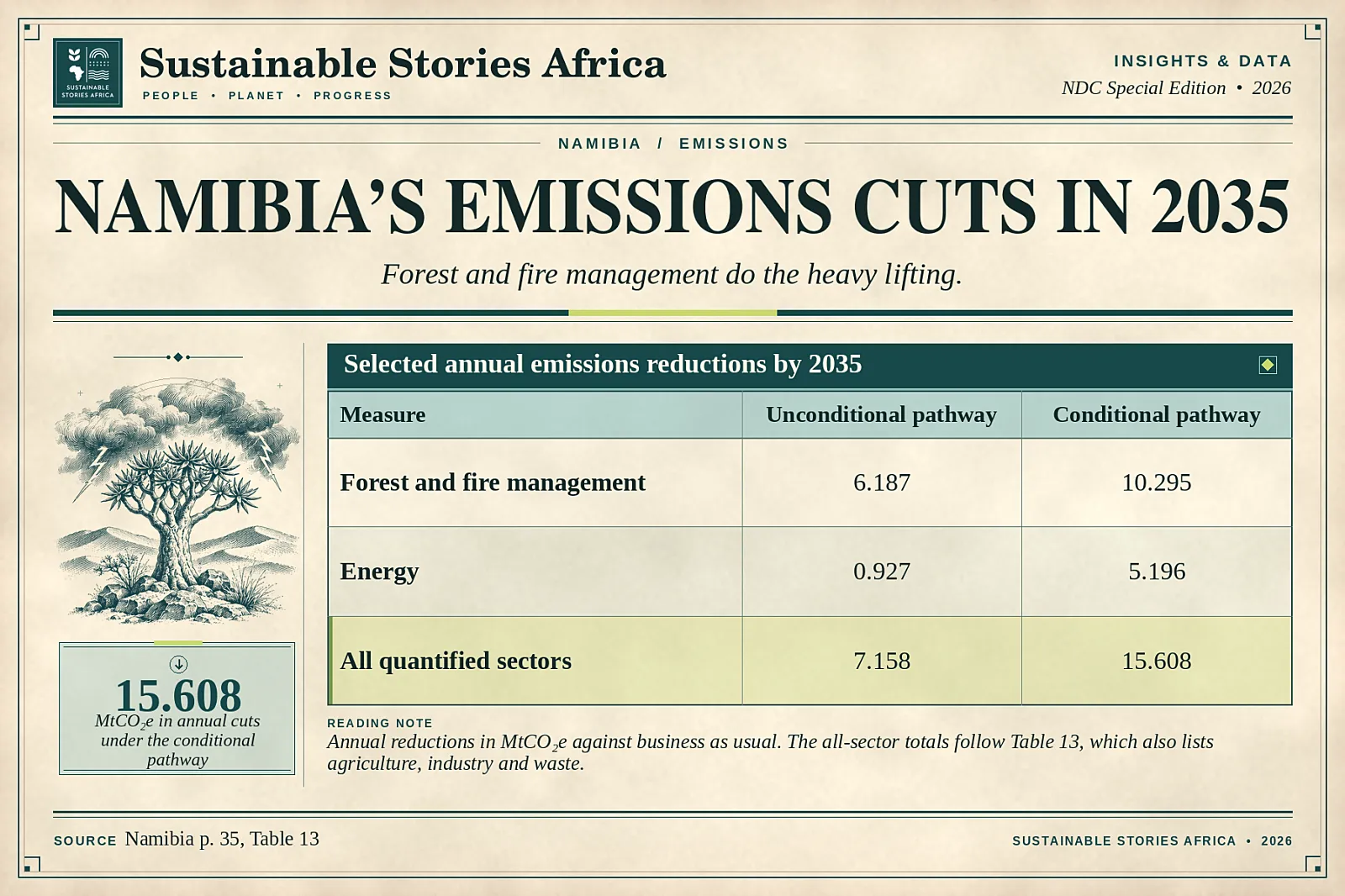
Namibia expects its climate plan to avoid about 15.6 million tonnes of carbon dioxide equivalent annually by 2035 in its conditional scenario.
Forest and fire management account for most of that estimate.
Water security is a separate priority.
The plan identifies rural water points, solar-powered boreholes and supply networks as investments that could help communities through drought.
Namibia Plans For A Drier Future
Namibia filed its third nationally determined contribution on 28 October 2026.
- The active submission covers 2026 – 2035, with 2030 as an interim milestone.
- It estimates annual emissions reductions of 7.158 million tonnes of carbon dioxide equivalent (MtCO₂e) in the unconditional scenario and 15.608 MtCO₂e in the conditional scenario by 2035.
Forestry and fire management make up most of the estimated reduction in both pathways.
- Namibia also propose measures for renewable power, cleaner transport and waste management.
- On the adaptation side, the government lists 46 measures and 110 actions across nine priority areas.
A nationally determined contribution (NDC) is the climate plan a country communicates under the Paris Agreement.
- The agreement’s five-year cycle gives Namibia a way to report how its domestic actions and measures requiring support develop.
- For residents in drought-prone areas, delivery will also be measured by water availability during dry periods.
What Namibia’s Mitigation Numbers Actually Measure
The 7.158 MtCO₂e and 15.608 MtCO₂e figures are estimated annual reductions against business as usual.
They represent avoided emissions associated with two pathways.
- Namibia analysis includes the role of forest management and other land measures.
- This accounting boundary matters when interpreting the country’s pledge alongside gross emissions targets that report land use separately.
Forest and fire management account for 10.295 MtCO₂e of modelled mitigation in the conditional pathway, and energy accounts for 5.196 MtCO₂e.
- The conditional scenario depends on access to international finance, technology and capacity support.
- Namibia’s unconditional pathway includes measures financed through domestic resources, private investment or already secured funding, according to the plan’s financing categories.
The filing describes Namibia as a net carbon sink, largely due to land and forest removals.
- An economy can still emit greenhouse gases from power, transport and agriculture while its land absorbs more carbon than the country emits overall under a given inventory.
- Both sides of the calculation matter for policy and for tracking whether removals persist.
The filing compares its new conditional mitigation estimate of 15.608 MtCO₂e with 7.669 MtCO₂e in the previous contribution.
- It uses an updated inventory and projects emissions from a 2022 base year. The new estimate gives readers an annual quantity to follow.
- Comparing submissions also requires the assumptions behind each set of measures.
Why Fire Management And Power Matter
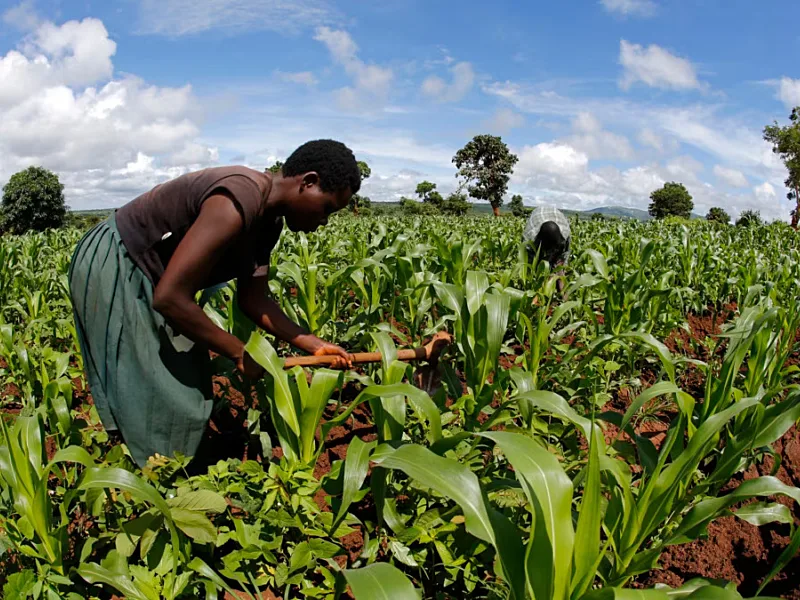
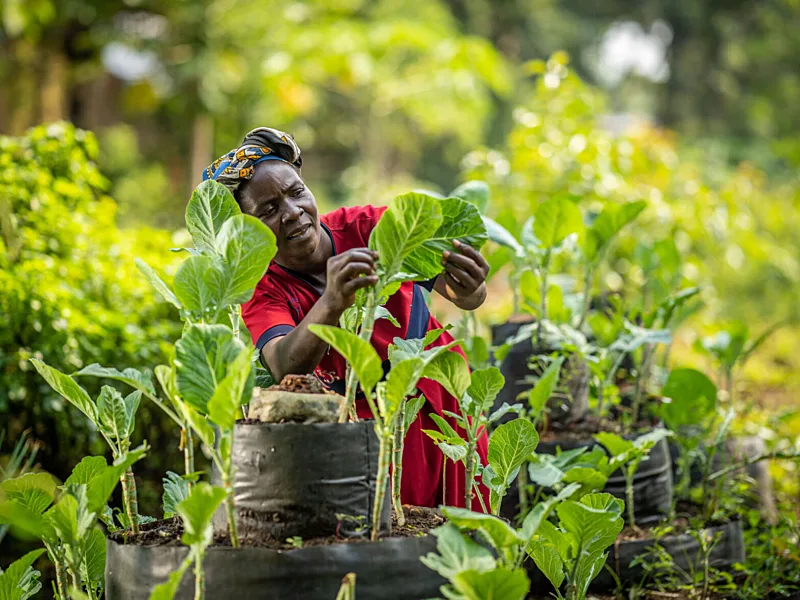
Namibia also identifies agricultural measures such as conservation farming and more sustainable livestock production.
- Some measures aim to improve soil carbon, reduce waste and industrial emissions.
- Results depend on how farmers use the practices and the yields under different conditions.
- Field data link mitigation estimates to seasonal decisions made by producers.
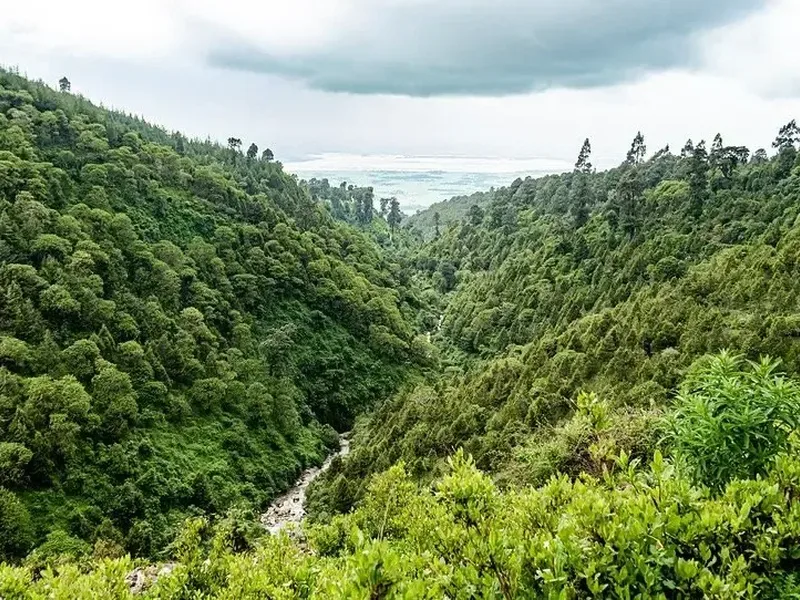
The forestry measures include preventing and managing fires and restoring degraded areas.
- A fire programme needs to know where burn patterns are changing and whether interventions are preserving vegetation.
- Satellite observations and field records can help verify the results.
- The condition of restored land matters as much as the area listed for intervention.
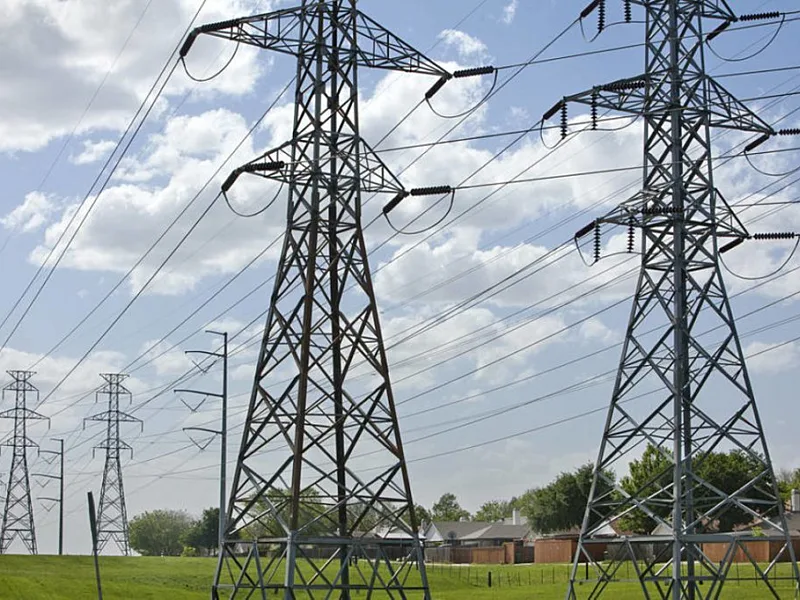
The energy programme includes renewable generation, grid modernisation, energy efficiency and cleaner transport.
- An emissions estimate for a new power project depends on the generation it replaces and how much electricity it supplies.
- Reporting output alongside installed capacity would make those assumptions easier to test.
The 2030 milestone creates an opportunity to compare changes in forests, power generation and other sectors before the main 2035 target.
- Tracking them separately also helps identify where action is slowing.
- A delay in connecting a power project and a decline in forest carbon call for different responses and different sources of evidence.
How Water Investment Could Reduce Disruption
The filing gives rural water agencies indicators for households served and the operation of rehabilitated facilities.
- This makes it possible to assess distribution as well as construction.
- Regional information and user groups can show whether the work reaches remote communities and whether households have a practical alternative when their usual sources fail.
Namibia proposes rehabilitating and bringing at least 695 rural water points into operation by 2030 and at least 1,390 by 2035 in priority areas under a conditional measure.
- The filing also proposes solar-powered boreholes in water-scarce areas.
- Rehabilitated facilities can shorten water journeys, while reliable supply can protect livelihoods during drought.
The plan includes new pipelines, distribution upgrades, water recycling and desalination.
- These measures address different settings.
- A rural borehole serves a different need from a regional supply network. Water quality, maintenance and aquifer condition affect the long-term value of both.
- Reporting availability across seasons would reveal problems that a count of completed works can miss.
Water resources are one of nine adaptation priorities.
- The wider plan also covers agriculture and food security, ecosystems and infrastructure.
- Namibia is developing its National Adaptation Plan to provide more detail on priorities, costing and evaluation.
- This gives local and national agencies a way to specify where the investments will have the greatest effect.
The proposed water master plan includes extending and upgrading pipelines alongside rehabilitation and solar pumping.
- These actions have different lead times and maintenance needs.
- If a regional authority reports works by type and location, residents can see whether improvements are part of a dependable network or whether a settlement still relies on one vulnerable source of supply.
How Namibia Plans To Track Delivery
The water resources annex gives the scale of investment envisaged in one priority area.
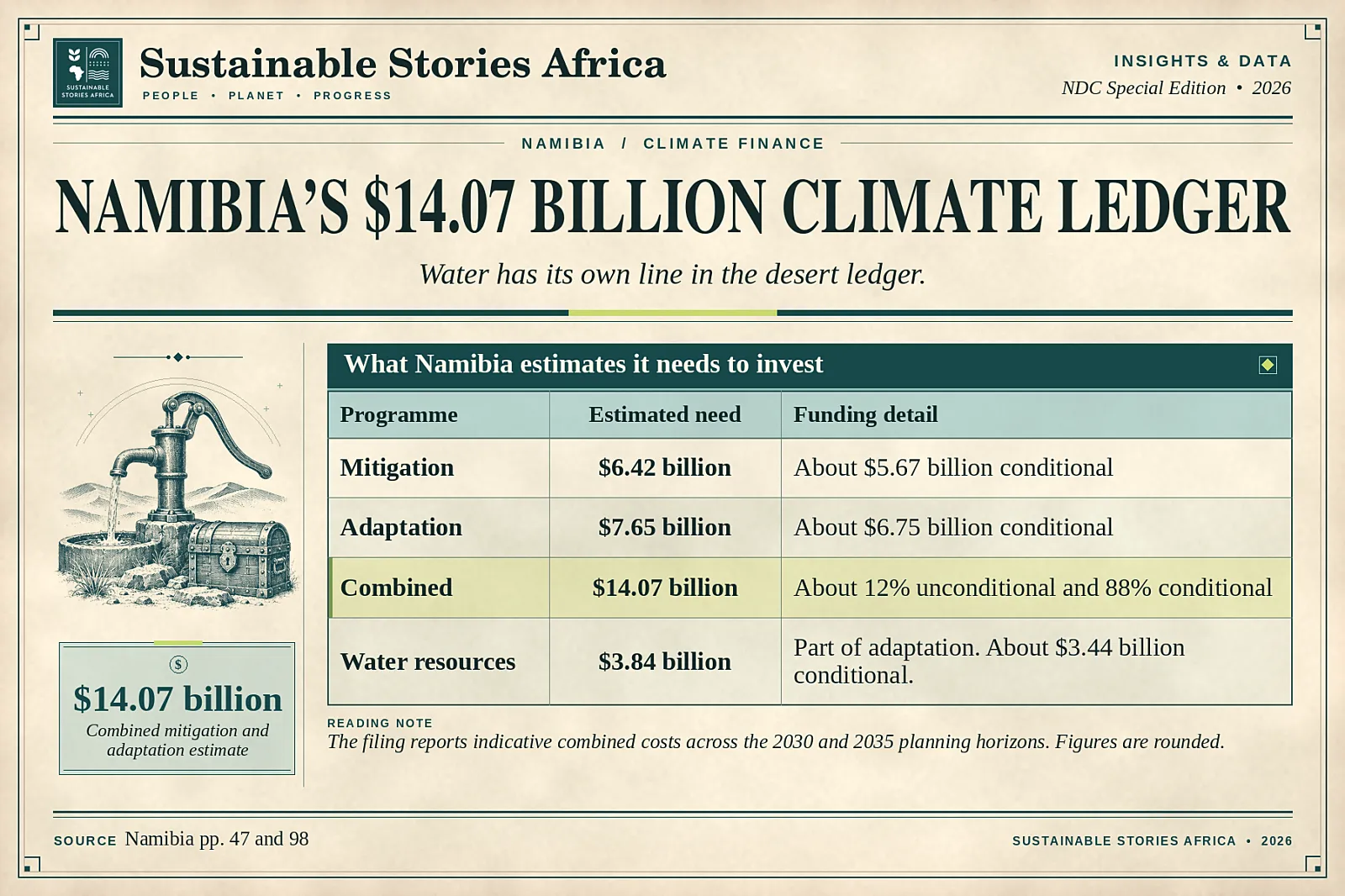
- It estimates about $3.84 billion in costed water measures; around $3.44 billion is conditional.
- Some interventions are already supported through existing budgets or financing.
- Others depend on new funding sources and the capacity to commission and operate the facilities.
Namibia estimates combined mitigation and adaptation investment needs of about $14.07 billion across its 2030 and 2035 planning horizons.
- The plan classifies approximately 88% as conditional.
- It envisages an updated implementation strategy and action plan that assigns responsibility for measures and tracking which require international support.
The Ministry of Environment, Forestry and Tourism coordinates national monitoring with sector ministries and other institutions.
- The filing calls on designated institutions to collect and verify information before consolidating reporting.
- For water, regional and local authorities can report whether points remain operational and which households they serve.
Finance data can help explain why some interventions progress faster than others.
- A ledger that distinguishes amounts secured from amounts still sought would support procurement and planning.
- The Biennial Transparency Report process can then map these financing records to verified emissions reductions, better water service and the capacity available to implement the next set of measures.
International support also includes technology and institutional capacity.
- Namibia’s plans for better monitoring call for information from the ministries responsible for energy, land and waste, as well as agencies overseeing adaptation.
- Shared reporting methods can help reconcile the records.
- Clear responsibilities for gathering local information also make it easier to improve estimates as new evidence becomes available.
Path Forward – What To Watch At Interim Milestones
Follow the 2030 checkpoint for forest and fire management, renewable generation and rural water points.
These measures can show whether the 2035 plan is on schedule.
Look for updates that distinguish secured funds from costs still conditional on support, alongside evidence that completed water facilities are working.