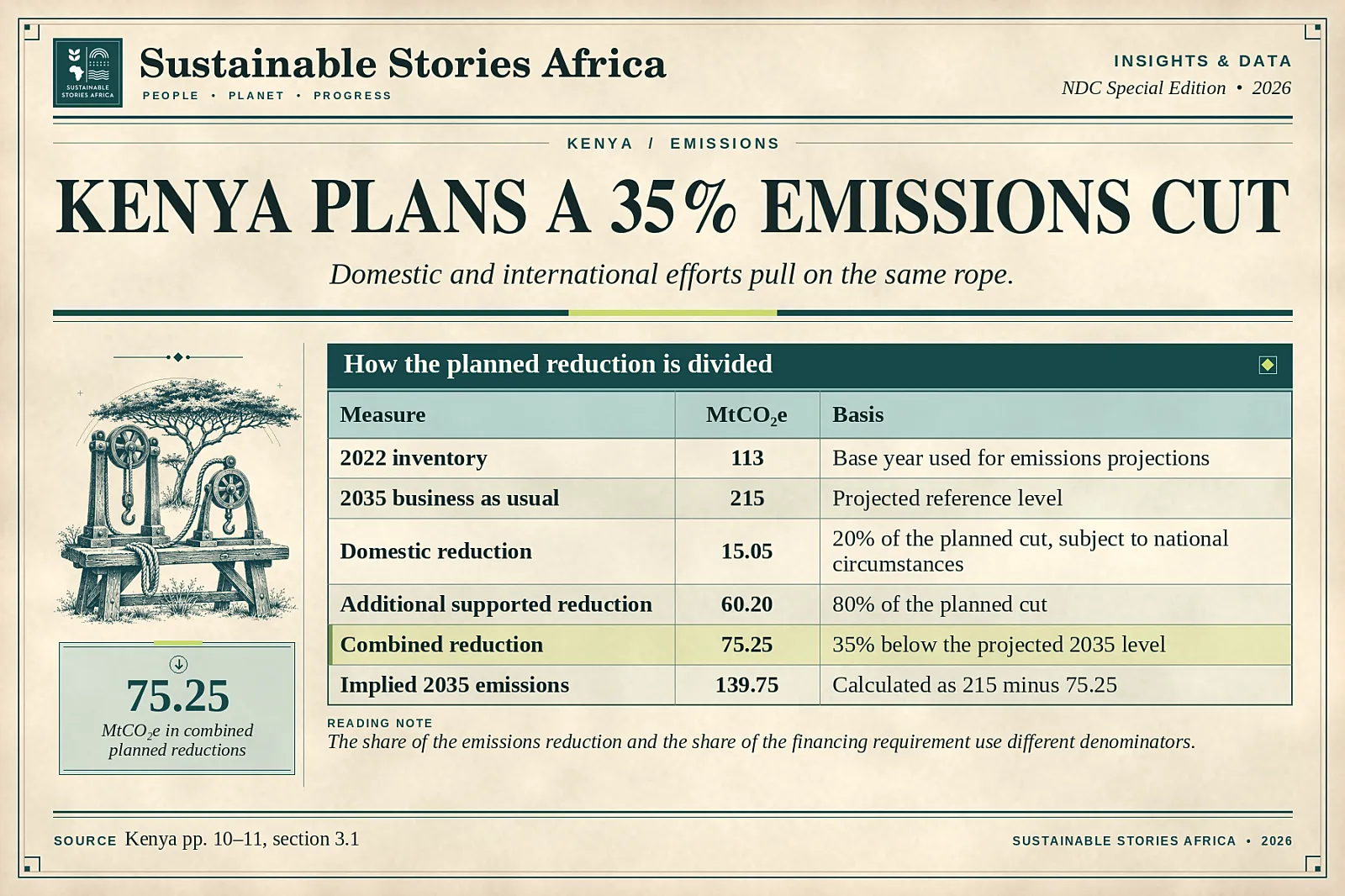
Kenya aims to avoid 75.25 million tonnes of carbon dioxide equivalent against its projected 2035 level.
Its plan identifies the share it hopes to deliver domestically and the larger share that needs external support.
County delivery will shape how the pledge improves water security and prepares communities for floods and droughts.
Kenya Extends Its Pledge To 2035
Kenya filed its Second Nationally Determined Contribution on 30 April 2025.
- The active submission covers 2031 – 2035 and aims to cut emissions by 35% against projected 2035 levels.
- It places the reduction at 75.25 million tonnes of carbon dioxide equivalent (MtCO₂e), with just over 15 million tonnes to come from domestic measures, subject to national circumstances.
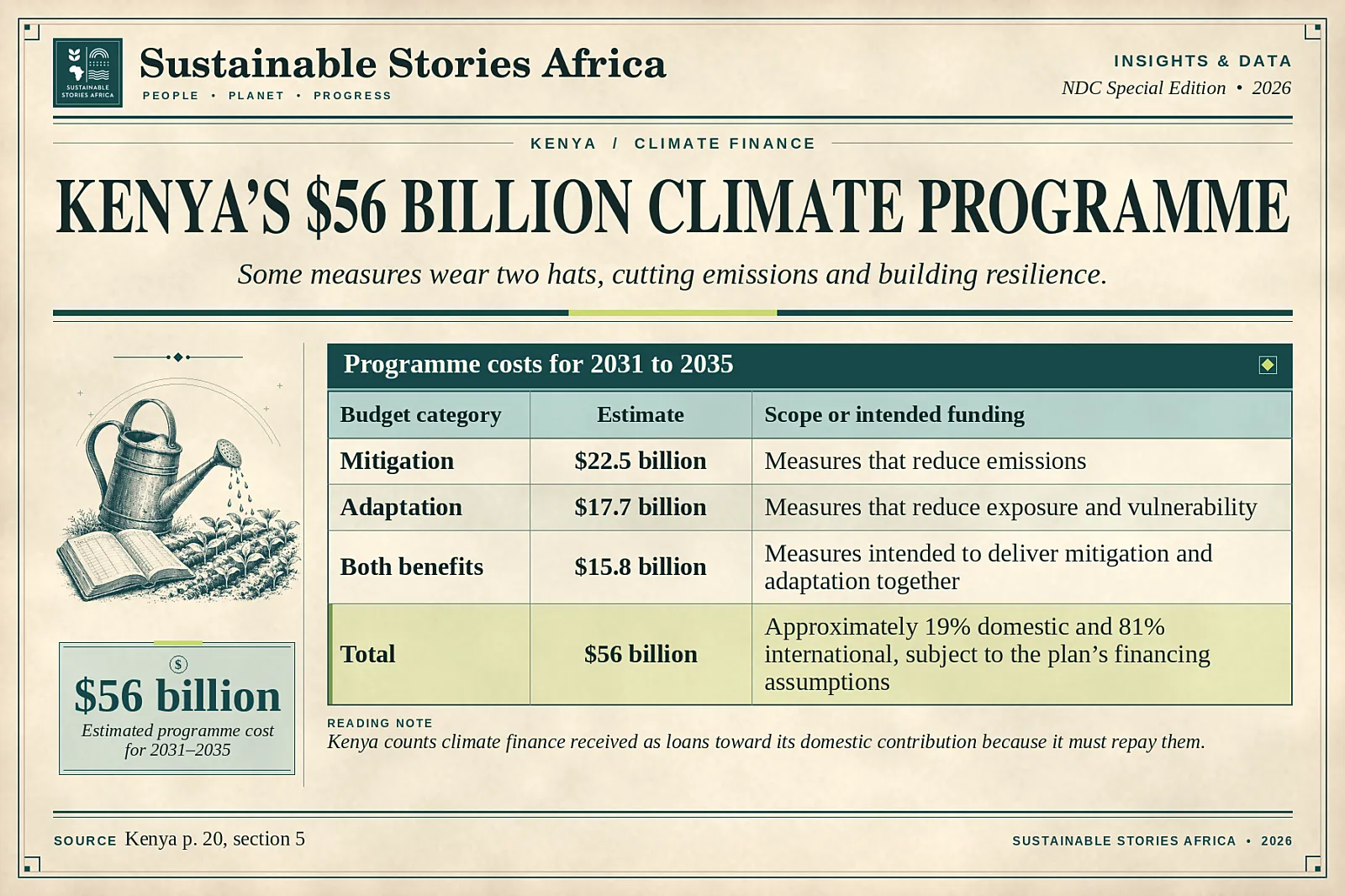
Kenya estimates the plan will require $56 billion.
- This includes activities designed to deliver both emissions reductions and adaptation, alongside programmes focused on either objective.
- The way Kenya classifies expenditure helps readers see which activities are intended to serve more than one purpose.
Under the Paris Agreement, parties submit successive national climate plans, known as NDCs, every five years.
- Kenya’s second NDC builds on its first updated plan and sets out what it wants to achieve by 2035.
- For residents exposed to drought or flooding, the most visible results will come through county services and infrastructure.
How Kenya Calculates Its Planned Cut
Kenya bases its projection on its 2022 inventory, which records 113 MtCO₂e.
- It estimates that 2035 emissions would reach 215 MtCO₂e under business as usual.
- Subtracting the stated reduction from that projection gives an implied 2035 level of 139.75 MtCO₂e if all measures are implemented.
- The implied level is above the 2022 inventory and below the projected 2035 reference.
The contribution attributes 15.05 MtCO₂e of the reduction to domestic measures and 60.20 MtCO₂e to measures that require support.
- These figures represent 20% and 80% of the planned emissions reduction respectively.
- The supported portion draws on finance, investment, technology, capacity building and participation in carbon markets.
Kenya’s updated first NDC had targeted a 32% cut below its 2030 projection.
- The second submission raises the headline to 35% for a different target year and a revised modelling base.
- The target amounts, policy assumptions and conditions attached to delivery give a fuller account of the change.
Kenya’s updated first contribution used a projected 2030 level of 143 MtCO₂e.
- The second contribution sets out both a new projection and a more explicit division of the planned reduction between domestic measures and additional support.
- The updated filing also raises Kenya’s intended domestic share of the overall cost from 13% to about 19%, subject to national circumstances.
How Power And Carbon Markets Fit
Kenya envisages reviewing the types of activities that can participate in carbon markets over 2031 – 2035.
- The criteria can shape which investment reaches the power sector, agriculture or other sectors.
- Reporting authorisations and transfers alongside the national inventory would make the effect of those transactions on Kenya’s own 2035 target easier to see.
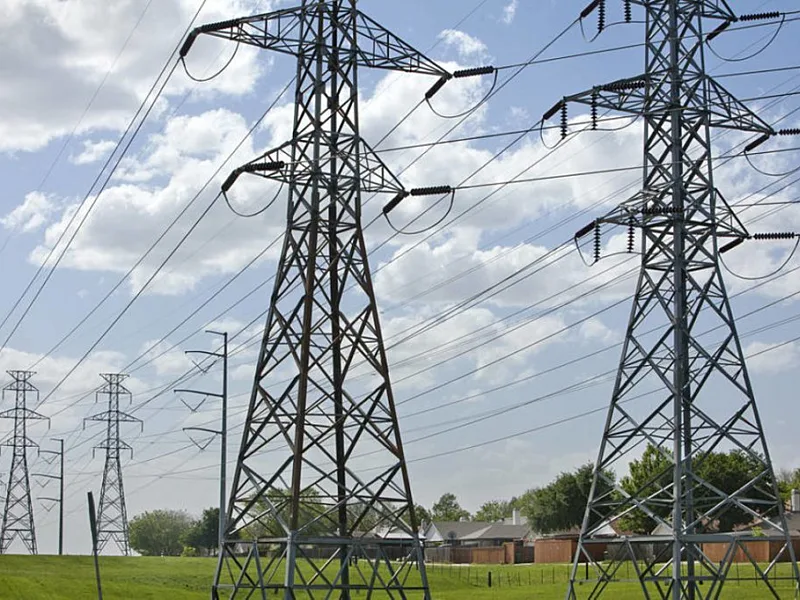
The plan aims for renewable generation on the national grid to move towards 100% by 2035.
- It also prioritises cleaner cooking and lower-emission transport and industrial activity.
- More renewable electricity can support cleaner vehicles and equipment as people and businesses switch from fossil fuels.
- Generation data and service reliability will help assess the effect of those changes.
Kenya identifies mass transit and shifts in how people and goods move as ways to cut transport emissions.
- A cleaner bus fleet can reduce emissions per trip.
- The overall effect also depends on how many people use the service and which journeys they would otherwise make.
- This is where urban planning and transport investment influence a national climate target.
Kenya expects carbon markets to help attract investment.
- It envisages reserving a share of mitigation outcomes for its domestic target.
- Under Article 6, transparent authorisation and accounting help establish who can claim internationally transferred reductions.
- Project records can also help communities understand which activities are covered and what local benefits are expected.
Where County Adaptation Can Reduce Risk
The plan also calls for better ways to assess loss and damage, including impacts from slow-onset events and displacement.
- Weather warnings and preparedness can reduce immediate risks.
- After a shock, records of damage to services and livelihoods can help national and county authorities decide what recovery assistance is needed and whether existing programmes reached affected communities.
Kenya’s adaptation priorities include drought and flood early warning, better water storage and climate information for farmers.
- Counties can use local knowledge to match those services to different hazards
- A warning that reaches a farmer or pastoral household before a critical decision can protect assets and reduce disruption to income.
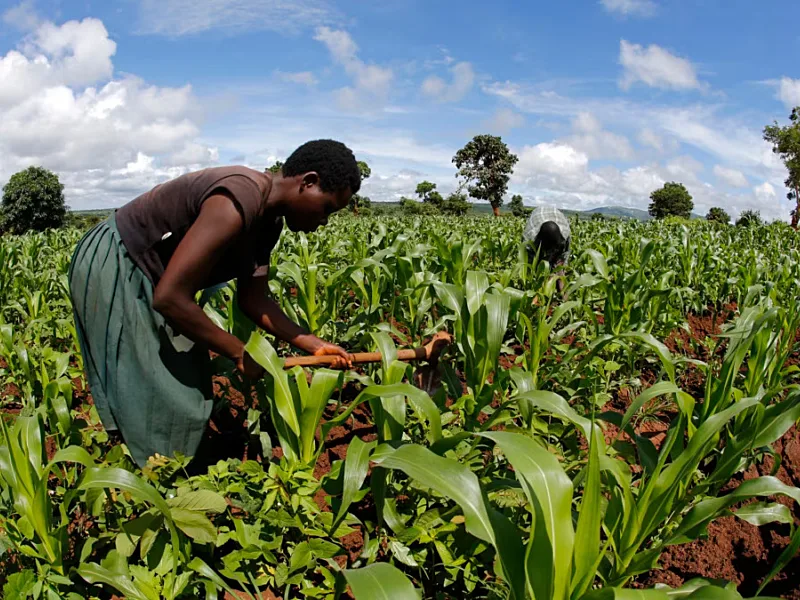
The plan also calls for climate-smart agriculture, better irrigation and catchment management.
- On a farm, storage and irrigation are most valuable when they can be used during a dry period.
- Measuring the season and location of service delivery can show more about resilience than counting facilities on a national list.
Kenya estimates $17.7 billion for adaptation and $15.8 billion for activities designed to deliver both adaptation and mitigation.
- Spending can be assigned to the right budget category while results are tracked against both aims.
- For example, a low-emission water system can be assessed for the fuel it saves and the number of people it serves reliably.
How To Follow Money And Delivery
The budget for mitigation alone is estimated at $22.5 billion.
- Within that budget, Kenya identifies $4.28 billion as the intended domestic contribution and $18.34 billion as subject to international support.
- These are rounded figures from the submission, and the overall $56 billion estimate has a broader scope.
- Keeping the lines separate helps readers follow how a financing commitment affects the programme it supports.
Kenya intends to mobilise about 19% of the overall cost domestically and looks to international support for about 81%.
- These financing shares describe the budget. The 20% and 80% split describes the planned volume of emissions reductions.
- Kenya counts loans towards its domestic contribution because taxpayers bear the repayment obligation, making the financing terms relevant to how the plan is reported.
The filing envisages a detailed investment plan.
- That can connect national targets to procurement decisions and county programmes by identifying who will implement a project, when it will start and what evidence it will produce.
- Local adaptation funds can report the projects they support and the communities they reach.
Kenya’s monitoring, reporting and verification framework is intended to bring sector and county evidence into national reporting.
- Electricity generation, lower transport emissions and flood warnings need different indicators.
- Using consistent definitions and time periods can help the government combine those reports and explain progress under the Paris Agreement’s transparency framework.
Project reporting can also show whether adaptation is reaching groups that the filing identifies as vulnerable.
- County offices can publish where they have installed or improved a service, how often it is available and how many people use it.
- A national summary could then distinguish the scale of investment from the distribution of the resulting benefits.
The Ministry of Environment, Climate Change and Forestry coordinates climate affairs through the National Climate Change Council and the Climate Change Directorate.
- The filing also anticipates aligning the contribution with future national development and climate action plans.
- As those plans are updated, identifying the county and sector responsibilities can help maintain a clear record of the measures behind the target.
Path Forward – What To Track Across Kenya’s Counties
Follow the domestic and supported reductions in tonnes, alongside changes in grid generation and the accounting for any internationally transferred mitigation outcomes.
For adaptation, track county investment through to results.
Useful measures include who receives timely warnings, which communities have reliable water and what share of approved funding reaches local projects.