Global Canopy’s final chapter describes a transition that slows damaging practices while building viable alternatives.
For Africa, both sides of that transition must work for communities and businesses.
The test through 2030 will be whether budgets, purchasing and lending change fast enough to produce measurable recovery in the places under pressure.
Two Changes Must Happen at Once
A government can restore a degraded watershed while infrastructure incentives encourage clearing nearby.
A retailer can support agroforestry while awarding most contracts on volume and lowest price.
- Each recovery project can show real progress while pressures continue at a larger scale.
This Sustainable Stories Africa special on nature’s business draws on The Little Book of Nature Business by John Tobin-de la Puente and Andrew W. Mitchell, published by Global Canopy in 2026.
- The final chapter uses an X-curve to picture two simultaneous changes.
Established practices that degrade ecosystems lose support, while practices that protect or restore nature gain investment and become easier to adopt.
In African markets, those changes will have different timelines.
- A procurement rule can be rewritten in a budget cycle, while soil or habitat recovery can take years.
The timeline should allow households and businesses to adjust, especially where current practice supplies jobs or supports affordable food and energy.
The Money Shows Why Timing Matters
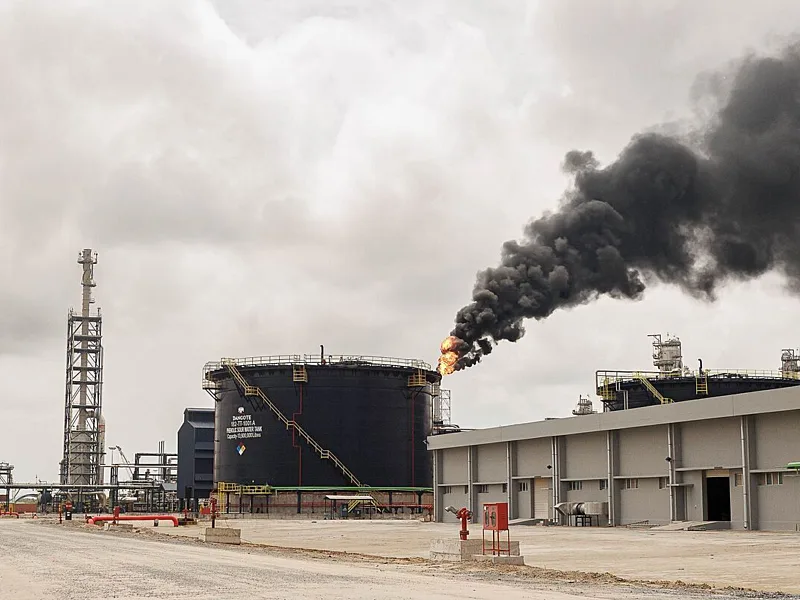
UNEP’s 2026 State of Finance for Nature report estimates that $7.3 trillion flowed to nature-negative activities in 2023, while $220 billion went to nature-based solutions.
- It estimates that annual investment in nature-based solutions needs to reach $571 billion by 2030 to support global biodiversity, climate and land restoration goals.
- These global figures describe separate categories and a modelled need.
For African institutions, the practical starting point is to review which activities domestic budgets, lending and purchasing support today.
The X-curve lays out a possible sequence for the transition.
- Businesses can first improve existing operations where that produces an immediate benefit, while testing alternatives and identifying which harmful practices need to end.
- The risk is spending so much on making the old approach marginally better that investment in a viable replacement never grows.
A transition plan can set separate measures and deadlines for each.
- The global biodiversity framework offers a policy horizon, but the X-curve helps translate it into operational choices.
- An institution can identify which practices can change now, which need a replacement first and how to fund the interval.
This matters where a rapid change could raise food prices or disrupt access to energy.
A schedule that ensures conditions to end support is possible and test progress without assuming every sector will move at the same pace.
Food Supply Shows Both Transition Tracks
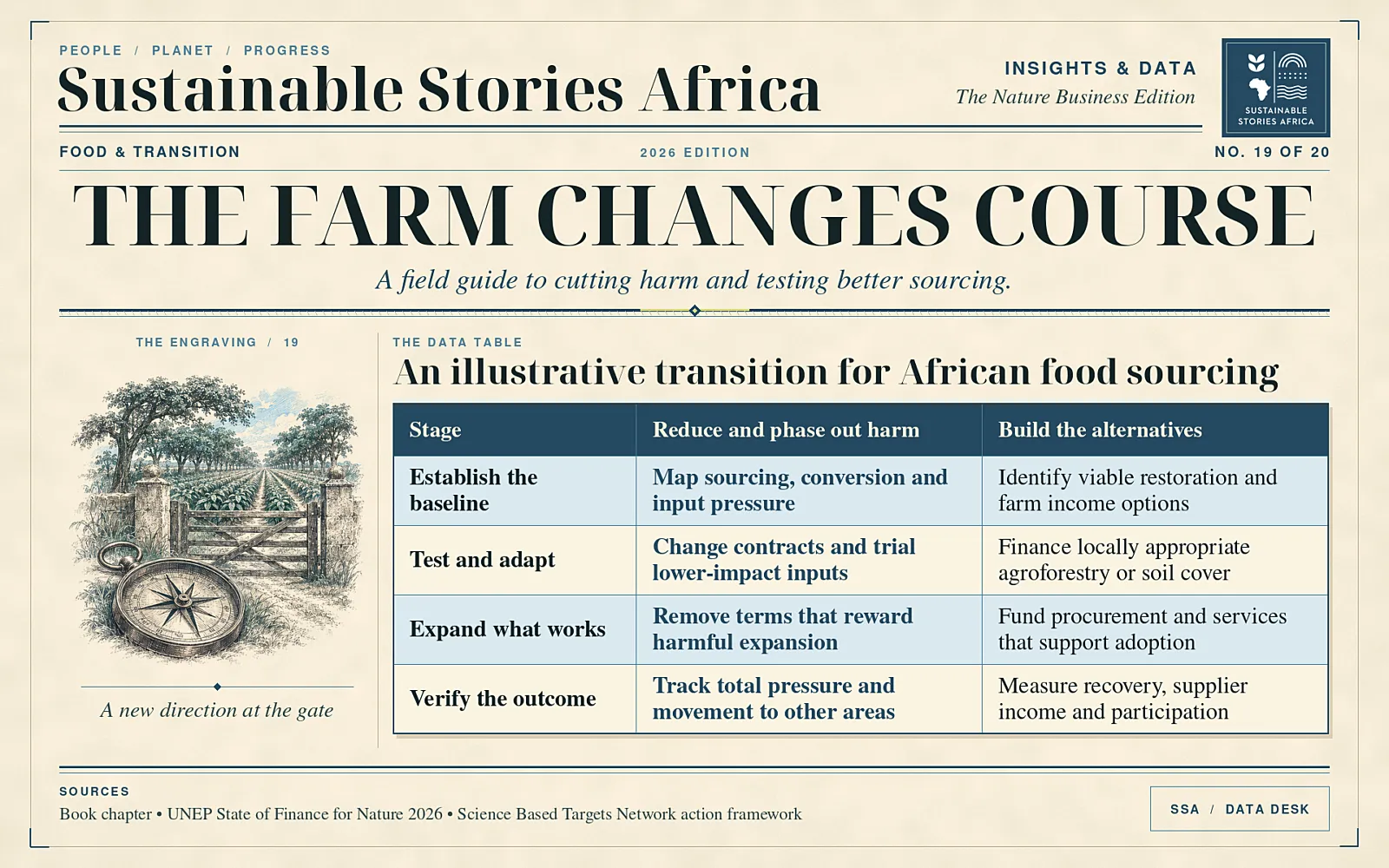
Consider a food buyer sourcing from a landscape where forest conversion is a risk.
- One track can reduce harm by geolocating supply, checking conversion and changing purchase terms that encourage expansion into sensitive areas.
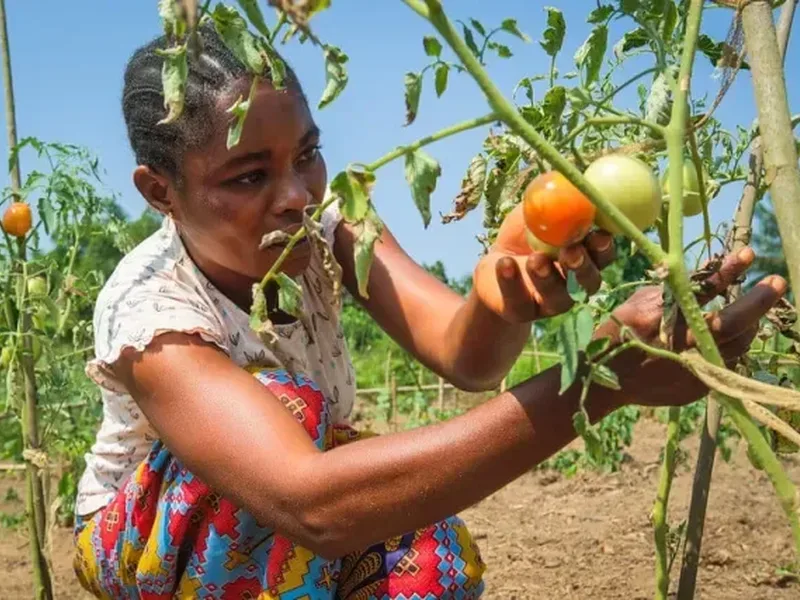
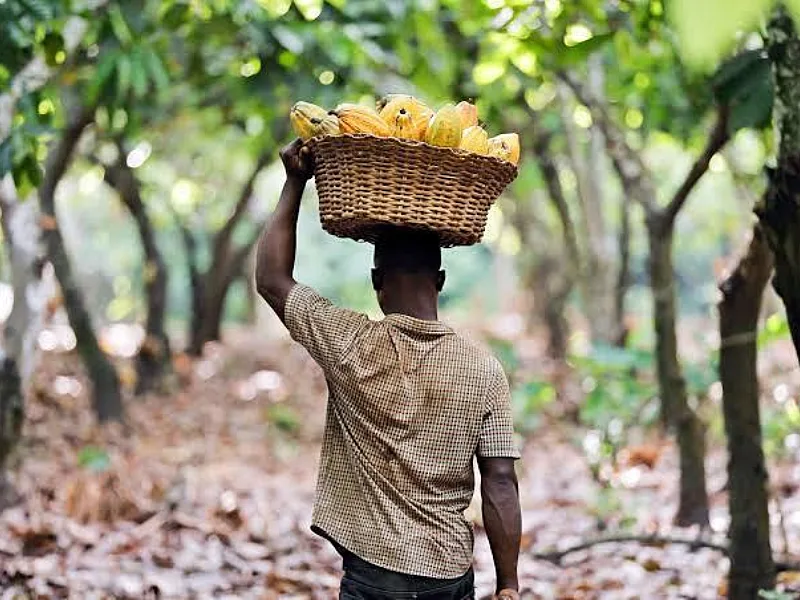
- A second track can pay farmers to diversify production, improve soil cover and protect habitat.
The tracks work together when the buyer finances the costs of changing practice and checks whether farmers retain income and market access.
Livelihood effects deserve early attention.
- Changes in sourcing can remove income from smaller farms if new conditions are introduced before support reaches them.
- An investment timetable can align support with planting, fishing or selling seasons.
- It can also specify how suppliers regain access by correcting a problem.
Where an activity must end, policymakers need a clear view of which households and workers depend on it.
The same approach could help a water utility decide how long to rely on repeated dredging.
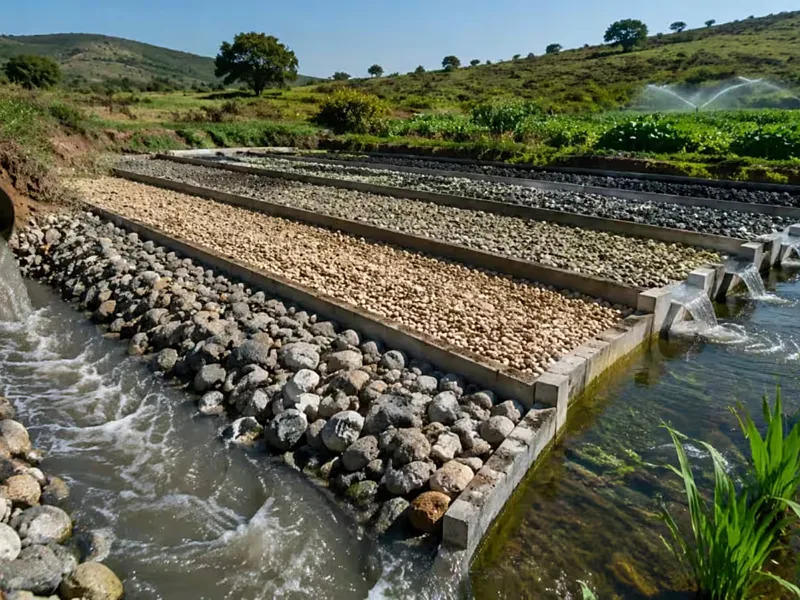
- The utility can keep essential works funded while testing upstream erosion controls and measuring changes at the intake.
- If the upstream measures prove effective, future budgets can reserve money for their upkeep and reassess the expected frequency of dredging.
The comparison should still allow for unusually heavy rainfall and the possibility that some dredging remains necessary.
Local Institutions Can Carry Recovery Forward
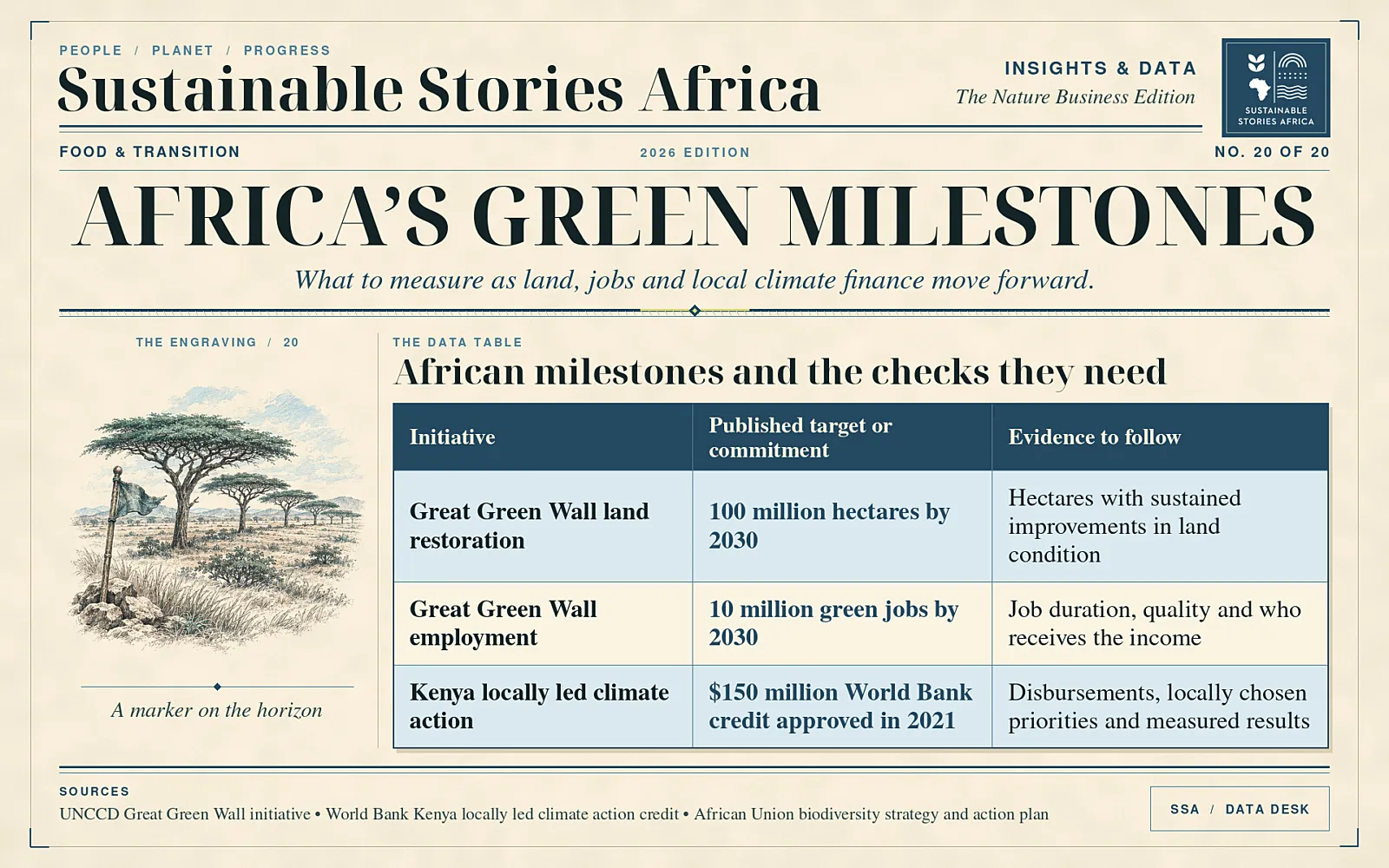
The Great Green Wall, launched by the African Union in 2007, shows how restoration, jobs and land management can sit within one continental effort.
- The UN Convention to Combat Desertification lists ambitions to restore 100 million hectares and create 10 million green jobs by 2030.
- Targets of that scale require clear methods for what counts as restored land or a job.
We can track a hectare treated this year and a hectare functioning better years later; however, they answer different questions.
Kenya’s Financing Locally Led Climate Action programme offers a financing example at a different scale.
- In 2021, the World Bank approved a US$150 million credit for community-identified climate resilience work, with counties receiving funding against performance criteria.
- For nature projects, similar arrangements can give local institutions a role in choosing outcomes and maintaining assets, provided funding rules support the monitoring those outcomes require.
Local participation can also improve the quality of a restoration target.
- A land manager may be able to report seedlings planted immediately.
- People who rely on fodder or water may want to know which species survive, whether access improves and how those changes hold up in a dry year.
Agreeing on both sets of measures gives public agencies a way to track delivery and makes it harder to confuse completed works with lasting recovery.
Measure What Changes on the Ground
Finance ministries can compare support for activities that increase pressure on nature with spending that helps viable alternatives grow.
Investors can publish which lending terms and exposure limits have changed.
Procurement teams can show how purchasing shares shift over time.
- Read these financial indicators alongside ecology and livelihoods, because a funding decision may take time to affect water quality, habitat condition or income.
Where results are mixed, reviewers should be able to see what went wrong and who can change it.
- Publishing the record makes it possible to adjust the next cycle of finance and procurement while keeping long-term responsibility for the places already affected.
A transition plan also needs a way to review unexpected costs.
- A purchasing rule may exclude suppliers that could comply with short-term assistance, or a restriction on a harmful practice may push it across a border.
- When that happens, teams can check whether the rule, the accompanying support or the enforcement boundary needs to change.
A review of both tracks should identify whether activity fell overall and whether people can use the alternatives.
Path Forward – Make the Next Budget Show Both
Use the next budget and purchasing cycle to publish support that will decline and which alternatives will receive funding.
Agree on ecological and household indicators with affected people.
Review both tracks each year.
Redirect support where damaging practices persist and keep recovery funding in place long enough to measure whether conditions improve.