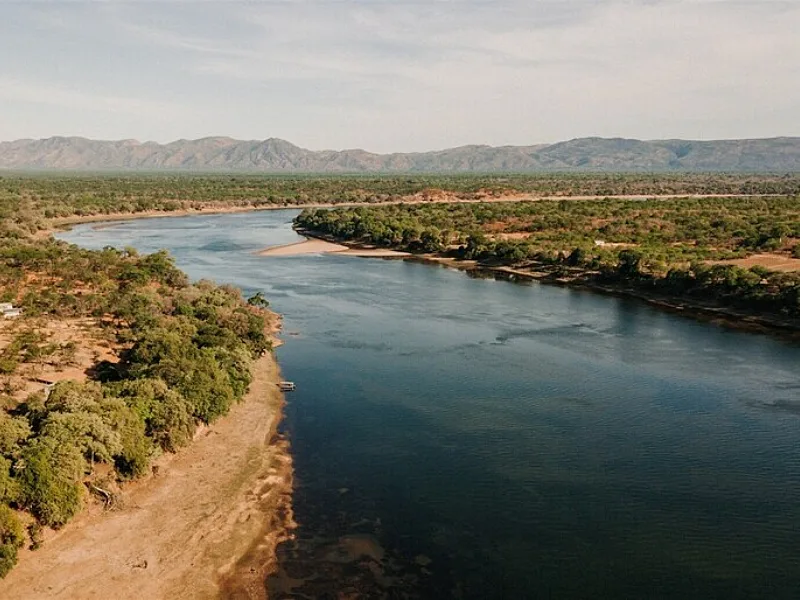
Nairobi student housing financed through a green bond shows how building standards can help attract capital.
The next test is how construction affects land, waterways and material supply chains.
A building’s footprint starts at the quarry and continues through construction, occupancy, maintenance and demolition.
A Building Starts at the Quarry
A housing project can use less electricity once occupied while drawing sand from a stressed river or blocking natural drainage at the site.
- These effects appear on different accounts, at different times, and under different regulators.
A construction investment that seeks to benefit nature has to consider all three.
This Sustainable Stories Africa special on nature’s business draws on The Little Book of Nature Business, the 2026 Global Canopy publication by John Tobin-de la Puente and Andrew W. Mitchell.
- Chapter five tracks the construction chain from material sourcing and manufacture to engineering, use and the end of a building’s life.
For African cities that need more housing and infrastructure, land and materials decisions can have effects that last beyond the first owner.
- A city can reduce flood exposure by keeping a drainage route open before construction.
Recovering the same capacity after several developments have occupied it can be far more expensive and disruptive.
Finance Already Rewards Some Building Efficiencies
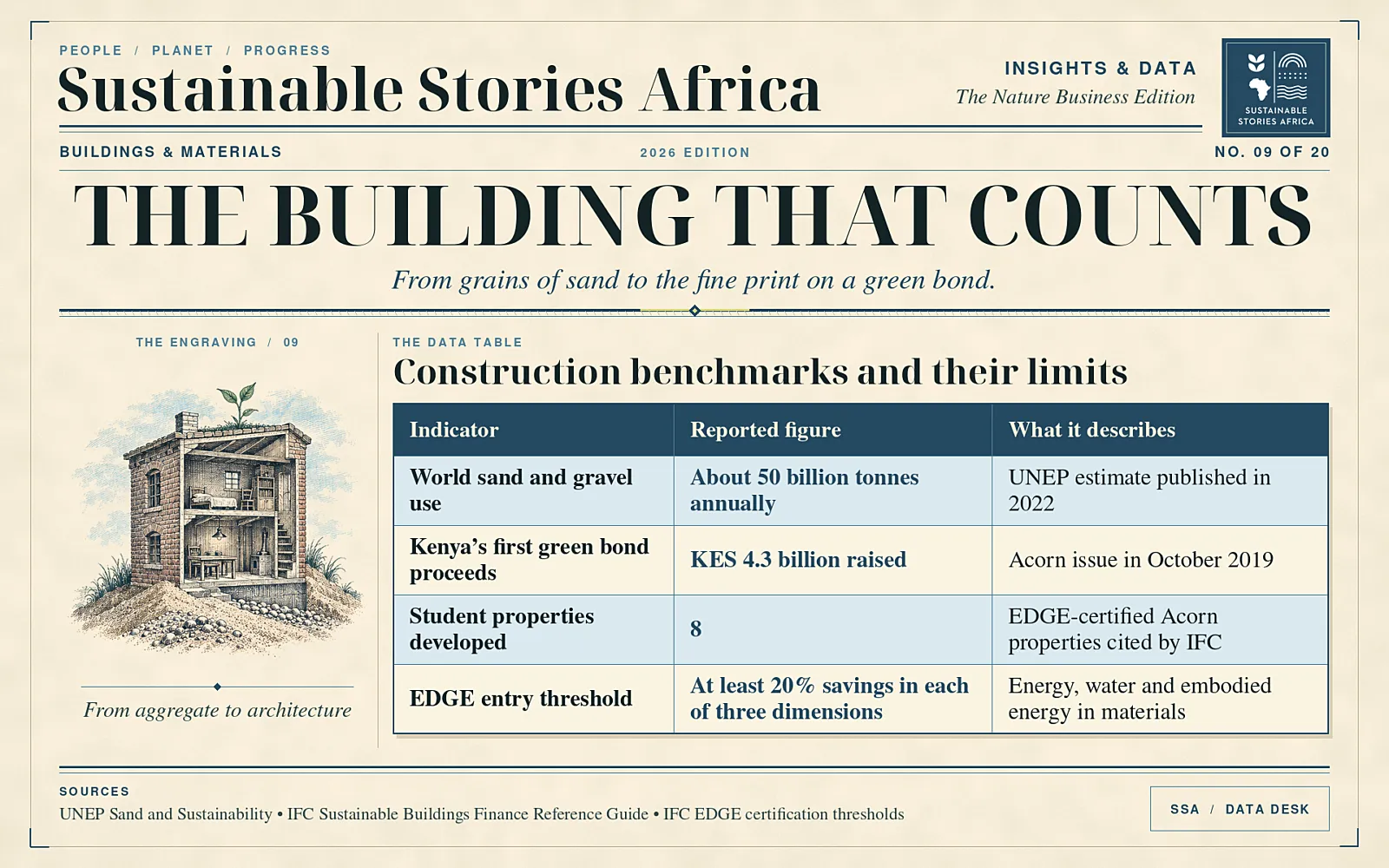
Acorn Holdings raised KES 4.3 billion in 2019 through Kenya’s first green bond under a KES 5 billion note programme, according to the International Finance Corporation.
- The proceeds helped develop eight purpose-built student accommodation properties certified under IFC’s EDGE standard.
- IFC reports that Acorn redeemed the bond in October 2024, ahead of its scheduled maturity.
The deal demonstrates that building performance criteria can be integrated into financing.
At its entry level, EDGE assesses energy, water and embodied energy in materials against a baseline.
- An efficiency certification can inform a lender about these performance dimensions.
- Biodiversity, sand sourcing, cumulative impacts in a river basin and household affordability each require separate evidence.
The chapter takes a longer view of how construction draws on nature.
- Sand and gravel demand pressurise extraction sites.
- Cement production has process emissions and requires raw materials.
- Building design can alter runoff and urban heat, while demolition can create waste streams or supply reusable materials.
Financing that follows the asset’s life span can capture more than the utility bill.
The global context underscores the material dimension.
- UNEP’s 2025 – 2026 status report attributes nearly half of global material extraction to the buildings and construction sector.
- This is a broad global estimate.
For a city deciding what to procure, the practical questions are about locally available materials, where extraction occurs and which specifications allow for reuse.
- Updating the design standard may change demand more effectively than asking each contractor to find a lower-impact supplier after a tender has been awarded.
Follow the Material From Its Source
UNEP estimates that the world uses about 50 billion tonnes of sand and gravel annually.
- The figure describes global demand for both materials across their uses.
- Where sand is removed from rivers or coastal systems, sediment movement can change.
This affects habitats, banks and downstream water users, even if procurement records show only the supplier’s name.
Kenya’s 2024 sand harvesting regulations provide an example of designated sites and licensing requirements.
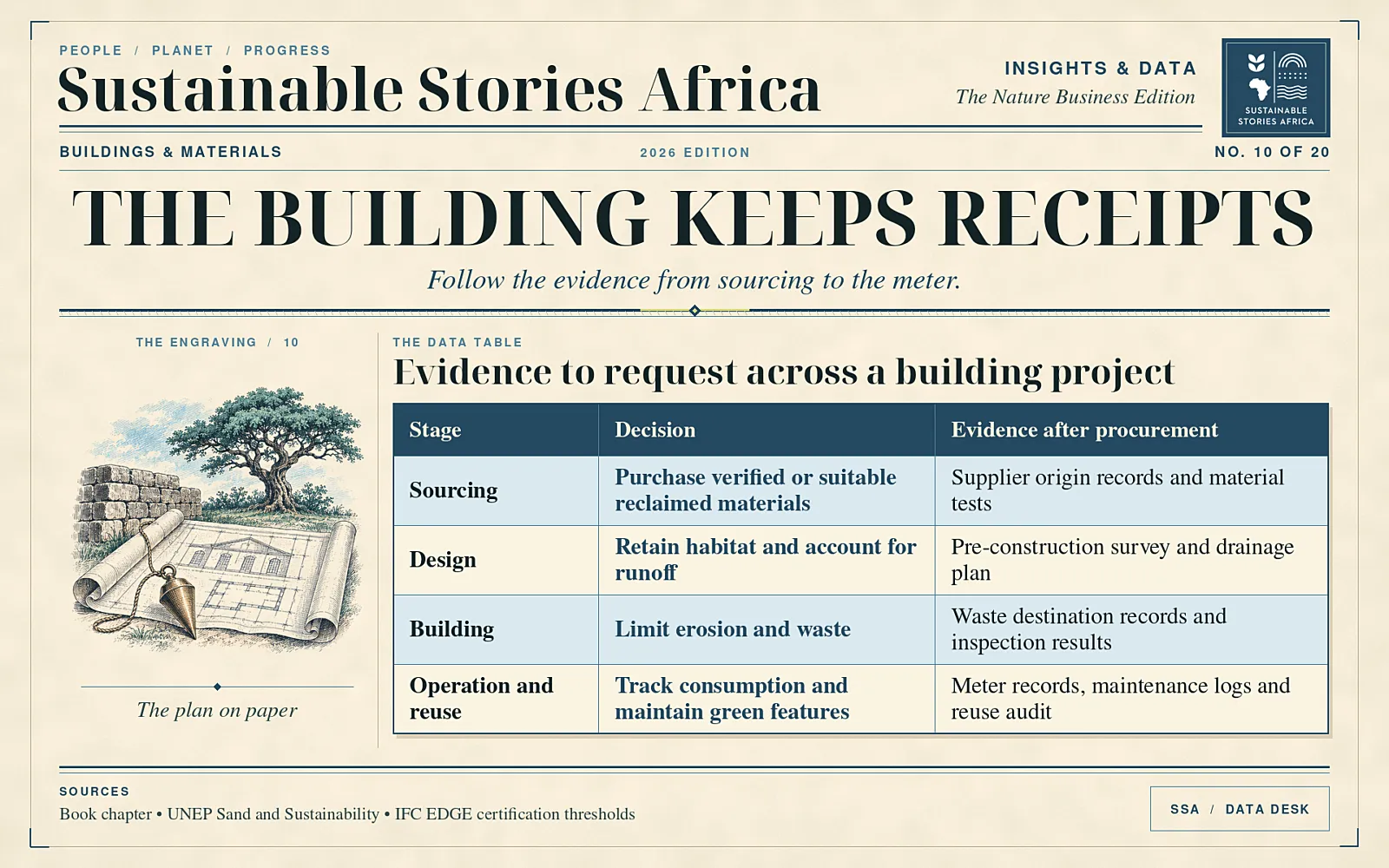
- Buyers can go further in their own contracts by keeping records of the specific source and verifying that material originated where the supplier says it did.
- When recycled aggregate is proposed, engineering standards and contaminant testing should determine which uses are suitable. [6]
The supply chain can also cross several jurisdictions.
- A city may review runoff within its boundaries, a rural county manages an extraction site, and another authority handles construction waste.
- Project records should make those connections legible.
- Geolocating material sources and waste destinations lets lenders and inspectors a way to test claims.
It also helps identify where shared purchasing by several developers may create greater pressure than any single project’s records would suggest.
Lower Impact Design Begins Before Procurement
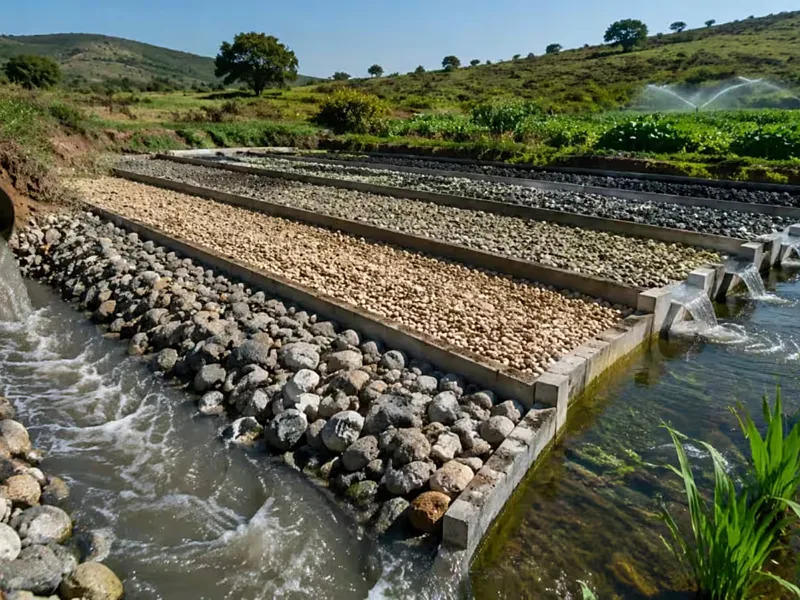
- A municipality can protect a floodplain, retain existing vegetation and plan an outfall before issuing tenders.
- A developer can test reusing an existing building before demolishing it and choose materials that can be recovered at the end of use.
These choices affect the quantities bought and where they come from.
- Their economics depend on site conditions, building standards and local suppliers.
- The market opportunity includes material recovery firms, laboratories, maintenance companies and designers who can integrate drainage and habitat into conventional building contracts.
Using lower-impact alternatives requires adjustments to specifications, worker training and predictable orders.
- A purchasing authority can set technical performance criteria while leaving qualified suppliers room to propose products that meet them.
The chapter’s discussion of mass timber illustrates the trade-off.
- A timber system can use less of some conventional materials, but it increases demand for wood and brings decisions about forest management, durability and safety.
- A project should establish where the wood comes from and what would otherwise happen in that forest.
In markets where qualified supply, fire engineering or maintenance capacity is limited, material recovery and reuse from existing stock may be a better first investment.
The comparison belongs in design; the choice is still open.
Buyers Can Make Site Evidence Routine
Public buyers and development lenders can require a basic construction nature file.
- It should identify the locations of major material sources, the project site condition, expected drainage changes and the parties responsible for maintenance.
- Tender evaluation can compare alternatives on lifetime costs and material use alongside bid price, with proof required where a supplier claims avoided extraction.
For publicly financed housing, operational reporting should put rent, service charges and utility bills alongside environmental metrics.
- This allows a housing agency to see whether lower running costs reach residents.
- Site reporting should also cover drains, green areas and contractors that keep those systems functioning after handover.
- A design can only deliver its promised performance if somebody has the budget to maintain it.
A useful procurement trial can cover a single material with significant volume.
- Start with the current specification, assess what performance it protects, and define a way to compare verified alternatives.
- Inspectors then need enough information to confirm where deliveries came from and whether they met the agreed standard.
The tender can assign responsibility for maintaining the records after the builder leaves, so the development lender and city can use them to assess subsequent projects.
Path Forward – Start With the Next Building Tender
Use the next housing or infrastructure tender to require traceable materials and a baseline for site conditions.
Connect any green finance claim to evidence the owner can still produce after construction.
Measure operating costs, drainage performance and maintenance alongside the original design targets. Feed those findings into the next project’s specifications.