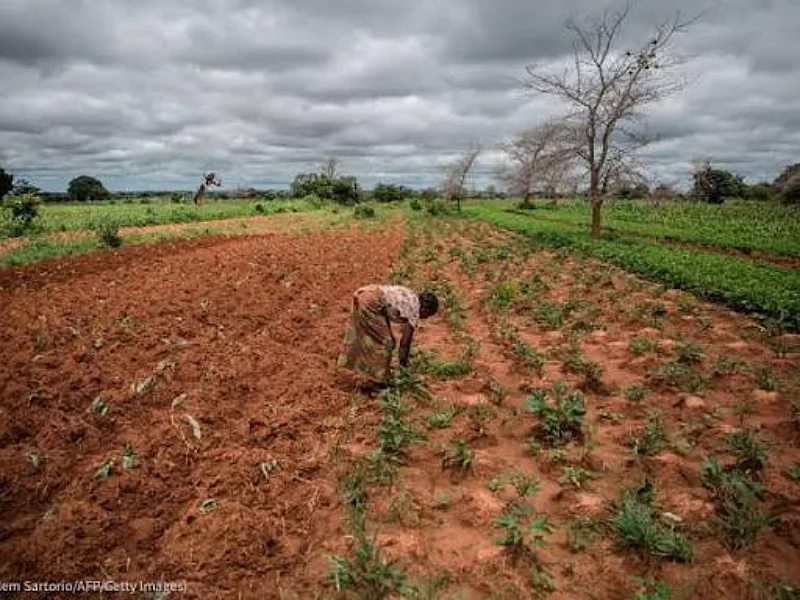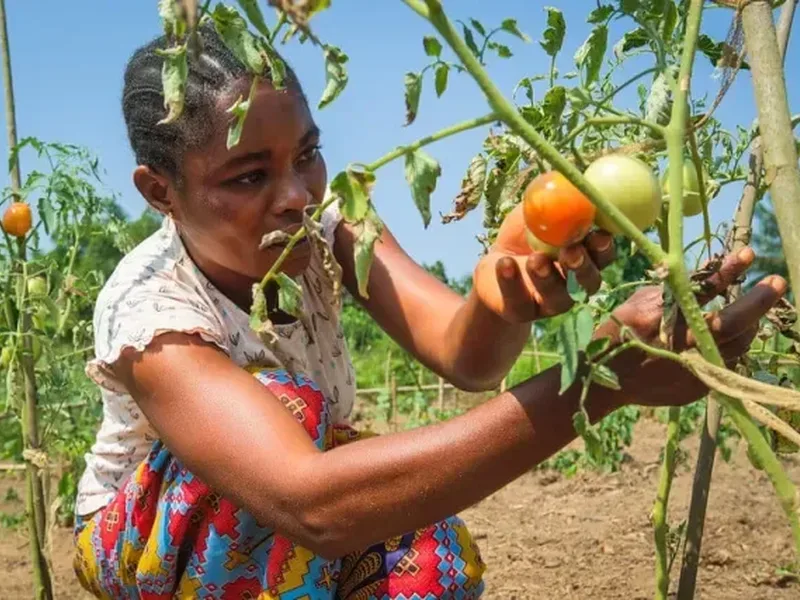
Two investments in Ghana and East Africa show how capital can enter specific business activities linked to nature.
The next question is what evidence can justify the claim.
For investors, the distinction between a commercial opportunity, a company’s risk management and verified ecosystem recovery will determine what they can responsibly finance and report.
A Business Claim Needs Clear Boundaries
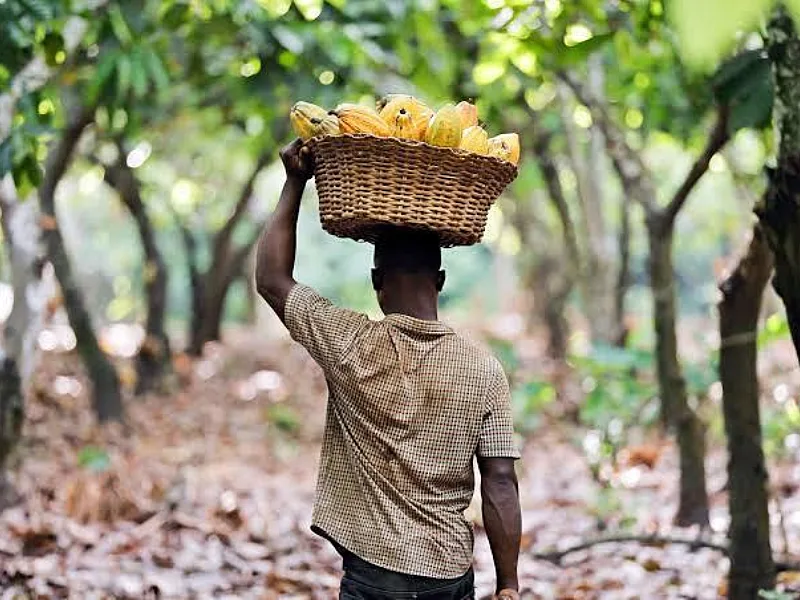
A cocoa fruit contains more than beans.
- Its pulp can be collected and sold as a food ingredient, creating another source of revenue from fruit already harvested.
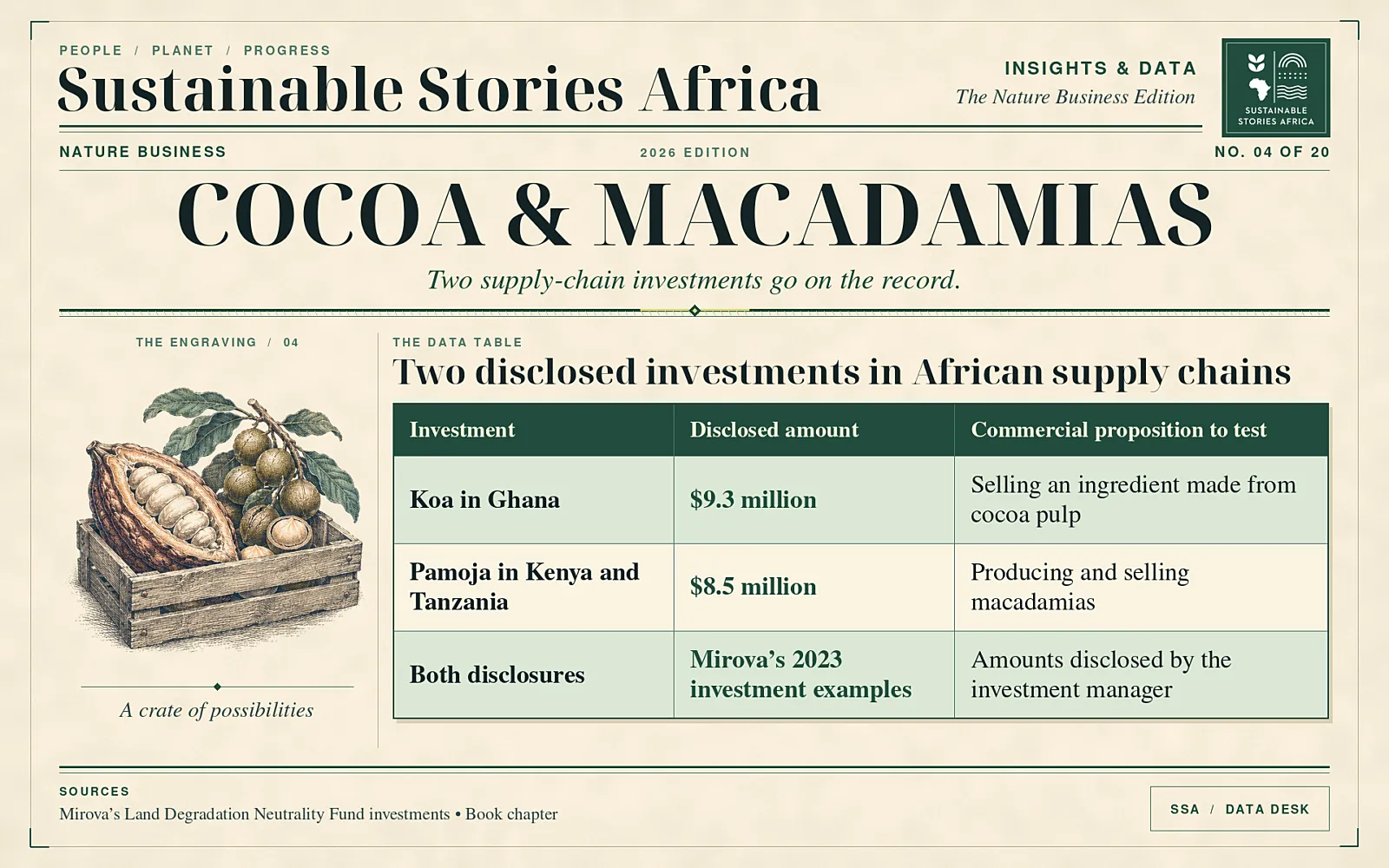
That is the commercial proposition behind Koa in Ghana.
- Whether it improves outcomes for nature depends on how it changes waste, water use and sourcing on the ground.
This Sustainable Stories Africa special on nature’s business draws on The Little Book of Nature Business, the 2026 Global Canopy publication by John Tobin-de la Puente and Andrew W. Mitchell.
Chapter two defines nature business at the level of a specific investable activity.
- It draws a line between earning revenue from a solution and carrying out environmental work as part of an unrelated business.
African businesses can use that distinction to describe what they sell, how it changes an existing practice and which effects they can measure.
- Lenders can use it to decide whether the projected revenue can service debt and whether the evidence is strong enough to support an environmental claim.
The Transaction Matters More Than Branding
Mirova disclosed $9.3 million invested in Koa and $8.5 million in Pamoja, which produces macadamias in Kenya and Tanzania.
- The investments show that food businesses can attract dedicated land-use capital through different operating models.
- The amounts establish what the fund manager said it invested.
They leave open how much additional income reached farmers, whether natural habitat was protected, and what ecological improvement occurred against a baseline.
The book recognises three broad routes.
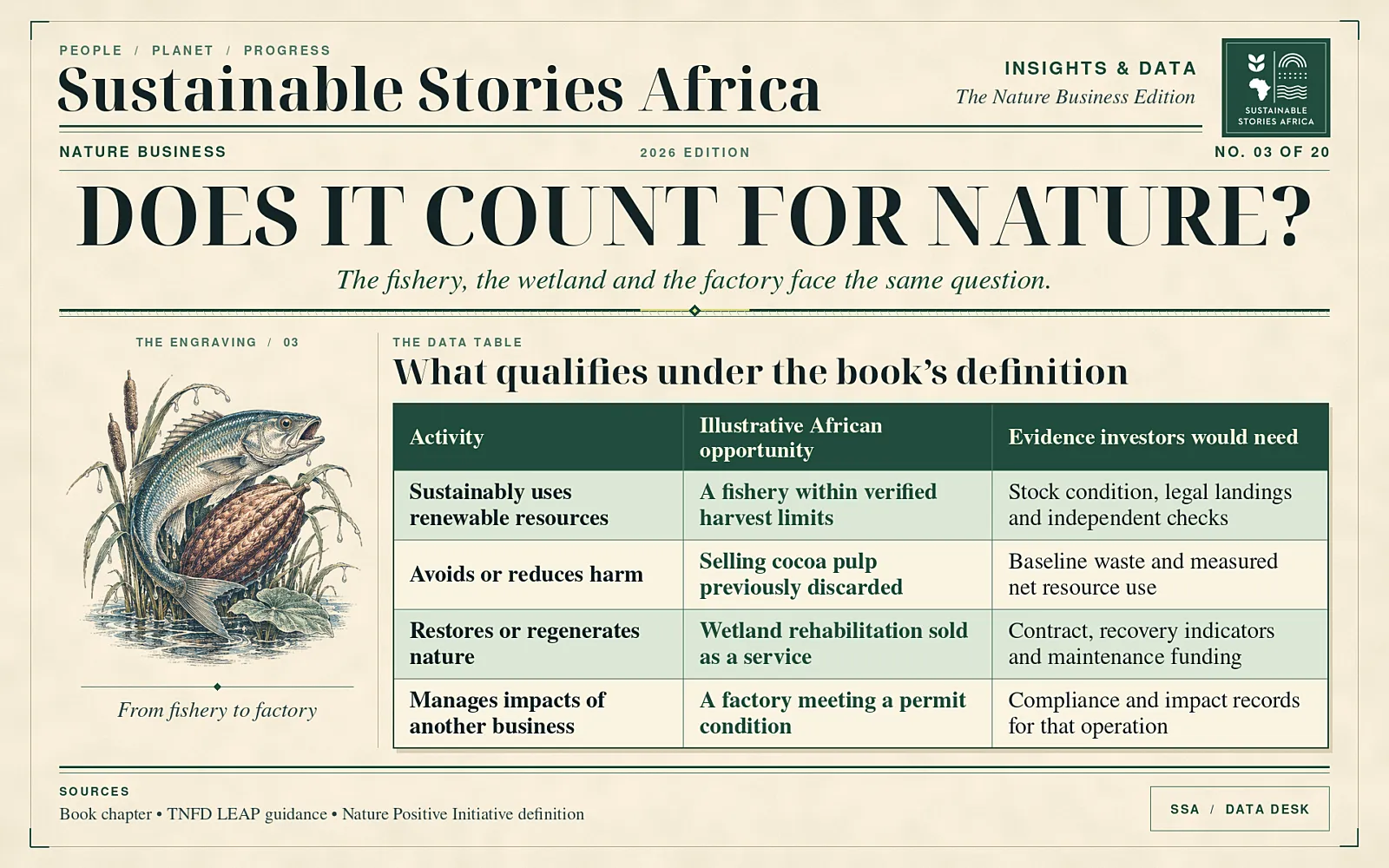
- An investable activity can use renewable resources sustainably, avoid or reduce harm compared with the conventional process, or generate revenue through the protection or recovery of ecosystems.
- Credibility rests on the actual activity and the quality of the evidence.
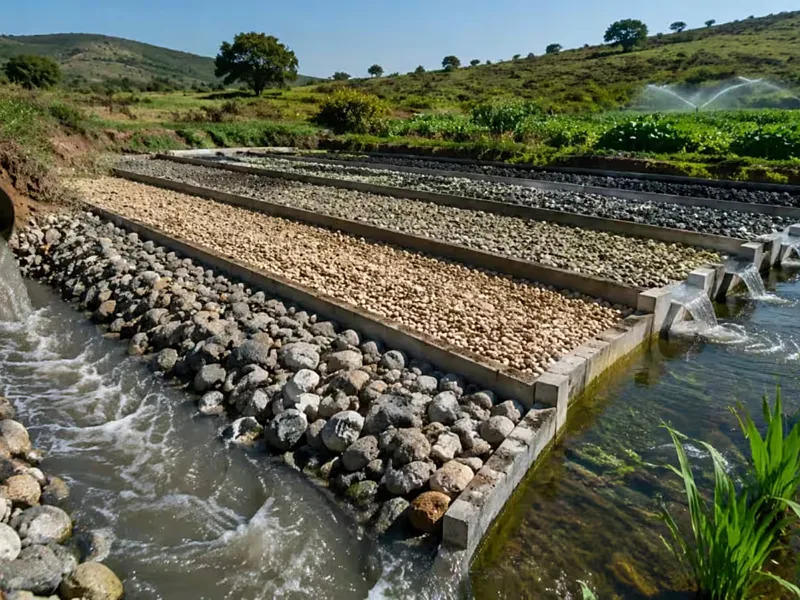
- A diversified company can finance a wastewater treatment business while retaining other activities with significant impacts.
This distinction is especially useful when a project has both a public benefit and a private revenue stream.
- A wetland restoration contractor earns a fee for work with defined outputs.
- A developer restoring habitat as a permit condition is meeting an obligation.
Both require scrutiny, but the commercial activity, the reason for undertaking it and the claims available to each party differ.
The distinction also helps buyers avoid double counting.
- A processor may pay for waste prevention because it improves operating efficiency, while an investor finances equipment and a customer purchases the final ingredient.
- Each can describe its contribution.
If each independently claims the whole benefit, the evidence quickly becomes unusable at portfolio level.
The contract should identify the baseline, the period and who can report each result, especially when partners use the information in annual reports or product marketing.
An Investment Screen Starts With Evidence
Analysts should trace the mechanism from transaction to environmental result.
- For a cocoa pulp operation, the logic runs from farmer contracts and collection volumes to a reduction in residues and a net change in water, energy and transport use.
- For a tree crop supplier, the assessment needs previous land cover, records of expansion and an understanding of how the cropping system affects the surrounding landscape.
Location matters because nature is difficult to substitute.
- Restoring habitat in a second catchment offers little protection to customers drawing from a polluted river in the first.
- Even within a catchment, young vegetation and established wetland functions can differ sharply.
The Nature Positive Initiative describes recovery as a global societal goal.
- A firm can measure and report its contribution at a specific place, with the limits of that contribution made explicit.
It is worth asking what would happen without the transaction.
- If pulp was already used locally, diverting it to a factory can remove an existing benefit.
- If higher demand encourages farmers to clear more land, a product that reduces waste per fruit can still contribute to greater pressure in total.
The evidence therefore needs two comparisons, one against previous practice and another against the wider changes in sourcing and production associated with growth.
This second comparison matters more as a business scales.
Better Claims Can Open Better Deals
A narrower claim can improve deal design.
- If the proposition is that a new product prevents food waste, a lender can track volumes converted into saleable goods, the cost of collection and processing, and wastage at each step.
- The company can put resources into the evidence that actually influences customer and investor decisions.
Regulators and communities gain a clearer basis on which to challenge the claim.
The buyer also matters.
- A durable order from a processor or retailer makes projected revenues more credible than expressions of interest.
- Smaller suppliers may still need finance for storage, testing and verification.
- Where these are shared services, a cooperative or aggregator can spread costs.
- Farmers should be able to see the price, fees and payment timing before committing production or labour.
Pamoja presents a related diligence problem.
- Macadamia trees can be part of a diversified system, but planting trees tells an investor little about what previously occupied the land.
- On a farm, intercropping may create income while trees mature.
- At landscape level, the same crop can be grown in a way that removes habitat.
Procurement and investment agreements can reward retention of existing vegetation and make expansion into sensitive areas an explicit financing issue.
Investors Should Follow the Product Trail
The Taskforce on Nature-related Financial Disclosures offers a process known as LEAP.
- It asks firms to locate where they interact with nature, evaluate dependencies and impacts, assess risks and opportunities, and prepare a response and disclosure.
- Combine that process with deal diligence.
- Establish the legal rights to resources and identify parties who bear costs, then test whether a credible customer will keep paying through the investment term.
A financing agreement can then attach conditions to material claims, such as a seasonal waste audit, independent checks of sourcing locations or a procedure for responding to grievances.
- These are costs to price into the deal.
- A disclosure should describe the specific financed activity and disclose material uncertainty, particularly where data on biodiversity or land-use change are incomplete.
Small companies can build a usable evidence base in stages.
- Purchase receipts and supplier locations can establish a first picture of coverage.
- A pilot can add water and waste measurements, then verify a sample independently.
Investors should include the cost of improving that evidence in the deal.
- A baseline built this way can support a better expansion decision and help direct the next round of technical assistance.
Path Forward – What Investors Can Ask for Next
For the next transaction, identify the unit of business, its source of revenue and the ecosystem pressure it changes.
Agree on what will be measured, by whom and over which period.
As results come in, use the measurements to decide whether to expand, redesign or end the activity.
Keep company-wide claims proportionate to what the investment actually demonstrates.