Gabon’s near-term growth recovery offers breathing space, but not a durable escape from commodity dependence.
Afreximbank forecasts 3.3% growth in 2026, easing to 1.8% in 2027 as oil-sector support weakens.
The development test is whether resource earnings can finance credible diversification without worsening fiscal pressure or obscuring the full public-debt position.
Gabon’s Recovery Needs More Than Oil
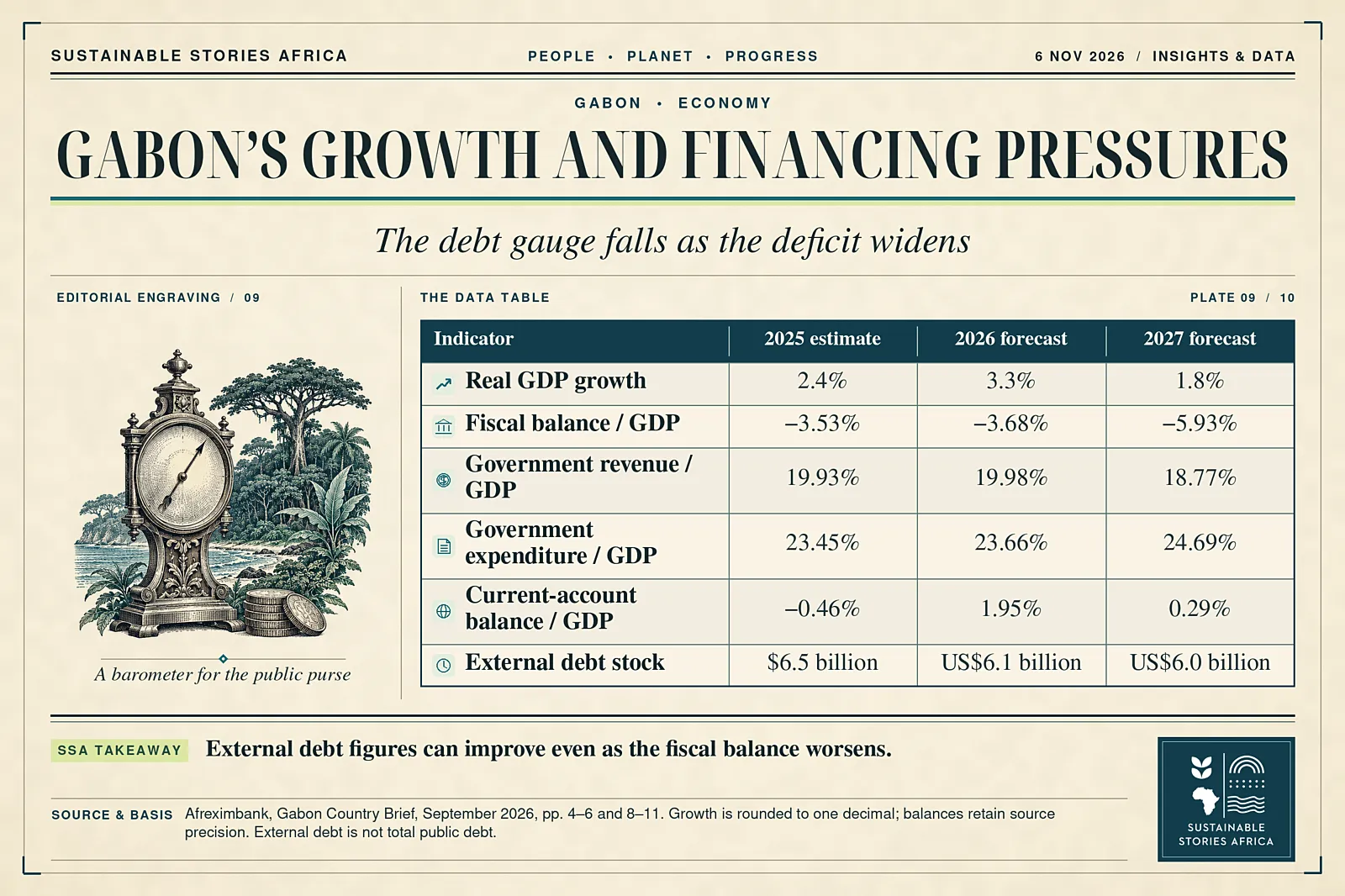
Gabon’s economy is forecast to grow by 3.3% in 2026 before slowing to 1.8% in 2027, with Afreximbank’s September country brief warning that stronger oil receipts provide temporary support rather than a structural change in the growth model.
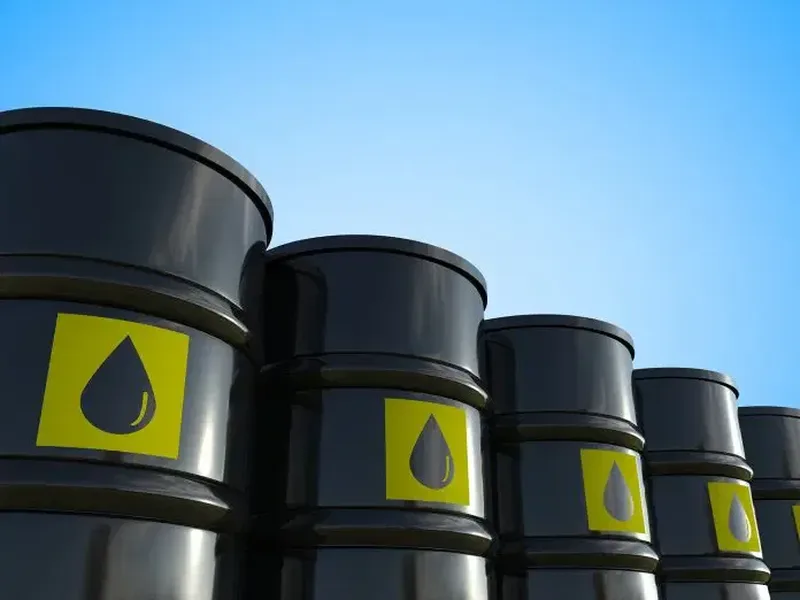
Oil accounts for more than half of exports, leaving public finances and foreign-exchange earnings exposed to prices and production.
- The report forecasts a fiscal deficit of 3.68% of GDP in 2026, widening to 5.93% in 2027 despite efforts to develop mining, timber processing, agro-industry and infrastructure.
For a country with a population of around 2.7 million, the central question is how resource wealth translates into wider economic opportunity.
- The answer depends on more than increasing extraction.
It requires productive investment, accessible finance, transparent public liabilities and institutions capable of turning industrial ambitions into functioning businesses.
Temporary Oil Gains Mask Structural Pressures
A higher oil price can improve export receipts and government revenue without solving the problem of declining production from mature fields.
- The brief makes that distinction central to Gabon’s outlook.
Growth is estimated at 2.4% in 2025, rising in the 2026 forecast before slowing again.
- The projected reversal shows why a cyclical upswing should not be presented as proof of successful diversification.
Services account for around 43% of GDP and mining for 36% in the report’s sector breakdown.
- However, the extractive economy has an influence on exports and public finances that is larger than an output-share comparison alone suggests.
- Domestic activity and external resilience are therefore related, but not interchangeable.
For households and firms, commodity dependence creates uncertainty about the public spending, payment flows and investment that support the wider economy.
- The development challenge is to use temporary gains to reduce that exposure, rather than build permanent commitments around favourable prices.
Fiscal Pressures Outlast The Commodity Upswing
Afreximbank expects government revenue to equal 19.98% of GDP in 2026, while expenditure reaches 23.66%.
- In 2027, revenue is forecast to fall to 18.77% and expenditure to rise to 24.69%, producing a wider deficit.
That combination matters because an oil-supported recovery can coexist with a deteriorating budget.
- Stronger receipts do not automatically create fiscal space if recurrent spending, investment commitments and debt costs expand faster.
The external outlook is also cyclical.
- The current account is projected to move from a small deficit in 2025 to a surplus of about 2.0% of GDP in 2026, before narrowing to around 0.3% in 2027.
- The improvement rests heavily on commodity receipts rather than a broad transformation of export capacity.
All these figures come from the September brief.
- They are estimates and forecasts with a common source vintage, not confirmed full-year outcomes or an independently updated November economic assessment.
Processing Resources Could Capture Greater Domestic Value
Gabon’s industrial strategy aims to capture more value from resources already present in the economy.
- Manganese, timber processing and agro-industry feature prominently, alongside infrastructure and special economic zones.
The brief describes Nkok, near Libreville, as the flagship special economic zone, with additional zones intended to support processing and manufacturing.
- The opportunity is to develop production capability and supplier relationships rather than depend only on shipments of raw materials.
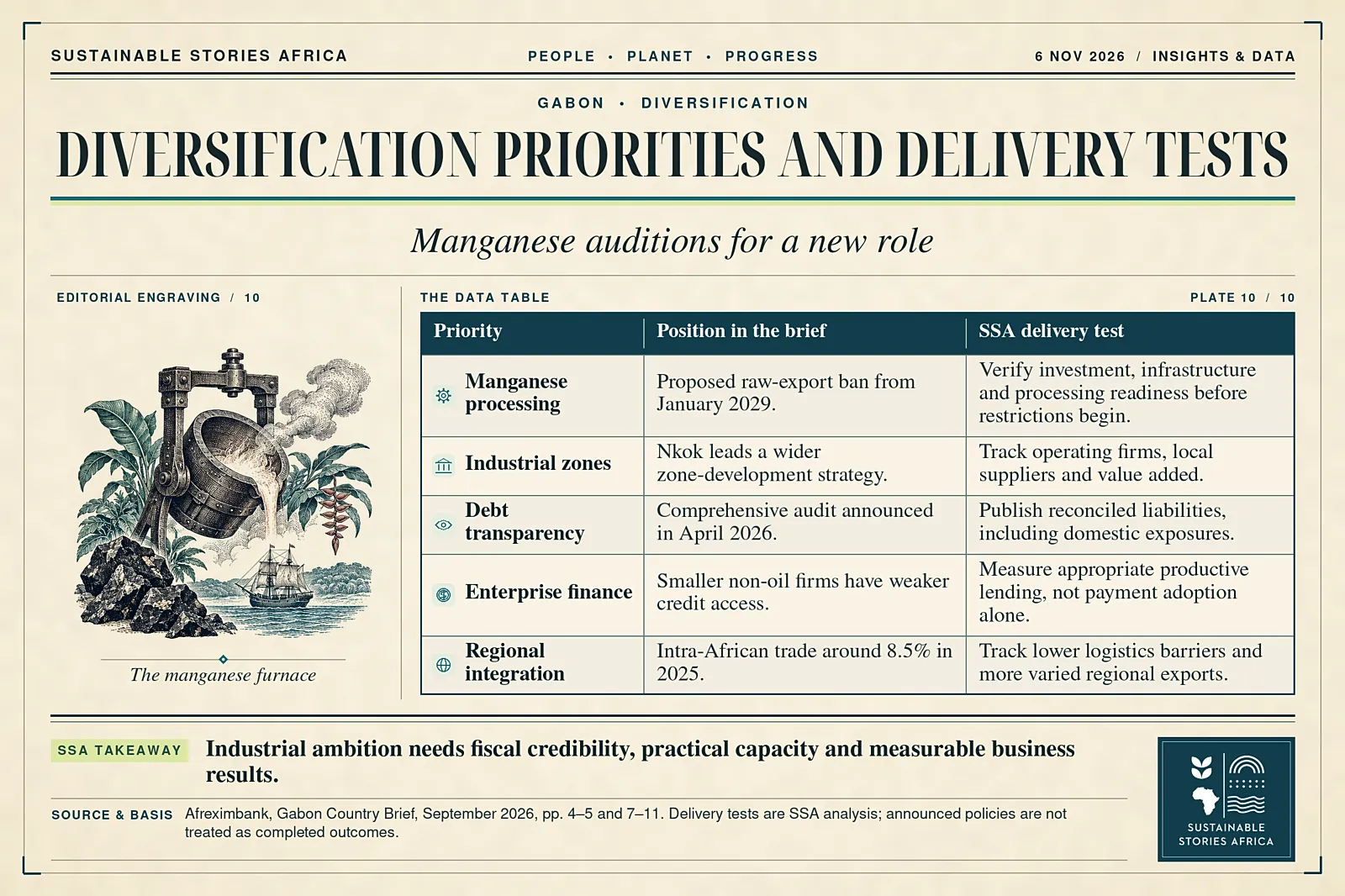
A proposed ban on raw manganese exports from January 2029 is part of that direction.
- It should be understood as a policy intention in the source, not as an export restriction already operating in November 2026.
- Nor does an announced deadline establish that processing capacity is financed or ready.
The sustainability test extends beyond the volume processed.
- As an editorial implication, industrial projects should be assessed against energy requirements, environmental impacts, worker protections and local economic linkages.
- Higher-value output can support diversification, but no automatic ESG benefit follows simply from moving one stage further along a supply chain.
The linkage with public finance is direct.
- Building processing capacity can require infrastructure and services before additional revenue materialises.
- If the state takes on obligations faster than projects become productive, a diversification programme can add near-term fiscal strain even when its long-term objective is sound.
That is why project sequencing and financing terms matter alongside industrial ambition.
A practical assessment would distinguish construction activity from sustained production, and announced investment from operating capacity.
- It would also ask whether domestic businesses can supply the new facilities and whether workers gain transferable skills.
- These are proposed delivery tests, not outcomes already demonstrated in the brief.
They help translate the broad objective of value addition into evidence that citizens, investors and public authorities can examine over time.
Rebuild Fiscal Credibility While Financing Diversification
Debt transparency is a priority because the report’s falling external debt stock does not capture the whole sovereign balance sheet.
- The brief highlights domestic arrears, reliance on regional borrowing and uncertainty about the full stock of public liabilities.
It records an April 2026 announcement of a comprehensive public-debt audit.
- Publication of its coverage, findings and reconciliation of liabilities would help lenders and citizens distinguish external obligations from domestic debt and other fiscal exposures.
The report also describes renewed IMF engagement, while stating that a programme had not been secured at its September publication.
- This status should not be converted into a claim that no agreement exists as of 6 November without an additional update.
- In this article, it remains a dated source assessment.
Financial-sector reform is another part of the diversification task.
- Lending remains concentrated around established corporates, public-sector-linked clients and extractive supply chains.
- Expanding mobile payments can improve access to transactions, but does not by itself provide smaller enterprises with productive credit.
A credible response would pair spending discipline with better project preparation, credit information and transparent financing arrangements.
- Infrastructure and industrial incentives should be judged by whether viable businesses emerge, rather than by announced allocations alone.
Regional trade provides a further benchmark.
- The brief puts intra-African trade at around 8.5% of total trade in 2025.
Improving transport links and implementing regional commitments can support diversification, but the underlying partner charts contain classification errors, so their country-share details are not reproduced here.
Path Forward – Converts Windfalls Into Resilience
Gabon should use temporary commodity support to improve debt transparency, contain persistent spending pressures and prepare viable non-oil investments.
Processing ambitions need credible financing and infrastructure, not deadlines alone.
The strongest measure of progress will be a broader revenue and export base, better access to productive credit and visible opportunities beyond extraction.
This is how a short-term recovery can support more durable development.