Côte d’Ivoire’s investment ambitions remain substantial, but cocoa exposure and rising external financing pressures complicate its growth outlook.
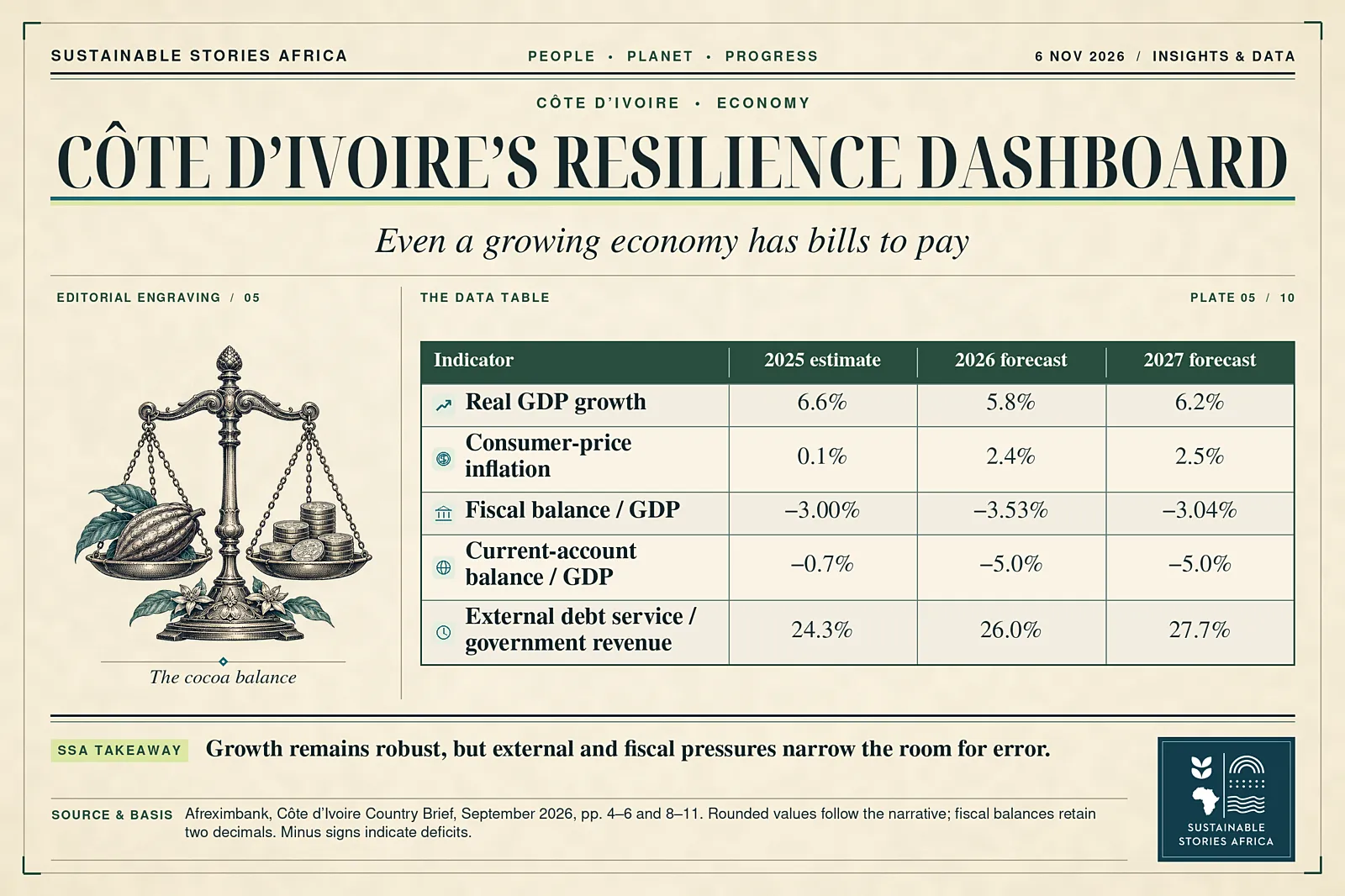
Afreximbank forecasts 5.8% real GDP growth in 2026, followed by 6.2% in 2027.
The challenge is to turn infrastructure, private capital and local processing into a more resilient economy, while ensuring that farmers and smaller businesses can participate in the gains.
Strong Growth Faces A Resilience Test
Côte d’Ivoire is forecast to grow by 5.8% in 2026, but its investment-led expansion faces renewed pressure from weaker cocoa receipts, import demand and rising debt-service ratios, according to Afreximbank’s September 2026 country brief.
- The forecast follows estimated growth of 6.6% in 2025.
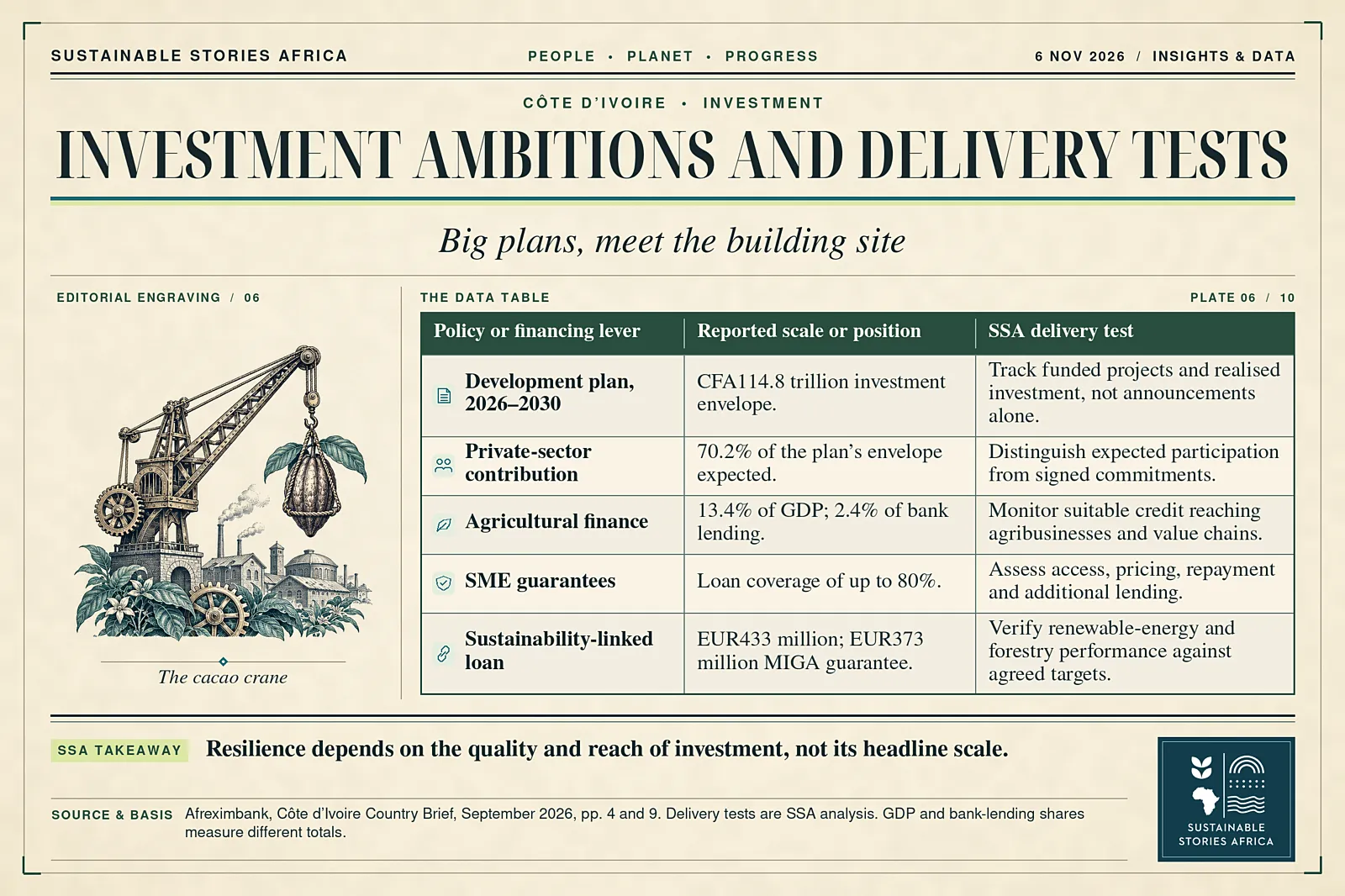
The government’s 2026 – 2030 National Development Plan has an investment envelope of CFA114.8 trillion, with 70.2% expected from the private sector.
- Transport, agricultural productivity, industrial development and regional economic hubs sit at the centre of that ambition.
The figures frame an important development test: can a fast-growing economy reduce its exposure to commodity cycles while broadening opportunity?
- For investors, the answer depends on viable projects and financing discipline.
- For households and smaller firms, it depends on whether better infrastructure and expanding markets translate into productivity, affordable services and access to credit.
Growth Strength Does Not Remove Exposure
Côte d’Ivoire accounts for around 40% of global cocoa production, according to the brief.
- This makes the country central to an international supply chain, but also leaves rural incomes and foreign-exchange earnings sensitive to harvest conditions and commodity prices.
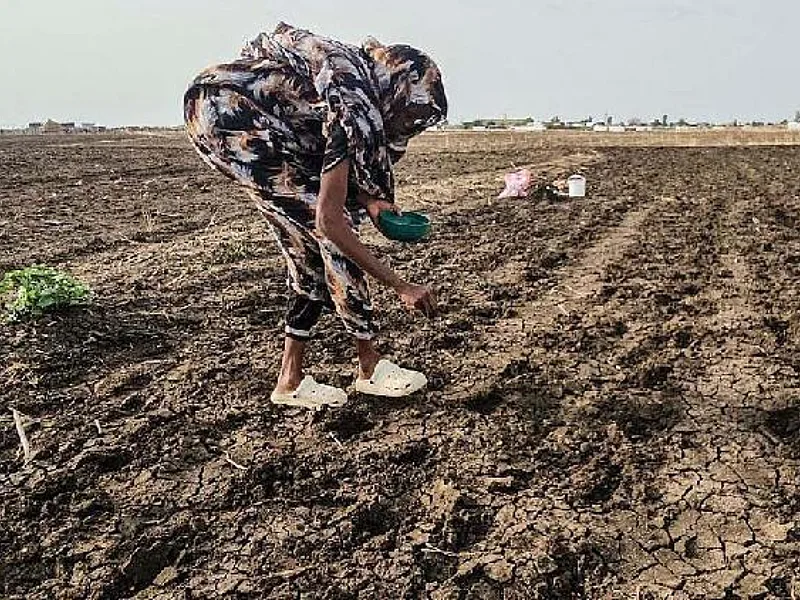
Agriculture represents 13.4% of GDP in the report; however, its importance cannot be judged by that share alone.
- Cocoa, cashew and other crops connect farm livelihoods to processing, transport, trade finance and export receipts.
A commodity shock therefore travels through several channels.
- Lower export earnings can affect public finances and external balances, while adverse weather can reduce production even when international prices appear favourable.
- Processing businesses can face pressure on their input costs and margins at the same time.
The relevant distinction is between a strong growth rate and a diversified growth model.
- The brief presents an economy with momentum, but also a continuing need to raise productivity and move activity into higher-value sectors.
Investment Ambitions Meet Tighter External Balances
Afreximbank forecasts a current-account deficit of 5.0% of GDP in 2026, compared with an estimated 0.7% in 2025.
- Its trade outlook also shifts from a $4.5 billion surplus in 2025 to a $1.2 billion deficit in 2026.
This deterioration does not mean investment has ceased to be productive.
- Large infrastructure programmes can require substantial imports of machinery and capital goods before the resulting assets generate additional output.
- It does mean the timing of financing and returns becomes more important.
The brief forecasts a fiscal deficit of 3.53% of GDP in 2026, above the West African Economic and Monetary Union’s 3% ceiling.
- Household-protection measures and support for cocoa purchases add to spending pressures, even as revenue reforms continue.
The outlook remains a forecast, not a completed economic result.
- The September report’s assumptions should not be presented as a fresh November data release or as evidence that every planned investment has secured financing.
Local Value Addition Can Broaden Opportunity
The development plan creates an opportunity to connect infrastructure investment with greater domestic value creation.
- The ports of Abidjan and San Pedro support agricultural exports and regional logistics, while transport upgrades can help link production centres to markets.
The brief identifies agro-processing, textiles, construction materials, transport, digital activity and mining among the longer-term priorities.
- Their importance is not simply that they add more sectors to an investment list.
- They offer potential routes for retaining value, developing suppliers and reducing reliance on unprocessed exports.
Regional markets also matter.
- African economies accounted for around 22% of Côte d’Ivoire’s goods trade in 2025
- Mali and Burkina Faso together represented nearly 57% of its exports to Africa, underlining the commercial importance of inland corridors.
The opportunity is conditional.
- Roads and ports create capacity; firms still need finance, dependable services and workable border procedures to use it.
- Success should therefore be assessed through enterprise participation and productivity, not only through construction expenditure.
There is also a distribution question within the investment programme.
- Regional economic hubs outside Abidjan can potentially connect more producers and smaller firms to national growth.
- However, location alone does not establish inclusion.
The relevant questions are whether local suppliers can qualify for contracts, whether transport costs fall and whether enterprises can obtain the working capital needed to fulfil orders.
This is where the infrastructure and finance agendas meet.
- A processing business may benefit from a better road but still struggle to buy inputs, maintain equipment or manage the interval between production and payment.
The brief’s emphasis on private-sector participation therefore needs to be read alongside its discussion of SME finance.
- Productive investment works through connected systems, rather than through one project or funding instrument in isolation.
Finance Productive Inclusion Without Weakening Discipline
One of the brief’s sharpest contrasts concerns agricultural finance. Agriculture accounts for 13.4% of GDP but receives only 2.4% of bank lending.
- These are different denominators, so the comparison is not a measure of lending entitlement.
- It nevertheless highlights a significant financing constraint in an economically important sector.
The report describes an SME loan-guarantee scheme with coverage of up to 80%, extended through selected banks in April 2026.
- Such arrangements can reduce lenders’ exposure, but their development value depends on whether suitable firms actually receive credit on workable terms.
Sustainability-linked finance offers another instrument.
The brief reports a EUR433 million, 15-year loan supported by a EUR373 million MIGA guarantee.
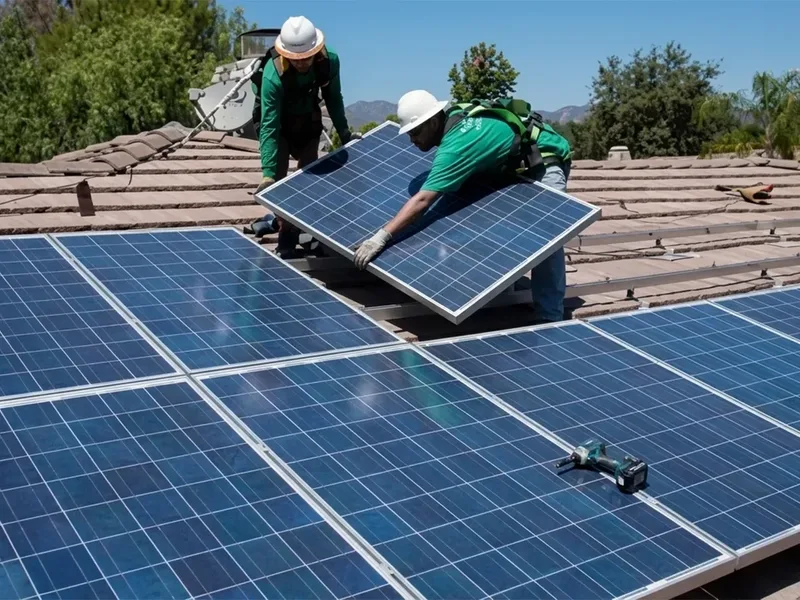
- Borrowing costs are linked to targets for non-hydropower renewable energy output and forestry outcomes.
These are performance-linked arrangements, not evidence that the environmental targets have already been met.
Public authorities should link investment selection to transparent procurement, realistic revenue assumptions and monitoring of project results.
Banks and development partners should pair financing with the information and risk-management tools needed to serve smaller firms.
The brief reports an improved IMF debt-distress assessment in June 2026, while also forecasting higher debt-service ratios.
- These propositions are compatible: a better overall risk assessment does not eliminate cash-flow pressure or justify indiscriminate borrowing.
The practical priority is to preserve concessional financing access and direct scarce fiscal space towards productive, measurable outcomes.
Path Forward – Prioritises Productivity And Inclusion
Côte d’Ivoire’s next step is to connect private investment, local processing and regional trade with broader access to productive finance.
Public borrowing and guarantees should support projects whose benefits can be tracked.
The country’s growth outlook provides a platform, not a guarantee.
Stronger export capacity, disciplined financing and verified sustainability outcomes will determine whether investment delivers resilience for businesses, farmers and households.