A portfolio can look diversified across sectors while several borrowers depend on one river basin.
An investment framework from Global Canopy gives lenders a way to find that concentration.
The method starts with production processes and then tests what finance, technology and infrastructure can change in a specific location.
A River Can Connect Unrelated Borrowers
A food processor, a power producer and a water utility may submit applications to different teams at the same bank.
- If they rely on the same river, a dry season or a surge in sediment can affect all three at once.
Understanding those dependencies can change both the credit assessment and the search for new investments.
This Sustainable Stories Africa special on nature’s business draws on The Little Book of Nature Business by John Tobin-de la Puente and Andrew W. Mitchell, published by Global Canopy in 2026.
The third chapter proposes a framework for linking high-impact production processes to interventions that can attract investment.
- The authors group economic value chains as verticals and treat infrastructure, finance and technology as capabilities that cut across them.
For African lenders and development banks, the framework can turn a generic list of biodiversity risks into a set of questions about particular facilities, suppliers and landscapes.
It can also help buyers see when their supply chains depend on the same natural assets as a competitor’s.
Economic Activities Reveal the Hidden Concentration
ENCORE, a nature-risk screening tool used by the authors, covers 271 economic activities.
- The book converts qualitative materiality ratings to a one-to-five scale, derives separate dependency and impact indices, then combines them to rank processes by nature intensity.
- Dependency asks what production needs from ecosystems.
- Impact asks what production changes in those ecosystems. Both answers can matter to a loan.
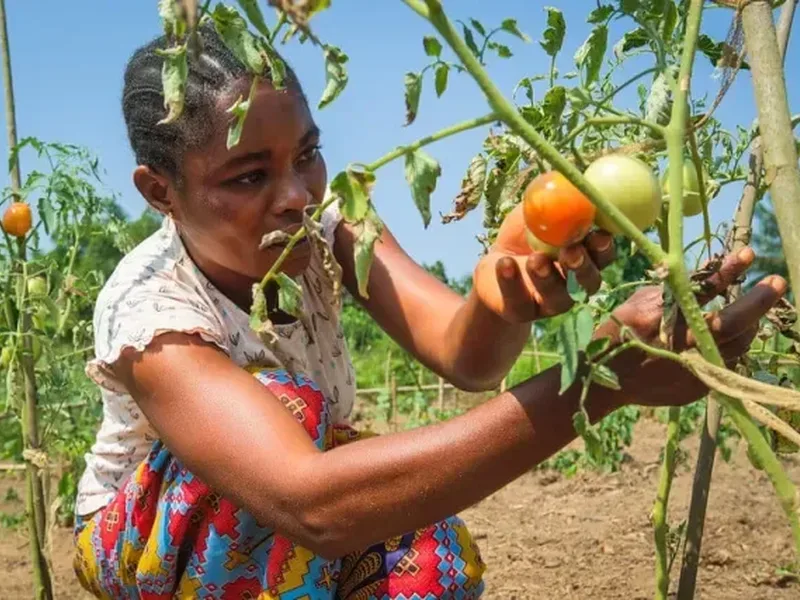
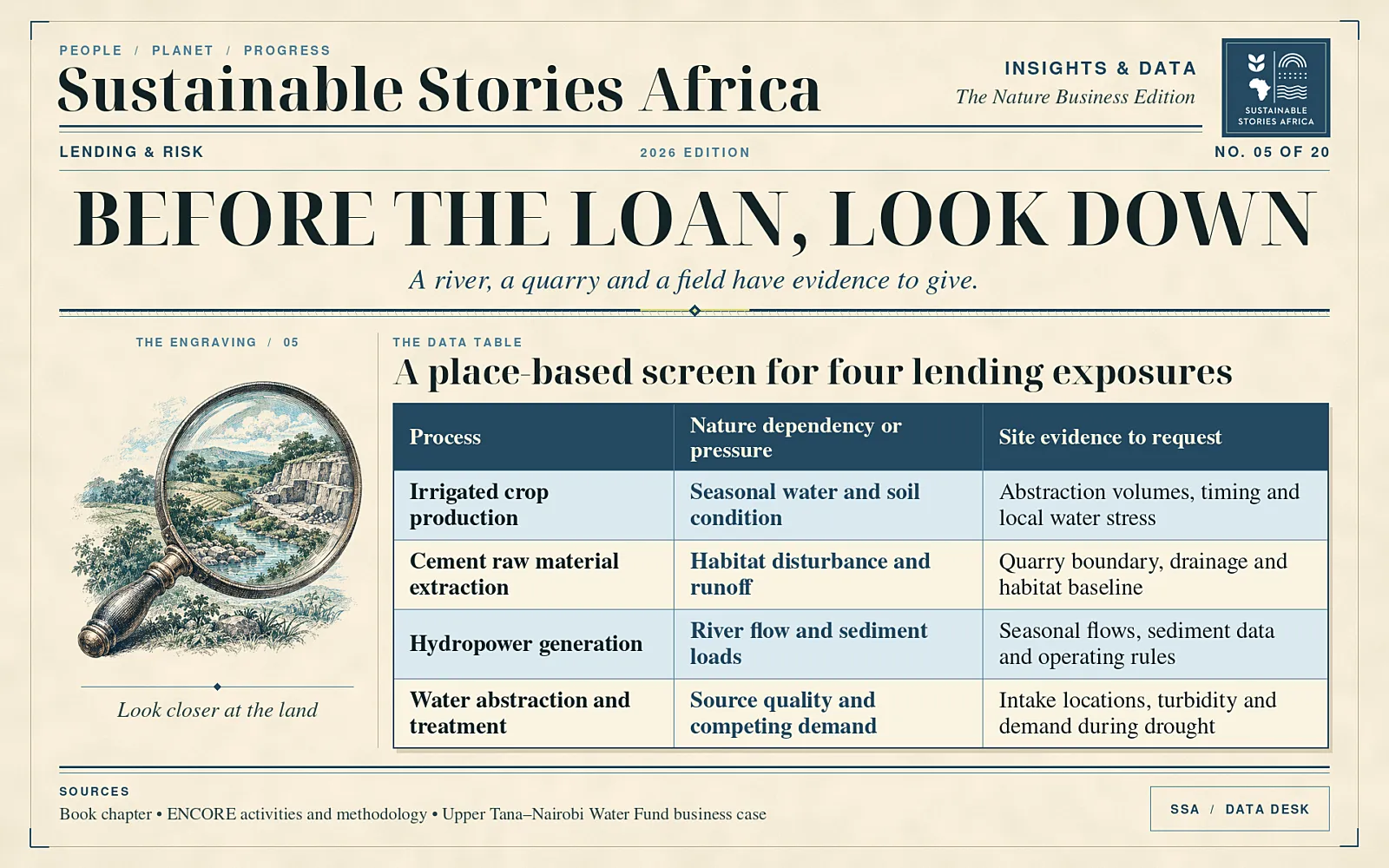
A tomato processor depends on water and on suppliers’ ability to harvest a consistent crop.
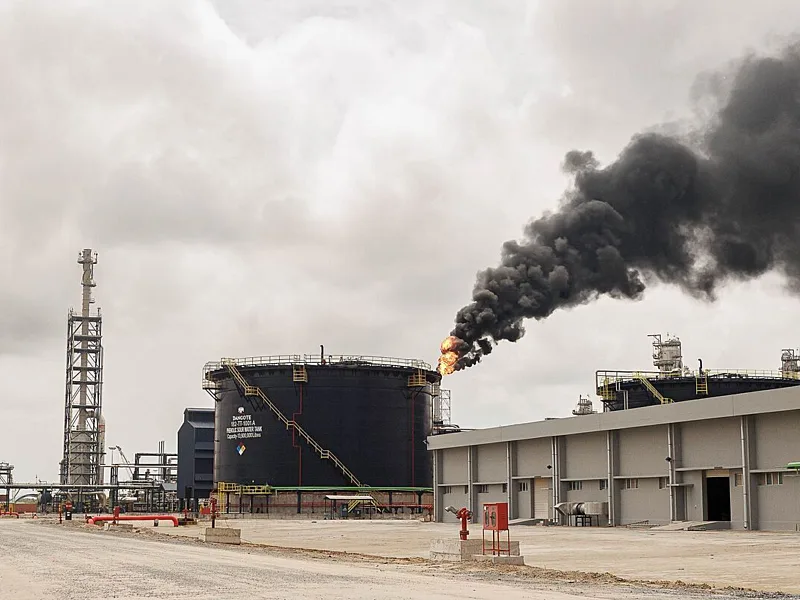
- Its own discharge can also affect water quality.
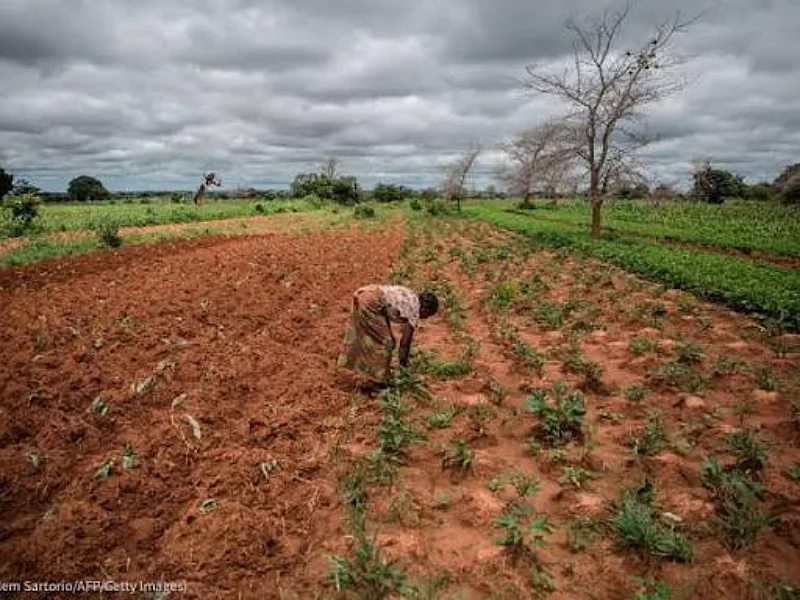
- A bank that screens the factory alone may overlook upstream farms drawing from stressed water sources.
- A bank that focuses only on farms may miss pollution downstream.
Different activities call for different data and different terms in the financing.
Sector scores draw attention and establish a common language for analysts.
- They are an early filter.
- The condition of an individual wetland, river or farm cannot be inferred from an industry average, and a score needs to be checked against local evidence before it changes the price or availability of credit.
The book’s method also makes it easier to distinguish a physical dependency from a risk created by changing rules or buyer behaviour.
- A mill can face direct production losses when water becomes scarce and a separate loss of customers if it cannot prove that its raw materials were sourced responsibly.
- These exposures can reinforce one another, but the remedies are different.
One may call for changes to water use. The other may require reliable information about suppliers and the ability to change purchasing terms.
Start With the Process and Place
Kenya’s Upper Tana illustrates why location can matter as much as an industry label.
- The business case for the Upper Tana–Nairobi Water Fund described links between water supply, hydropower and agricultural production in the same basin.
- In a case like this, combining borrower locations with information about the watershed can expose a shared risk that conventional sector limits leave scattered across the loan book.
The stages then connect to one another.
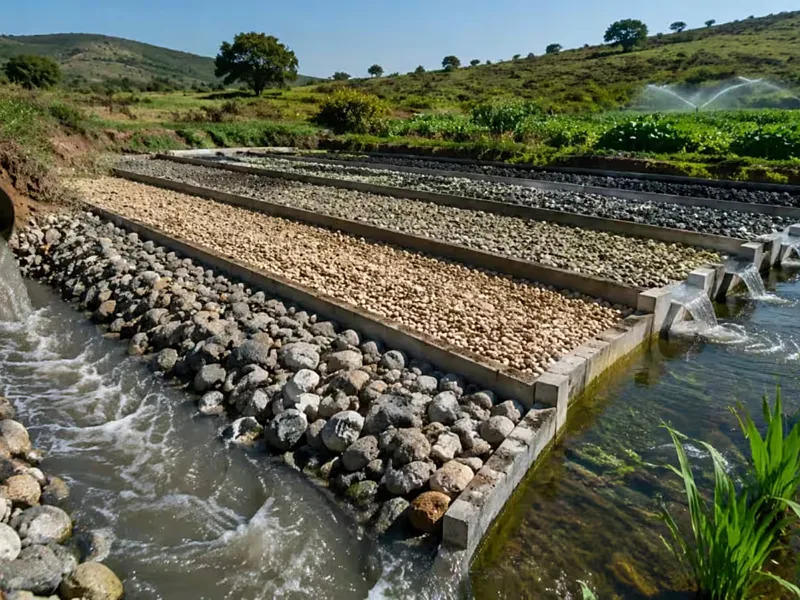
- A basin-level view can identify a collective investment in erosion control, while a site review can expose leaking pipes or poor water recycling at an individual borrower.
- The costs and benefits of each intervention should be assigned to the parties that can change the relevant practice.
Otherwise, one operator can end up paying for a result that depends on the decisions of several others.
The ranking is best used to choose where to spend time.
- A business that appears relatively low on a global list can have a material impact near a protected habitat or in a catchment with little water to spare.
- A high-ranked activity may be managed differently at a particular site.
- Once a lender knows the location, it can compare screening results with maps, permits, field evidence and knowledge from people who depend on the same resource.
The two layers should stay visible in the record so the reader can see where local evidence changed an initial assumption.
Shared Infrastructure Can Unlock Smaller Deals
A common problem for local lenders is transaction size.
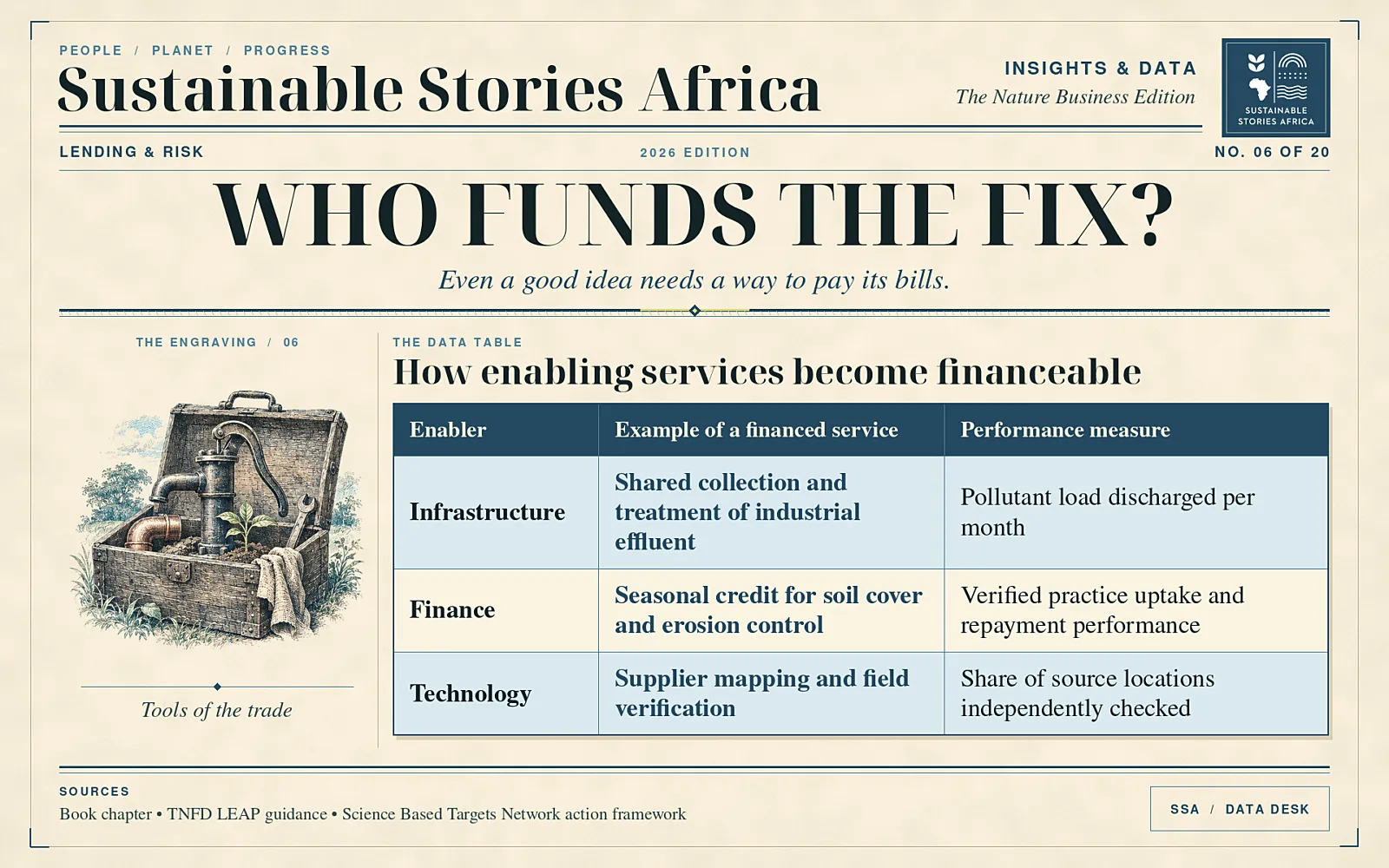
- A few farms may need practical changes but cannot individually carry the costs of monitoring or loan origination.
- An aggregator, water fund or cooperative can combine similar investments and maintain a common measurement system.
- A guarantee can address defined early risks, while the underlying activities still need a viable repayment source.
The same principle applies to technology.
- Satellite data can show where land cover changed and suggest where to look. Local observations can identify seasonal use, the condition of individual plots and which communities depend on them.
- A workable monitoring budget should cover both. Better maps are valuable when they inform field checks and change decisions on siting or sourcing.
This also changes how a bank evaluates scale.
- An erosion-control service may work technically across several districts; however, a single payer may have no incentive to cover them all.
- Each new catchment can have a different set of beneficiaries and different rights over land.
- A scalable model needs a repeatable way to organise those parties and collect revenue.
In some places, the most valuable innovation is a shared contracting arrangement supported by ordinary field practices.
Build the Pipeline Around Measurable Changes
A credit committee can start with a single portfolio segment and map the largest exposures.
- Analysts should distinguish impacts the borrower controls from those that require coordination.
- Then assess several options against the book’s emphasis on avoidance, reduction and recovery, and test whether an enabling service has a payer, a measurable result and a credible path to scale.
Monitoring should also capture unintended effects.
- A processor that reduces its own water use can still increase basin withdrawals if expansion raises demand faster than efficiency improves.
- Report the intensity measure alongside total use where both affect the resource.
- If data coverage is incomplete, disclose which operations or suppliers have been checked and where field evidence remains missing.
Record the limits of the screen, including facilities without coordinates and suppliers known only by district.
- For assets that share a basin, decide whether exposure limits, loan conditions or collective investments offer the most appropriate response.
- Taking this step makes the framework useful to credit officers, while leaving space for environmental specialists to revisit the assumptions as conditions and data improve.
Path Forward – Use the Screen Before Allocating Capital
Lenders can pilot the approach in one exposed basin or supply chain.
Start with borrower locations and activities, use local evidence to refine the shortlist, and identify counterparties willing to pay for changes.
Bring the results to the next credit committee alongside ordinary financial metrics.
Compare different interventions against the same baseline before deciding which can be repeated.