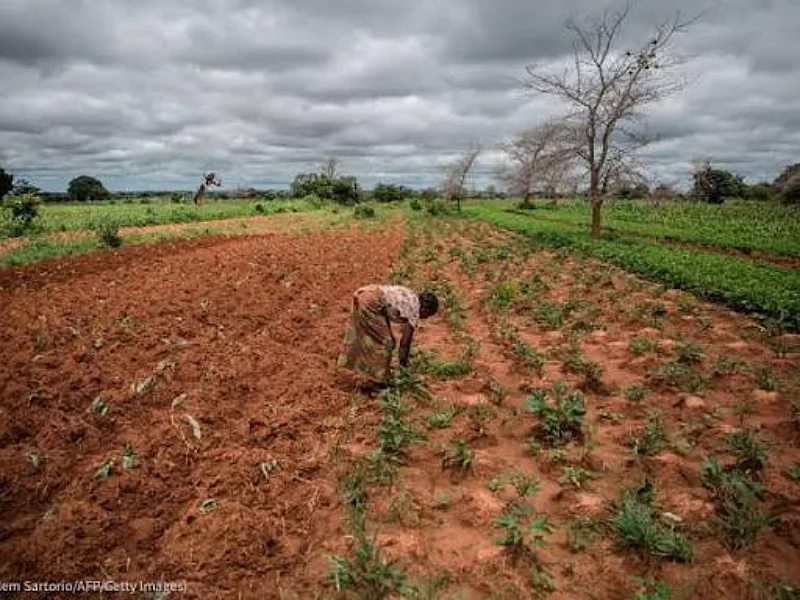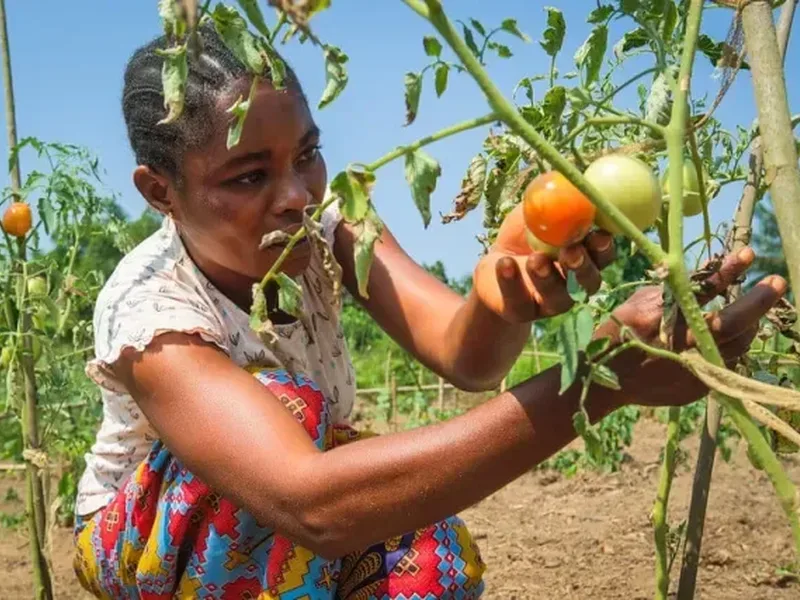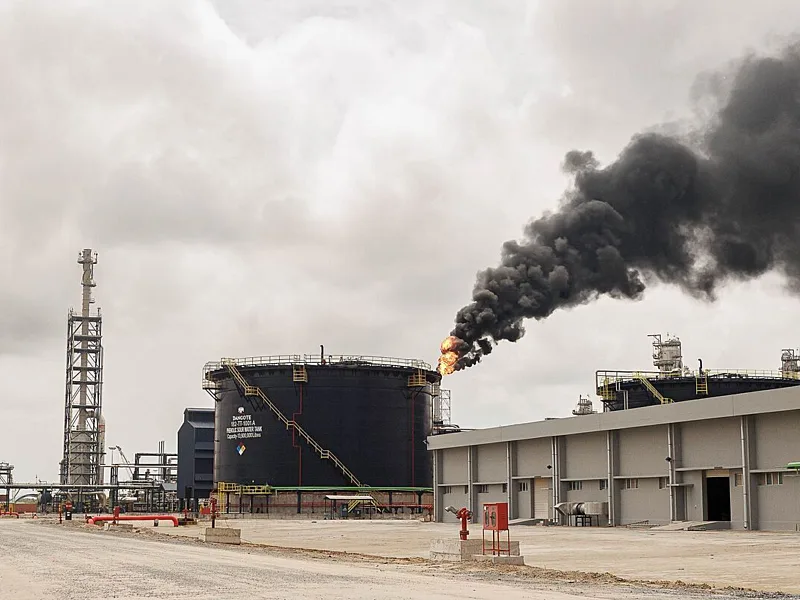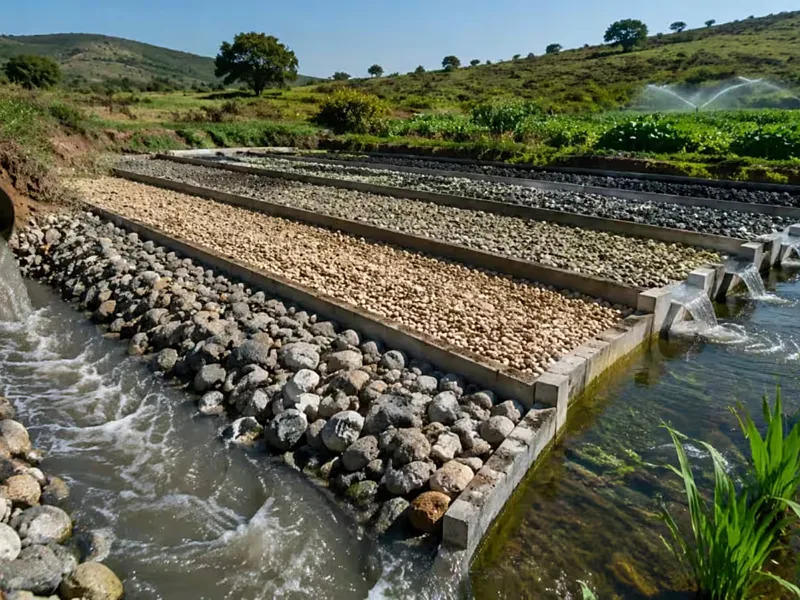
Africa’s farms, cities and power systems depend on ecosystems that rarely appear in infrastructure or operating budgets.
A World Bank simulation quantifies the economic exposure if selected ecosystem services collapse.
The first article in this SSA special examines which financial flows could change that outcome and who should help decide where the money goes.
When Healthy Ecosystems Underpin the Economy
Water utilities can budget for chemicals, pumps and spare parts more easily than for a forest upstream.
However, when vegetation disappears, and sediment washes into a reservoir, the treatment bill can rise, and usable storage can shrink.
- The cost surfaces somewhere else in the economy, often after a land-use decision has already been made.
This Sustainable Stories Africa special on nature’s business draws on The Little Book of Nature Business by John Tobin-de la Puente and Andrew W. Mitchell, published by Global Canopy in 2026.
The first chapter asks what economies receive from nature and what it costs to keep those systems functioning.
- For Africa, that question connects drought, food prices and public investment to decisions about land and water.
The chapter’s distinction between ecosystem maintenance and redirecting harmful capital matters.
Governments can increase conservation budgets while continuing to finance practices that degrade water, soils or habitats.
An economic response has to examine both sides of the ledger, including expenditures formally classified under agriculture, transport, power and housing.
The Economic Shock Begins Well Upstream
The World Bank modelled a 9.7% GDP shortfall in sub-Saharan Africa in 2030 relative to its baseline under a scenario of partial ecosystem collapse.
- The global estimate was about $2.7 trillion lower GDP in that year.
- The scenario tests selected services, including wild pollination, marine fisheries and timber provision.
It is a stress test comparing two scenarios for the level of GDP in the same year.
The channels are familiar.
- A farmer can pay more for inputs when soil stops cycling nutrients effectively.
- A processor can lose throughput if rainfall variability and degraded catchments disrupt supplies.
- Fish processors, traders and transporters can lose business when catches decline.
- Costs also fall on households that pay for substitute water, food or fuel, and on local authorities that must respond to emergencies with narrow budgets.
A loan appraisal organised around the borrowing company alone can miss these relationships.
- The same watershed may underpin several borrowers that appear diversified on paper.
- This is one reason to map where production takes place and how much activity depends on shared assets before a bank concludes that a portfolio can absorb an environmental shock.
There is also a distributional question hidden in the GDP figure.
- A national account can record the sale of replacement water or the construction of a new intake as economic activity.
- A household that previously relied on a nearby source may experience the same change as a loss of time and income.
In an African investment appraisal, the people paying for a substitute should be identified even if they are outside the utility’s service area.
Otherwise, the business case may improve simply because costs have moved off one set of books.
Global Finance Pulls in Opposite Directions
The book’s global estimate of $898 billion to $1.199 trillion in annual biodiversity funding needs is expressed in 2025 dollars.
- It covers a broad package that includes managing productive land and seas, conservation areas and urban pollution.
UNEP’s separate 2026 assessment tracks finance for nature-based solutions and finance associated with harmful activity.
- It estimates $220 billion flowed to nature-based solutions in 2023 against $7.3 trillion to nature-negative activities.
Different definitions and scopes explain why the figures answer different questions.
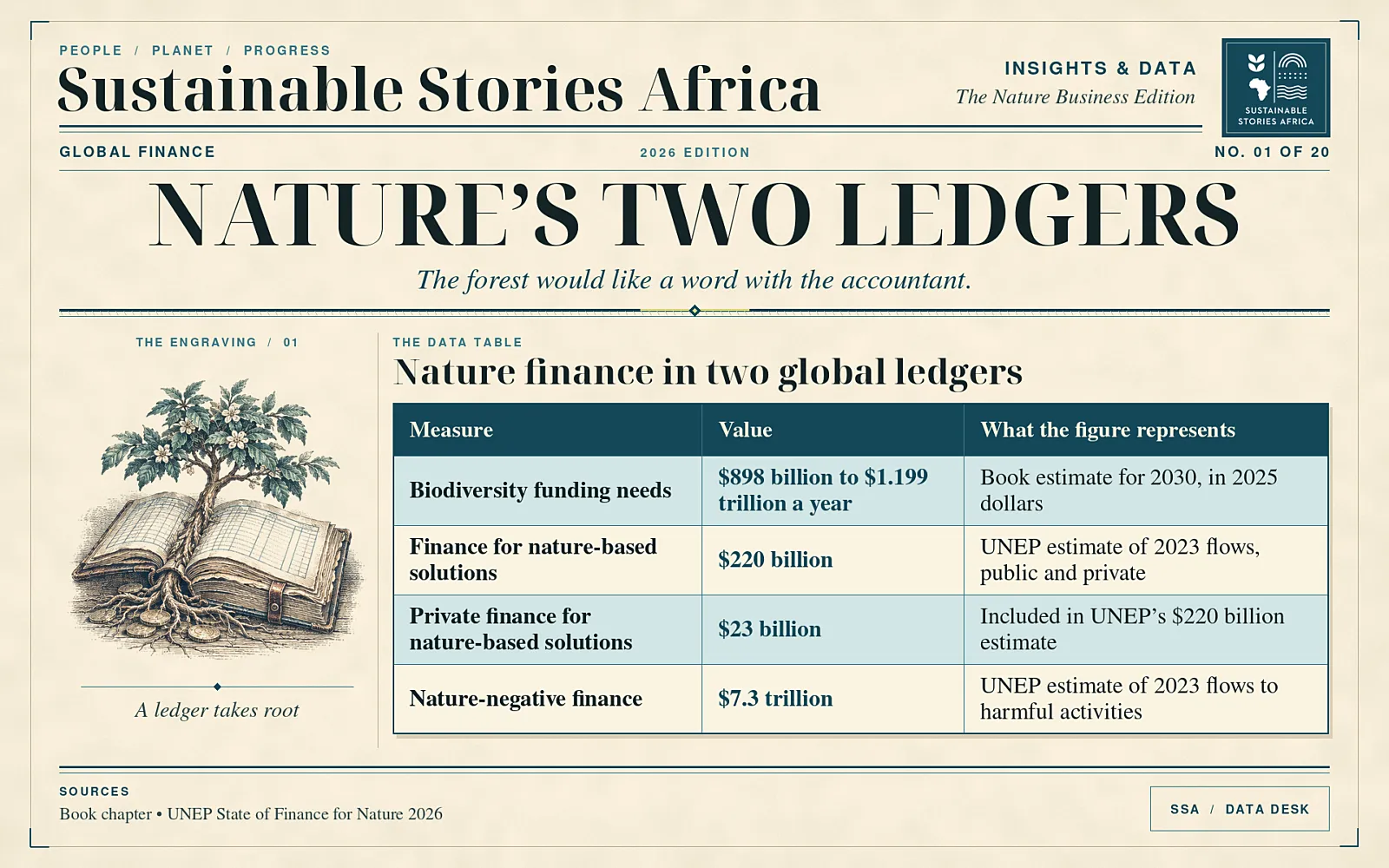
Neither ledger isolates an African funding gap.
- The useful comparison for an African ministry is between the spending it can influence and the ecological outcomes it seeks.
- A budget review can identify which incentives reward land clearing or excessive abstraction and which programmes fund water stewardship or habitat recovery.
This exercise also makes trade-offs visible.
- Farmers or workers may need transitional support when a damaging incentive is reformed.
The book estimates that managing productive landscapes and seascapes accounts for more than half of its total annual biodiversity funding need.
The range of $544 billion to $720 billion covers agricultural land, forests and fisheries globally.
- This places working landscapes at the centre of the funding debate.
Farm extension, fisheries enforcement and forest management can matter alongside protected areas because decisions outside protected boundaries shape the water, habitat connections and harvest pressure within them.
Nature Investment Starts With Shared Benefits
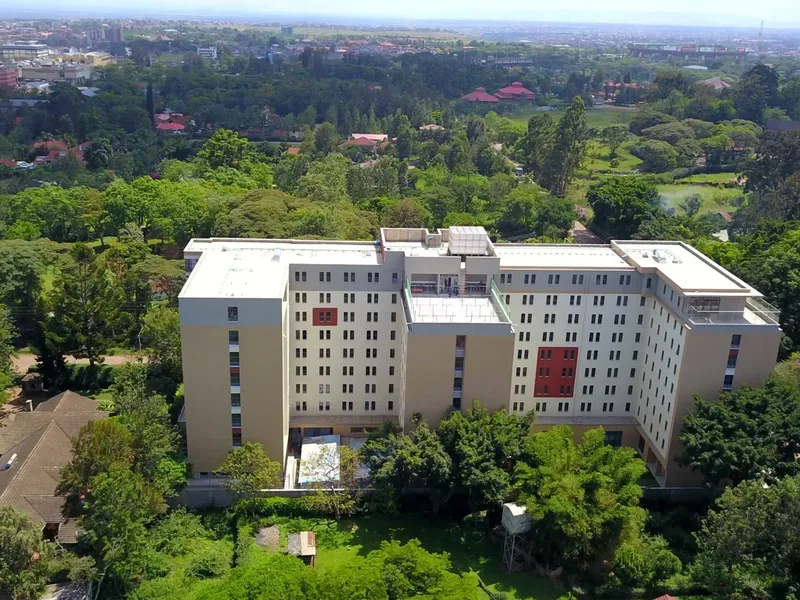
Kenya’s Upper Tana–Nairobi Water Fund illustrates the logic.
- The business case described a basin that supplied about 95% of Nairobi’s water at the time of the study.
- Downstream water users have a reason to help upstream farmers manage runoff and sediment.
The commercial case depends on a credible estimate of avoided costs, alongside agreements that compensate land managers for work that benefits customers elsewhere.
Investors can apply the same reasoning to fisheries, rangelands and coastal protection. Some benefits have a clear beneficiary willing to pay.
- Others, such as conserving species with no immediate revenue stream, still need dependable public or philanthropic finance.
- A viable mix should acknowledge the difference and avoid asking community stewards to carry the cost of monitoring, maintaining and defending areas that serve a wider public.
Indigenous Peoples and local communities are central to decisions about who can manage, use and benefit from these resources.
- Chapter one treats stewardship as a question of rights as well as finance.
- A catchment contract should identify customary users, including people whose access varies with the season, and specify how decisions about money and land can be challenged.
Where free, prior and informed consent applies, the timetable and budget should accommodate it before commitments are made.
Budgets Can Reward Better Land Stewardship
Finance ministries can begin with major subsidy and capital programmes.
- Ask how each affects water extraction, habitat conversion and pollution, then identify spending that could be redesigned with the same social purpose.
Sector agencies can define baselines in relevant places.
Companies and lenders can then use those baselines to test whether their investment is shifting pressure elsewhere, including into a neighbouring catchment or supplier district.
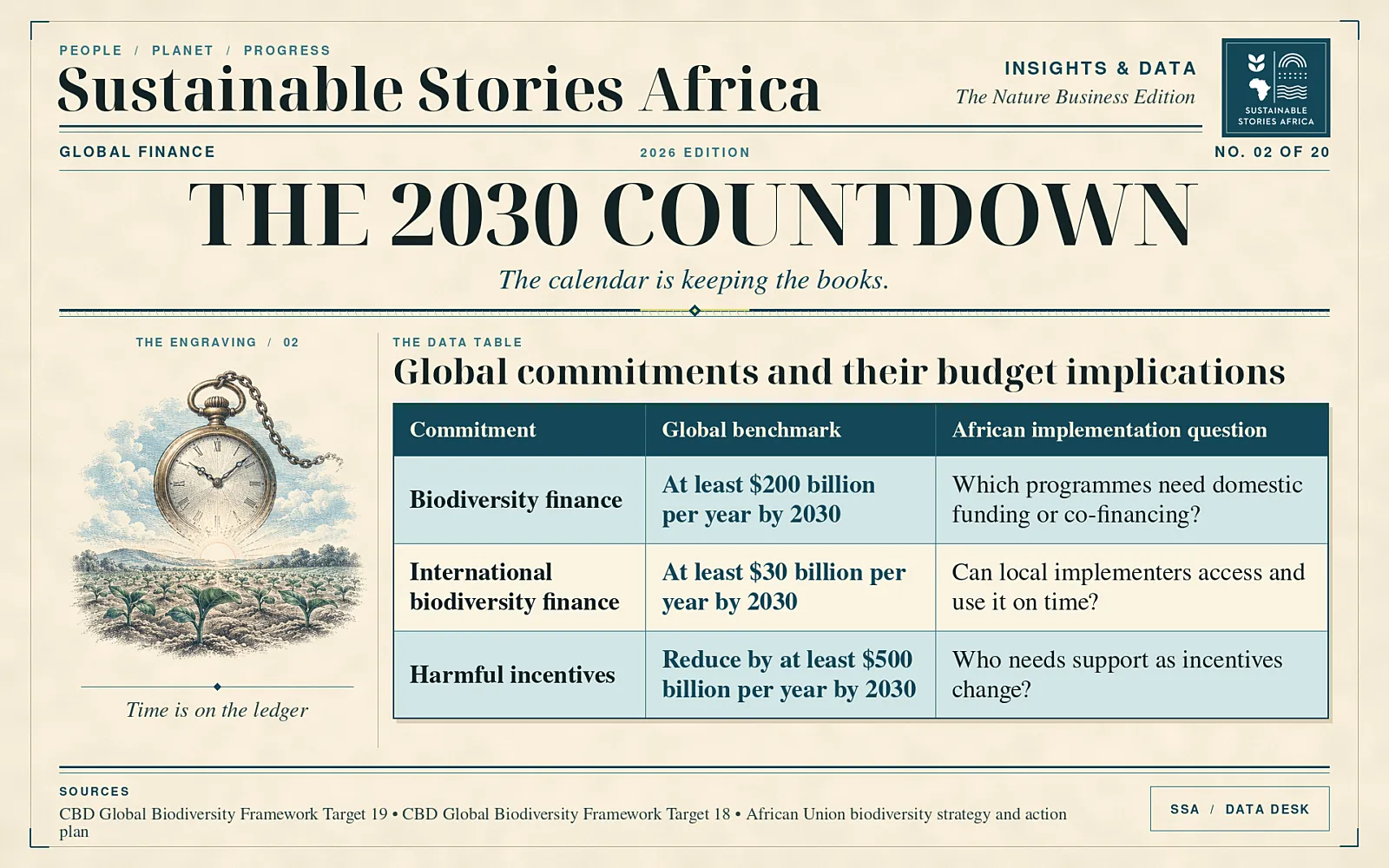
The African Union’s biodiversity strategy provides a continental coordination framework. Implementation still depends on national and local decisions about rights, funding and evidence.
- For public projects, that means consulting affected groups before design choices close, checking who holds customary rights, and reporting both financial commitments and ecological outcomes.
- The test of a spending shift is what happens on the ground.
The same discipline can improve capital planning.
- When a road proposal crosses a wetland, the appraisal can compare routes before land is acquired.
- Include drainage maintenance, flood losses and access for existing users in the comparison.
This makes ecological dependence relevant at the moment when a different decision is still possible and when the financial implications of each option can be priced.
Path Forward – Where the Money Should Move Next
Start with sectors where ecosystem decline is already raising operating costs, then use that evidence to change the next budget, loan or procurement round.
Record what is redirected and who bears the transition cost.
Make the results public at the scale where people can verify them.
Catchment condition, fishing pressure and household access can reveal whether the financial shift improved the underlying asset.