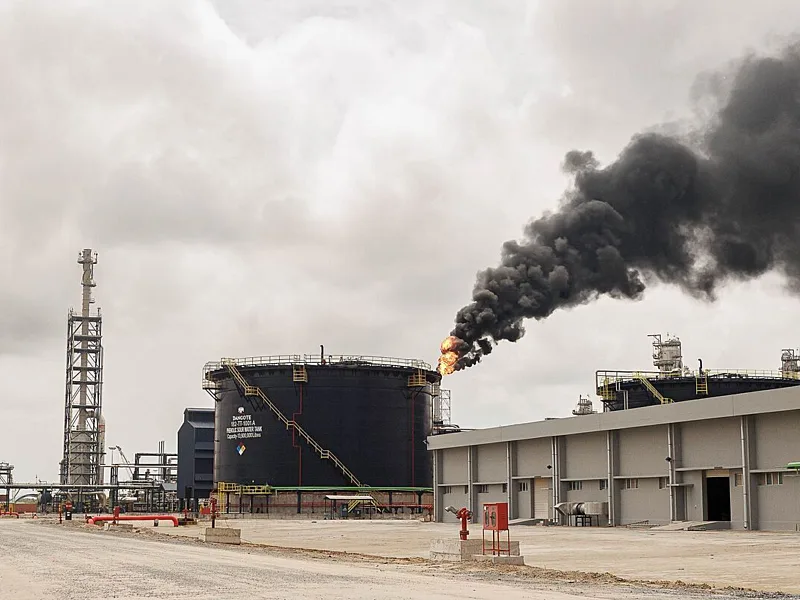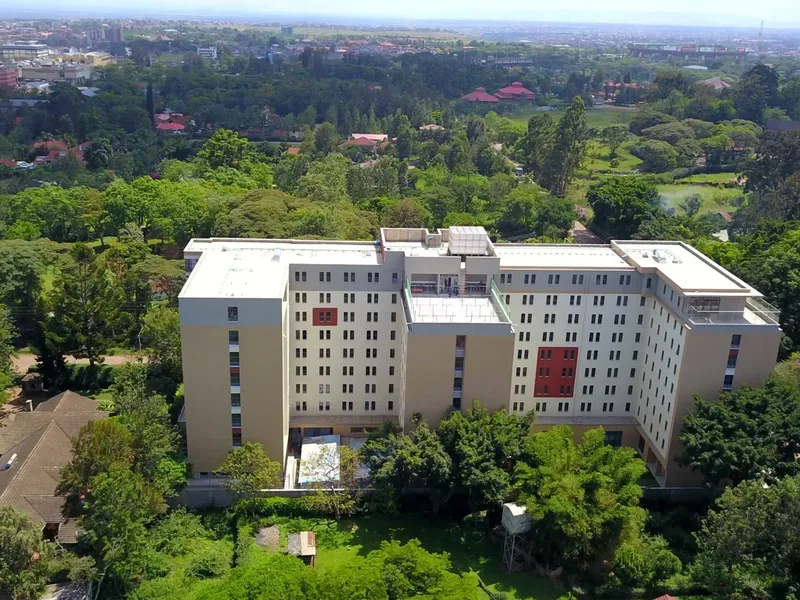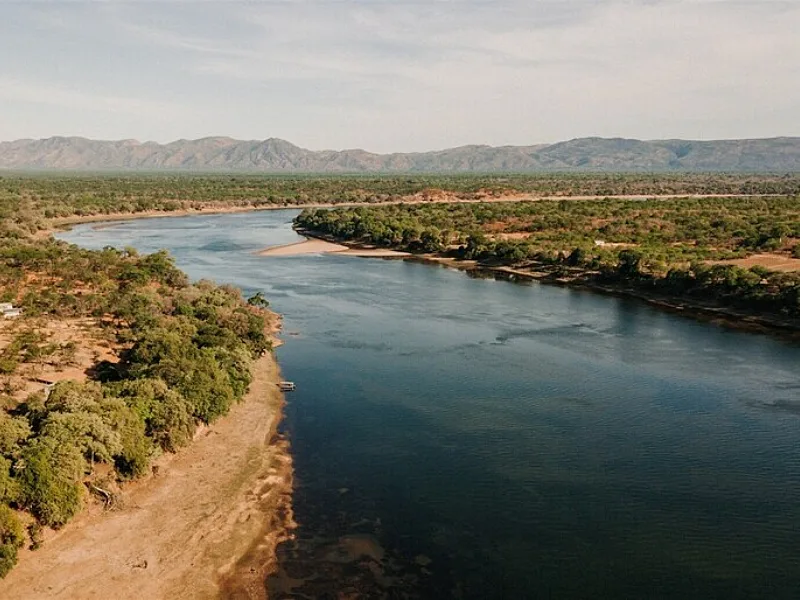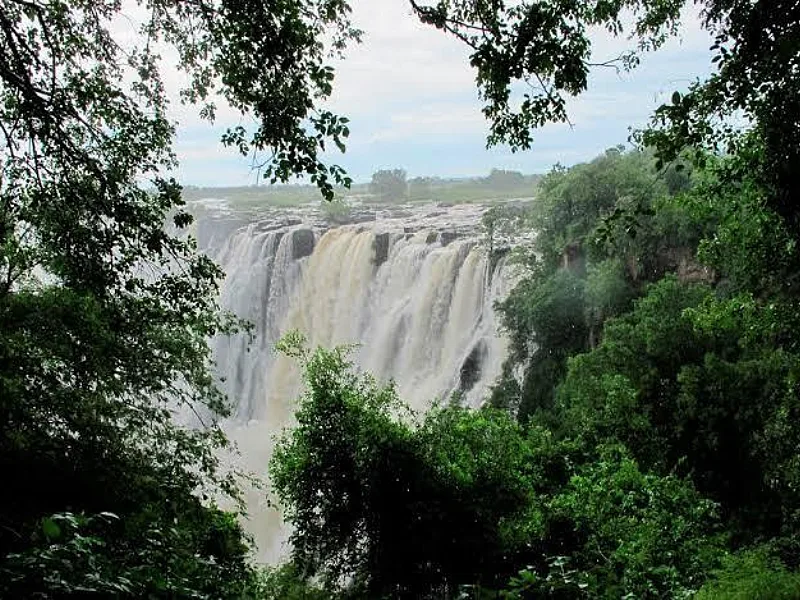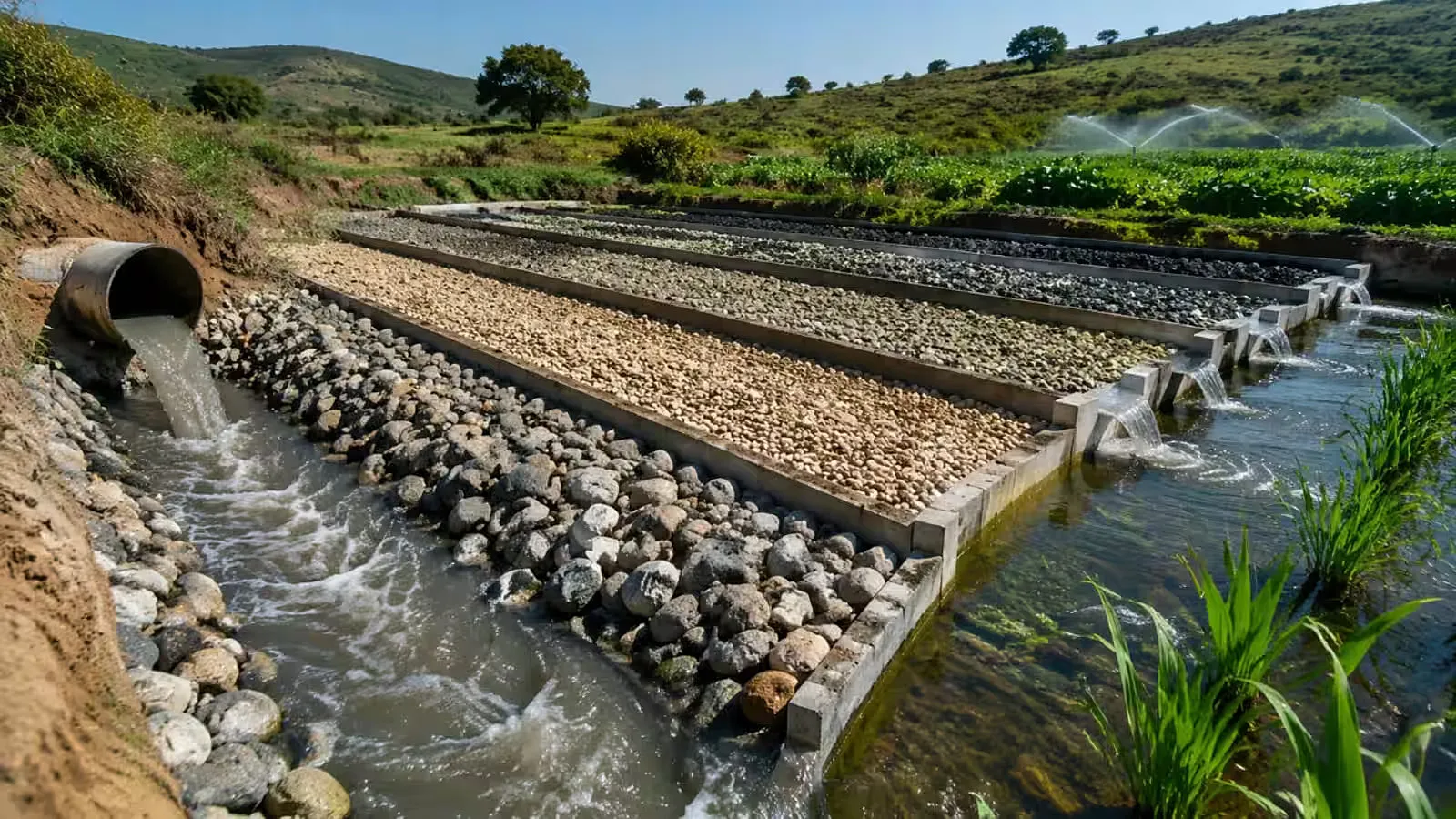
shows what an urban wetland project can deliver.
Kenya’s Upper Tana business case illustrates a different approach that pays for upstream treatment-plant changes.
Both point to a practical question for utilities and cities. Which water problems can ecosystems help solve, and how should service providers measure the result?
Water Service Starts Before the Intake
The cost of delivering a glass of water begins well before the treatment plant.
- When sediment reaches a reservoir or pollution enters a stream, a utility may need more treatment, storage or operating capacity.
After use, poorly treated effluent can raise costs for communities and businesses farther downstream.
This Sustainable Stories Africa special on nature’s business draws on The Little Book of Nature Business by John Tobin-de la Puente and Andrew W. Mitchell, published by Global Canopy in 2026.
- Chapter seven follows water sourcing and wastewater treatment and examines how utilities can work with natural systems across that chain.
Cities and water providers have different levers. A utility can repair leaks and improve treatment.
- A municipality can protect land around streams and limit encroachment. Communities can identify sources and flood routes that engineering plans miss.
The strongest interventions combine these roles and give someone responsibility for long-term maintenance.
Kigali Restored Part of Its Drainage System
Kigali’s Nyandungu Eco-Park opened to the public in 2022 after a six-year restoration initiative.
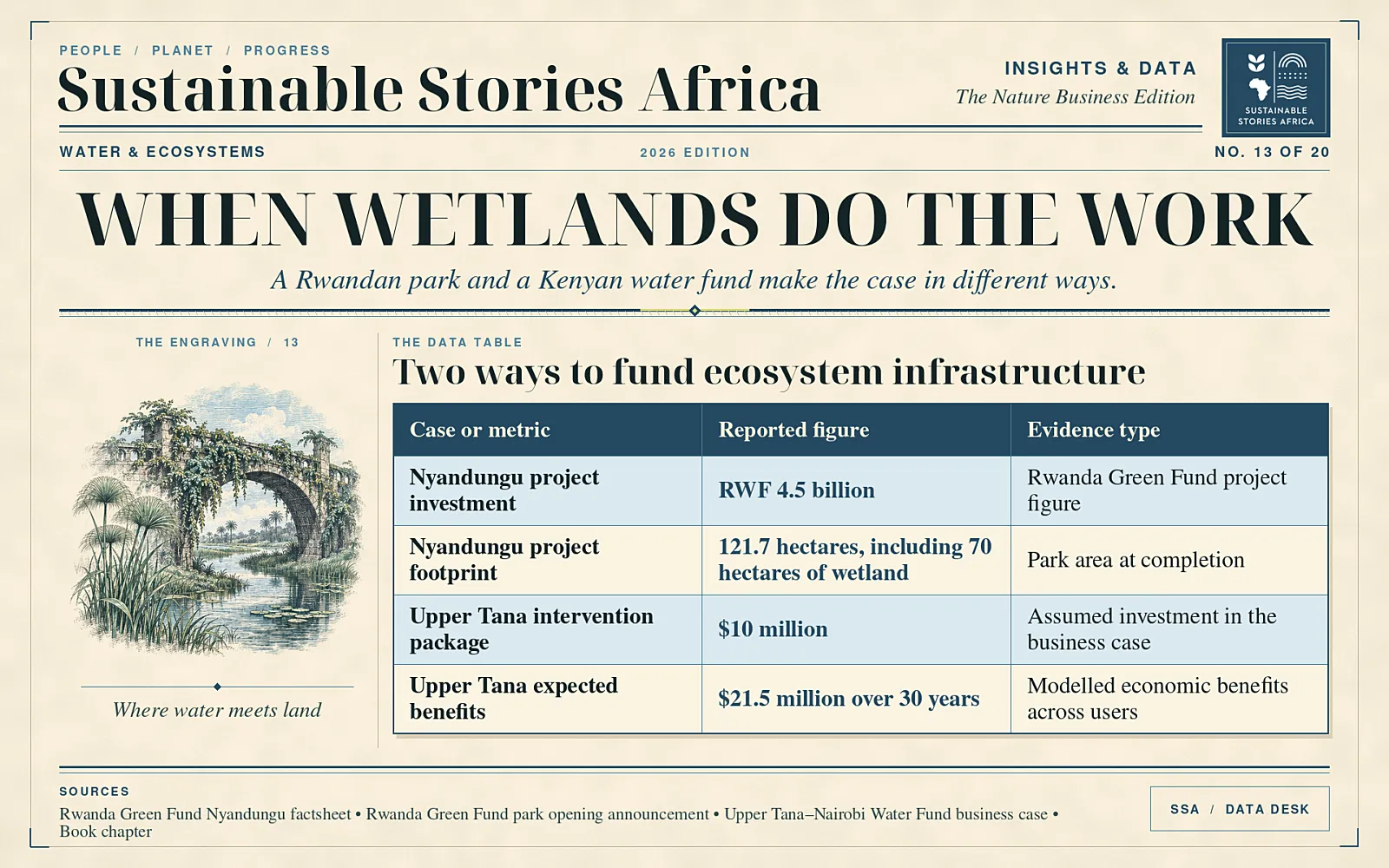
- The Rwanda Green Fund reported an investment of RWF 4.5 billion and a park area of about 122 hectares, including 70 hectares of wetland.
- The project rehabilitated streams and ponds and installed reed beds.
- The Fund also reported the planting of 17,000 trees from 55 indigenous species.
That record documents the works and their scale.
- Assessing flood performance requires measurements across storms of different intensity and attention to changes elsewhere in the catchment.
- Water quality similarly needs measurements at relevant points and times. An urban wetland can help store runoff and retain some pollutants.
- Reliable sanitation still requires collection and treatment designed for the loads entering the system.
There is a financial difference between building the infrastructure and securing its service for the next decade.
- A municipality can fund restoration through a capital budget, while a utility or park operator has to pay people to maintain ponds, channels and vegetation.
- A project appraisal can estimate the costs of sediment removal, inspection and maintenance alongside the initial investment.
Otherwise, a restored site can deteriorate once the institution responsible for it moves on to the next project.
Price the Services the Basin Provides
In Kenya, the Upper Tana–Nairobi Water Fund business case estimated $21.5 million in economic benefits over 30 years from $10 million of watershed interventions.
- The model included benefits to different users, including farmers and water and power operators.
- An economic benefit across several groups is distinct from the cash revenue available to any one utility or lender.
A utility could apply that logic by comparing the expected costs of recurring sediment removal with the cost of supporting erosion control at priority upstream sites.
- It would need a baseline and a method for separating the effect of land management from the weather.
- The comparison should also include the cost of compensating participating land managers and maintaining the practices.
The access gap adds urgency. The WHO and UNICEF Joint Monitoring Programme estimated that 167 million people in sub-Saharan Africa used limited drinking water services in 2024.
- That category covers people using an improved source where collection takes more than 30 minutes for a round trip, including queuing.
- Source protection can support supply, while reducing the time people spend fetching water may require connections or more accessible collection points.
The distribution of benefits also matters.
- An upstream farmer can lose crop area to a planted buffer before a water company experiences any reduction in treatment costs.
- Land managers and users should have a way to agree how that cost will be covered.
A water fund can pool contributions from several downstream beneficiaries, but the arrangement needs clear entry rules, a record of payments and a credible method for resolving disputes over changes to land use.
Better Treatment Can Support Water Reuse
Wastewater offers another opportunity.
- A treatment operator can sell reclaimed water for suitable industrial uses where treatment, monitoring and offtake arrangements make the economics work.
- This can reduce demand for freshwater
- It may also require managing concentrated residues or adding treatment for pollutants relevant to the intended use.
- Buyers need a dependable quality standard and a plan for interruptions.
The book considers constructed wetlands, managed aquifer recharge and green stormwater infrastructure alongside conventional equipment.
- Each has a different purpose
- Recharge can store water underground where geology and source water quality are suitable.
- A constructed wetland can support some treatment functions when designed for the loads it receives.
- Vegetated drainage can hold and slow rainwater in suitable areas.
Combining approaches can improve resilience if land, staffing and maintenance are budgeted over the life of the asset.
For a city with limited coverage, the highest priority may be stopping untreated waste from entering a waterway.
- A constructed wetland can complement a treatment system when flows and pollutant loads fit its design.
- If flows regularly exceed that design, a project should compare the costs of storage, pre-treatment, new collection infrastructure and enforcement at industrial discharge points.
A wetland that cannot cope with its load can become another place where pollution accumulates, and people face exposure.
Water Contracts Need Catchment-Level Measures
Regulators and utilities can specify the service they want and compare options against it.
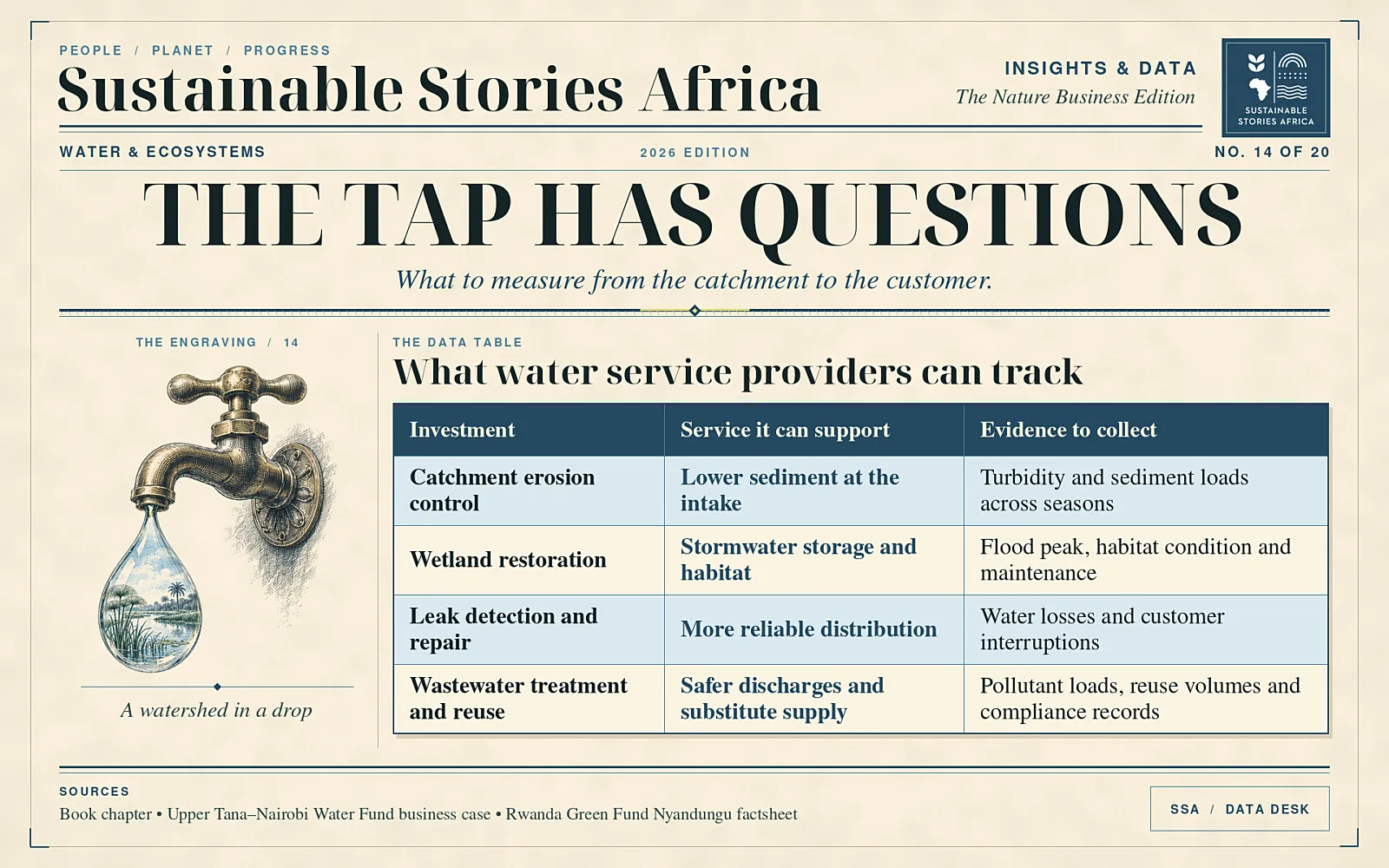
- Lower sediment loads at an intake, better compliance at an outfall and fewer customer interruptions call for different contracts.
- A project can establish monitoring upstream and downstream before work begins, and set out which partner responds when the expected improvement fails to materialise.
Affordability also belongs in the evaluation.
- A new park or cleaner source may serve a wider population while households near the project face tariffs, changes in access or disruption.
- Cities can consult those households early, record commitments and track whether service improves in underserved areas.
- If the project charges for access to benefits, the financing model should explain who can use them and at what cost.
Service indicators can be combined with ecological ones without collapsing them into a single score.
- A regulator can report changes in treatment interruptions and customer access alongside turbidity, pollutant loads and habitat observations.
- If the utility saves money while people downstream still receive polluted water, the public record should show both.
Keeping indicators separate can also help decide whether future spending should go to household connections, treatment capacity or changes upstream.
Path Forward – Put Catchments Into the Capital Plan
Choose a source, outfall or flood-prone area and establish how the ecosystem currently supports water service.
Compare the benefits and maintenance costs of ecological and conventional options before finalising the design.
Set measurable service and habitat outcomes, then make the results available to the people who pay for and rely on the system.