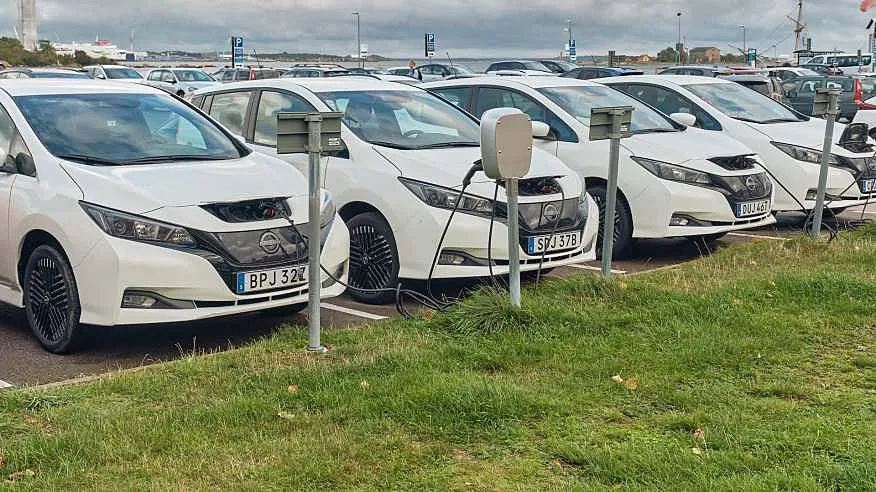
A September 2026 Transport & Environment report finds that the gap between electric and petrol car residual values narrows when prices, subsidies and taxes are considered.
It argues that headline figures can give an incomplete picture.
For African markets, the relevance lies in carefully evaluating used vehicles, with battery information, charging conditions and local costs assessed before transferring European findings.
Used Vehicle Values Need Better Context
Used battery electric vehicles appear less disadvantaged than petrol cars once several price and policy effects are considered.
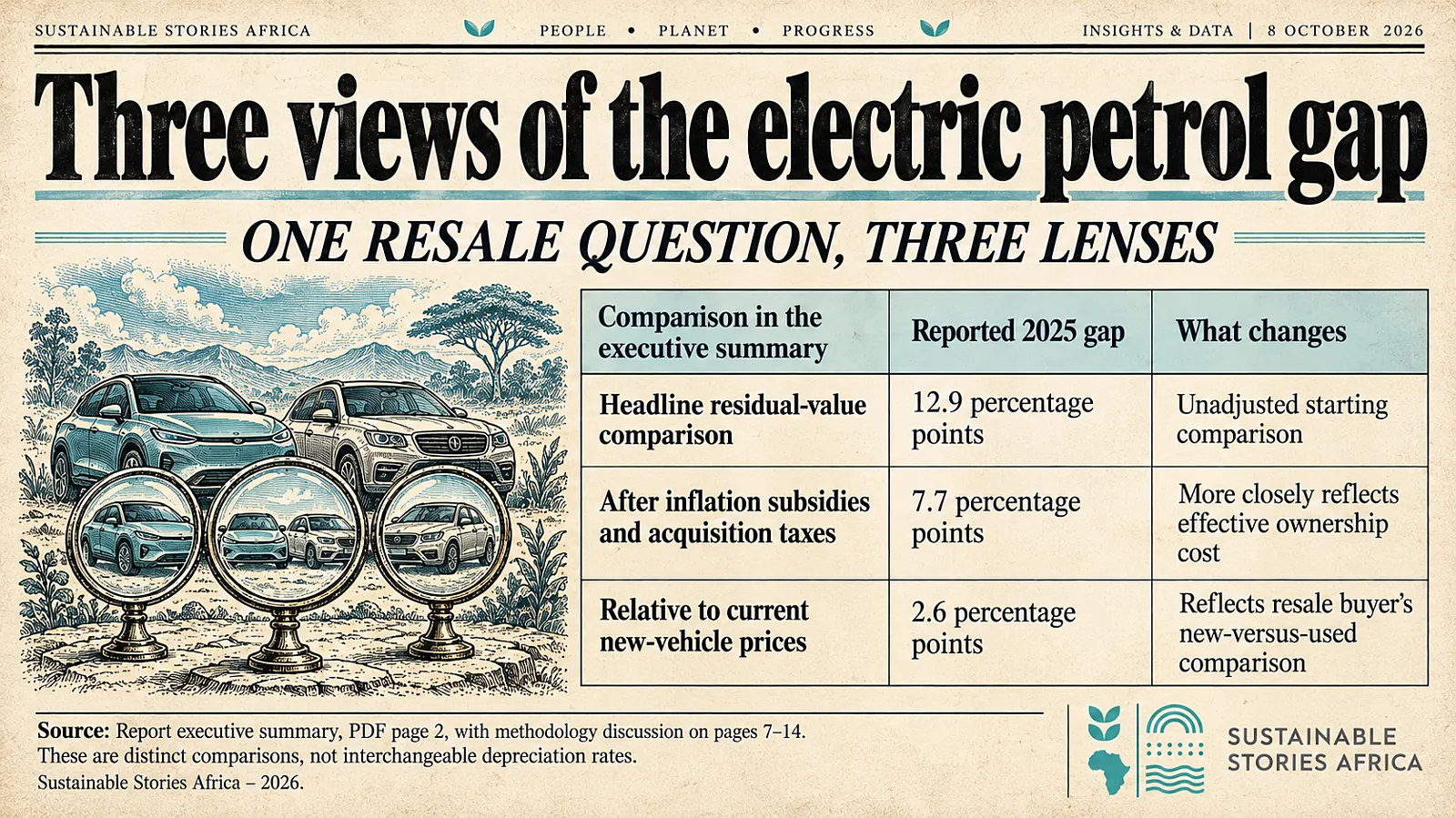
A September 2026 Transport & Environment report says the 2025 residual-value gap falls from 12.9 percentage points to 7.7 points after adjustments for inflation, purchase subsidies and acquisition taxes.
When resale values are compared with current new-vehicle prices, the reported gap narrows further to 2.6 percentage points.
- That second comparison answers a different question: how a used vehicle is valued against a new equivalent at the time of resale.
For African importers, fleet operators and policymakers, the study warns against using a headline depreciation rate as a complete measure of value.
European resale patterns do not establish local affordability, battery condition or suitability for a particular transport need.
Residual Value Depends On The Denominator
In this report, RV means residual value, the value retained by a vehicle at resale.
- It does not mean recreational vehicle.
- A conventional residual-value percentage divides the resale value by the car’s original new price, with the study’s dataset using values including VAT.
That calculation can mislead if the denominator does not reflect what the first owner paid.
- A subsidy reduces the effective purchase cost of an electric car, while an acquisition tax can increase the cost of a petrol vehicle.
- Comparing both against unadjusted retail prices can therefore distort the difference in value lost.
Inflation adds another complication.
- Nominal resale values and nominal purchase prices refer to different times, so a change in purchasing power can affect the ratio.
The study also controls for differences in dataset composition, such as vehicle age, mileage and segment.
The narrower gap does not eliminate the loss of an owner whose vehicle falls in value.
- Falling new-car prices can improve affordability for new buyers while reducing the value of cars purchased earlier.
- Both effects can occur at the same time.
European Data Shows Uneven Market Patterns
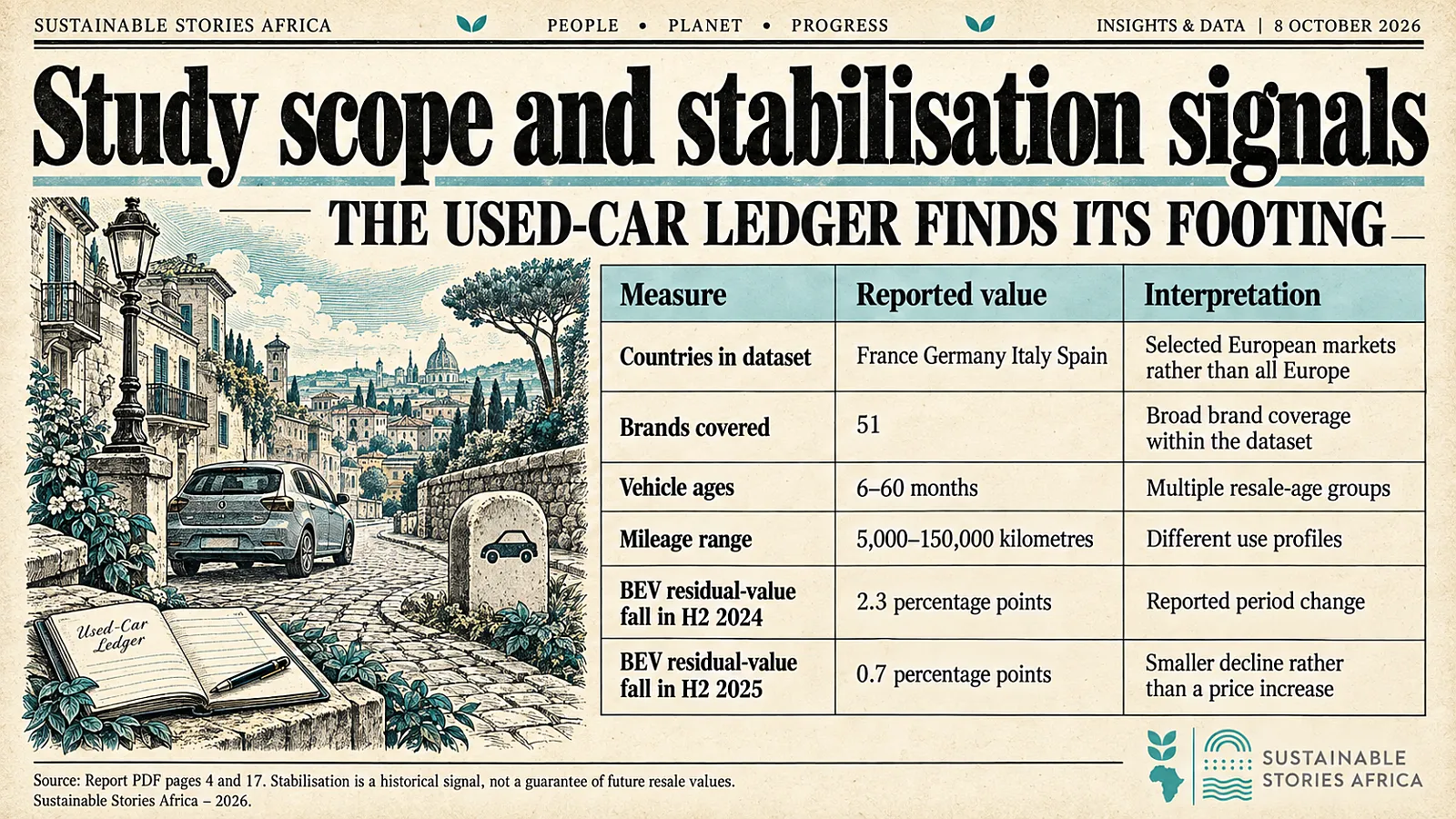
The report uses Autovista data covering France, Germany, Italy and Spain, with 51 brands and multiple vehicle ages, mileage groups, powertrains and segments.
- Its monthly reporting dates run from January 2020 to December 2025.
- Although a scope table mentions 2020 – 2026, it specifies those data dates; the analysis should not be described as a complete observation of 2026 resale outcomes.
The executive summary reports different country patterns, with Spain showing relatively stable electric residual values and Italy sharper declines.
- Smaller electric cars also perform differently from larger, more expensive models
- A single European average can conceal these variations.
The report’s modelling includes adjustments for age and mileage as well as other characteristics.
- It notes that older electric vehicles historically experienced faster depreciation, with some recent narrowing of the difference.
- Such findings need to be interpreted alongside changes in technology and new-vehicle prices.
For a potential buyer, the practical question is the specific car’s remaining usefulness.
- Its model, condition, charging compatibility and service support matter more than an average across several countries.
- A residual-value percentage cannot answer all of those questions.
Buyer Confidence Can Support Used Markets
The report proposes battery health testing, stronger transferable warranties and manufacturer-backed used-vehicle schemes to improve confidence.
- These measures address a central information problem: buyers need evidence of the battery’s condition and the support available if something goes wrong.
Battery information should be understandable and comparable.
- A certificate is useful only if its method, date and limitations are clear.
- It should help a buyer assess condition without creating an impression that future performance is guaranteed.
Used-vehicle finance can also affect access.
- A lower purchase price may still be unaffordable if credit is expensive or repayment periods do not fit the buyer’s income.
- The report discusses tailored finance and leasing as possible ways to support second-hand demand.
For African markets, those proposals require adaptation.
- A vehicle imported from Europe may enter a different charging environment, tax system and service network.
- Freight, import costs and financing can change the price advantage.
- Buyers and fleet operators need local estimates rather than a direct transfer of the European residual-value gap.
Extending potential sustainability can benefit the vehicles' useful life and widen access to electric mobility.
- Its scale depends on actual use, electricity supply and the vehicles displaced.
- The report does not provide a quantified African emissions assessment, so that benefit should remain a proposition for local evaluation.
Consumer information should remain attached to the vehicle throughout its resale journey.
- An importer or dealer can provide records of testing, previous use and warranty terms in a form that subsequent buyers can understand.
- Where information is missing, the uncertainty should be visible in the appraisal.
Buyers also need a realistic description of charging time and access for their intended use.
- A vehicle suitable for a depot-based fleet may be less convenient for a household without predictable charging.
These distinctions help finance providers and consumers assess value and operating needs rather than broad electric-vehicle averages.
Import And Finance Decisions Need Evidence
African policymakers need the basic information that electric-vehicle buyers require.
- Relevant checks include documented battery condition, vehicle history, appropriate warranties and evidence that the vehicle can be charged and maintained in its intended setting.
- These are SSA recommendations informed by the report’s confidence-building proposals.
Fleet operators should build scenarios around acquisition cost, charging expenditure, downtime and resale assumptions.
- A lower residual value can benefit a used buyer and increase the cost to a first owner or leasing company.
- Financial appraisal should identify which participant bears that risk.
Tax and incentive design also need consistency.
- Support concentrated on new vehicles can leave used buyers with limited help, even where second-hand purchases are more affordable.
- The report discusses measures intended to improve that balance.
Local policy appraisal should test affordability and distributional effects rather than assume the same European mechanism will work elsewhere.
Public communication should use the unit of comparison.
- A 7.7 percentage point difference is not the same as a 7.7% decline in a car’s price.
- Comparing original purchase prices with current new prices answers different economic questions.
Clear disclosure can prevent those distinctions from becoming misleading sales claims.
Path Forward – For Credible Electric Mobility
African used-electric-vehicle markets need trustworthy condition information, workable finance and local ownership-cost assessments.
European residual-value analysis can inform those decisions without substituting for local evidence.
Policymakers and businesses should make assumptions visible and test them against real vehicles and operating conditions.
That would support affordability and confidence while making the sustainability case for electric mobility more credible.