A peer-reviewed study presents the Climate Connectivity Hub and its underlying taxonomy as tools for connecting dispersed climate knowledge.
The aim is to help researchers and decision makers find relevant evidence and build on earlier work.
For Africa, the opportunity depends on local relevance, accessible language and sustained human review, as well as the technology linking the sources.
Climate Research Needs Usable Shared Connections
Climate information becomes more valuable when people can find, interpret and reuse it across projects and institutions.
A study published in Climatic Change on 24 February 2026 presents the Climate Connectivity Hub and Taxonomy as a way to improve those connections and reduce knowledge silos.
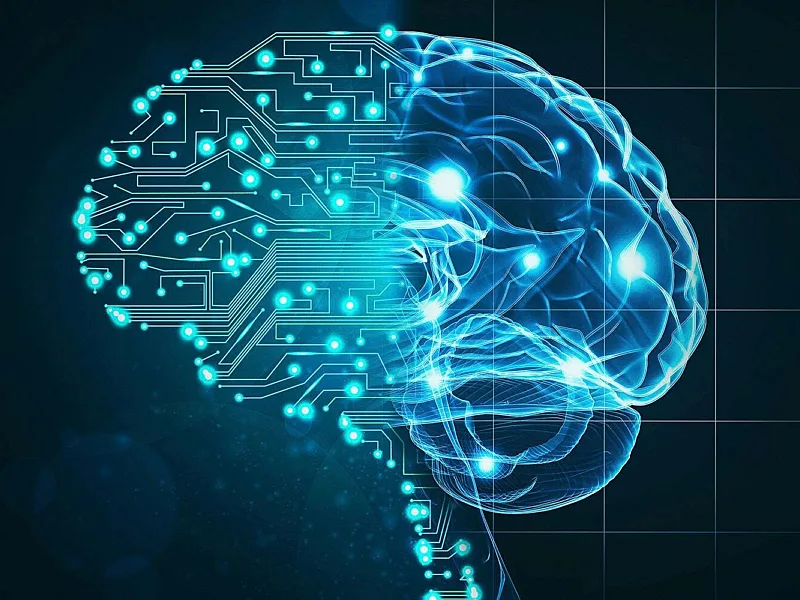
The authors, Sukaina Bharwani, Kate Williamson and Adam Wangrat, describe a combination of established glossaries, machine-assisted processing and expert curation.
- Their approach processed 35,891 projects and articles while building connections across climate knowledge platforms.
For African decision makers, the relevance is practical.
- A planner preparing an adaptation programme needs evidence that fits the local hazard, institutions and communities.
- Better discovery can help identify previous experience, but it does not establish that an intervention will work in a new setting.
Disconnected Evidence Can Weaken Climate Planning
The study begins with a familiar problem: useful climate information is dispersed across websites, projects and platforms.
- Different systems describe similar content in different ways, making comparison difficult.
- Users may miss relevant research even when it already exists.
This can waste time and resources.
- An illustrative city planning flood protection project might commission a new review without finding evaluations of comparable interventions.
- More seriously, a project might replicate a measure that worked briefly elsewhere while missing evidence of longer-term harm.
The paper discusses maladaptation as one reason learning from previous work matters.
The challenge has both technical and semantic dimensions.
- Platforms need compatible data structures, but people also need to understand what terms mean.
- Vulnerability, resilience and risk can mean different things across disciplines and decision contexts.
- A search that matches words without examining those meanings may connect material that is only superficially similar.
The authors distinguish knowledge classification from the screening of investment activities.
Their taxonomy supports discovery and shared understanding;
- It is not a certification system that determines whether a project meets sustainable finance rules.
The Hub Connects Content Across Platforms
The approach begins with credible seed knowledge structures, including the IPCC Sixth Assessment Report glossaries and the UNDRR–International Science Council hazard taxonomy.
- It then identifies additional terms from platform content and other knowledge structures, with expert review helping assess candidate connections.
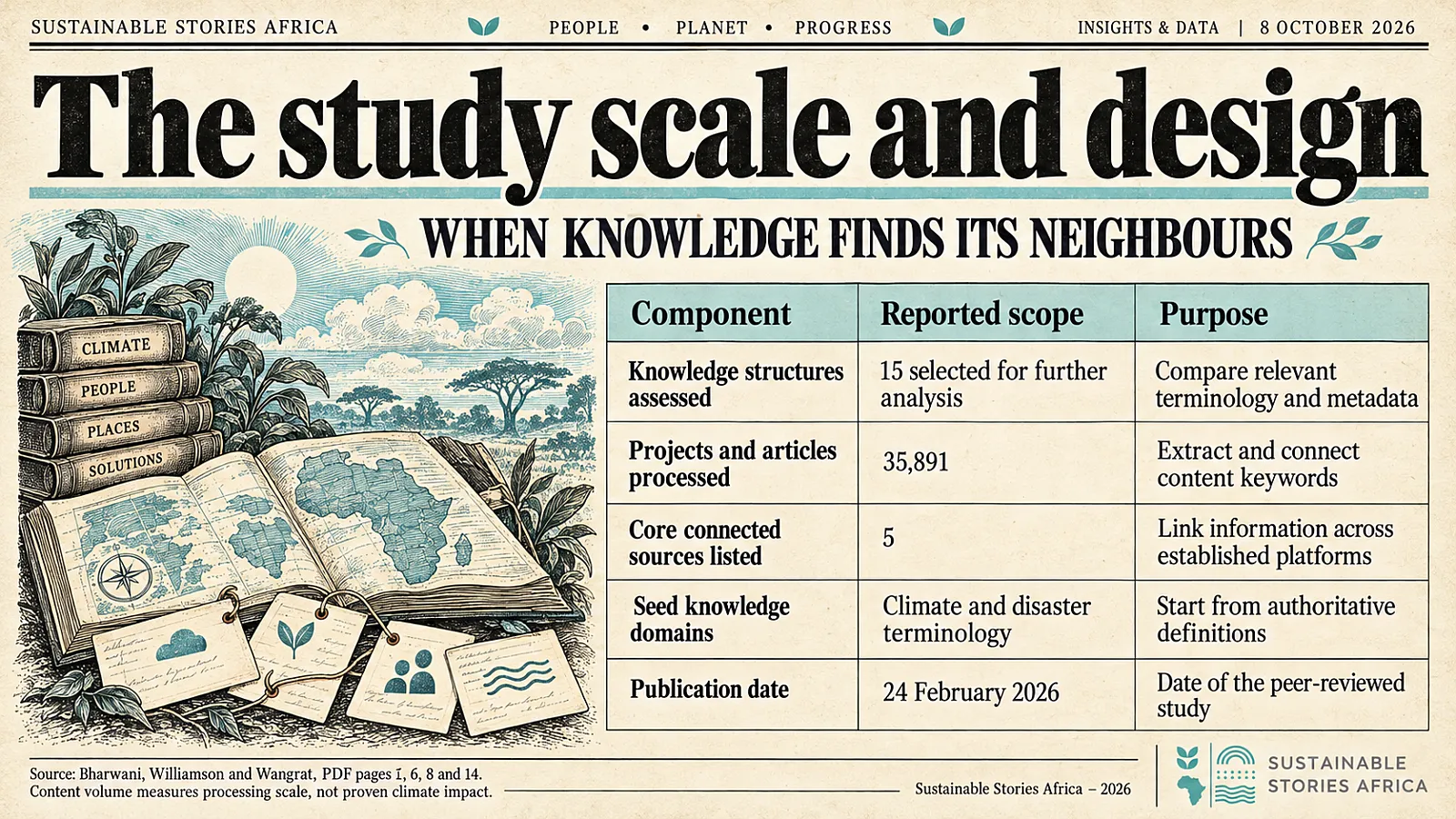
The five sources listed are CORDIS, PreventionWeb, weADAPT, Climate-ADAPT and the Resilience Platform.
- Connections are generally made through application programming interfaces, which allow systems to exchange information.
- Users can explore relationships among projects, organisations and keywords, then refine their searches.
The study’s guiding principle is FAIR knowledge: findable, accessible, interoperable and reusable.
- These qualities address different barriers.
- A document might be online but difficult to locate.
- It might be easy to find but described in a way that cannot connect to another platform.
- It might be accessible but lack the context needed for responsible reuse.
The paper does not quantify reductions in project costs, improvements in African adaptation outcomes or avoided climate losses.
- Those results would require further evaluation.
Its contribution is a demonstrated approach to organising and connecting information, accompanied by an agenda for refinement and validation.
Better Discovery Could Improve African Adaptation
For African institutions, linking existing evidence could help staff identify comparable work before designing a new programme.
- Universities might find partner organisations with relevant expertise.
- Practitioners could compare how different projects define a hazard or describe the communities affected.
These are potential applications rather than African outcomes measured by the paper.
Local context remains essential.
- An intervention suited to one coastline, farming system or urban settlement may depend on institutions and resources that are absent elsewhere.
- Reuse should include a check on the conditions under which evidence was produced, not merely a similarity between project titles.
Language is another constraint.
- A vocabulary dominated by technical English can remain inaccessible even after platforms become linked
- The authors identify multilingual interpretation and expert validation as future priorities.
African applications should involve local researchers and practitioners in reviewing concepts and their translations.
The visibility of gaps also matters.
- The study discusses projects that do not connect adequately to existing taxonomy terms.
- Such orphaned content can reveal a missing concept, a weak description or an emerging field.
Reviewing it can improve the taxonomy, while also exposing the limits of automated classification.
A well-governed system could therefore help institutions learn from available evidence and see what is missing.
- It should preserve the origin and meaning of information so users can judge quality and relevance.
Access rights require attention alongside technical connections.
- Linking a record does not necessarily give users permission to download, adapt or redistribute its contents.
- Platforms should display the relevant licensing and access conditions, particularly when material is intended for reuse in public programmes.
- Provenance also helps users distinguish an evaluation from a proposal or a promotional account of a project.
Those differences can affect the weight attached to evidence.
- A connected system should make them easier to see, so improved discovery supports critical judgement rather than simply increasing the volume of material presented.
Institutions Should Fund Curation And Validation
Building another portal is unlikely to solve fragmentation if institutions continue to describe evidence inconsistently.
The paper points towards shared vocabularies, richer metadata and sustained review.
- SSA’s proposed implementation priorities translate those principles into questions for African knowledge systems.
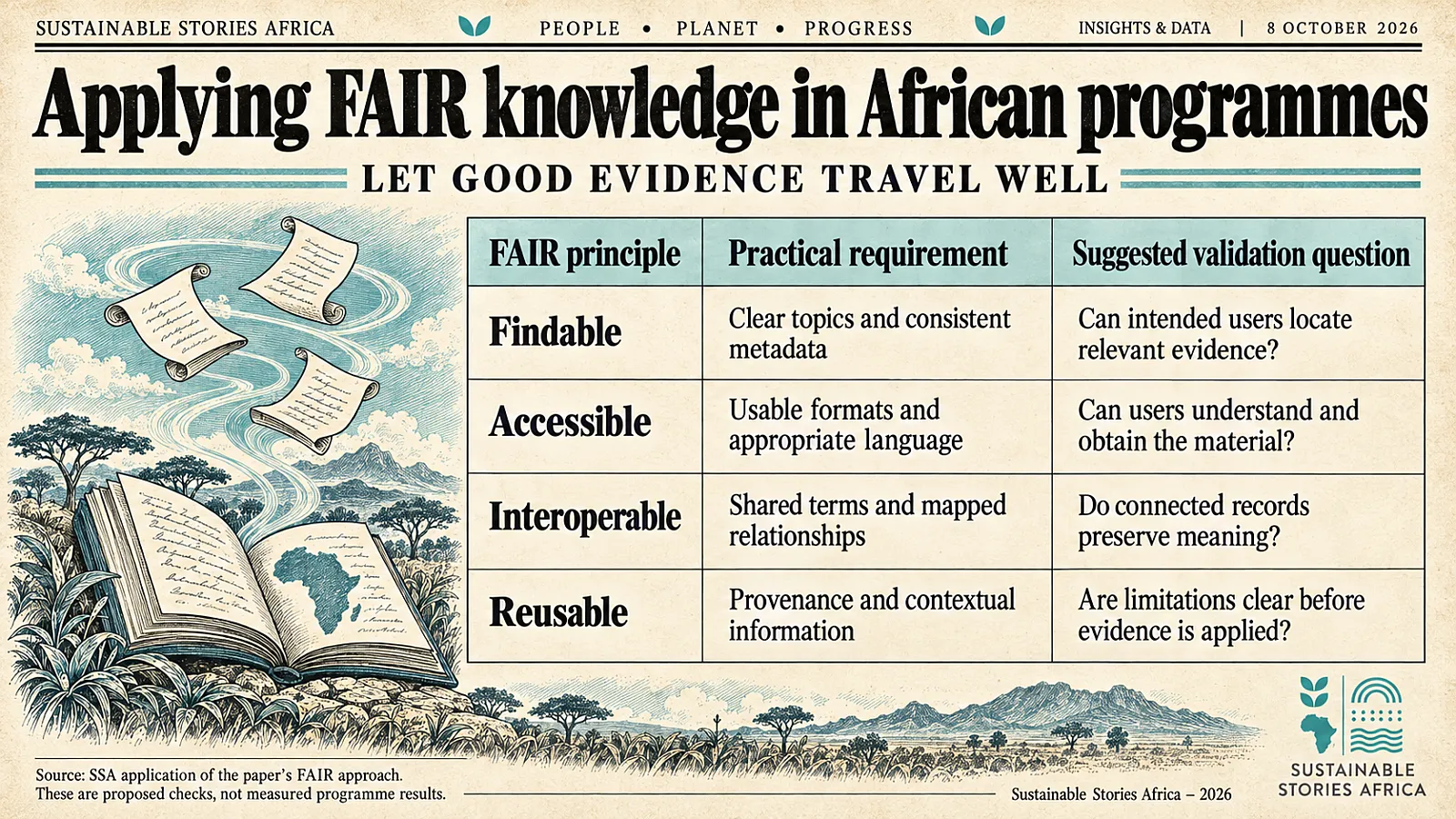
Research funders can require useful descriptions of location, methods and intended users, while providing resources for maintenance after projects end.
- Platform owners should keep a visible record of how terms are added, merged or revised.
- Otherwise, links can change without users understanding why.
Machine-assisted classification should remain reviewable.
- Automated similarity can accelerate processing, but close wording does not always mean equivalent concepts.
- Domain experts should examine consequential mappings and allow users to report errors.
The authors’ own approach recognises this need for expert validation.
Evaluation should ask whether intended users find evidence more easily and make better-informed choices.
- Download counts and the number of connections provide activity measures, but they do not establish decision quality.
- Pilot programmes can compare discovery time, relevance and user understanding before making wider claims about climate impact.
Path Forward – For Connected Climate Evidence
African climate institutions should improve how existing evidence is described, linked and reviewed before assuming that more information will solve planning gaps.
Shared terminology needs local context and accessible language.
The Climate Connectivity approach offers a useful model to test.
Its value will grow through expert curation and evaluation, showing that decision makers can find and responsibly apply relevant knowledge.