Bokku’s expansion offers a case study in bringing formal grocery retail closer to Nigerian households.
Jennifer Udeze’s analysis links its model to small stores, familiar essentials and purchasing scale.
The sustainability question is whether convenience and affordability can grow alongside strong supplier relationships, decent work and reliable evidence of operating performance.
Neighbourhood Retail Responds To Household Budgets
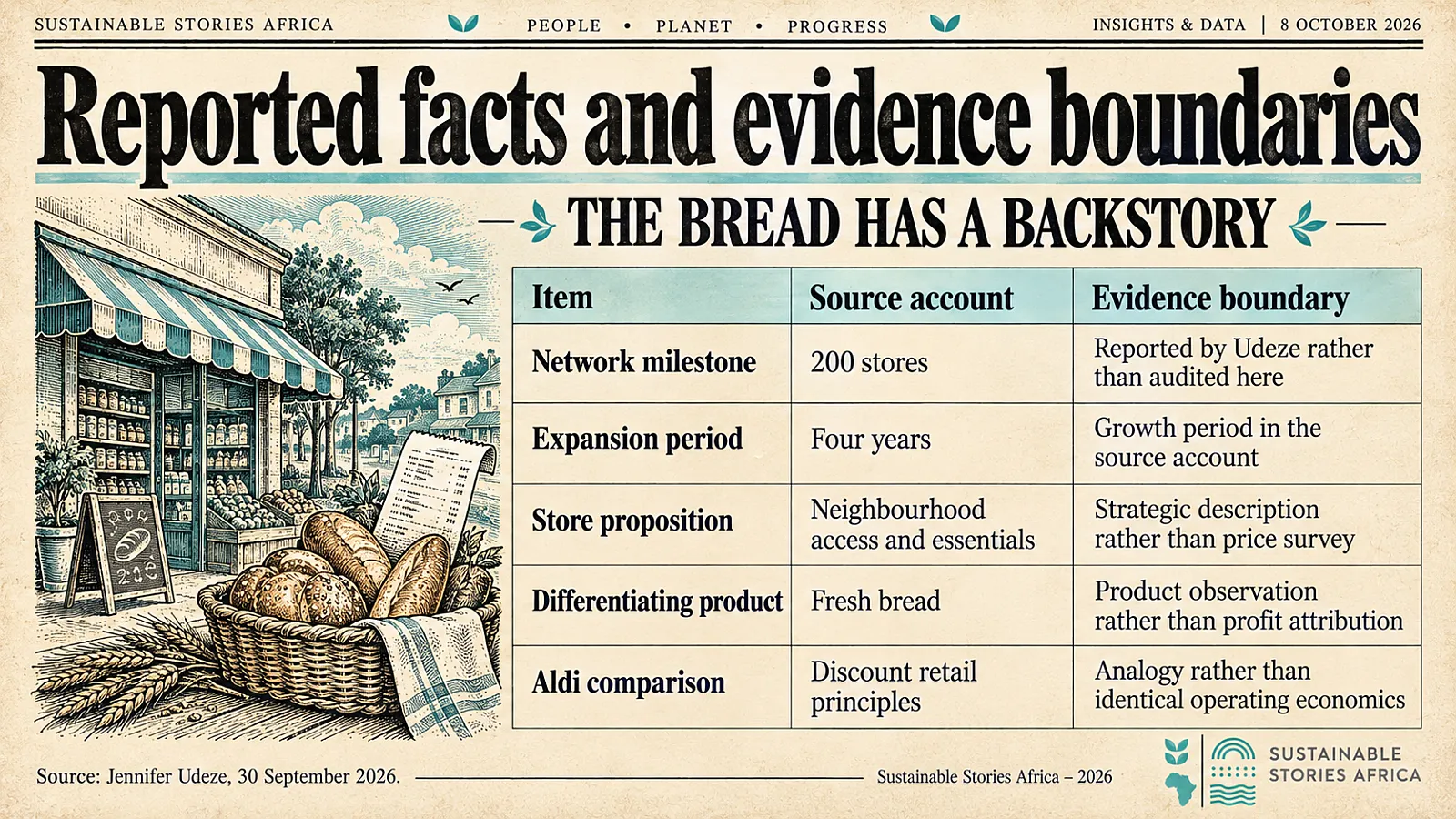
Bokku’s reported expansion to 200 stores illustrates how a supermarket network can grow around neighbourhood shopping habits.
In a 30 September article, Jennifer Udeze describes a model built on small outlets, familiar essentials and fresh bread, with proximity supporting frequent purchases.
Her account is a strategic interpretation rather than a financial disclosure.
For households, access to food involves more than the price printed on a shelf.
- Travel costs, time away from work and the ability to buy small quantities can influence whether a shop is affordable.
- A store close to home can therefore compete through the total cost of shopping.
For African cities, the case raises questions about inclusive retail growth.
- A larger network can broaden access and aggregate demand, but its contribution to sustainable development depends on how it treats workers, suppliers and the communities in which it operates.
Small Formats Change The Shopping Equation
Udeze compares Bokku with Aldi’s discount model, distinguishing reliance on familiar Nigerian brands from Aldi's stronger private-label emphasis.
- She also reports that Bokku reached 200 stores within four years.
- Those figures belong to her account and should not be read as audited evidence of profitability.
A neighbourhood format changes the economics that retailers need to examine.
- Smaller premises may require less rent and fewer fixtures than a supermarket, but a network of many outlets can create distribution and maintenance costs.
- Purchasing economies help only if goods reach stores efficiently and sell before deterioration or expiry.
The shopper’s calculation is equally specific.
- Any household buying bread and a few essentials may value a short walk more than a distant store’s broader assortment.
- Another household making a monthly purchase may prefer to travel for a larger range.
Neither pattern represents all customers.
- Store design should follow observed shopping missions rather than the assumption that a single format can meet every need.
This is why counting branches is an incomplete measure of success.
- Outlet numbers establish reach.
- They do not establish lower basket prices, consistent product availability or a sound return on invested capital.
The Model Needs Carefully Defined Benchmarks
The verified LinkedIn source provides a description of strategy and a reported expansion milestone, but no store-level revenue, margin or energy dataset.
- A responsible comparison separates those claims from the measurements needed to evaluate them.
Assess affordability through a repeatable basket comparison.
- Researchers should match pack sizes and product specifications, record promotional prices separately and compare several dates.
- A single inexpensive product cannot establish that a retailer is cheaper across the items a household needs.
The comparison should also include the shopping journey.
- Transport expenditure and time can alter the value of a lower shelf price.
- These costs vary by customer and location, so reporting a single national saving would require much more evidence than the source provides.
It provides a governance issue in supplier relationships.
- Aggregated demand can improve planning, but the effect depends on payment terms and delivery requirements.
- A retailer may offer access to a larger market while expecting a small supplier to finance longer receivable periods.
Sustainable procurement should examine opportunities and burdens, with transparent terms that suppliers can assess before agreeing.
Affordable Access Can Support Community Welfare
A well-run neighbourhood network could help households purchase essentials closer to home and create demand for local services.
- These are potential development benefits, not quantified impacts established for Bokku.
- They deserve measurement because retailers often describe expansion as a community contribution without explaining who gains and under what conditions.
Food waste offers a practical intersection between commercial and environmental performance.
- Predictable ordering and appropriate storage can reduce losses, protect margins and improve availability.
- A limited assortment may simplify stock management, but it can also disappoint customers when key items are unavailable.
The aim should be appropriate stock coverage rather than restriction for its own sake.
Energy is another test.
- A small outlet does not automatically have a lower environmental footprint per purchase.
- Several lightly used backup generators could perform poorly compared with a more efficiently supplied site.
Operators need actual energy consumption, sales or throughput, and a consistent boundary before they claim efficiency gains.
Consumers also need confidence in the products they buy.
- Traceable suppliers, appropriate storage and a responsive process for quality complaints are necessary to sustain trust.
- Social media comments, whether favourable or critical, do not establish product safety or overall performance.
Verifiable operating records carry more weight.
A community assessment should examine where new outlets are located and who can use them.
- Proximity to a store can improve access for some households while leaving others beyond practical reach.
- Opening hours, payment options and the availability of essential products can also affect inclusion.
Retailers can collect customer feedback in several formats so that people without regular internet access are represented.
- The resulting evidence would make community claims more specific and help managers identify service changes.
- It would also avoid assuming that rapid expansion has the same effect in every neighbourhood.
Expansion Should Follow Verified Store Performance
Retail leaders should link expansion decisions to store economics and community outcomes.
- A branch that attracts footfall but repeatedly runs out of essentials may be weakening trust.
- A branch that reports strong sales but leaves suppliers waiting for payment may shift financial pressure elsewhere.
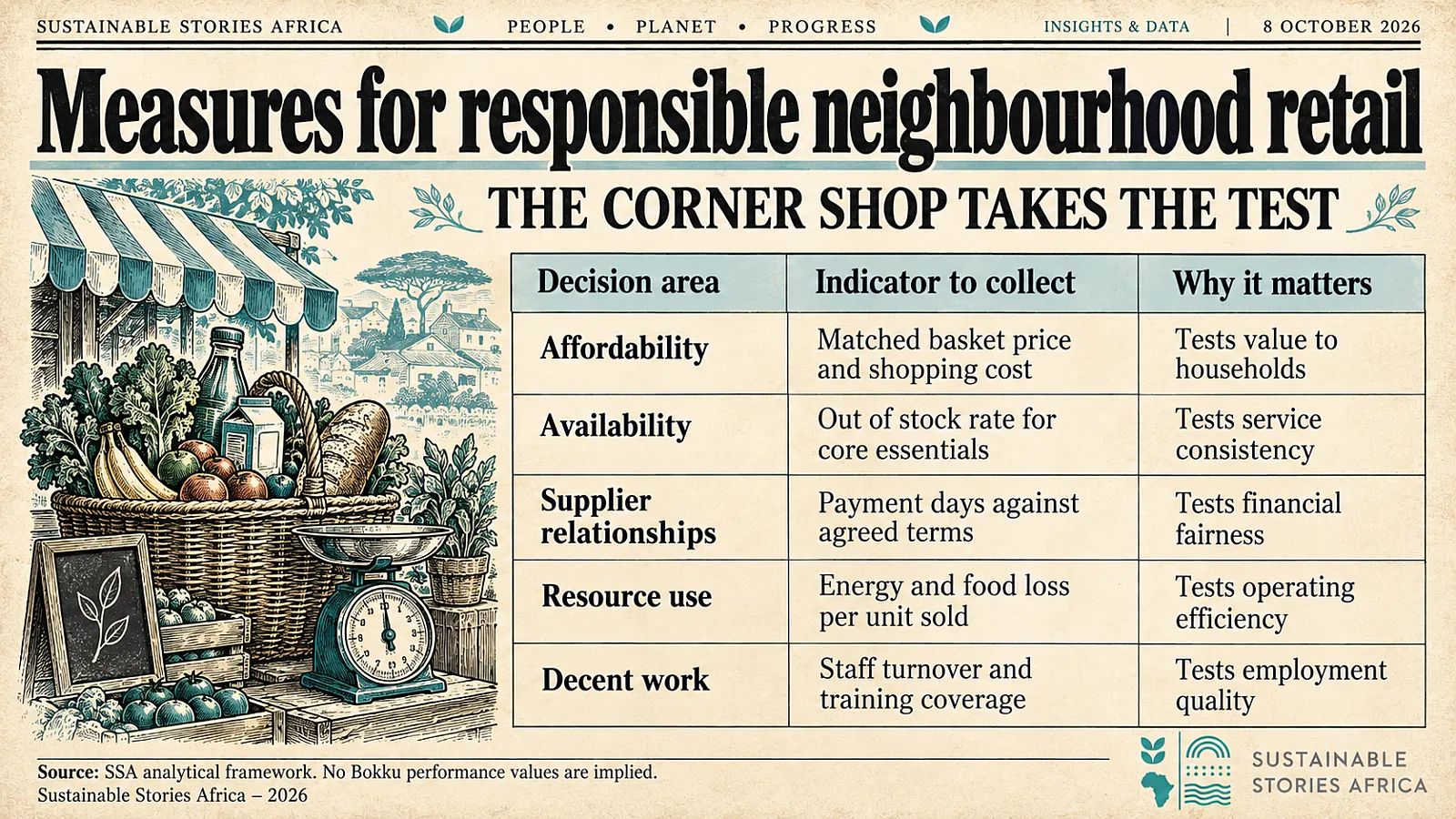
Management should compare stores using consistent definitions, while recognising differences in customer mix and location.
- A new outlet may need time to develop demand. An established branch may face congestion or changing neighbourhood conditions.
- Comparisons should explain those circumstances instead of treating every store as interchangeable.
Retailers can then improve procurement and replenishment based on demand evidence.
- Local suppliers should receive clear specifications and manageable compliance requirements, with support where practical.
- Independent verification becomes particularly useful when a retailer makes public claims about affordability, waste reduction or community impact.
For policymakers, the objective should be a competitive retail market that offers consumers choice.
- Formal chains and smaller traders serve different needs and may coexist.
- Assessing development benefits requires attention to local employment, supplier access and customer outcomes rather than celebrating size alone.
Path Forward – For Responsible Retail Growth
Bokku’s case invites retailers to examine how proximity and cost discipline fit household shopping habits.
The next analytical step is to test affordability and operating performance with comparable data.
Growth can support sustainability when customers obtain dependable value, suppliers receive fair terms and resource use is measured.
Those outcomes would provide stronger evidence than store counts alone.