Nigeria’s oil and gas methane challenge combines wasted resources, climate risk and weak emissions accountability.
APRI’s assessment identifies measurement gaps, fragmented oversight and insufficient investment as barriers to progress.
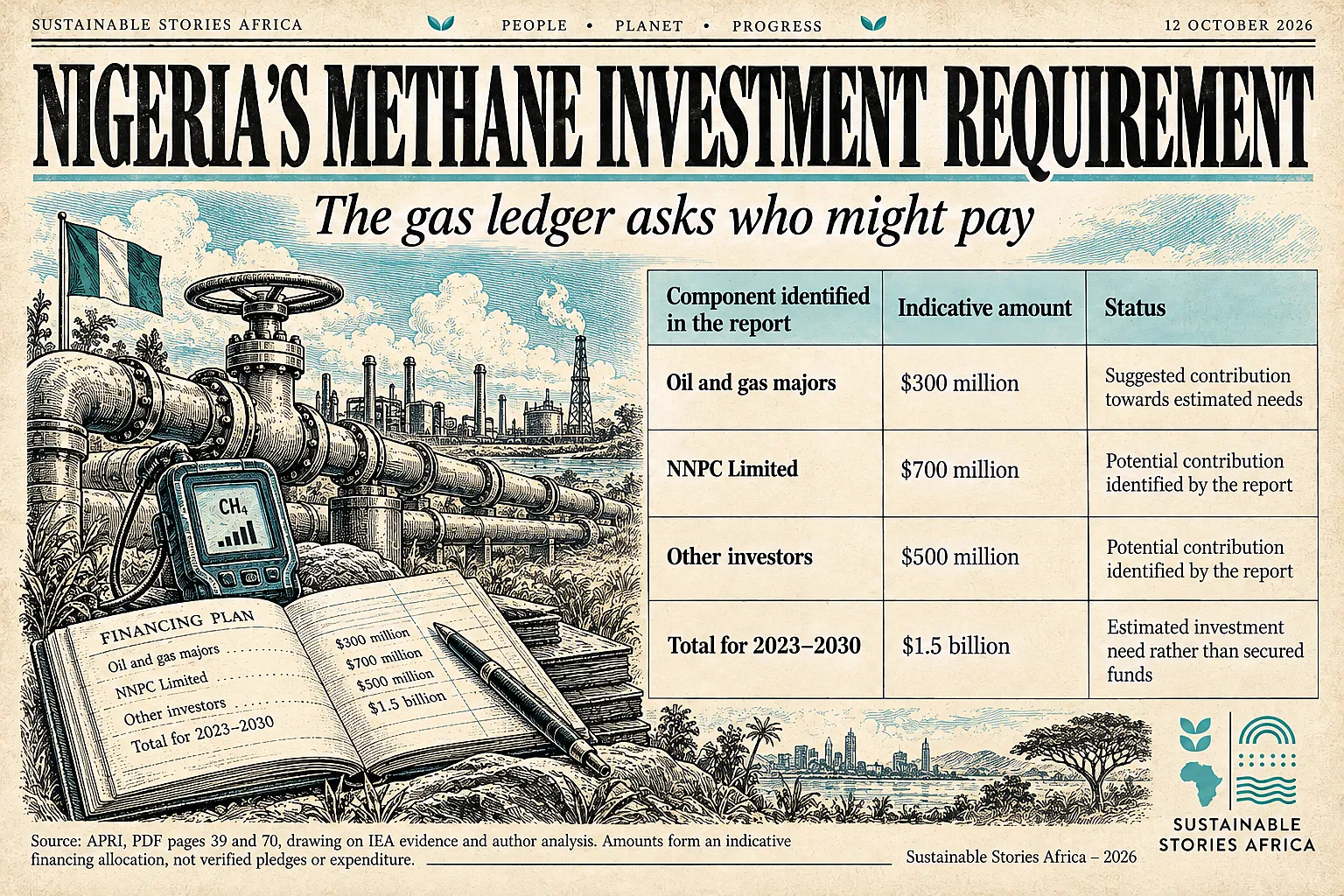
The report estimates a $1.5 billion investment need for 2023 – 2030, while host-community research points to exclusion from mitigation decisions.
Cleaner operations require verified reductions and clearer responsibilities, with community concerns addressed alongside technical and commercial priorities.
Nigeria’s Methane Response Needs Verified Reductions
Nigeria needs stronger measurement, coordinated oversight and targeted investment to reduce methane releases from oil and gas operations.
An August 2025 Africa Policy Research Institute report by Mahmoud Ibrahim Mahmoud finds that policies and technical opportunities exist; however, fragmented responsibilities, weak data systems and financing gaps constrain implementation.
The report estimates $1.5 billion in methane-abatement investment needs between 2023 and 2030.
- It is an estimate for that period, not a funding commitment or an amount confirmed as disbursed.
- It brings a commercial dimension to a climate problem: gas lost through leaks or venting may have value if safely recovered and used.
For host communities, accountability also concerns pollution and participation.
- Their experience should inform mitigation plans and help attribute specific health effects across the wider mix of emissions associated with petroleum operations.
Methane Losses Carry Climate And Commercial Costs
Methane has more than 80 times the warming potency of carbon dioxide over 20 years, according to the scientific evidence cited by APRI.
Reducing releases can therefore limit the near-term warming while improving the efficiency of oil and gas operations.
- That potential does not remove the need to address carbon dioxide and the broader transition away from high-emission systems.
The operational distinctions matter.
- Fugitive emissions escape unintentionally from equipment and infrastructure. Venting releases gas deliberately.
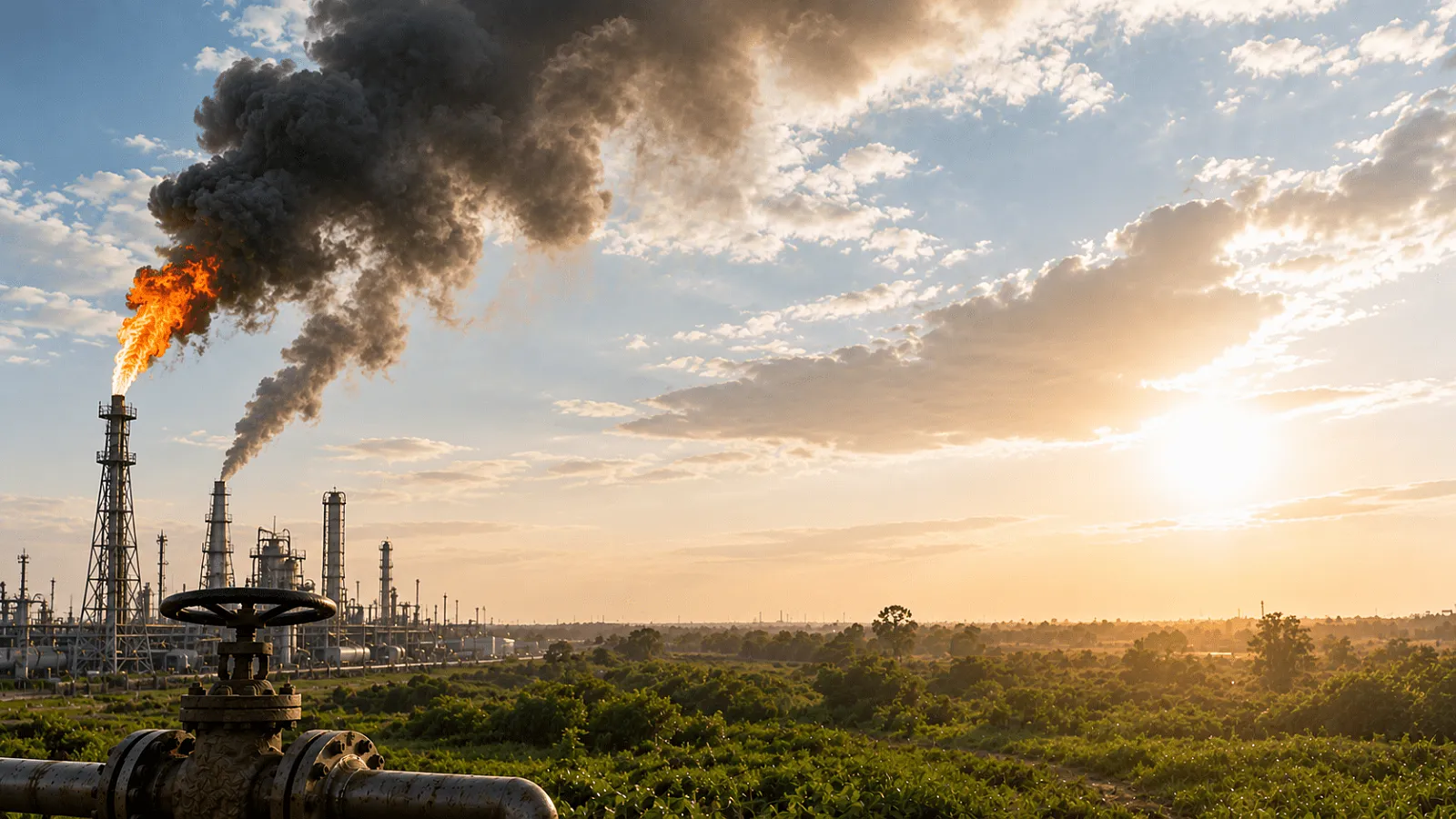
- Flaring burns gas and produces carbon dioxide and other pollutants; incomplete combustion can also leave methane unburned.
These sources require different detection and reduction measures.
Leak detection and repair can address faulty equipment, while vapour recovery and gas-capture infrastructure can reduce other losses.
Cost and commercial return depend on the facility, the volume involved and access to a usable market.
- Describing every intervention as cost-free would obscure the upfront spending and operating capability required.
Fragmented Oversight Weakens Measurement And Public Confidence
APRI’s assessment combines policy mapping, stakeholder consultations, workshops and field research.
- Its detailed fieldwork section covers Bayelsa, Rivers and Cross River after access restrictions altered the original plan.
- This provides qualitative evidence from host communities and operational contexts, rather than a nationally representative emissions survey.
The authors identify overlapping responsibilities among upstream and midstream regulators, environmental institutions and the Ministry of Environment.
- They also describe conflicting timelines across policy frameworks.
- Without agreement on definitions, baselines and reporting requirements, a company can face unclear expectations while the public struggles to judge progress.
Measurement is a central concern.
- Industry self-reporting can differ from independent observations, and APRI calls for stronger monitoring, reporting and verification.
- Satellite information can help identify large emission events, but facility-level follow-up is necessary to investigate sources and confirm corrective action.
- No single observation system provides every answer.
An integrated record should distinguish estimated emissions, directly measured releases and verified reductions.
- It should also identify the methodology and period involved.
- This would make changes easier to interpret and reduce the risk that an improved estimate is incorrectly presented as an actual increase or decrease in emissions.
Community testimony needs similar care.
- Interviewees reported environmental and health problems associated with flaring and petroleum operations.
- The research documents their experiences and concerns; it does not isolate methane as the cause of each condition.
Distinguish methane’s contribution to ozone and climate risk from direct exposure to other pollutants.
Cleaner Operations Can Deliver Multiple Practical Benefits
Recovering gas can improve resource efficiency where equipment and infrastructure make utilisation feasible.
- A project may reduce waste and provide an energy or industrial use product.
- Its climate performance nevertheless depends on actual methane capture, subsequent combustion and the baseline against which reductions are calculated.
Leak detection and repair can also create demand for skilled technicians and monitoring services.
- APRI identifies academic institutions as potential contributors to measurement, research and capacity development, while finding limited resources and engagement.
- Building this capability domestically would strengthen both operational delivery and independent scrutiny.
Host-community involvement could improve the relevance of mitigation programmes.
- Accessible information and a trusted route for reporting concerns would help connect technical decisions with local experience.
- Communities need a response process and opportunities to influence priorities, rather than being informed only after project design is complete.
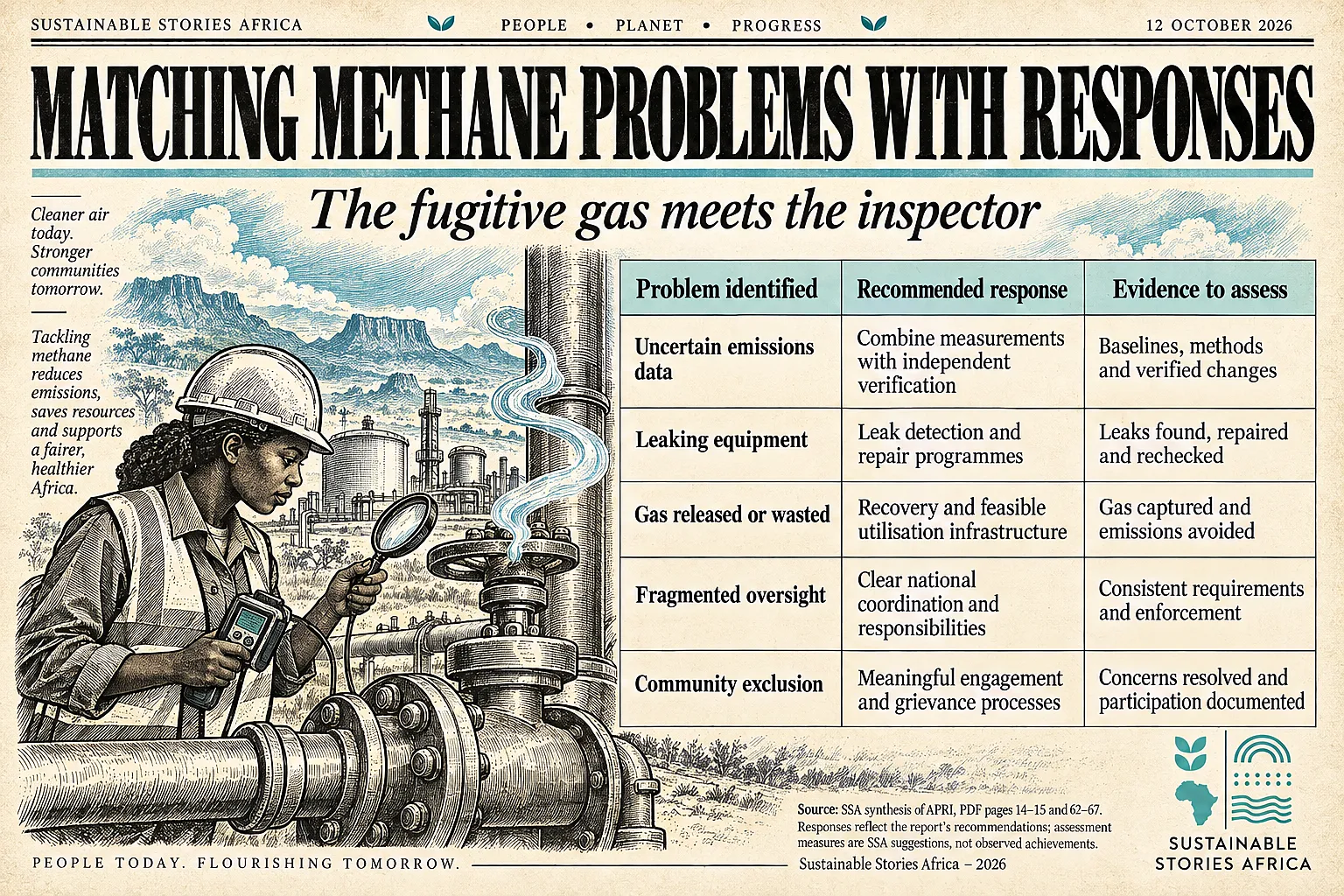
Finance should support this evidence.
- Investors need credible project economics, while climate-linked instruments require trustworthy reductions.
- Carbon-market revenues should be assessed cautiously because eligibility, measurement and market terms determine whether a project can obtain them.
They cannot replace an operator’s responsibility to maintain equipment and meet applicable requirements.
Regulators And Operators Must Publish Measurable Progress
Relevant institutions should agree on a common framework for methane data, responsibilities and implementation priorities.
- APRI recommends a national strategy with clear targets, timelines and financing arrangements.
- The immediate value would be to connect existing responsibilities with consistent operational expectations and transparent reporting. [1]
Operators should identify high-priority leaks and sources, cost the response and document repair or recovery outcomes.
- Projects with credible returns can mobilise commercial finance, while public and development support should address identifiable capacity or infrastructure barriers.
- An investment announcement should remain separate from verified emissions performance.
Public reporting should include unresolved problems and follow-up actions.
- Community representatives, universities and independent technical organisations can help scrutinise results where capacity and access allow.
- This would make methane reduction a continuing operational practice, with accountable progress beyond periodic pledges.
Path Forward – Turning Methane Plans Into Reductions
Nigeria should prioritise credible measurement, practical leak reduction and coordinated responsibilities.
Financing must be linked to feasible projects and verified performance.
Host communities need meaningful participation and responses to their concerns.
Publishing emissions baselines, corrective action and investment delivery would provide a clearer basis for judging whether oil and gas operations are becoming more efficient and less harmful.