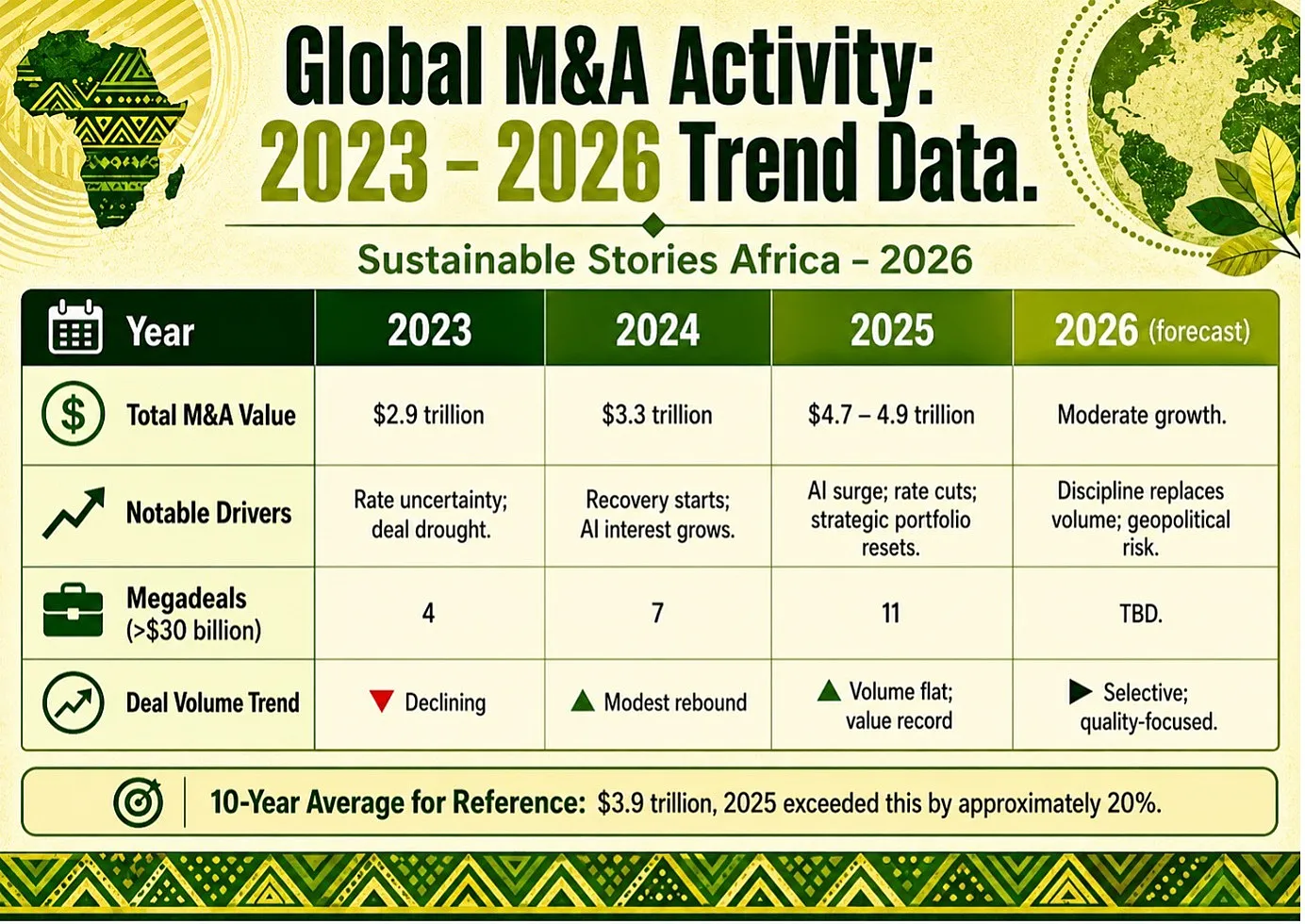
Global M&A activity surged 43% in 2025 to $4.7 trillion, 20% above the 10-year average, driven by AI investment, central bank rate cuts and improving valuations.
However, as 2026 unfolds, a tightening capital pool is reshaping the rules: discipline, selectivity and strategic clarity now determine which deals proceed.
For Africa's dealmakers, corporate acquirers, private equity firms, development finance institutions and regulators, the message is direct: the age of growth at almost any price is over.
A new era of precision-based dealmaking demands higher standards, smarter structures and a sharper focus on value creation.
Capital Discipline Rewrites the Deal Playbook
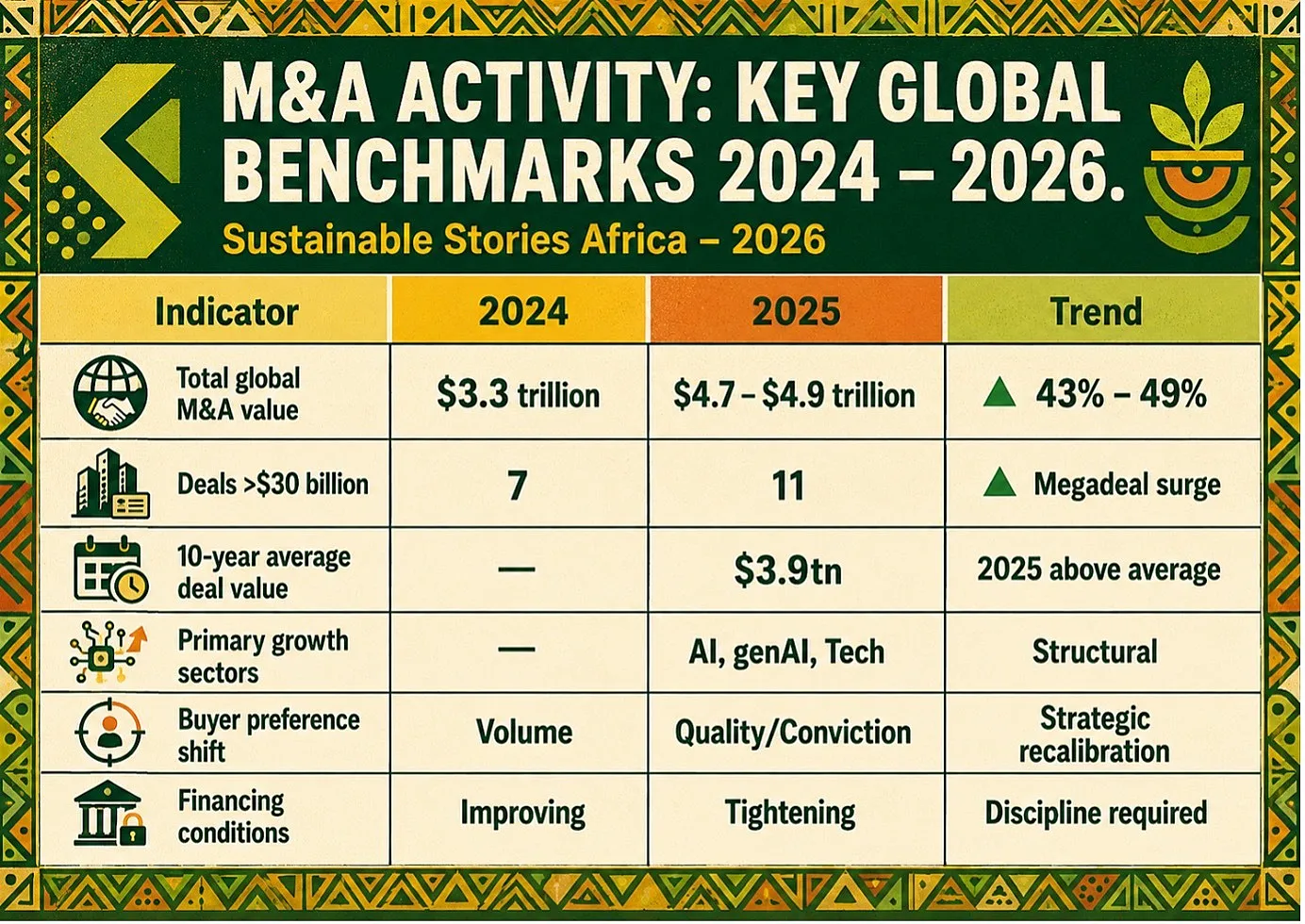
The year 2025 was, by many measures, a record one for global dealmaking. Total M&A value reached $4.7 trillion, according to McKinsey, up 43% from the prior year and 20% above the 10-year average
PitchBook placed the total even higher at $4.9 trillion, calling it a historic high that surpassed 2021's previous peak.
Megadeals, those valued above $30 billion, numbered 11 in 2025, up from 7 in 2024 and 4 in 2023.
However, as 2026 begins, the dealmaking environment has grown markedly more selective.
Tighter capital, costly debt and cautious lenders are forcing acquirers to prioritise quality over volume.
In Africa and across the Global South, where infrastructure deficits, energy transitions and digital transformation demand sustained M&A investment, understanding how global deal dynamics are shifting is not optional; it is strategic.
Precision Is the New Growth Strategy
Capital is no longer cheap, and the days of financial engineering are numbered.
Higher interest rates and reduced availability of debt have constrained leverage, placing direct emphasis on whether target businesses are operationally resilient, revenue-generating and structurally sound.
The result is a highly curated deal market, in which buyers are walking away from competitive auctions and pursuing proprietary transactions or creative structures like earnouts and staged investments.
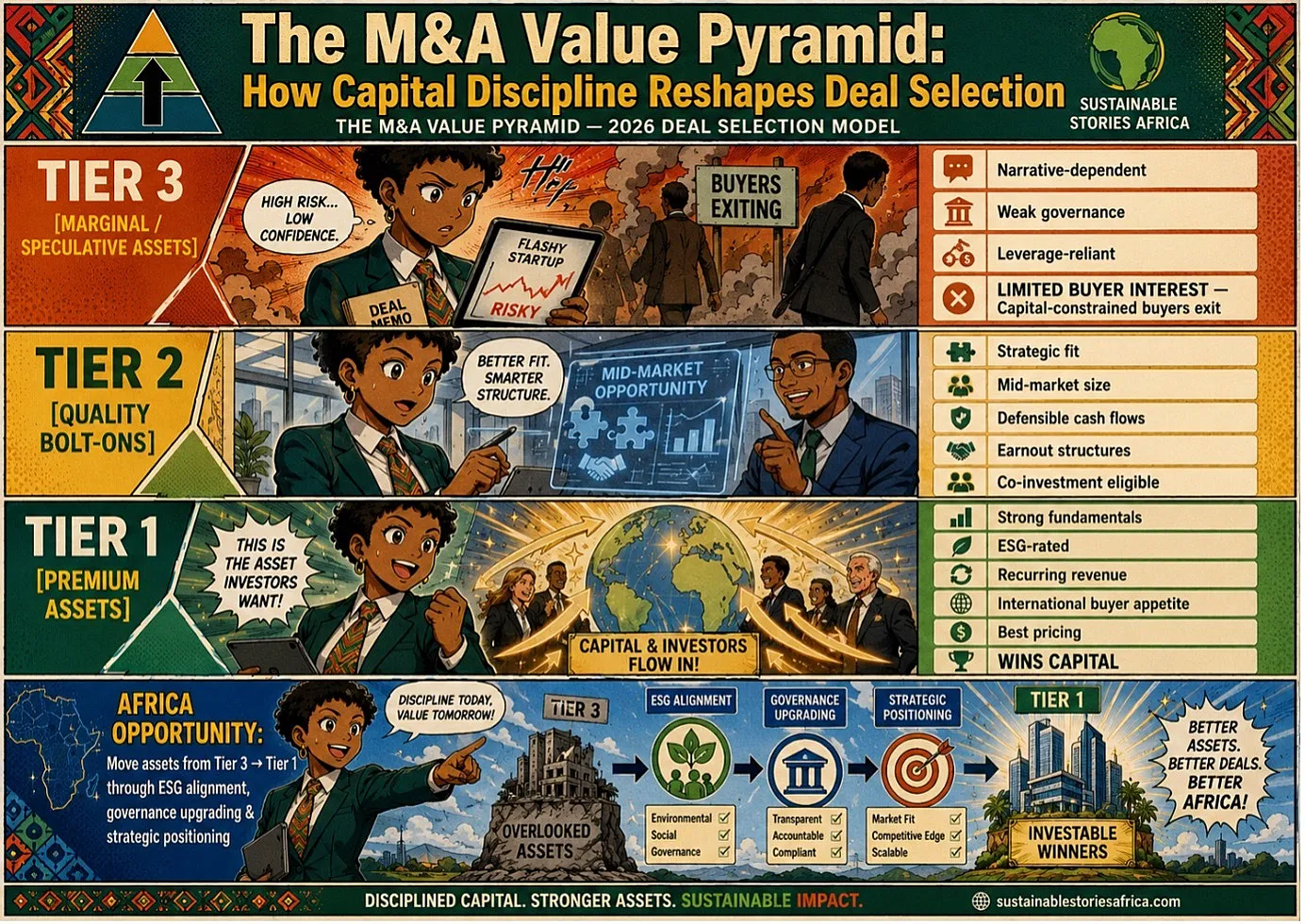
This shift directly affects African markets. Infrastructure assets, renewable energy projects and financial inclusion platforms have long attracted M&A interest.
In a capital-constrained environment, assets with strong cash flows, recurring revenues and clear sustainability credentials will attract the most attention, and the highest valuations.
 |  |
The Anatomy of a New Dealmaking Order
The 2025 M&A boom defied early-year pessimism. Volatility driven by the Trump administration's sweeping tariff orders in the first half of the year temporarily derailed activity; however, a strong rebound in the second half, anchored on AI-driven investment and rate-cut expectations, powered the full-year surge.
For the first time since 2021, dealmakers had reason for optimism.
However, 2026 is different.
- Capital is more expensive.
- Lenders are more cautious.
- Exit markets are improving but uneven.
- Private equity firms face a liquidity backlog.
Capital tied up in existing investments freezes redeployment options, and only deals that meet higher return thresholds are the focus.
For Africa, this creates a dual reality.
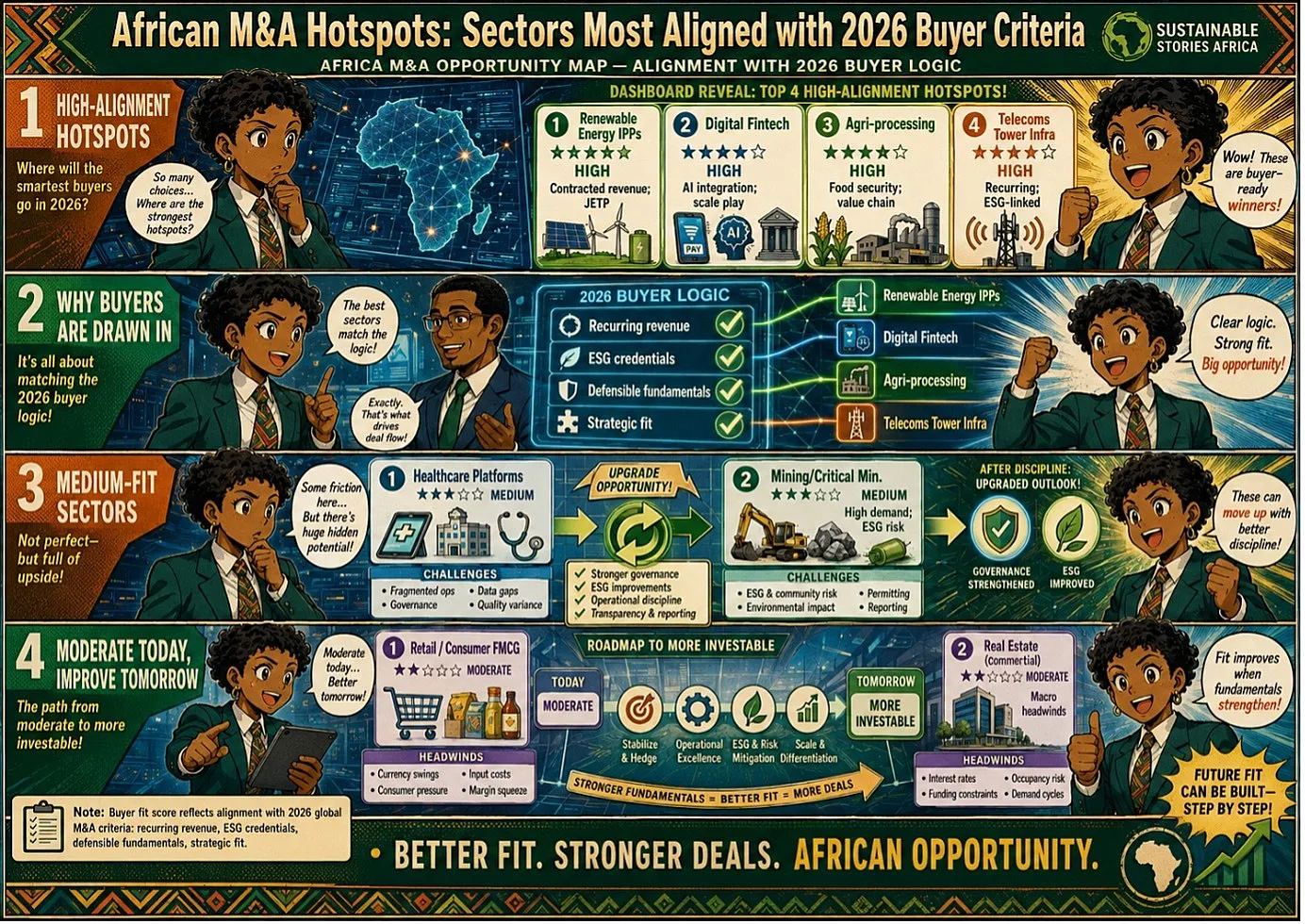
- On one hand, assets with genuine strategic value, such as clean energy infrastructure, digital financial services, and agricultural supply chains, remain attractive.
- On the other hand, the era of accessing capital based on growth narratives alone is over.
African issuers and deal sponsors must now meet international buyers at the threshold of institutional discipline: credible governance, verifiable cash flows, clear ESG positioning, and post-merger integration capability.
The strategic implications run deeper. In an era of "precision-based investment," African buyers and sellers must invest in deal preparation, from robust financial modelling to ESG compliance frameworks, well before entering transaction processes. The cost of being unprepared has risen sharply.
What Disciplined Dealmaking Unlocks for Africa
The shift toward quality over volume, while demanding, is not without opportunity.
In Africa, where capital efficiency matters profoundly, given currency risks, limited capital market depth and high cost of financing, a discipline-first approach to M&A could generate more sustainable outcomes than the boom-era pursuit of scale.
Infrastructure assets with long-term contracted revenues, such as toll roads, solar IPPs, and water utilities, align precisely with what international acquirers now seek: resilience, recurring income and defensible fundamentals.
ESG-rated assets in Africa's energy transition pipeline are increasingly meeting this bar.
The African Development Bank's $25 billion climate finance commitment and the Just Energy Transition Partnerships (JETPs) in South Africa, Senegal and Indonesia are creating investable pipelines with the kind of structural backing that appeals to post-2025 deal standards.
Deals that clearly articulate value creation, beyond financial returns, embedding community impact, employment generation and climate alignment, are also increasingly resonant with global LPs and strategic buyers subject to ESG mandates.
This is where Africa's inherent sustainability story becomes a deal asset, not just a development narrative.
What African Deal Professionals Must Do Now
The playbook for African corporates, PE firms and DFIs in this environment is precise:
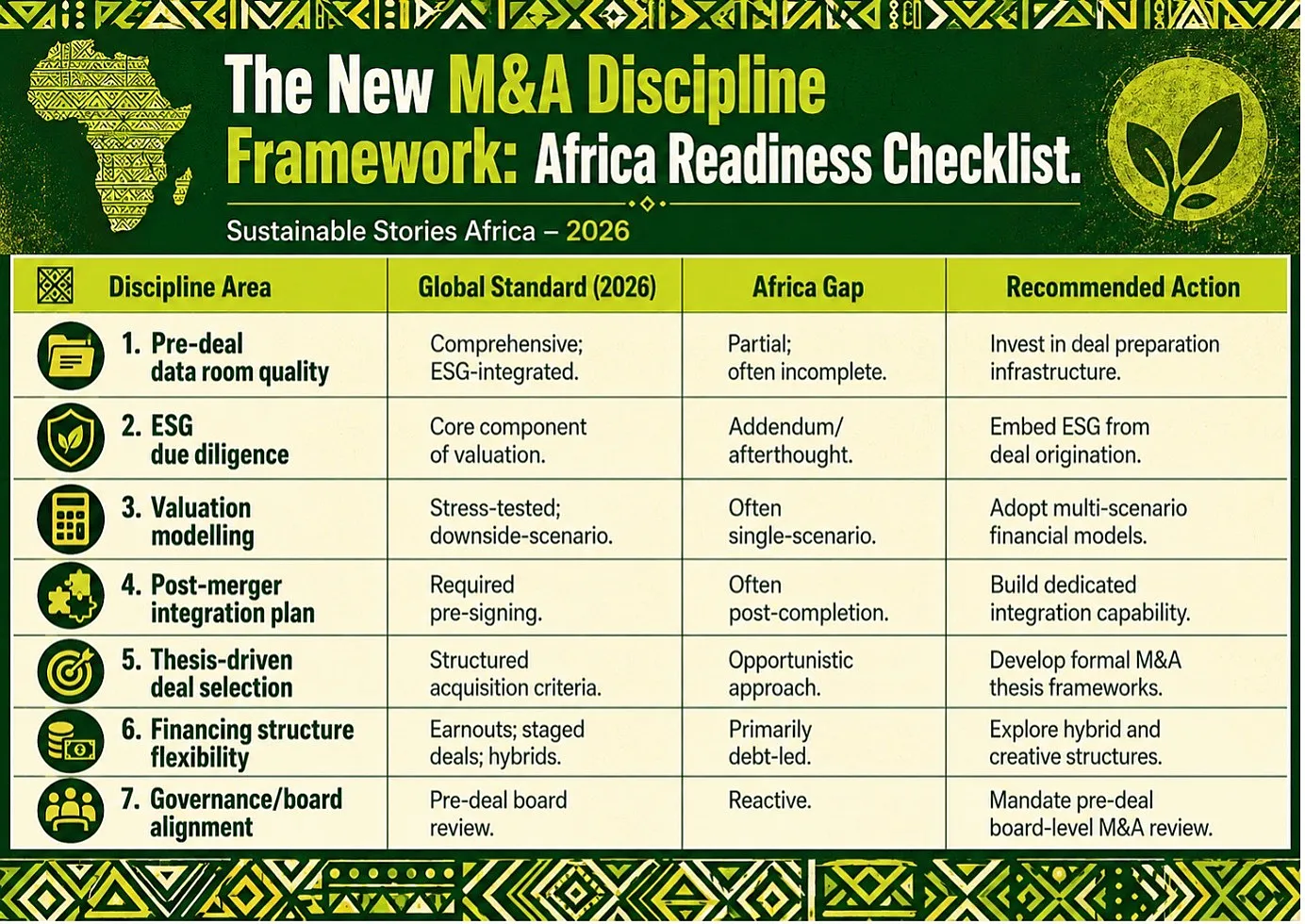
- Strengthen pre-deal data rooms. Buyers are applying higher scrutiny. Financial records, ESG performance data, supply chain assessments and governance structures must be comprehensive, current and audit-ready.
- Adopt thesis-driven transaction strategies. African acquirers should move away from opportunistic dealmaking toward structured, thesis-guided target selection, whether to fill capability gaps, enter adjacencies or consolidate fragmented sectors.
- Stress-test valuations against tighter financing. With debt more expensive, deal models that relied on leverage must be revisited. Equity-heavy structures and hybrid instruments are gaining ground.
- Invest in post-merger integration capability. Deals are being measured not just on completion but on value delivery. African companies that build integration functions, such as talent management, technology alignment, and governance integration, will protect deal value more effectively.
- Engage ESG from day one. ESG due diligence is no longer a compliance addendum. It is now a core component of deal valuation, financing terms and buyer appetite.
Path Forward – Africa Must Lead on Deal Quality
Global M&A is entering an era defined not by volume but by conviction. African deal professionals, policymakers and regulators who embrace this shift — building institutional-grade deal infrastructure, prioritising strategic fit and grounding transactions in genuine value creation — will attract the capital that others cannot.
The tools are available. The standards are rising. Africa's time to lead on deal discipline is now.