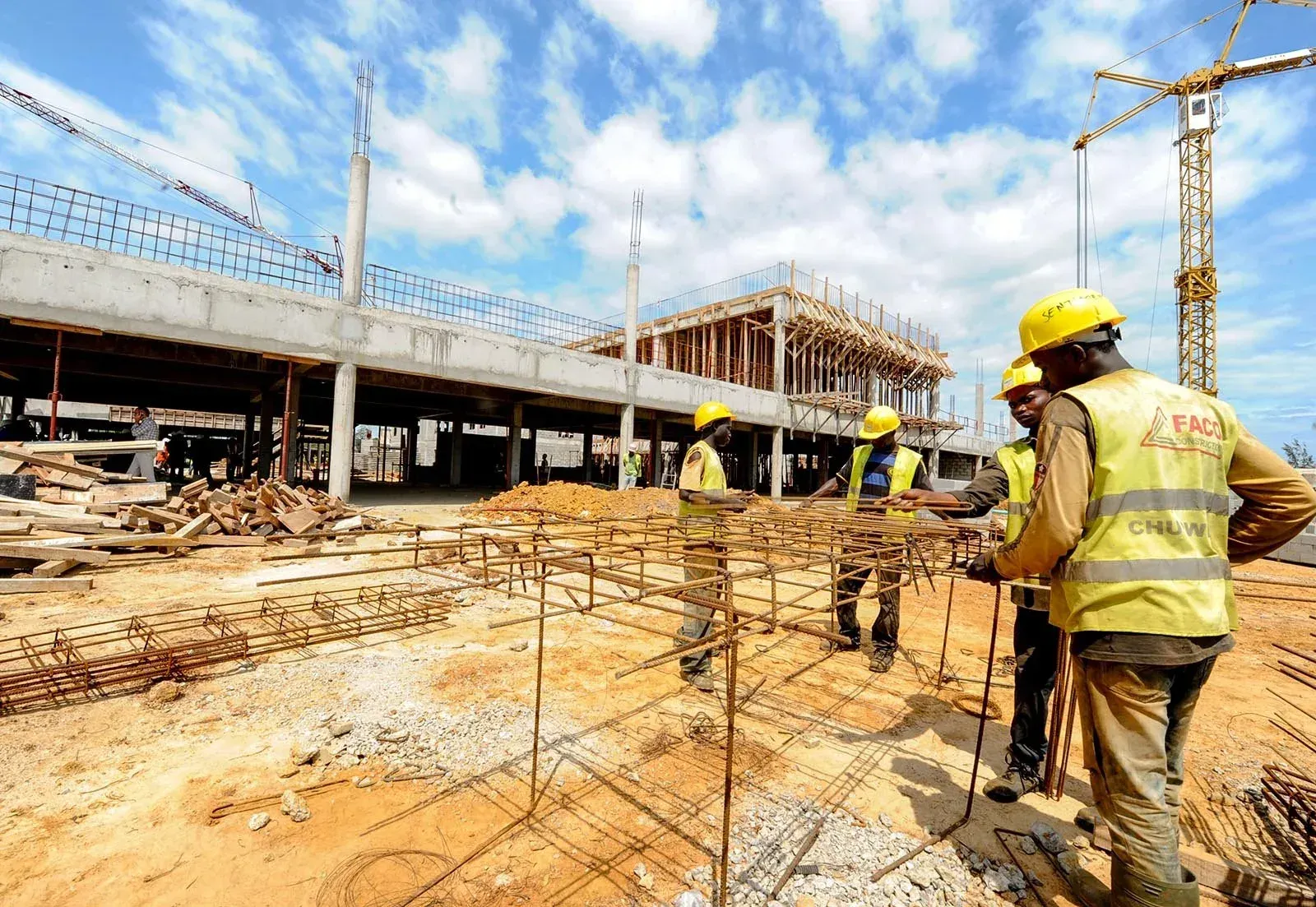
Major capital projects rarely fail on the day a dashboard turns red. They often begin to deteriorate while schedules, budgets and board updates still look reassuring.
A McKinsey study based on interviews with more than two dozen senior executives identifies seven leadership disciplines that could help African infrastructure owners protect investment value, community trust and long-term service delivery.
Building Better Starts With Asking Harder Questions
Across Africa, infrastructure investment is expected to deliver more than concrete, steel and installed machinery.
Communities need reliable electricity, safer transport, productive industrial assets and water systems that work.
However, owners can spend enormous sums on construction without receipt of public and commercial outcomes used to justify the investment.
In April 2026, McKinsey & Company published An Executive’s Survival Guide to Capital Projects, drawing on interviews with more than two dozen senior executives whose collective experience includes hundreds of billions of dollars in complex energy, industrial and infrastructure developments, primarily in North America and beyond.
Their central lesson is immediately relevant to African governments, utilities, development finance institutions and private sponsors:
- Successful delivery depends on whether senior leadership can identify weak assumptions before those assumptions become expensive realities.
The evidence is qualitative leadership research, not a statistical performance audit of African projects.
Green Status Reports Can Conceal Serious Risks
The most dangerous project indicator may be a permanently green one.
- Forecasts can look stable because project teams repeatedly revise their baselines, defer recognising delays or describe uncertain forecasts as commitments.
- A chief executive who receives reassuring monthly summaries may consequently discover procurement, labour or permitting risks only after remedies become costly.
McKinsey’s executives advocate progressing early to a credible Level 3 engineering and schedule baseline, followed by independent assessments of expected cost, productivity, sequencing and contingencies.
- Independent assessment matters not because internal professionals are invariably wrong but because even competent teams experience optimism bias.
In one LNG development described in the source, external reviewers challenged assumptions about concrete productivity.
Initial resistance eventually gave way to mitigation.
- The review's contribution was not a dramatic cancellation; it was to make an emerging schedule problem visible while it remained manageable.
For an African power plant or road concession, this describes governance that welcomes inconvenient evidence before financing, contractors and communities become locked into avoidable commitments.
Seven Leadership Disciplines Define Stronger Delivery
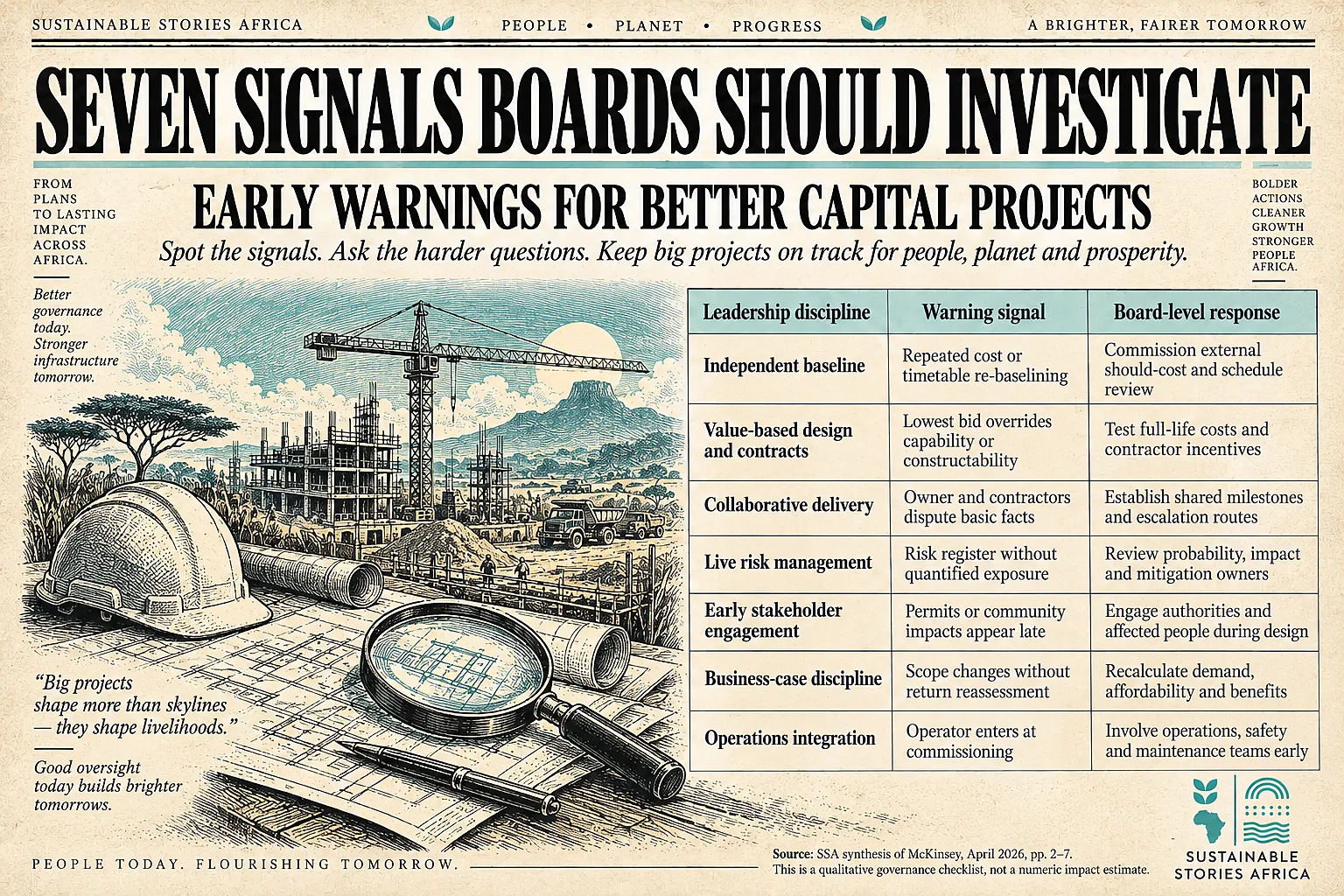
The report presents seven connected disciplines, not a single technical fix.
- First, validate costs and schedules independently.
- Second, design projects and contracts for long-term value rather than the lowest headline bid.
- Third, build collaborative owner–contractor teams with clear accountability.
- Fourth, manage risk daily rather than maintaining a static register.
- Fifth, engage regulators and communities early.
- Sixth, anchor decisions in the continuing business case.
- Seventh, integrate the future operator from the beginning.
These principles matter where foreign-exchange movements affect imported equipment, land acquisition creates social obligations, and a project’s financial success depends on customers being able to use the asset after handover.
- An affordable bid that later attracts claims or unreliable services may become more expensive than a well-structured contract that supports operational performance.
Project Discipline Protects People And Returns
For citizens, stronger governance should be measured in dependable services rather than construction photographs.
- An electricity project creates value when households and industries receive usable, affordable power.
- A logistics corridor succeeds when it reduces journey times, improves trade reliability and protects surrounding communities.
- A water scheme only fulfils its purpose when water remains safe and available after commissioning.
Integrating operators into design decisions can reduce the risk of expensive retrofits, weak maintenance arrangements and assets that are technically complete but commercially underperforming.
Bringing regulators and affected communities into planning can identify resettlement, environmental and land-use challenges before they interrupt work.
- These outcomes reinforce environmental, social and governance performance and protect investors from stranded or contested infrastructure.
The analysis also warns against overreliance on contracts as shields.
- A fixed-price contract cannot replace owner capability or eliminate upstream design defects, interface failures and disagreements.
- The project company still needs engineers, commercial specialists, safety leaders and delivery executives who understand how an asset will create value.
Strong oversight is consequently an investment in prevention, not simply another administrative cost.
Africa-focused risk analysis should also consider the source of each project's capital.
- Borrowing in foreign currency to build assets that earn mostly local-currency revenues introduces an exposure that construction dashboards may miss.
- The same is true when project viability rests on tariff increases consumers cannot afford.
- A rigorous owner should show how these financial assumptions interact with technical readiness and the timing of public benefits.
- Procurement governance and anti-corruption controls are integral, because a technically successful project can still destroy public value through inflated prices or weak competition.
The discipline extends to climate resilience.
- A road, port or transmission line designed by outdated weather assumptions may become costly to maintain long after the construction contractor has left.
- Whole-life thinking makes decisions about strengthening drainage, siting or maintenance arrangements an investment choice rather than a late-stage environmental add-on.
Make Independent Challenge Part Of Governance
African project sponsors can institutionalise four changes.
- First, require an independently tested baseline before major commitment, with explicit assumptions on inflation, foreign exchange, construction productivity and permits.
- Second, ask management to present ranges rather than a single optimistic date or cost.
- Third, link stage-gate approvals to updated viability, environmental and social safeguards, and operator readiness.
- Fourth, appoint accountable executives to resolve major interface risks, not merely reporting them.
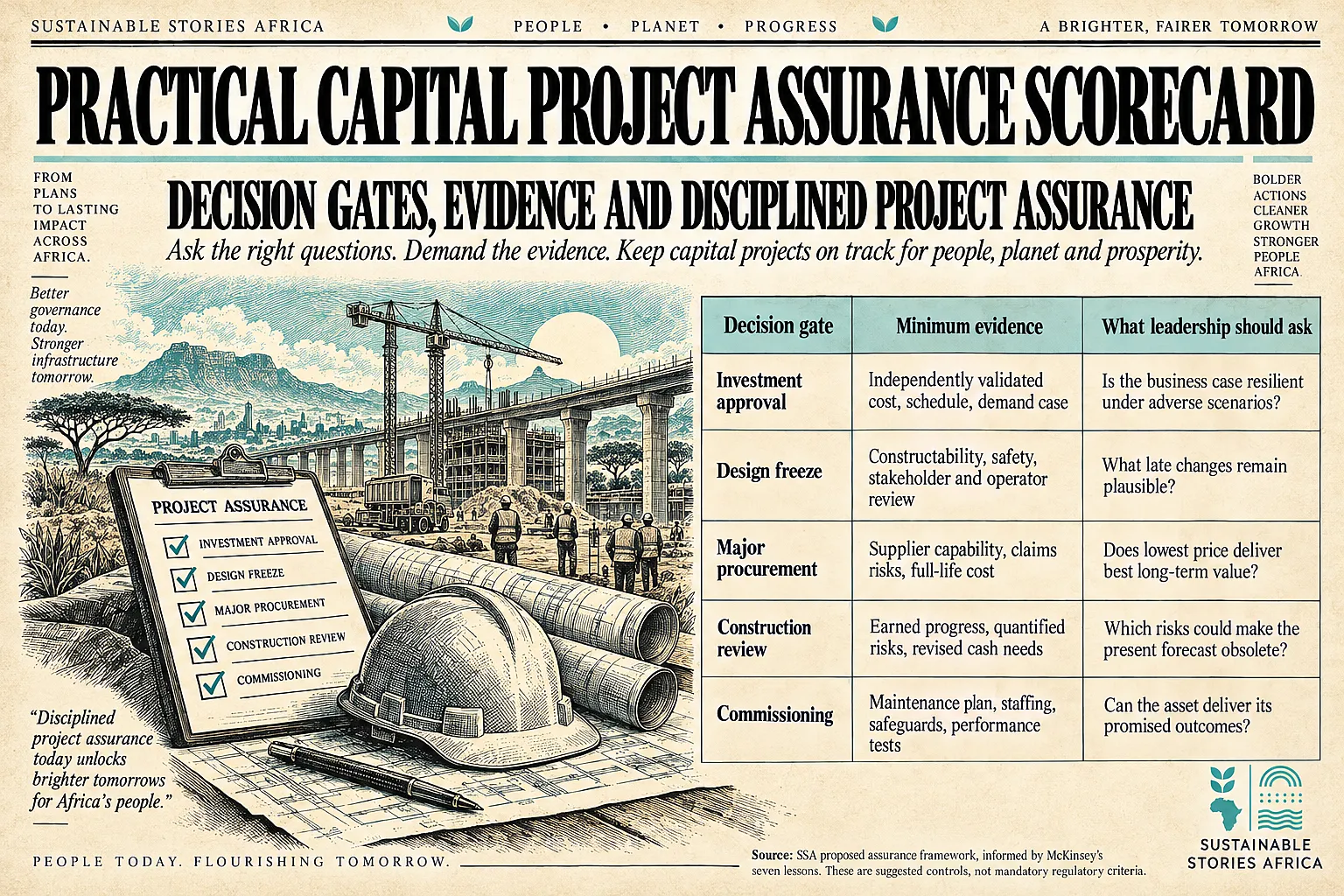
Reporting should combine delivery indicators with outcome measures: electricity supplied, plant availability, water quality, logistics throughput, safety performance, local jobs and grievances resolved.
Boards should protect whistleblowing and bad-news escalation because a culture of punishment encourages concealment.
Public-sector procurement units and financiers can reinforce this by publishing credible milestone changes and explanations without compromising legitimate commercial confidentiality.
Path Forward – Deliver Assets That Fulfil Public Promises
Africa’s capital-project challenge is not only to mobilise financing; it is to turn financed plans into durable services.
Independent validation, transparent relationships, credible risk ownership and early operator involvement should become routine board expectations.
Judge success against the benefits promised to users and communities.
Executives who confront uncomfortable facts early give projects a better opportunity to deliver those benefits.