Africa is home to 12 of the world's 20 fastest‑growing economies in 2025, yet the continent remains off‑track to meet key Sustainable Development Goals by 2030. Financial stress, data blind spots and persistent social inequalities are eroding the promise of Agenda 2063 and the SDGs.
A new Africa Sustainable Development Report warns that progress on health, gender equality, decent work, oceans and global partnerships is real but far too slow, with wide gaps in financing, jobs, and statistical capacity threatening to leave millions behind.
Fragile Gains, Slipping Deadlines, Rising Risks
Africa has made measurable progress on 12 of 17 SDGs, but at the current pace, most countries will miss the 2030 targets, even as the continent is projected to outpace global economic growth.
In 2025, 12 of the world's 20 fastest‑growing economies are in Africa. However, jobless growth, high informality and debt stress are deepening structural vulnerabilities, according to the 2025 Africa Sustainable Development Report.
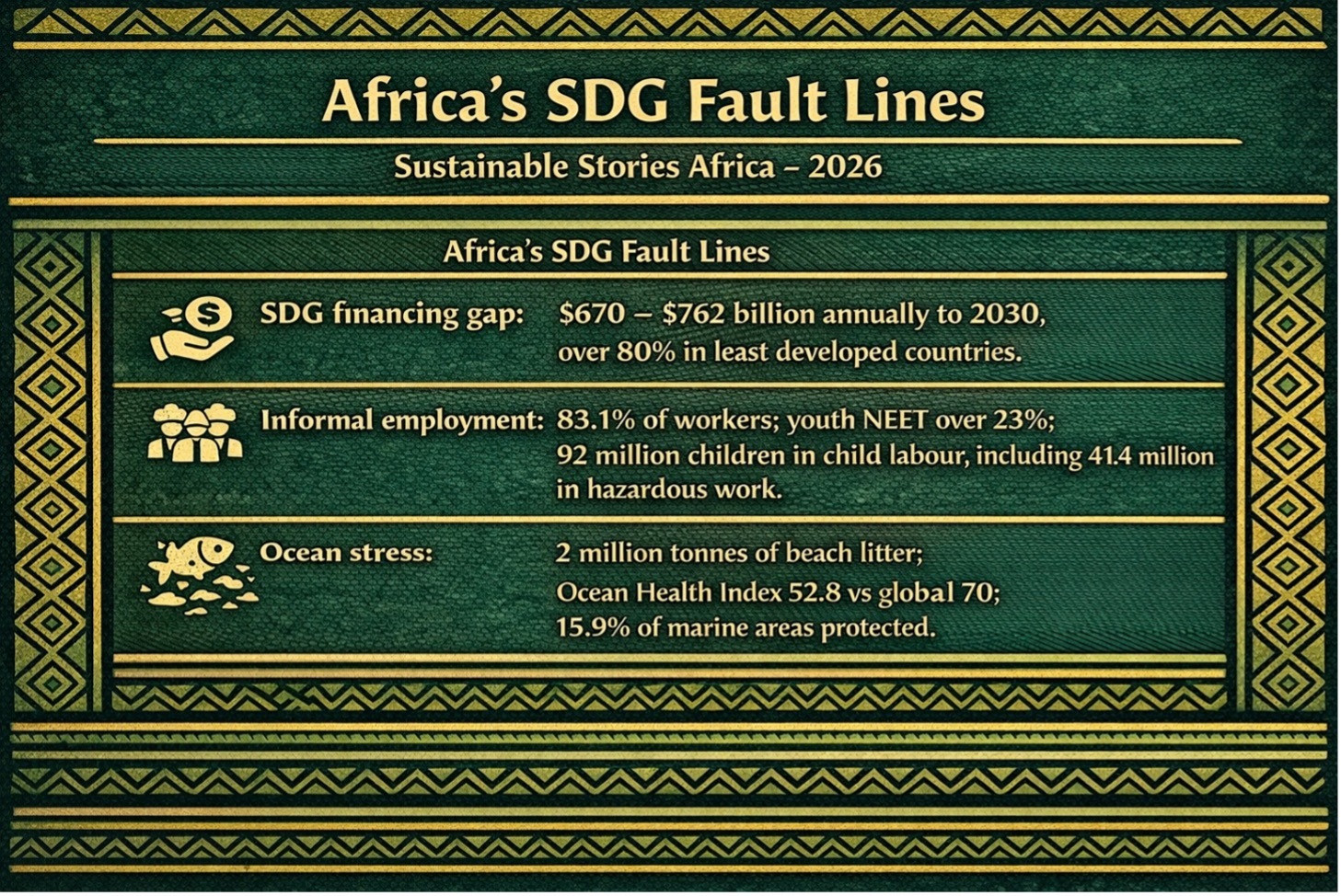
A forthcoming AfDB–ECA analysis estimates that Africa will face an annual SDG financing gap of between $670 and $762 billion through 2030, with over 80% of this shortfall concentrated in least developed countries.
Government revenue ratios remain below global averages. Foreign Direct Investments (FDIs) reduced by 3.4% to $52.6 billion in 2023, and debt servicing increased by 20%, climbing from 8% of revenues in 2015 to 9.6% in 2022.
Progress With A Price Tag
Life expectancy in Africa has increased by three years since 2015, maternal mortality has reduced by 7.4%, and skilled birth attendance has increased by 22.49%, from 61.8% to 75.7%. Child mortality is declining, and there have been notable gains against HIV, tuberculosis and malaria, underscoring what targeted investments and policies can deliver.
However, most countries are unlikely to achieve SDG 3 on health by 2030, as public health spending on average averages 7% of national budgets. This is well below the 15% benchmark, and health systems confront climate‑driven shocks, workforce shortages and high out‑of‑pocket costs.
Structural inequities and geographic disparities continue to shape who gets treated, who is protected and who is left out of the health transition.
Inequality, Informality and Ocean Stress
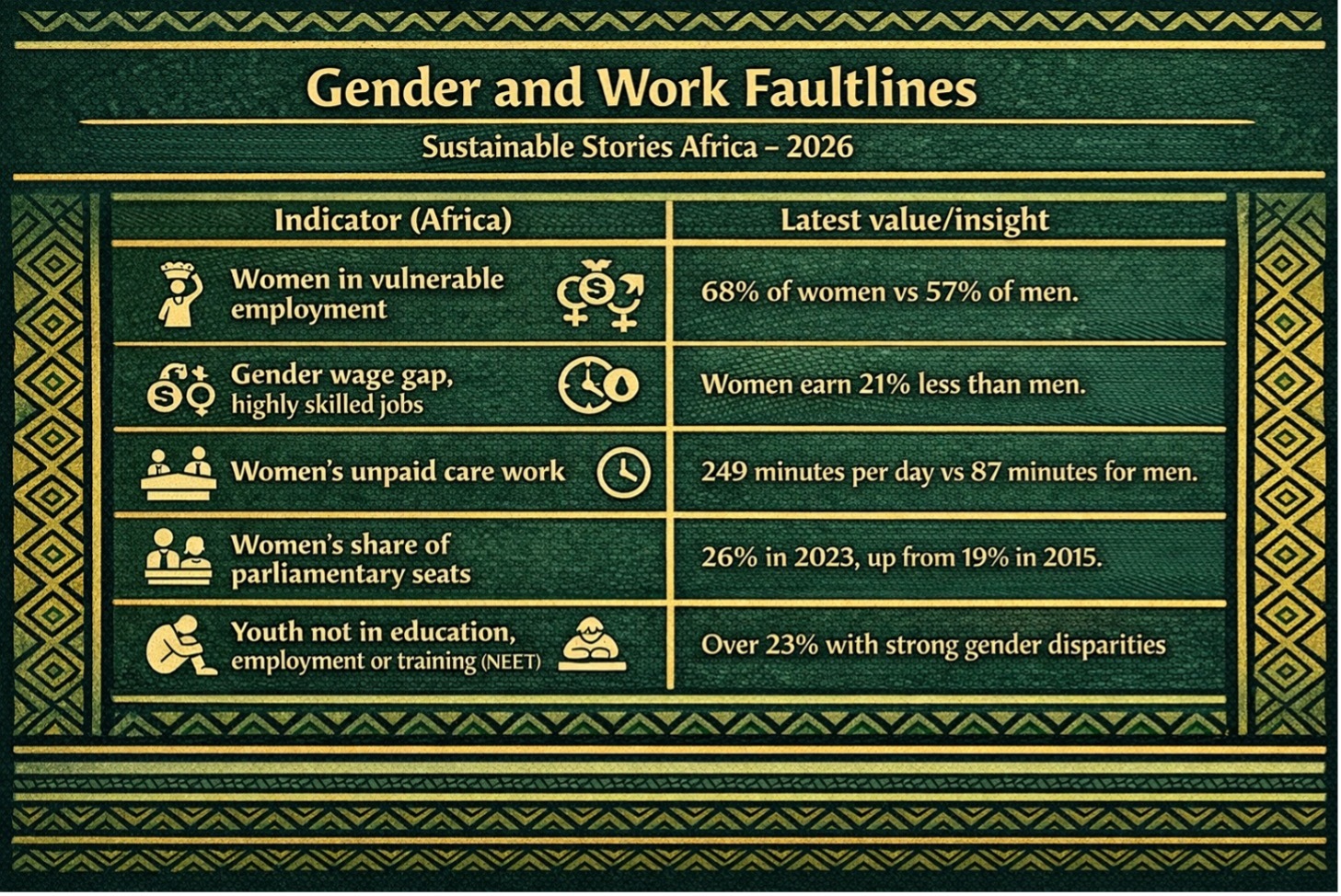
On gender equality, progress remains uneven. Only 15 African countries have strong legal frameworks supporting women's economic rights, while nearly 60% lack adequate data to track progress. Women now hold 26% of parliamentary seats, an increase of 36.84% in comparison to 19% in 2015. However, they still account for 68% of vulnerable employment and earn 21% less than men in highly skilled roles.
Harmful practices persist at scale. Around 130 million women and girls were married off before age 18 by 2023. Africa hosts 80% of the world's most child-marriage-affected countries, and 34.6% of girls and women aged between 15 and 49 have undergone female genital mutilation.
Women also carry a disproportionate care burden, averaging 249 minutes of unpaid work daily versus men's 87 minutes, constraining labour participation and income mobility.
Economic growth has failed to deliver decent work. Per-capita GDP growth slowed to 0.7% in 2023, 83.1% of workers are still in the informal sector, and over 23% of youth remain without education, employment and training.
Ocean health reflects a similar strain. Beach litter exceeded 2 million tonnes in 2022, and the Ocean Health Index averages 52.8. Despite expanding marine protection, overfishing, urbanisation and weak enforcement continue to erode Africa's blue economy.
Gender And Work Faultlines
| Indicator (Africa) | Latest value/insight |
|---|---|
| Women in vulnerable employment | 68% of women vs 57% of men. |
| Gender wage gap, highly skilled jobs | Women earn 21% less than men. |
| Women's unpaid care work | 249 minutes per day vs 87 minutes for men. |
| Women's share of parliamentary seats | 26% in 2023, up from 19% in 2015. |
| Youth not in education, employment or training (NEET) | Over 23% with strong gender disparities. |
Desire: Rewiring Finance, Skills and Digital
The report highlights a different trajectory in which Africa closes its SDG gap by aligning growth with equity, climate resilience and institution‑building.
That pathway hinges on massive investments in education and skills at all levels, from early childhood to higher education, to unlock the demographic dividend and connect young Africans to decent work and entrepreneurship.
A new social and economic compact would also accelerate women's economic empowerment by reforming discriminatory laws, scaling survivor‑centred responses to violence, expanding childcare and care infrastructure, and closing digital and financial inclusion gaps.
Prioritising ecosystem‑based approaches in ocean governance, expanding marine protected areas with real enforcement, and investing in blue‑economy value chains could convert coastal vulnerability into a resilient growth frontier.
Africa's SDG Fault Lines
From Rhetoric To Remittances Reimagined
To shift from incremental change to transformation, African governments must mobilise domestic revenue, reform subsidies, and deploy blended finance, green bonds and diaspora capital, while pressing for a global financial architecture that lowers borrowing costs. Leveraging the AfCFTA, regional infrastructure and public–private partnerships are to lift productivity, diversify economies and scale MSMEs.
Robust, interoperable data systems underpin this shift. Statistics offices, digital and geospatial tools, and AI can track who benefits. With time before 2030 limited, aligning youth, climate and governance under SDG 17 will decide whether growth becomes prosperity.
Path Forward – Shared Prosperity, Measurable Results
African leaders are under pressure to deliver faster growth with fairer outcomes by investing in universal health coverage, women's rights, youth skills and blue-economy resilience, backed by stronger domestic resource mobilisation and reformed global finance.
Institutional strength, anti-corruption efforts and scaled digital infrastructure are framed as non-negotiable for managing debt, jobs and climate risk.
New commitments emphasise interoperable data systems, deeper South–South cooperation and platforms such as the AfCFTA to mobilise long-term, climate-smart capital.
If realised, these priorities could convert Africa's demographic surge and natural assets into inclusive, measurable development.