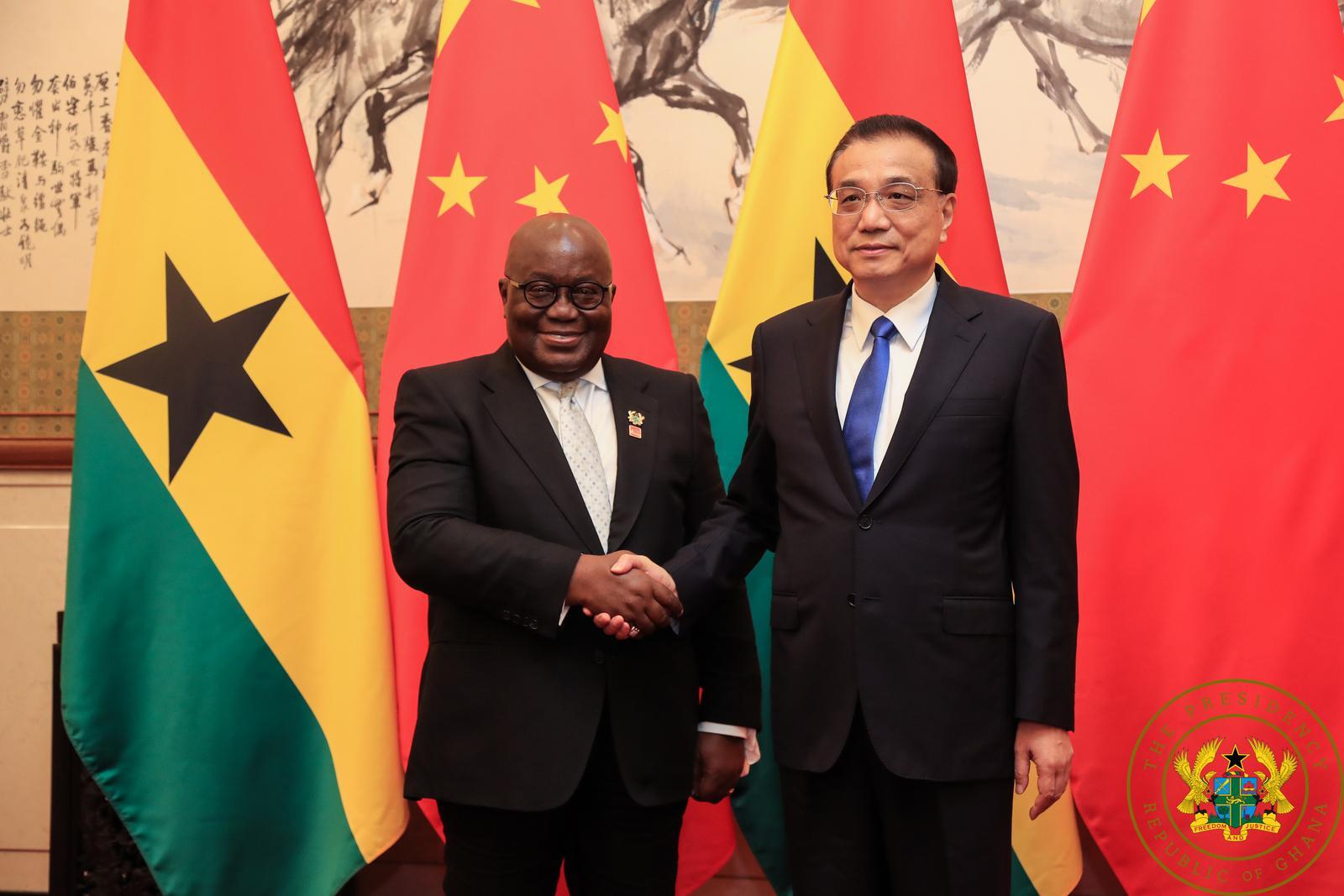
China has become Ghana’s biggest bilateral source of green-aligned finance, helping fund energy and industrial projects that now shape the country’s low-carbon ambitions. But the deeper question is whether this money can build systems, rather than just assets.
A new policy brief says the next phase of Ghana’s green growth will depend on stronger institutions, clearer monitoring, and a shift from infrastructure delivery to technology absorption, local ownership, and industrial capability.
China finance, Ghana choices
Ghana’s green transition is increasingly being framed not only by climate targets, but by industrial ambition. The ACCPA brief presents China’s Forum on China-Africa Cooperation, or FOCAC, as the main external framework shaping that ambition through finance, infrastructure support, and technology cooperation.
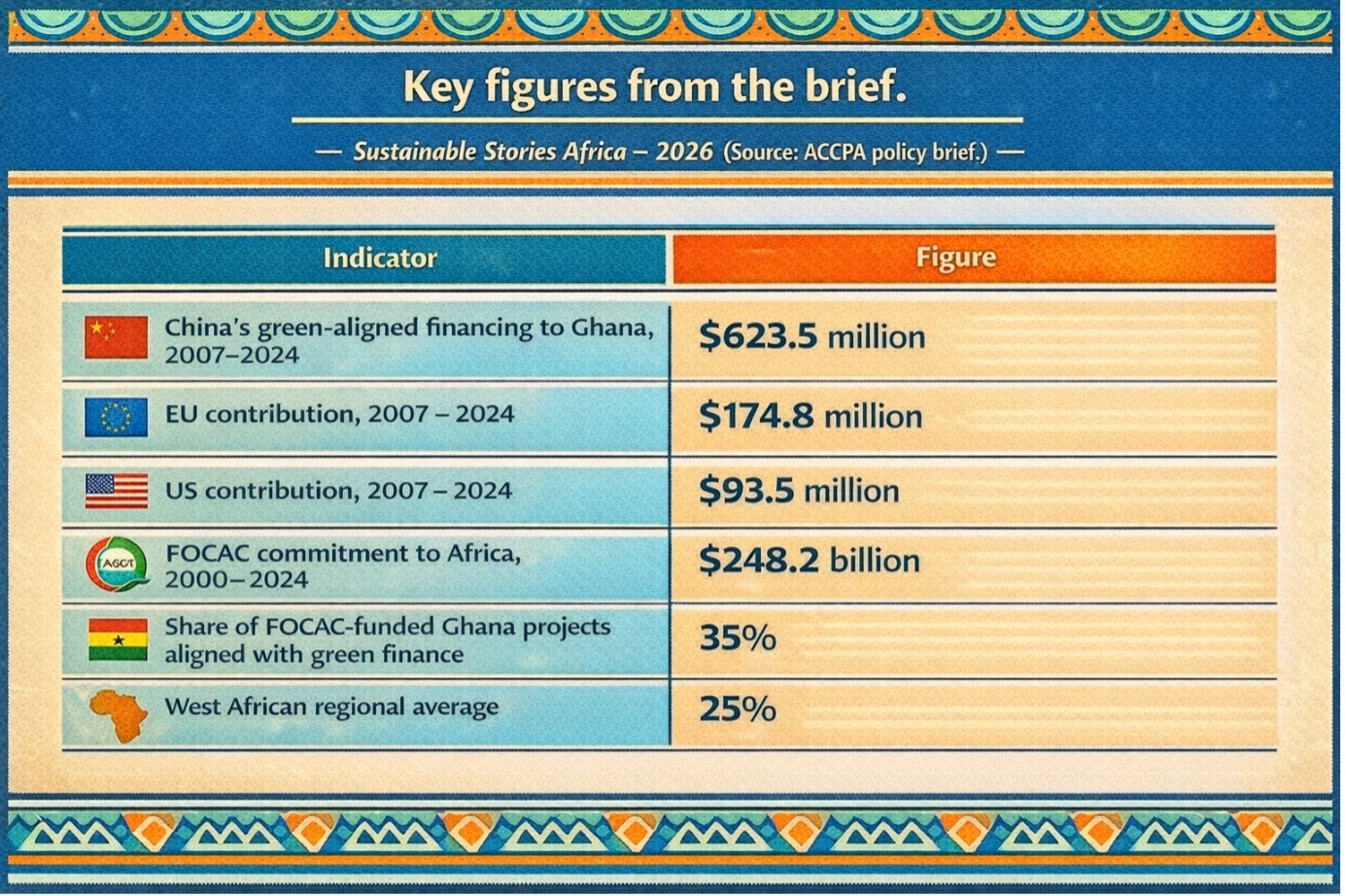
Between 2007 and 2024, China disbursed more than US$623 million for green-aligned infrastructure in Ghana, ahead of the European Union and the United States.
That matters because Ghana is trying to align growth with climate resilience through the Ghana Beyond Aid Charter, its Nationally Determined Contributions under the Paris Agreement, and the 24-Hour Economy initiative.
The policy brief’s core argument is simple: international partnerships can help close the finance and technology gap, but only if Ghana governs them well enough to turn financing into long-term industrial value.
Big capital, bigger questions
The headline number is compelling. China’s cumulative FOCAC-linked financial commitment to Africa reached $248.2 billion between 2000 and 2024, while Ghana alone received more than $623.5 million in green-aligned Chinese financing between 2007 and 2024.
According to the brief, that is well above the EU’s $174.8 million and the US’s $93.5 million over the same period.
However, the brief does not treat scale as success. It says Chinese financing has been concentrated in large energy and infrastructure projects, while public information on project outcomes, financing terms, and sustainability impacts remains thin.
In other words, Ghana has attracted capital; however, it still lacks the monitoring architecture needed to prove whether that capital is delivering broad-based green development.
From dams to factories
The policy brief maps a relationship that has matured from traditional aid into strategic industrial cooperation.
Flagship projects include the Bui Hydroelectric Dam at $790 million, the Sunon Asogli Power Plant at $580 million, the Ghana-China Industrial Park in Tema at $320 million, and a Green Industrial Complex in Kumasi at $200 million.
Chinese finance is structured mainly through concessional loans and policy bank instruments, particularly from China Exim Bank and China Development Bank.
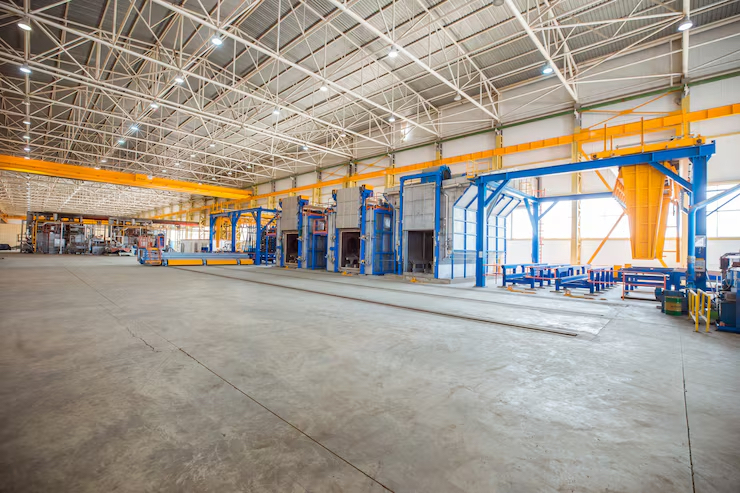
A notable shift appears between 2022 and 2024. The brief says financing has moved toward industrial capacity building, eco-industrial parks, and clean energy manufacturing, including solar panel assembly plants with an annual output of 400MW, EV assembly hubs worth $150 million, and battery storage facilities worth $120 million.
It also says 35% of FOCAC-funded projects in Ghana are more green finance aligned.
This is above a West African average of 25%.
That shift is important for a country seeking more than imported infrastructure. It suggests Ghana wants to climb the value chain, from consuming green equipment to producing it.
The human-capital story is just as significant.
The brief highlights the China-Ghana Renewable Energy Technology Transfer Project, the Ghana-China Technology Transfer Centre, and a $150 million Ghana-China Climate Technology Centre.
It also points to the Tema Green Industrial Park, established in 2019, where energy-efficient systems are said to produce 40% lower emissions than conventional industrial zones. The park is expected to support up to 300,000 jobs, while EV component production is positioning Ghana as a lithium-ion battery hub in West Africa.
What success could actually look like
If these arrangements work as intended, the gains go well beyond cleaner electricity. Ghana could build stronger domestic expertise in green standards, smart grids, low-carbon manufacturing, emissions control, and industrial environmental management.
That would make green growth less dependent on imported know-how and more rooted in Ghanaian firms, technicians, and institutions.
The opportunity is also strategic. A country that combines renewable energy investment with technology localisation, industrial parks, training systems, and supplier development can position itself as a manufacturing and export node, not merely a project host.
That is the real promise underneath the brief: not just greener assets, but a greener industrial base.
Fix the systems behind the money
The brief is clearest when it turns to what is missing.
- It flags weak transparency around loan terms and project agreements, limited local agency involvement, and the absence of centralised monitoring and evaluation.
- It recommends a dedicated Green Industrial Development Unit inside the Ministry of Trade and Industry, a formal green technology transfer framework, a Ghana-China Green Industry Training Institute, a digital project monitoring system, and a Green Industry Innovation Fund to help SMEs adopt cleaner technologies.
- It also calls for a blended Green Industrial Development Fund, a Ghana-China Green Industry Alliance, sector-specific technology transfer centres, stronger private-sector participation, and environmental performance criteria in co-financing agreements.
The logic is practical: Ghana does not simply need more capital; it needs better-governed capital with measurable developmental spillovers.
Path Forward – Building Systems, Not Just Green Infrastructure
Ghana’s next green-growth test is institutional, not rhetorical. The country already has access to capital, partnerships, and a pipeline of industrial projects; what it now needs is transparent monitoring, stronger inter-agency coordination, and binding frameworks that turn finance into technology absorption, local jobs, and accountable outcomes.
The broader lesson for African markets is clear: foreign green finance works best when it strengthens domestic systems. Ghana’s experience suggests that the winners in the next phase of climate-aligned development will be the countries that negotiate for skills, standards, data, and industrial capability, not just infrastructure.