Malaysia is trying to solve a problem that African markets know well: how to turn sustainability ambition into a financing language that banks, investors and regulators can actually use.
Its proposed taxonomy does not just classify green activities. It tries to price transition, recognise nature and social risks, and align local rules with regional and global capital flows.
Why Malaysia’s Taxonomy Matters for Africa
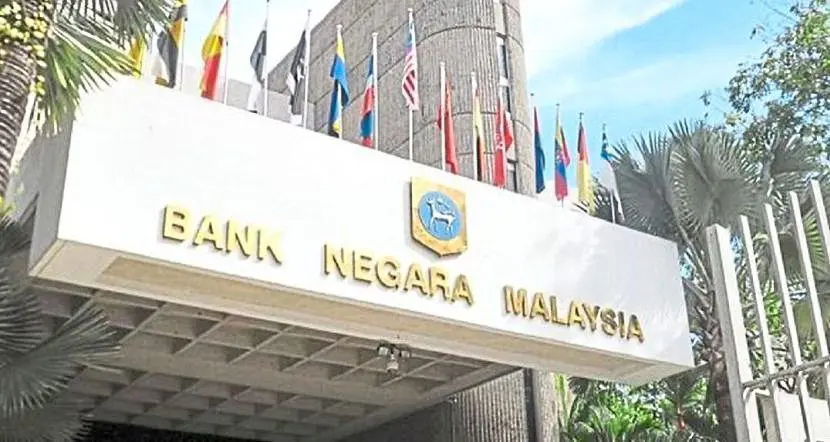
Malaysia’s proposed taxonomy arrives at a useful moment for African markets. Bank Negara Malaysia and the Securities Commission Malaysia, working through the Joint Committee on Climate Change, are developing a unified national taxonomy that builds on earlier frameworks and invites market feedback by 14 April 2026.
The aim is not only domestic clarity, but interoperability with the ASEAN Taxonomy and other international systems.
That is the part African policymakers and financiers should pay attention to. The document treats taxonomy not as a branding exercise, but as financial infrastructure: a shared classification system that can reduce compliance burdens, facilitate cross-border capital flows, and strengthen safeguards against greenwashing.
For African economies, balancing development needs, transition financing gaps, export exposure and uneven data capacity, that framing is powerful.
It suggests that a taxonomy works best when it is not merely strict but also usable; not only climate-focused but also connected to nature, labour, communities and the real architecture of finance.
Four Lessons From Malaysia – Africa's Taxonomies Must Move Beyond Aspiration
Malaysia's evolving sustainable finance taxonomy offers Africa four lessons it cannot afford to ignore. Since 2021, expanding market maturity, investor expectations, and sustainability risks have pushed Malaysian regulators beyond climate to encompass adaptation, nature, and social issues, demanding more quantitative and technical classification tools.
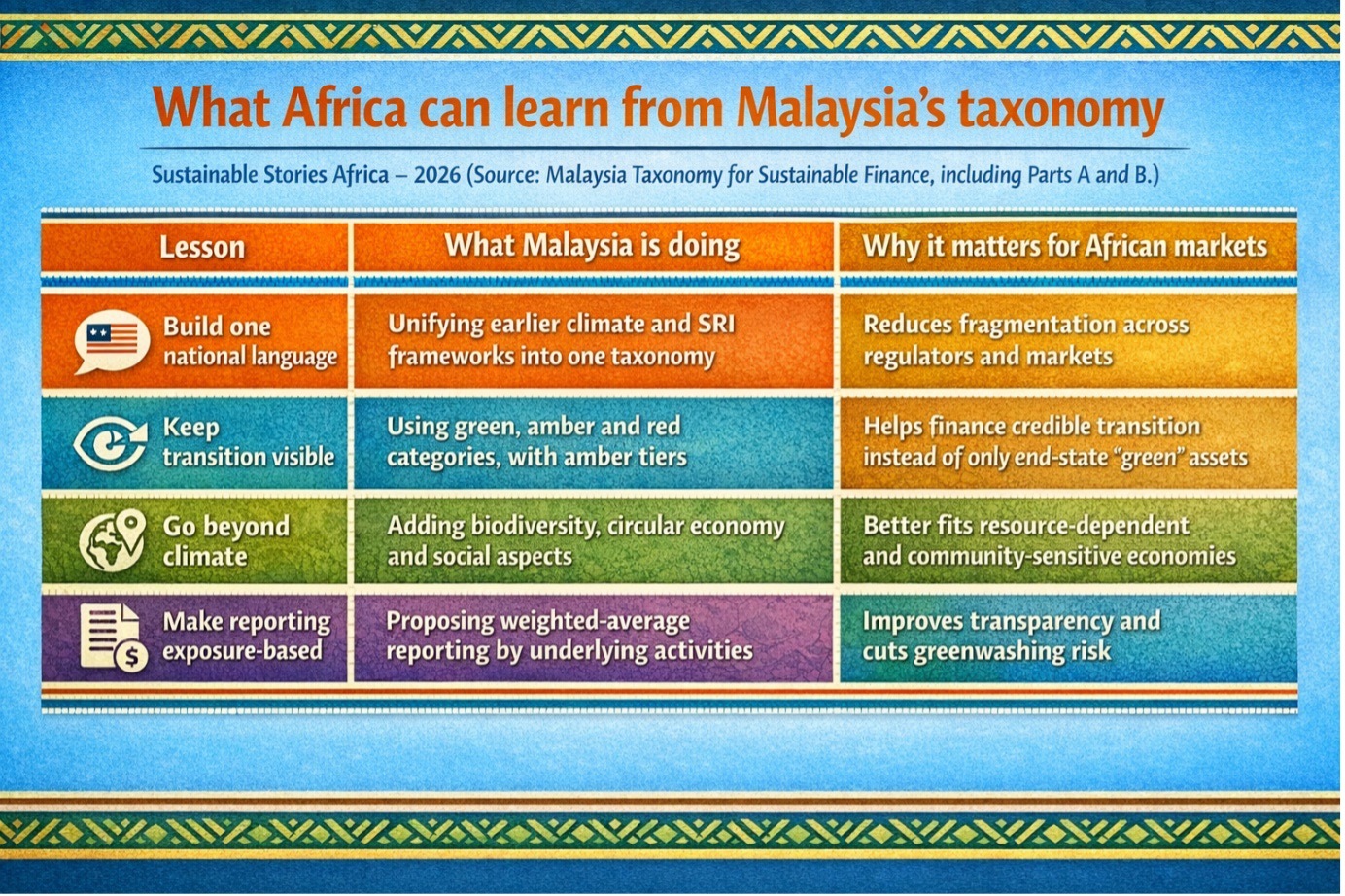
- The first lesson is directional – principles-based frameworks cannot remain aspirational indefinitely. Markets need measurable, technical thresholds to function credibly, and Malaysia's shift from its Climate Change and SRI Taxonomy frameworks toward a consolidated technical system reflects that commercial reality.
- The second lesson is about transition honesty – Malaysia's taxonomy retains the ASEAN green, amber, and red architecture, including amber tiers that recognise transitional progress rather than treating every non-green activity as an automatic failure. African markets with carbon-intensive but economically critical sectors need exactly that structured nuance.
- The third lesson is scope – Climate alone is insufficient. Malaysia explicitly incorporates biodiversity, healthy ecosystems, resource resilience, circular economy principles, and social dimensions, including human rights, labour conditions, and community impacts, into its taxonomy design.
- The fourth lesson is pragmatism – A taxonomy that ignores data constraints, SME capabilities, and mixed portfolios will not function in practice. Malaysia's consultation process, such as addressing phased implementation, reporting feasibility, and proportional support, treats pragmatism as a design principle, rather than a design weakness. Africa must do the same.
Interoperability Starts With Common Market Language
Malaysia's taxonomy proposal makes one architectural argument with particular force: interoperability must be built in from the start, not retrofitted later.
Alignment with the ASEAN Taxonomy, covering climate mitigation, climate adaptation, healthy ecosystems and biodiversity, and circular economy and resource resilience, reduces compliance burdens and keeps cross-border finance accessible, while domestic adaptation preserves local relevance.
For Africa, the lesson is direct. Capital does not respect national boundaries. African sovereigns, banks, funds, and corporates increasingly interact with global lenders, DFIs, and private investors who require clear sustainability alignment.
A taxonomy that cannot communicate with other systems becomes a local filing exercise rather than a capital-raising instrument.
Malaysia's design principle, regional comparability and local relevance working together, not competing, is precisely the architecture that Africa's sustainable finance frameworks need to adopt.
Regional anchors like the African Development Bank's frameworks provide a starting point; the task is building coherently from them.
Amber Is Not Failure – It Is Where African Transition Finance Must Begin
Malaysia's taxonomy rejects purity in favour of nuance, and Africa should take note. The ASEAN-linked classification system distinguishes green activities from amber transition activities and red watchlist activities, with amber reflecting multiple gradations of progress rather than a single holding category.
A complementary ASEAN Transition Finance Guidance further assesses the credibility of entity-level transition plans.
For African markets still industrialising, expanding energy access, and formalising sectors that cannot turn fully green overnight, this architecture matters enormously.
A taxonomy that recognises only already-green activities will look clean on paper but fail to mobilise finance where transition is actually occurring. Malaysia's model offers a better route: classify ambition honestly, demand remedial action where harm exists, and create a credible pathway from amber to green.
The real-economy stakes reinforce the argument. A joint Bank Negara Malaysia-World Bank estimate projects that partial ecosystem collapse could cost Malaysia 6% of its annual GDP by 2030.
Social risks, the document notes, damage asset quality, trigger project delays, and weaken investor confidence.
For African markets, taxonomies that ignore nature and social dimensions do not merely under-report risk; they actively misprice it.
Report What You Finance, Not What You Label
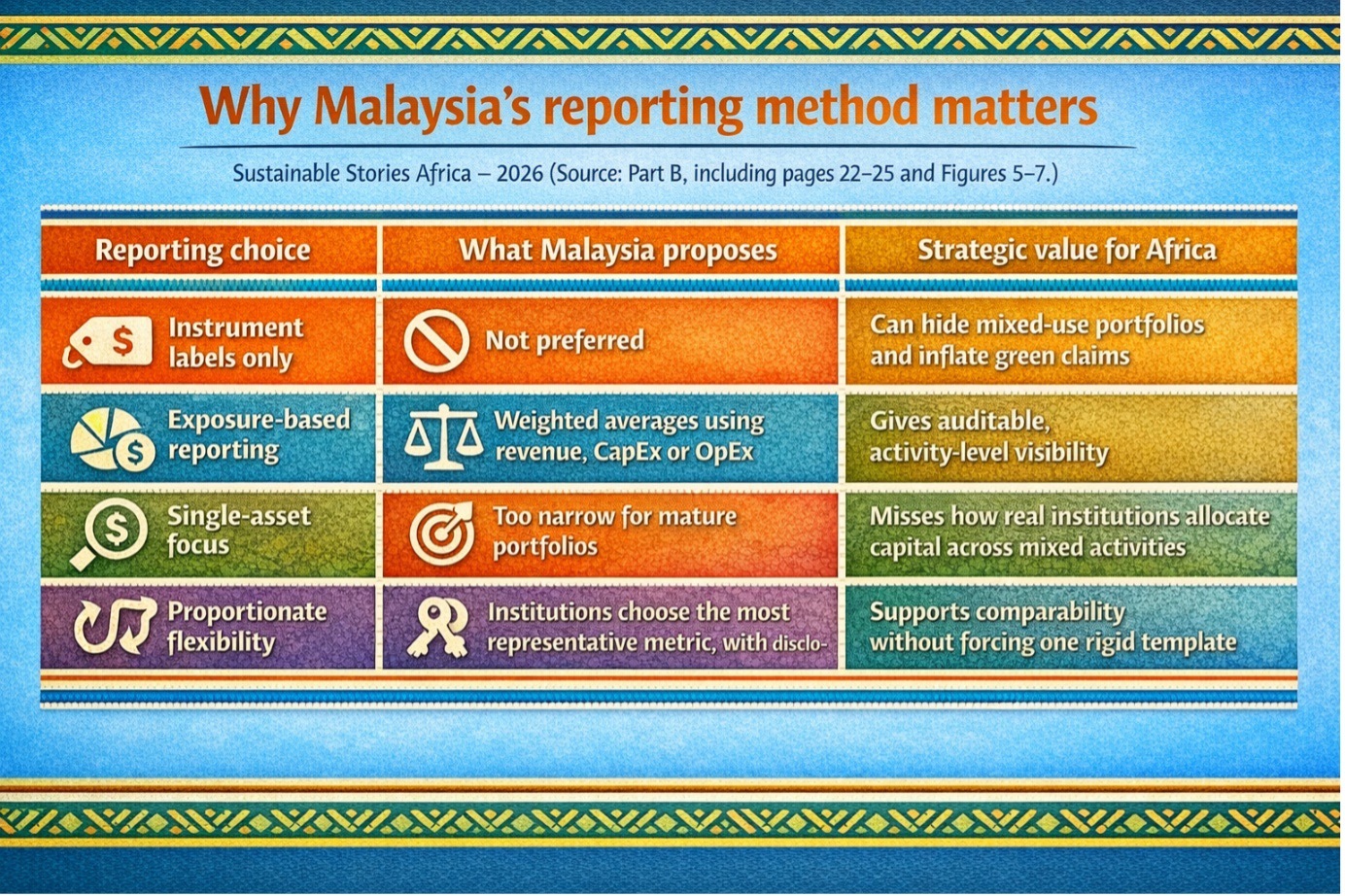
Malaysia's most practical methodological contribution is entity and portfolio-level weighted-average reporting, which uses underlying revenue, capital expenditure, or operating expenditure, rather than product labels.
Institutions must report what financed business activities actually are, and how much falls into green, amber, red, or out-of-scope categories.
The examples on pages 23–25 illustrate the logic clearly. A single company can carry green solar, amber transport transition, red coal-related generation, and out-of-scope retail activities simultaneously, each classified separately before consolidation into an entity-level view.
Portfolio alignment is then calculated across debt and equity exposures. The principle is unambiguous: taxonomy reporting must follow underlying economic activity, not marketing narrative.
A taxonomy is only as credible as the data systems behind it. Malaysia's consultation correctly sequences the work: classify activities, test data availability across turnover, capital expenditure, and operating expenditure, then scale.
For African regulators, the inclusion imperative is equally critical; a taxonomy that excludes SMEs, insurers, and foreign capital managers may look technically elegant, but will govern only a fraction of the market it claims to regulate.
Path Forward – Build Taxonomies That Reflect African Realities
Africa does not need to copy Malaysia’s taxonomy. However, it can learn from its design logic: unify fragmented frameworks, recognise transition, embed nature and social safeguards, and anchor reporting in underlying economic activity rather than labels.
The real test is whether taxonomies help move capital with greater honesty and less confusion. Malaysia’s proposal suggests they can, if they are interoperable, technically grounded and realistic about data, institutions and development pathways.