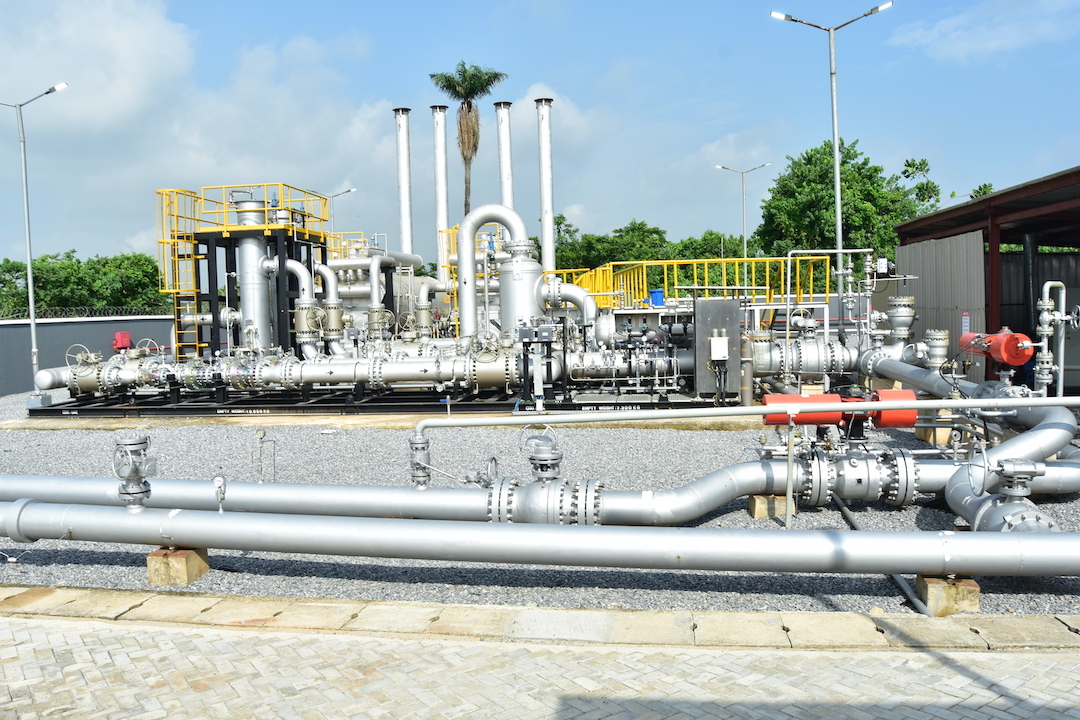
Climate finance is not standing still. Climate-themed funds grew, corporate target-setting improved, emissions disclosure widened, and carbon-credit retirements rose again in 2025.
However, the deeper picture is more uncomfortable: the world’s listed companies still imply roughly 3°C of warming, far above the goals investors say they support. That is the core tension in MSCI Institute’s Transition Finance Tracker, Fourth Quarter 2025.
For African and other emerging markets, it matters because transition finance is no longer only about whether capital is flowing.
It is increasingly about where it flows, what it is measuring, and whether those signals are consistent with real-economy decarbonisation.
Capital is moving, but unevenly
The energy transition is no longer short of data points. Investors can now compare climate-fund performance, assess the ratio of low-carbon to fossil-fuel energy financed through bond portfolios, track the credibility of corporate targets, and measure how far company emissions trajectories remain from climate goals.
What remains in shorter supply is alignment.
That is what makes MSCI’s latest transition-finance tracker useful. Rather than offering a single headline number, it presents a set of market signals that together show a transition gaining momentum in some areas while still lagging badly in others.
The report notes stronger performance in climate-themed funds, rising corporate disclosure, more science-based targets, and growing carbon-credit retirements. However, it also shows that capital markets still finance fossil energy far more heavily in segments, and that most listed companies remain on emissions pathways inconsistent with 1.5°C or 2°C.
For African markets, that mixed picture carries two implications.
- First, transition finance is becoming more measurable and therefore more selective.
- Second, emerging markets may continue to face a split system in which investors call for faster climate alignment while still directing low-carbon capital unevenly across regions and instruments.
That second point is an inference from the report’s bond-finance ratios and company-versus-country temperature comparisons.
Attention: The money is growing
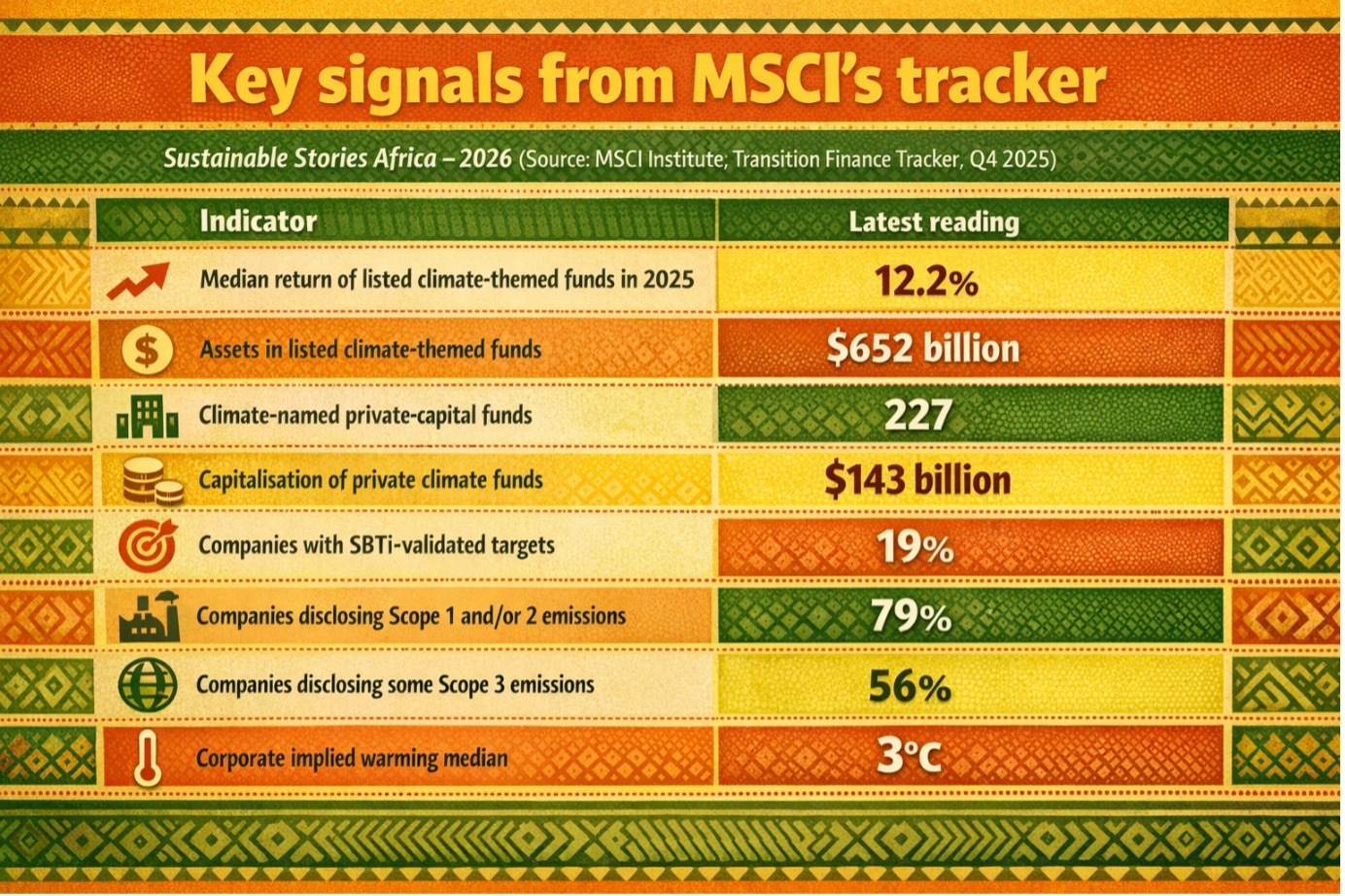
One of the clearest messages in the report is that climate-linked investor appetite remained resilient in 2025, even as some markets pulled back on policy support. Listed climate-themed funds posted a median return of 12.2%, up from 5.2% in 2024, while assets grew 16.4% to $652 billion.
Private climate capital also deepened, with about 227 climate-named funds across private equity, credit, infrastructure and venture capital, holding approximately $143 billion by September 2025.
Carbon-credit demand strengthened, too. Companies retired 202 million tonnes of CO2-equivalent in 2025, marking a fourth straight year of growth and the highest level since 2021.
Nearly 90% of fourth-quarter retirements came from emissions-reduction projects, while engineered removals remained below 1%, underscoring where demand still concentrates.
Interest: Better signals, unresolved gaps
More companies are setting climate targets, improving disclosure and attracting climate-linked capital, but the report warns that progress in transparency is still outpacing progress in transition alignment.
By the end of 2025, 19% of listed companies had science-based climate targets, up from 14% a year earlier, while 32% had adopted companywide net-zero targets and 60% had published some form of climate commitment.
Disclosure also improved, with 79% reporting Scope 1 and/or Scope 2 emissions and 56% disclosing at least some Scope 3 data.
However, the larger picture remains troubling. The report estimates that listed companies’ aggregate emissions trajectories still imply approximately 3°C of warming this century.
Only 12% of companies aligned with 1.5°C or below, while 26% aligned with 1.5°C to 2°C. That leaves 62% still above the 2°C threshold, exposing the central contradiction: more reporting, more targets and more climate capital have not yet translated into Paris-aligned corporate pathways.
What better transition could finance achieve
MSCI’s report becomes clear when it shifts from climate-finance volume to capital allocation. Adapting the energy supply ratio to bond markets shows how unevenly portfolios finance low-carbon energy relative to fossil fuels.
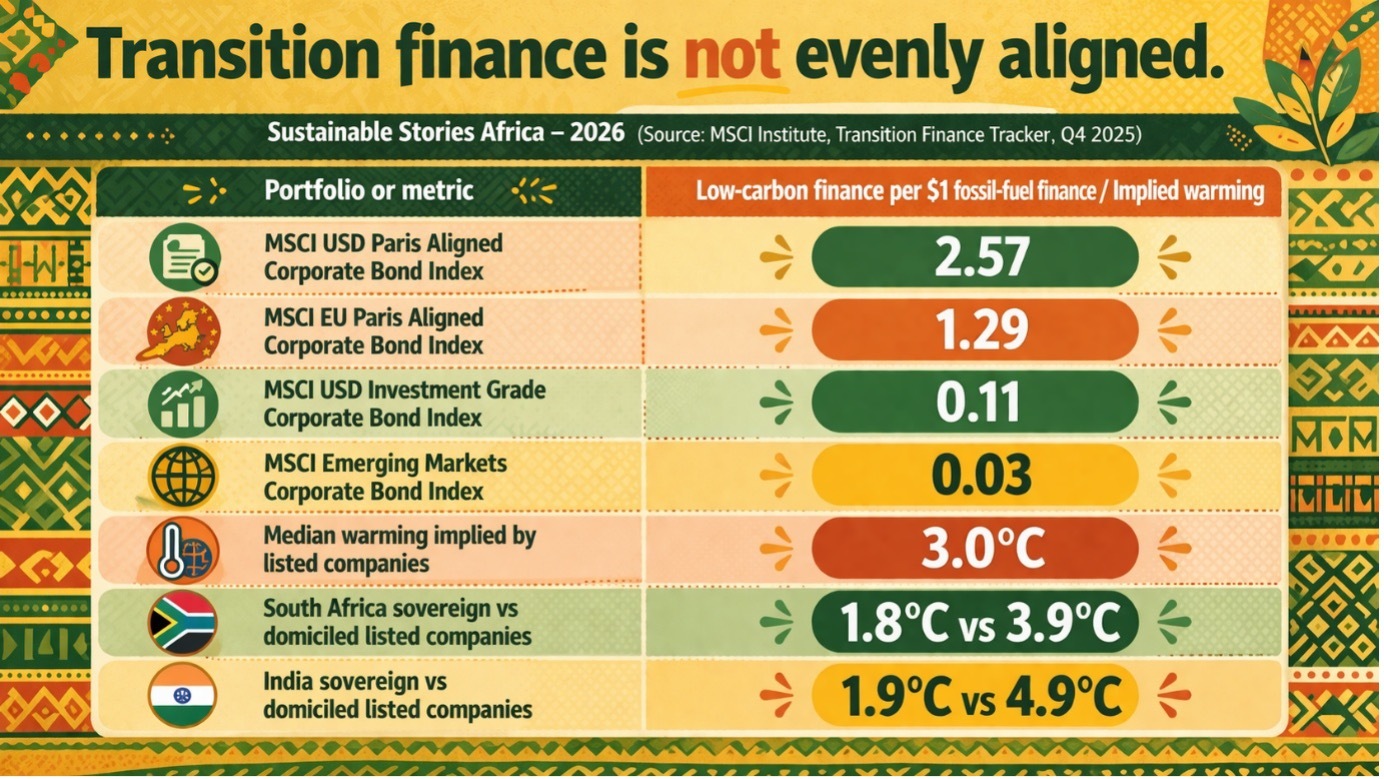
A portfolio tracking the MSCI USD Paris Aligned Corporate Bond Index financed $2.57 of low-carbon energy for every $1 directed to fossil-fuel energy, while one tracking the MSCI Emerging Markets Corporate Bond Index financed $0.03.
The implication is stark: transition finance is not only about labelled capital, but about where capital goes and on what terms.
The country comparison deepens that point. In several emerging markets, corporate implied warming pathways were higher than sovereign trajectories.
South Africa stood out at 1.8°C on the sovereign side versus 3.9°C for listed companies. MSCI attributes part of this gap to Scope 3 emissions, many of which are outside its borders. For policymakers and issuers, this exposes a financing and credibility gap.
What needs to change now
The report suggests three practical priorities.
- First, investors need to move beyond headline climate commitments and interrogate actual financed exposure. A portfolio may claim alignment with transition, while heavily supporting fossil-fuel revenues. Ratios such as MSCI’s low-carbon-to-fossil financing measure offer one way to make that more visible.
- Second, target quality matters as much as target quantity. The rise in SBTi-validated targets is encouraging, but it still covers less than one-fifth of listed companies. Net-zero claims without validated pathways, robust disclosure and credible capital expenditure plans will not close the warming gap shown in the report.
- Third, emerging markets need a transition-finance architecture that recognises development realities while rewarding credible decarbonisation. The sovereign-versus-company temperature comparison suggests many firms in emerging economies may be judged on global value-chain emissions that are not fully captured in national trajectories. That raises the need for more nuanced capital allocation, better transition plans and fairer treatment of development-stage differences.
Path Forward – Follow the allocation, not labels
MSCI’s tracker shows that transition finance is maturing but not yet aligned. Climate funds are larger, disclosure is broader, and target-setting is stronger; however, most listed companies still point to warming well above global goals.
For African markets, the next step is not only to attract more climate capital, but to demand better-quality transition finance: clearer metrics, fairer risk pricing, stronger corporate pathways and financing structures that reward real low-carbon investment rather than sustainability branding alone.