Adaptation finance does not fail only at the funding stage. It often breaks down earlier, when projects lack the technical, social and commercial preparation needed to attract capital.
The GAIA TA Facility’s stakeholder plan is an attempt to fix that upstream weakness by coordinating funders, governments, technical partners and service providers around a clearer project-readiness process.
Why readiness now matters most
The GAIA TA Facility’s Stakeholder Engagement Plan is, at one level, an administrative document.
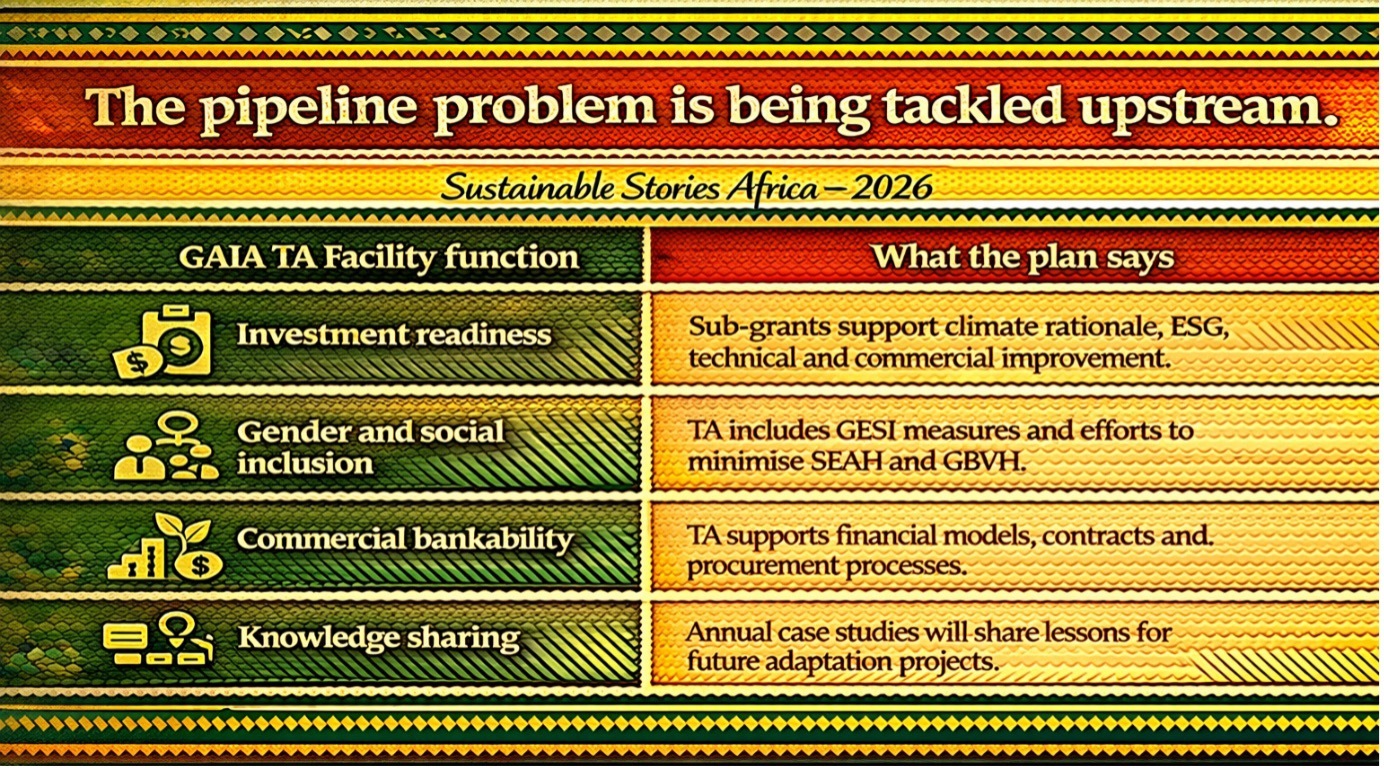
However, at another, it is a revealing map of what adaptation finance now requires. The facility, backed by GEF funding support and linked to the GAIA Climate Loan Fund, is designed to provide investment-readiness support to potential investees, especially in SIDS and LDCs, so they can strengthen climate rationale, ESG systems, technical design and commercial viability before seeking financing.
That makes the plan more than a compliance note. It is part of a wider effort to reduce one of the biggest bottlenecks in climate adaptation markets: a shortage of projects that are not only urgent and impactful, but also structured well enough to absorb blended or private capital.
The document says the facility will use sub-grants to help project sponsors build systems for environmental and social risk management, gender equality and social inclusion, SEAH and GBVH safeguards, and stronger financial models, contracts and procurement processes.
For African and emerging markets, that is important. Many adaptation needs are visible and growing, but projects often struggle to cross the distance between policy need and investable transaction.
The GAIA plan suggests that stakeholder design is one way to shorten that distance.
The pipeline problem is being tackled upstream
The document’s clearest insight is that GAIA is building a financing pipeline before projects are fully bankable. Its Technical Assistance Facility targets proposals with strong potential but unresolved gaps in impact, ESG or commercial documentation, turning weak pipelines into investable ones.
As outlined on pages 9 and 10, governments and institutions submit projects to the GAIA Fund, which screens for credit, climate and ESG quality before referring incomplete but promising proposals to the TA Facility.
That matters because assistance becomes a financing tool, not merely support, especially in adaptation, where sponsors need help on governance, procurement, stakeholder engagement and inclusion.
The governance chain, from WWF US to Catalytic Finance and partners, is designed to move projects from concept to funding.
Who is involved and how
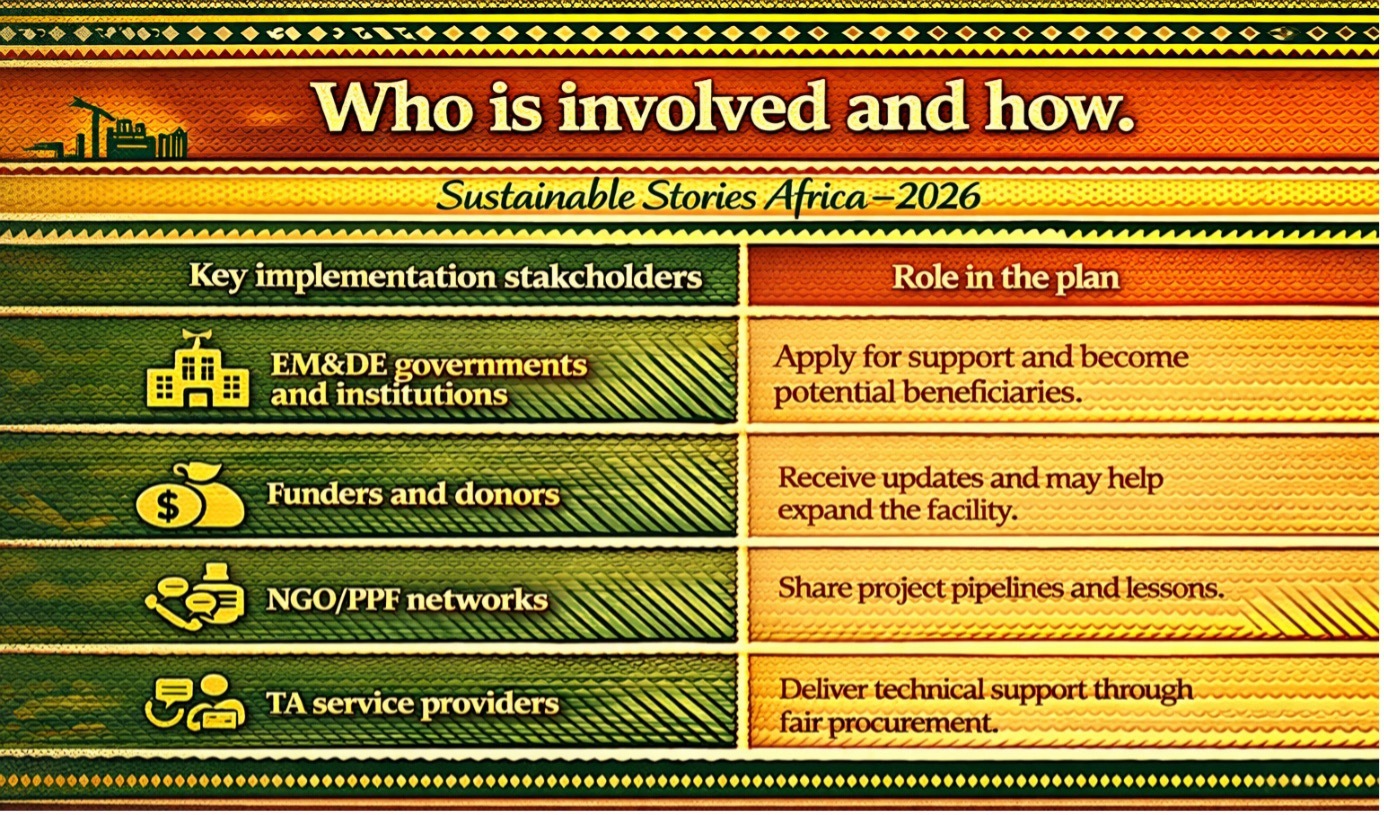
The plan’s most valuable feature is its stakeholder mapping. It identifies five groups:
- GAIA Fund partners
- GAIA TA Facility execution leads
- NGO network of project-preparation facilities
- EM&DE governments and institutions as potential investees
- Local or international TA providers.
Each is given a role in design or implementation.
That structure rests on consultation. Between May 2024 and September 2025, GAIA engaged FinDev Canada, CFM, Pollination, MUFG, Catalytic Finance, CPI, RMI, GIZ, C40, Resilient Cities Network, GGGI, the NDC Partnership, the Global Center on Adaptation, the Resilient Water Accelerator, and institutions from Benin to Tanzania.
This matters because adaptation pipelines fragment: funders, originators, technical partners and agencies work in parallel, not sequence.
GAIA’s model tries to fix that. Potential investees apply, screening identifies gaps, the TA manager reviews requests, the TA Committee approves support, and service providers are competitively procured with knowledge and vulnerable-group inclusion in view.
The geographic ambition is equally broad. Appendix 1 names potential stakeholders across the Caribbean, Latin America, Asia and Africa, including institutions in Benin, Côte d’Ivoire, Ghana, Kenya, Mauritius, Morocco, Tanzania and Togo.
For African markets, that is significant because it places adaptation-finance infrastructure around public institutions shaping transport, water, energy and infrastructure systems.
What a stronger engagement model could unlock
If the plan works, the biggest gain will be a better supply of investable adaptation projects.
That could improve how climate resilience is financed in countries where public needs are high but transaction preparation remains thin.
The facility’s focus on ESG systems, gender integration, bankability and knowledge sharing suggests it wants projects to be not only fundable once, but replicable across markets.
There is also a governance upside. The document says every project supported by the GAIA platform will require a robust project-level stakeholder engagement plan, and the TA Facility is positioned as a tool to help build or strengthen that capacity upstream.
That matters for credibility, especially where public adaptation projects affect vulnerable communities, local institutions or gendered risk patterns.
The plan’s treatment of grievances is another signal of seriousness. It includes both the WWF GEF Agency grievance mechanism and a Catalytic Finance whistleblower and grievance platform, covering issues from policy breaches to discrimination, fraud, SEAH and harassment.
In practice, that expands the facility’s accountability architecture before any follow-on financing is deployed.
What should happen next
The practical next step is disciplined implementation. Catalytic Finance is responsible for executing the stakeholder engagement plan, while WWF provides oversight.
The document says the SEP will be reviewed annually, stakeholder activities will be documented every six months, and progress will be tracked through indicators including the number of direct beneficiaries, the number of stakeholder groups involved annually, and the number of engagements such as meetings, workshops and consultations.
For African policymakers and public institutions, the lesson is wider than GAIA. Adaptation finance is increasingly about systems, not just projects.
Institutions that want to attract climate capital will need stronger stakeholder analysis, clearer gender and social safeguards, better project preparation and more credible engagement with local actors.
For financiers and climate platforms, the message is similar. Capital alone does not solve readiness.
The investable pipeline has to be built, and that requires structured technical assistance with governance, accountability and local participation designed in from the start.
Path Forward – Build the pipeline before the deal
GAIA’s stakeholder plan reflects a broader shift in adaptation finance: upstream preparation is becoming as important as downstream capital.
The facility’s value will depend on whether it can turn consultations, screening and TA support into stronger public-sector projects across vulnerable markets.
The priority now is execution with evidence: transparent procurement, measurable engagement, stronger project-level SEPs and case studies that show whether readiness support is actually improving adaptation finance outcomes.