
ESG scores remain widely used, even as criticism of opacity, inconsistency and greenwashing has grown.
The central question now is not whether they survive, but whether they become more transparent and decision-useful.
That matters for African and emerging markets because better scoring frameworks can influence access to capital, corporate behaviour and disclosure quality.
Poorly understood scores can distort judgment; better ones can improve market discipline.
ESG Scores Face A Credibility Test
ESG scores are under pressure from both critics and users. Critics argue that they can obscure more than they reveal, especially when providers apply opaque methodologies or produce sharply different outcomes for the same company.
However, investors continue to use them because, for all their flaws, they remain one tool for converting broad sustainability information into comparable signals for risk monitoring, stewardship and portfolio decisions.
That tension sits at the centre of the latest paper on LSEG’s ESG scores, which presents a redesigned, more modular approach built around transparency, materiality and clearer differentiation between operational ESG management and broader external or impact signals.
For African and other emerging markets, the implications are significant. As sustainability rules harden and capital becomes more selective, the quality of scoring frameworks will increasingly shape how companies are understood, screened and priced.
The bigger lesson is simple. ESG scoring is no longer just a branding exercise for sustainable finance.
It is becoming part of the market infrastructure that connects disclosure, accountability, capital allocation and corporate integrity.
Scores Still Shape Market Behaviour
ESG scores may be contested, but they remain influential in capital markets because they are embedded in investment mandates, labelled funds and stewardship decisions.
The LSEG paper argues that their durability lies in utility. ESG scores condense uneven sustainability disclosures into a signal, helping investors spot extra-financial risks, assess quality and compare companies at scale.
However, the same compression creates weakness. Divergent methodologies, inconsistent data, limited transparency and concerns around greenwashing have undermined trust.
For African issuers, that challenge is sharper: many are judged through external frameworks, while disclosure gaps may reflect immature reporting systems rather than the absence of risks.
How The New Scores Work
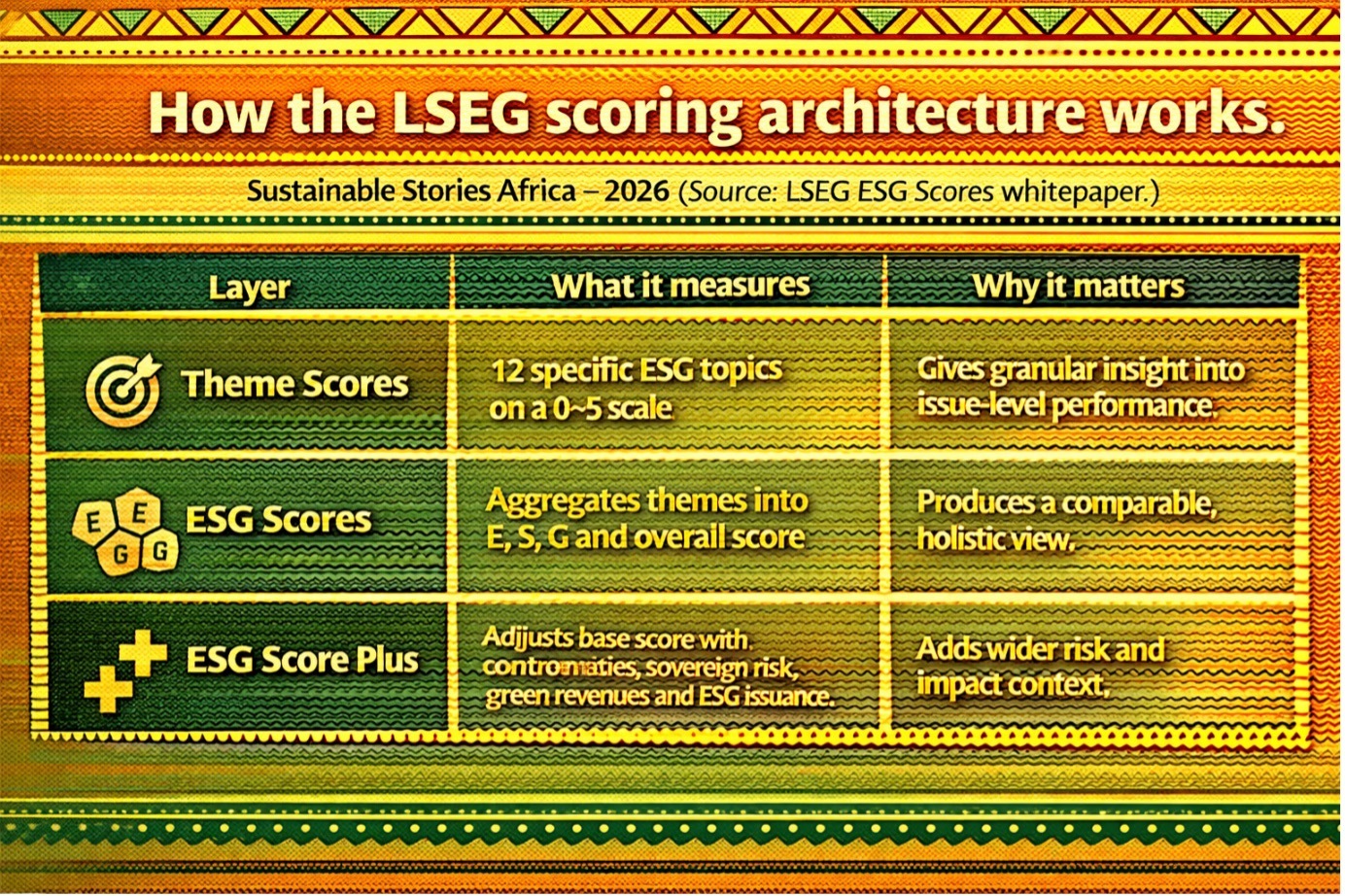
LSEG’s revised framework is a response to ESG credibility concerns, suggesting a more structured model built around 12 themes spanning environmental, social and governance issues.
Those themes are scored using selected indicators tested for standards alignment, data quality, availability and parsimony.
The model then translates theme scores into pillar results and an overall 0 – 5 ESG score, with materiality weighting at its core.
Instead of treating every issue equally, it assigns greater importance to themes that are more relevant to a company’s business activity and risk profile.
It also uses scoring caps to curb greenwashing. Companies cannot achieve strong scores without meeting basic evidence thresholds: poor fatality disclosure can limit health and safety scores, while energy and resource scores require quantified reduction targets.
The broader message is clear: credibility depends on materiality, discipline and verifiable disclosure.
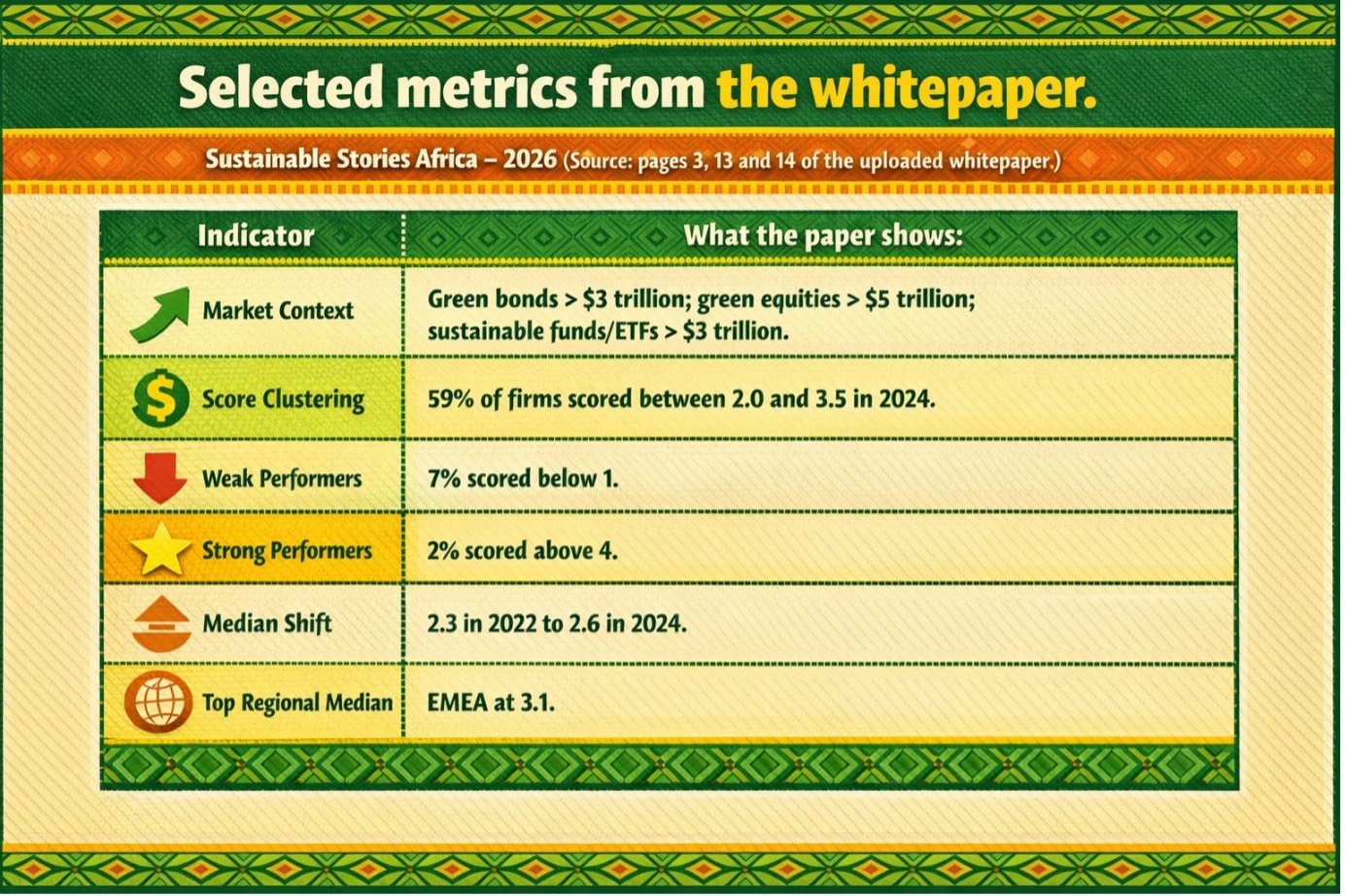
The data points to steady movement, not an ESG breakthrough. In FY2024, 59% of companies scored between 2.0 and 3.5, while 7% fell below 1, and only 2% rose above 4. The median score improved from 2.3 in 2022 to 2.6 in 2024, reinforcing the picture of gradual progress.
For African readers, the deeper lesson is methodological: absolute scores support cross-market comparison, but peer-normalised scores still matter for emerging-market firms navigating global benchmarks and local realities.
What Better Scoring Could Unlock
If ESG scores become more transparent and disciplined, the payoff could be significant.
Investors would be better placed to distinguish real operational performance from narrative polish, while companies would gain clearer signals about which sustainability practices capital markets value most.
Regulators and exchanges could push for stronger disclosure quality without rewarding reporting theatre.
That matters in African markets, where better scoring systems could reduce noise around firms improving but still under-disclosed.
A more credible framework would reward measurable targets, stronger governance and better internal systems, while helping lenders separate country-risk assumptions from company-level performance.
ESG Score Plus reflects that direction by combining company disclosures with sovereign risk, controversies, green revenues and ESG debt issuance, widening the lens while keeping transparency at the core.
Make Scores More Useful
The practical task now is not to abandon ESG scoring, but to use it more intelligently.
- Providers need clearer methodologies, stronger disclosure on weighting choices and simpler explanations of what scores do and do not capture.
- Investors should resist treating any single score as the final truth and instead use them alongside raw data, controversy tracking and sector-specific analysis.
- Companies, especially in African and emerging markets, need to focus on the fundamentals that scoring systems increasingly reward: quantified targets, better disclosures, governance discipline, incident reporting, and operational follow-through.
- Governments, exchanges and regulators also have a role in improving reporting infrastructure so that lower scores do not simply reflect weaker reporting capacity.
One more caution is worth keeping in view.
The paper argues ESG scores should be treated as an informative investment signal and risk-management tool, not as a guaranteed source of “free alpha”.
That is a useful corrective in a market that sometimes oversells what scores can do. The stronger case for ESG scoring is not magic outperformance.
Path Forward – Better Scores Need Better Discipline
African markets need ESG scores that are transparent enough to trust and flexible enough to reflect local realities without lowering standards.
The priority is not more scoring noise, but more decision-useful signals.
That means better disclosure systems, clearer methodologies, smarter investor use and stronger market oversight.
Properly applied, ESG scoring can move from contested label to practical tool for accountability, capital access and corporate improvement.